The Prosperity Report № 25 · October 26, 2026
You are not short on information. You are unwilling to move without certainty.
A 5-minute weekly report delivering proven strategies, actionable insights, and curated resources to help you grow your business, build your authority, and create your best life.
Good Tuesday. Monday's session was about the quietest killer of momentum I know: overthinking. Thinking is not the problem. I'm a strategy guy, a preparation guy, and real responsibility deserves real evaluation. The problem is analysis that never arrives anywhere. Productive thinking moves you toward a decision. Overthinking keeps you circling the same one. The honest diagnostic is a single question: am I learning something new, or am I just looking for reassurance? Most of us already have what we need. We just want someone to guarantee the outcome, and that guarantee is never coming.
Here's your assignment. Name one decision you've been sitting on and write it in a single sentence. Draw a line down a page: what you know on one side, what you're assuming on the other. Then decide what you can responsibly decide with what you have, set a deadline, and commit. Confidence doesn't come from always being right. It comes from learning you can decide and handle the outcome either way.

Key takeaways
From this week's solo sessions with George.
Delaying is still a decision. Every time you postpone, you are choosing to stay exactly where you are, and that choice has an outcome too. Waiting can be the right call, but it has to be intentional. Choosing to wait because the timing is strategically wrong is wisdom. Choosing to wait because you're afraid to commit is avoidance dressed up as patience.
Separate goals from standards. Goals are what you want. Standards are what you accept and what you consistently do. You may have a goal to grow the business, but what is your standard for following up with a potential customer? If your actions don't match what you want, it's doubtful you really want them.
AI is not a strategy. It's a tool that helps you execute one. Know your priorities, your customer and your revenue model first, or automation just helps you move faster in the wrong direction. Pick one repetitive task, one marketing activity, and one part of the customer experience, then decide in advance how you'll reinvest the hours you free up.
Schedule important before it turns urgent. Just because something demands your attention doesn't mean it deserves your priority. The leverage sits in what's important but not urgent: health, relationships, long-range planning, skills. None of those scream at you today, and if you wait until they do, you'll be managing an emergency instead of building an advantage.
Stop Overthinking · Where Are You Holding Yourself Back? · Busy or Making Progress?
Guest spotlight

Greg McKeown
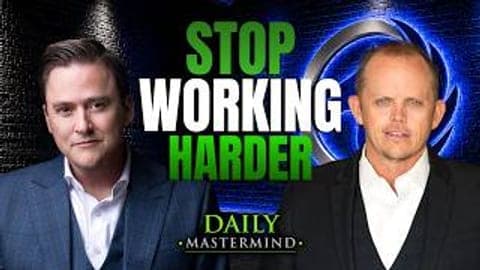
Author of Essentialism and Effortless, on why the people who want 10X results have nowhere near 10X more effort available.
McKeown asks audiences two questions. Who wants 10X results? Every hand goes up. Who can work 10 times harder? Nothing. That gap is the whole problem, and the usual answer, push harder, guarantees a plateau before you ever arrive. The un-obvious part is that the fix isn't a tactic. It's naming the invisible belief that important work has to be brutal, then choosing a pace you can repeat.
“We have to separate lazy from easy. They do not equal each other. Lazy is not being willing to put in effort. Easy is that something doesn't require effort.”
Three things worth stealing from the conversation:
- Set your 15 miles a day. Racing to the South Pole, the Norwegians moved 15 miles daily and never more, even on perfect days. With 45 miles left and no idea whether the British were ahead, they held the rule and took three more days. They arrived more than 20 days ahead, with enough left for the 16,000 mile journey home.
- Run the 85 percent rule. Never spend more than 85 percent today, because you want 85 percent available tomorrow. Spend 110 and you wake up with 50. Repeated 85 produces sustainable results that beat boom and bust every time.
- Name the lens before the tactic. McKeown uses the word metanoia: to see yourself, others and the world through new eyes. Most people try to fix results with a new tactic. Identify the belief driving your schedule, ask whether it is actually true, then look for the alternative lens that makes a better approach possible.
This week on the show
Resources & links
Run George's decision reset on paper. One page, a line down the middle, what you know on the left and what you're assuming on the right. Then pair it with McKeown's 85 percent rule for the week ahead.
Make one decision you've been avoiding, this week, with a deadline attached. Choose the reversible, small-step version if the stakes feel high. Reply and tell me what you decided and what the deadline is. I read every reply.
If you lead a team, start with Are You Busy or Making Progress? and then run the opportunity audit in Where Are You Holding Yourself Back? Five or ten minutes on beliefs, standards and decisions will usually find the bottleneck faster than another strategy session.
Where this leads
When you’re ready to go deeper than a weekly report, there are two ways in.
Group mentoring across mindset, marketing, authority, and automations. The room where the ideas in this report become your operating system.
Explore the Academy →A path from featured authority to your own podcast, to a full launch and media company, with ongoing monthly support. Built to make you the name people already trust.
Start the conversation →That’s your five minutes. Now go execute.