The Daily Mastermind
ALL GUESTS
Guest

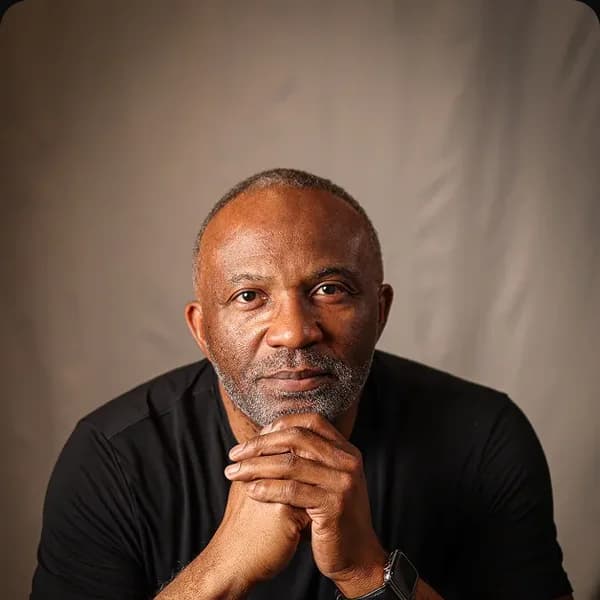
Curtis McCullom

Founder of Bespoke Human Potential Coaching, Host of The Curtis McCullom Show
Curtis McCullom
Background

About Curtis McCullom

Clinical HypnotherapyNLPMental Emotional ReleaseSubconscious ReprogrammingExecutive CoachingMindset

Curtis McCullom is the founder of Bespoke Human Potential Coaching, where he works with CEOs, founders, and entrepreneurs to eliminate blind spots that have quietly shaped their decisions since childhood. His practice combines executive coaching with clinical hypnotherapy, neuro-linguistic programming, and Mental Emotional Release®. The premise is straightforward: most personal development advice speaks to the conscious mind, which accounts for roughly 5 percent of mental activity, while the programming actually driving behavior sits underneath it. McCullom works at that lower layer, where the results tend to hold.

longBio2Placeholder

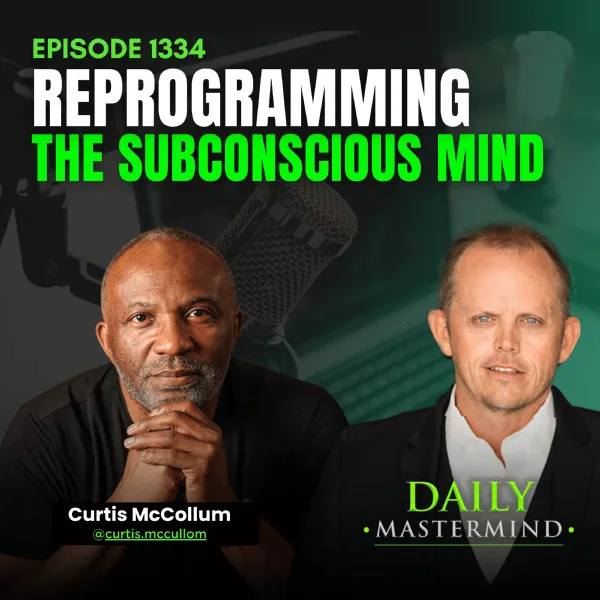
On The Daily Mastermind, McCullom sat down with George Wright III for a conversation on why willpower loses to programming and what to do instead — a discussion of how the subconscious drives 95 percent of behavior and how to reprogram it. They covered the two beliefs he finds under almost every high performer, the difference between working on something and clearing it, and the practical steps he gives clients: naming emotions rather than becoming them, 4-7-8 breathing, and asking "what" instead of "why." He also spoke about losing his son five years ago, and using the same process when grief returns.
Key Insights

Key takeaways from Curtis

01
Willpower is the 5 percent option when a 95 percent option exists.
Traditional coaching addresses the conscious mind. The subconscious, installed largely between birth and age seven, runs the rest. McCullom compares defaulting to logic and grit to choosing the $5 option when $95 is available — you can push, but you are outnumbered.
02
Almost every high performer is carrying "I'm not good enough" or "I'm not worthy."
Across years of coaching CEOs and founders, McCullom finds the same two root beliefs. They often trace to a single childhood moment. Outward success does not resolve them — it outperforms them, and the cracks tend to surface in relationships instead.
03
Working on something and actually clearing it are different things.
McCullom notes that repeating a story can reinforce the pattern rather than release it. Mental-emotional release targets the emotion at its root cause — where it originated, not where it shows up — which is why he says a single limiting belief can clear in under ten minutes.
04
Clear the ground before you plant new goals.
His framework moves through learning, expanding, growing, and transforming. Goal-setting belongs in the third stage, not the first. Setting new goals before emptying the backpack of old baggage is planting seeds in hard, cluttered soil.
05
Say "I'm feeling sadness," not "I am sad."
Emotions are temporary signals meant to communicate and leave, not identities to carry. Naming the feeling creates separation from it. Pair it with 4-7-8 breathing to signal safety to your nervous system before you react.