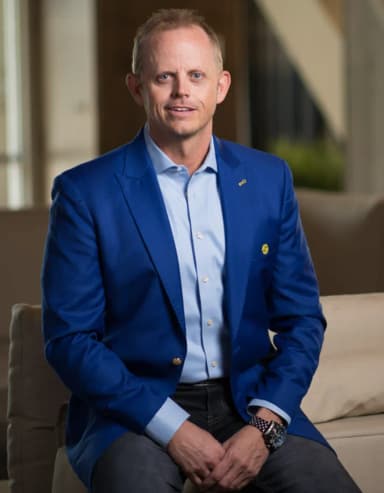
Most entrepreneurs spend their energy chasing leads, managing operations, or hunting for funding. Far fewer stop to ask whether they are becoming the kind of person who can actually lead a business to the next level. In this episode of The Daily Mastermind, George Wright III breaks down the eight defining characteristics of a founder mindset, the thinking patterns, emotional habits, and identity shifts that separate world-class leaders from average business owners.
George draws on his experience building global brands through Valiant CEO and the multiple businesses he has owned to make one critical distinction clear: a founder does not just build a business. A founder builds belief.
What Is a Founder Mindset (and Why It Differs from Being a Business Owner)
Most people running a business are focused on execution: managing sales, running operations, completing daily tasks. A founder mindset is rooted in vision, belief, and long-term impact. It is not just about working in your business. It is about working on yourself so your business can grow.
you don't just build a business as a founder, you build belief
That distinction is the foundation everything else rests on. You are building something that does not exist yet, and that requires a higher level of thinking, leading, and believing than most operators ever develop.
Vision Over Tasks: Why Founders Play the Long Game
Successful founders are visionaries, not task managers. They think big and they delegate small. They design the game, set the direction, and empower others to run the plays. If you are stuck in the weeds every day, you are not building the future.
The practical shift: schedule protected time to think strategically, define your mission clearly, and build systems that can run without you. Vision over tasks is not a productivity hack. It is a leadership identity.
High Risk Tolerance and Decisiveness
Bold decisions and fast execution are hallmarks of great founders. They take calculated risks, act quickly, and refuse to let fear of failure cause paralysis. Every mistake, in their view, is tuition paid toward experience. Mistakes are the gateway to success, not evidence of inadequacy.
Speed of execution matters more than perfection. Train yourself to make decisions based on your vision rather than your comfort level or perfectionist tendencies.
Extreme Ownership: No Excuses, No Exceptions
George references Jocko Willink's principle that discipline equals freedom, and applies the same standard to accountability. Extreme ownership means the founder owns the results, good or bad, with no exceptions. You cannot blame your team, the market, or the economy.
This level of personal accountability does something powerful: if the outcome is your responsibility, it is also within your control to fix. Ownership builds trust, shapes culture, and drives performance throughout the entire organization.
Resilience and Emotional Fortitude
Building a business is brutal. Fear, failure, anxiety, rejection, loss, and imposter syndrome are not signs that something is wrong. They are the standard experience of anyone building something real. What separates founders is not the absence of those emotions. It is their ability to regulate those emotions and bounce back quickly.
Mental fitness is as vital as funding. Founders who invest in their mental health, mindfulness practices, and emotional support networks gain a competitive edge that no business strategy can replicate.
Learning Obsessed and Growth Oriented
The best founders are not know-it-alls. They are learn-it-alls.
Founders are not know-it-alls. They're not the smartest people in the room. They're learn-it-alls, not know-it-alls.
They prize curiosity over credentials. They are not trying to prove they are the smartest person in the room. They are trying to grow their business, which means surrounding themselves with people who are smarter than them and staying in a constant state of learning. Develop a daily growth habit: read, ask better questions, stay curious. The moment you stop learning, your company starts dying.
Identity Shift: You Are the Brand
As your company grows, your visibility grows with it. Investors, customers, and partners will buy into you long before they buy into your product. That means you cannot hide behind your business. You have to step into the role of brand founder: showing up with visibility, vulnerability, and values that align with your company's mission.
George describes a personal reckoning with this in his own business, stepping out from behind the scenes of the global brands he built and into the spotlight because his vision demanded it. Your identity drives your culture, your marketing, and your sales. Shift it accordingly.
Knowing When to Pivot Versus Persevere
One of the hardest judgment calls in business is knowing whether to push harder or change direction entirely. There is a fine line between grit and stubbornness. The market is constantly giving you feedback that should shape your evolution as a founder. The best founders listen to that feedback, trust their gut, and adapt fast.
Critically, George adds what he calls the founder's dilemma, drawn from researcher Noam Wasserman's study of startup founders. Wasserman found that founders who clung to control over their companies ended up less wealthy than those who were willing to hand over operational power and bring in executives to take responsibility. The dilemma comes down to a simple question: do you want to be the boss, or do you want to build something that creates legacy and changes the world? Founders who choose legacy over control build larger, more valuable companies.
Don't fall in love with your solutions. Fall in love with solving the problems.
Action Steps
- Schedule dedicated time each week to think strategically about your vision, not just manage daily tasks.
- Practice making faster decisions based on your vision rather than waiting for perfect information.
- Apply extreme ownership to one outcome this week where your instinct is to blame an external factor.
- Build a daily learning habit: read, listen, ask better questions, and put yourself around people who challenge you.
- Audit your personal brand: does your online presence, your communication, and your public visibility align with the mission of your business?
Your business growth is capped by your personal growth.
your business growth is capped by your personal growth
The founder mindset is not a personality type you are born with. It is a set of habits, beliefs, and identity choices you make every day. Adopt these eight principles and you will start to unleash your potential in your business, your finances, and your life. It's never too late to start living the life you were meant to live.