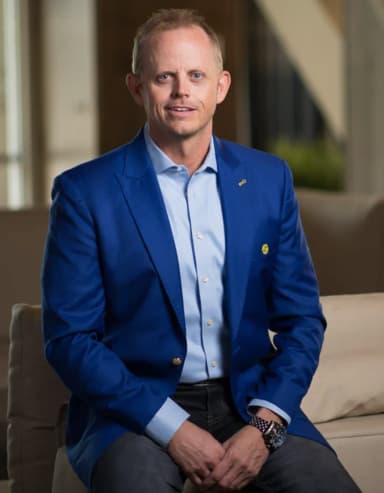
welcome back to the daily mastermind my name is George Wright the third with your daily dose of inspiration motivation and education and I've got a special daily mastermind edition for the weekend for you it's a interview and a mastermind that I did with one of my private mastermind groups and I did it with best-selling author Aaron Adams he's one of my nine figure eight figure nine figure mentors that I work with a real estate expert I'm going to give you a little bit of background on him and then we will just cut right to our our mastermind session with him so Aaron has been a full-time real estate investor since leaving his job teaching high school in the early 2000s he's purchased thousands of properties in California Indiana Missouri Texas Florida pretty much all over the place and he's purchased several thousand properties primarily with the focus of it being single-family homes in blue-collar and middle-class neighborhoods but it's not limited to that he has experience and done transactions in apartment complexes commercial property new construction mobile home parks Airbnb you name it now he's currently focused in Indianapolis Charlotte Kansas City and Dallas but he runs a massive turn Creek turnkey operation of the acquisition the rehab the construction the management he's got a master's degree from Cal Poly in business he speaks Spanish fluently and his business actually provides turnkey passive real estate for individuals all over the country and internationally but he buys hundreds of single-family homes on a on an average monthly basis and he fixes them up rent some manages them sells them and unlike the competitors that he has he does all of it in-house he does he owns all of his businesses so Aaron is an amazing speaker he's an author he's you know his new book tips tricks foreclosures and flips of a real estate millionaire was put out by Wiley and it's out on out in the marketplace right now so I encourage you to get it but he is by far one of the most successful you know eight nine figure mentors that I know and so I definitely want to give you access to this special mastermind I did I'm super excited to share it with you so take a notebook it's an extra long one take some notes listen to it over and over and I hope you'll find some value in it have an amazing day Aaron thanks for taking time man you're busy dude we're super glad to have you here on the on the mastermind thanks man I tonight's late night hockey for my for my son from 9 to 10 p.m. so so I still my day is not over we at. Oh, dude. Yeah, it's going to be a powerful session here, but I mean, it's hard to squeeze in. So we really, I think, rarely get the opportunity to kind of have the behind the scenes and everything else. So what I'm hoping to do with the group today is I want to start by giving just a little bit of background from you on kind of where you came from and what you felt like the keys were to kind of get you into success of where you're at. And then we can drill into some mindset and you know, active, passive income and real estate. But could you maybe start us out with a little bit of a background as to, you know, where this, this, where you came from, from teaching and what do you think was the key to shift you into entrepreneur mode? You know, I've always been a student, whether it's of school or, you know, we were talking before we started, I've been rereading some, some books on leadership that I read 10 years ago. And, you know, when you're, when you're doing $5 million a year in total revenue is different from when you're doing 20 times that. And it's interesting because at different points in your journey, you think you want something from your business or your personal life or your money, so you go after it. And then when you get it or you get partially to that destination, you realize that it wasn't as big of a deal as you thought it would be. And so, you know, while teaching high school, I thought, you know, I want more money, which a lot of people do. And so I started reading books and attending seminars and going with networking groups and started doing deals 20 years ago. And absolutely, I started making money. I mean, the fourth year at the high school, I made $400,000 and was still making 40 grand teaching. Wow. Yeah. Although, you know, it's funny, I was talking to a friend of mine today he's a judge and we were just you know we were talking about how much embezzlement he sees and you know you haven't arrived as an entrepreneur until you've caught one of your employees stealing from you it's you know it's like a rite of passage and you know the amount of anxiety that it gives you once you have something to lose it whether whether it's an asset you're trying to protect and or whether it's you know you're having systems to protect your own employees from taking from you, it creates a whole different level of anxiety because there's the anxiety from poverty. There's the anxiety from losing what you have to lawsuits or by theft. And so what's really interesting is 20 years down the road, you realize that anxiety never goes away. The one constant is, it's just what gives you stress. I'm not worried about the Wi-Fi bill or I'm not worried that I have utilities for four different homes that I keep, but I have a whole different type of anxiety. And so the same skill set that's required to make a million bucks, to make $10 million, to make $100 million is the same skill set that you need to protect those things and to, you know, you start thinking about legacy and longevity. And so I like, I love a group like this because it creates a platform for for for discussing these kinds of things because there's tons of platforms for you know how do you buy a mobile home how do you flip but but a group like this gives you the chance to kind of go take a deeper dive into these kinds of things well also I've learned from being around you enough that it's not and this is this is eight and nine figure thinkers right it's not the strategy it's not the thing. You guys think differently. Your thinking is what kind of got you where you are and what you're doing. It wasn't the other way around. You didn't start thinking creatively after you were making a lot of money, right? Right. Yeah, right. This morning, I was getting ready and I'm in between travel. I really don't have much going on this week. I had maybe two hours worth of work and I found myself rushing to get to the gym. Then I spent a full two hours working out because I had the time but then I was I thought I was I was getting ready and I was rushing to get ready and I'm like what am I rushing for and when you build that sense of urgency into everything that you do then then you you know I and then like three hours later I'm sitting in front of my computer waiting for emails to come in thinking all right what other projects can I work on and when you've reprogrammed your brain to to attack hard things and and then you don't have them you're kind of like like guess I should go home nine and time to leave the office. You know, it's a different mindset. Yeah, well, and don't you feel like you have, you know, it's not about getting to a destination. You're driven by those same goals and things to get you where when you were a teacher and you were trying to push yourself to the next level, now you're at an area, you're pushing yourself to the next level. It's really not that destination, right? I mean, it's always your mindset pushing you. No, that's the, like the French call that's a joie of life I mean you know when when I was in high school I remember getting to the school at 6 a.m. so I could work out with some of the other coaches and running around the track and doing the same thing now because I have a long travel day that that doesn't change you know excellence is a habit that you you know how you do anything is how you do everything and it doesn't it's it doesn't you can't just like I'm exceptionally good at making money but my diet sucks and I'm a fat piece of crap you tend to find the people it bleeds into all aspects of their life their money their family their you know their their their their personal health and you know it's like you and i are always talking about the battle to stay healthy in your 40s you know that's a daily grind man yeah so what you're saying is guys like you actually are like guys like us that still have to work out and still have to like put your pants on one leg at a time is that what you're saying absolutely yeah well so so let me ask you this what what do you think are a couple of the keys you specifically because a lot of people have different talents but what do you think are a couple of your unique abilities or keys to the success that's kind of taking you along the path and then we can use that to lead into kind of some seven-figure mindset stuff but you specifically what do you think's really helped you get to where you're at so learning to be dumb enough to just do things you know I remember being so scared to buy an apartment complex because i've never owned one and the only way to learn how to own an apartment complex is to buy one and having w-2 employees is intimidating you just need to hire one and so uh you know i i'm working on a um a storage unit development right now and i don't want to run the numbers i just want to find one and do it and get it going because that's the only way i've ever learned anything and so when when i bring you know i was in indianapolis brainstorming with some of my employees last week and they had some ideas and i'm like yes yes let's just do that let's just do it because as we fail forward we'll figure it out and that's a hard thing to do when you're coming from an analytical educational background or when you're coming from a corporate environment where nothing happens without three meetings and and voting on resolutions but uh at a very personal level you know it was like i had never ridden a bike and then i hurt my foot running a marathon last year and so now I bought the biker shorts and I got the sores and now I like riding a bike because you know it's just instead of working into it you just do it you know I think that's critical and we too too many of us spend so much time thinking about how we're going to do something instead of just jumping in and trying it do you think that's a bit of your personality because I also see that there's a lot of that in successful people they they don't overanalyze things they don't fear so much they just they just act right they just act but your personality is a little easier sometimes to go with or is it that you you've just made that decision I'm gonna say yes and and then I'm gonna figure it out you know once you start doing it it just it just it bleeds into everything and I think yes it's important to to get some education at a seminar or from a book or from hearing something but then it's just as important to plug that in and do that and it's you know I approached you a couple months ago and I said hey George you know you have a network that I don't have of people that I don't know and I want to try something and you're like okay here's a guy and I called the guy and and now now we're moving forward we were just talking about it the other day and you know a lot of people have been talking about doing that and and and building that part of their business and I'm just like I'm just gonna try it I'm just gonna figure it out and then I'll let you know how it went and I'm gonna try it again and I don't know if I'm gonna make money if I'm gonna lose money but I know after trying three or four times I'm gonna know a lot better you know what's fun is it's I've noticed this about you in particular and I'm talking about out of a lot of successful people that I know that you you're you it's a habit for you make saying yes and moving forward not just a habit but I've seen you with your people in your office and in your organization you teach that same thing where I could see in a brainstorming session say whoa like let's stop talking about it and try it let's just do it but you also um there's a confidence and do you think that for a lot of people that have this fear i mean it is a process right it's going to take the more they they do and make it a habit that the less fear they're going to have the less they think about it or is it you just got to make the decision and and bite the bullet well i i never want to have the confidence that i'm going to fail at some part of it. And so I don't, I'm not afraid of that anymore because I also have the confidence that I'll just keep tweaking things until I figure it out because I've been doing that, you know, for 20 years. And so it's having the confidence that you won't give up, uh, that, that inner confidence in yourself that, you know, that you'll just keep, keep grinding and keep, keep tweaking. I love what you just said. You said you have the confidence that you know, you're going to fail. So that's out of the way. Now it's like, Just be confident you're not going to stop. You're just going to keep tweaking it. And I noticed it with some of the things that you do with your organization, even in a marketing. It's one thing to say, I have the confidence. I know I'm going to fail and things like that. But you truly believe that it's through that failure that you're going to get the answers you need to move forward, right? You know, for a perfect example, so last week I'm in Indianapolis. We manage 1,600 properties. We have $100,000 to $200,000 a month in maintenance calls that come in on these properties we're managing. And for years, I had this belief that you don't hire a W-2 maintenance guy because he'll be lazy. You pay him by the job. You pay him piecework. Well, that worked up to about a thousand properties. But now we're paying so much. I'm making some piecework contractor rich. Like, you know, I realized I paid one of my guys like, you know, a million bucks last year. And I was like, wait, I need W-2 guys. And so six months ago, I said to my team, guys, we got to get some W-2 guys in here. we're losing money on this piece work by the job 1099 structure. And they're like, oh yeah, we've tried this. And literally we sat there and I'm like, no, I want you to try this. And I want you to do this. And I want you to think of this. And I want you to go ask this guy this. And I said, from a rainmaker standpoint, from a big picture standpoint, we have to do this because we just lost $50,000 this month of overpay because we're not on that structure. So I don't care where we pull them from. Let's get some W-2 guys in here. in four weeks we have to have one and and so that's that's that's the difference whereas you know 20 years in I get mad if we aren't gambling and moving forward where my team in that case was like well we're gonna go to some temp companies and some staffing services and we've interviewed some people like stop I just don't tell me what you've done just tell me why we don't have someone here working that we're figuring this out yeah so people on this call are obviously at the you know the top end of the percentage of the people that are willing to do the work. Do you feel like that is a transferable skill and habit to be able to say yes and move forward? And have you seen that progressively get better in your organization the more you hammer it? Because obviously, as the leader of an organization, you know, this is Maxwell 101. You have to lead by example. You have to always be there to help them grow to the next level. But do you see that as a transferable skill to get individuals or do people kind of they say, you know, you got it or you don't got it when it comes to being an entrepreneur, an investor, things like that? Or is that a transferable skill? So, you know, I've seen it. It wasn't transferable until we started focusing on what the corporate America calls KPIs or key progress indicators, key performance indicators. Yes. Every employee, every partner, every person in your organization needs a metric or a series of metrics that can be used to define their success that they can hang their hat on or can be used to hold them accountable. And so everybody hates them when you try to implement them. You know, for example, in Indianapolis, I have Heather who screens tenants for us. And I say, you know, Heather, you fail if we get over seven evictions in a month and you don't get your bonus. And she hated that at first until she had four evictions in a month. And then she was like, you know, spiking the football, throwing it down or, you know, saying to one of my partners, I remember having a conversation with one of my partners a couple years ago and I said, your attrition rate, I said, do you have one contractor right now that's done three jobs with you? I said, you're burning through contractors because you're actually too harsh with them. You're grinding them too hard. You're probably not paying them enough. And your attrition rate is atrocious. And, you know, they didn't like that either until they came back six months later and said, I just have a contractor to finish six jobs. And so I found that as I really think thoughtfully kind of implement metrics and KPIs with my team that when we interact about those KPIs they can feel the we need to be figuring this out kind of or grades like having the courage to say to your employer I was sitting in December I sit down and I said to people hey you know what i getting from you right now is a b minus and let me tell you why right and and you know they hated that they hated that but then when when uh two months later i'm like you know i honestly feel like you're doing b plus work now and let me tell you why then they really couldn't have been more thrilled and so as a leader having the courage to uh to put numbers out there and not just goals but just you know, ways to say, look, this was, you failed because you were within this parameter of failure. And this is why it's my fault, because I need, as the leader, I need to give you a better system that helps you become more successful. You know, every failure is my fault, because I lose the most money. So I never put that rock in the backpack of my team. But at the same, then it's always a we solution. And, you know, what's funny is all my best ideas come from them. or, you know, I wish I could say that I originated great ideas. I'm just good at recognizing them. Well, you're good at pulling them out of people as well, which is good. I love how you said, and that really clicked for me, because transitioning that skill is not something that's easy to do until you start measuring it with, you know, you got to have a scoreboard. You got to have the KPIs or grades, because then all of a sudden all the focus is on that skill set that you want to develop. I noticed that when I came to your operation, because Aaron runs a massive operation in Indy, and I was thinking to myself, man, I've run big companies, but having thousands of properties to manage and rehab and having hundreds of contractors, how do you do this? And you're like, it's simple. I have one report for this person. I have one report for that person. All I got to do is look at it and I know if they're doing it. But it was always, like I thought it was really strange that you were like, the amount of delinquent rent, that is it. And we know that's the metric I'm going to measure this person with or the amount of jobs in the queue. You know, and so that's huge. I really like that. But I also think you do a really good job of it. Do you feel like by having those metrics that allows you to be more in some ways hands off, like it gives them a little autonomy to look, just get the job done? Or is it because you're not a micromanager at all? We'll never run it. I'll never create an SOP, right? a standard operating procedure that a lot of franchises have. Because I feel like the minute you start to spell that out, then people hide behind that. I mean, I worked at a union job in a casino, and it was just a restaurant job. But it was amazing how people hid behind. The one that I'll never forget was, you know, in the casino you had housekeeping, and then you had restaurant bartenders and food servers. And if a glass broke, we couldn't pick that up because that's housekeeping. That wasn't part of our negotiated contract, right? And I hate that. Like I hate when that creeps in the whole that's not my job mentality because, you know, it's like sink or swim as a group. But, you know, there's a fine line as a leader between kicking the dog and highlighting failure or contribution to failure. I mean, you and I, you know, I'm a big BYU basketball fan, and I noticed this last week they jumped into the top 25 on a lot of polls. And, you know, Joe Lenardi says you're going to be a seven seed. It's like my you might write that in stone, right? And then I was reading an article today that was talking about the commitment to analytics as a program and this new coach that came in last year. Oh, how he just he brought in the guy from the Lakers that did the analytics. And then they were talking about specific players on the court, how, you know, one player was like, yeah, I didn't realize that I shoot three so much better from this spot on the court. So I try to take more threes from that spot. And and business is the same that way as sports. There's a overall scoreboard that defines success, but then every person should have analytics and data and metrics then that they use to define success on a daily level. And if they don't have those and if you haven't empowered them with that and the system to implement that and the tools to implement that, then scalability becomes impossible because then the business needs you to be there. In my case, I was forced out of my markets because I had the opportunity to be the full custody dad of my boys in Idaho, something that I've happily done. And so we kind of fell into the, you know, we kept falling and kept stumbling. And until I really embraced this to where I could sit in Idaho and evaluate how construction is doing in Charlotte by the numbers, I couldn't really, you know, be confident that things were going well in Charlotte without flying there every month. Yeah, no, that's that's that's interesting because you also I've noticed you're willing to fail. You know, you're going to fail, but you're also willing to let your people fail. I mean, there's been some and maybe you even have some examples of some catastrophic failures and where most people will be like, oh, man, like that person is fired. Like that is I'm going to pull a Donald Trump on this guy. Like he is gone. You know, you're like, man, best investment I ever made. I'm not letting them go anywhere or what. So tell me a little bit about that because you allow others to fail as well. So there's autonomy to grow, little measurements, scoreboard keeping. But there's some real latitude there on mistakes. Yeah. One of the things I've been testing the last couple of years is, of course, if I can convince George Wright to come run my Charlotte operation, it's going to be good. That's not a big deal. And I'm giving up 50% of my profits. So for me, the holy grail has been, how do I convince somebody who's 20% of George Wright to come to Charlotte with no real estate background and then build them? Just they have the desire, they have the willingness, right? So, you know, like what McDonald's does, McDonald's assumes that you don't even know how to cook a burger. And so their systems walk you through meticulously, whether you're in China or Washington, D.C. So the same burger comes out of the assembly line. So, you know, I have I have somebody here in Idaho who was working for me in Indiana and he had he spoke Spanish, which that was huge. So I said, you know, Mike, I want to teach you how to run construction and and you will lose my money. And but I'm happy to pay that tuition for you to learn to manage contractors in Idaho. And so, you know, we we we just finished an apartment that was he let the Hispanics choose the color. So the walls are pale purple lavender, right? That's a very popular interior Hispanic color. And the property owner hated it. And we had one of our contractors return to hot water heater, which, you know, we gave him the money for the hot water heater. He bought it and then returned it two days later and pocketed the cash. I mean, we've been ripped off, you know, several different ways. And, you know, I keep saying, hey, you know, I'm happy to pay that tuition because, you know, you're the project manager on this. Oh, my favorite was the guys. These are guys mostly from Mexico. They've never heard of a storm window in their life. And they went to Home Depot and they didn't order storm windows. They ordered custom replacement windows. So then not only did I have to pay triple the cost to install those custom replacement windows because you can't return them. So I've easily paid a worth of tuition, thousands of dollars for Mike's construction education. And what you're really banking on is that that person will become profitable for you down the road once they've because, you know, if they're the right kind of person, the embarrassment, the pain from failing will allow them to listen a lot more than if I hand them an SOP and be like, do everything in this book. And so that's what I was going to ask them responsible or feeling responsibility for those failures, because you don't you don't just leave it open to look, we know we're going to fail. They feel it. Right. Yeah, I make sure that I have conversations where they feel like, let's not beat around the bush. Your lack of management. I got you the job. I funded the job. I brought you the guys. You didn't manage it. You failed. We both lose. You're not going to lose any money because I'm the one who's going to buy the hot water heater again. I'm the one who's going to pay the extra money to replace those windows. So, yeah, I will pay the tuition. You don't have to pay that out of your pocket. And Mike feels that he hates it. it gives him anxiety and I'm like good I'm glad you get anxiety because the next job there's a there should be you should have a whole list of boxes that you need to check because it's so specific to Mike and his personal failures and so why would I create an SOP from my standpoint when when every person has their own little what I need to be successful as a manager or what I need to be successful as an employee kind of checklist that they have to go through God I really really love that I was at my so my son Isaac who I think you met at one of the summits my son Isaac got sworn into the military today into the Air Force so he's going to the Air Force and the commander stepped up and there's only about eight kids that are getting sworn in and I thought he did a great job of saying you know there's 325 million Americans and you're part of the one percent so be proud he said let me give you a piece of advice he said all of your success is going to lie completely outside your comfort zone which is kind of a personal development 101 right I feel like you run an operation a company well many many companies many things that it's almost like the mission of getting people outside their comfort zone because but living giving them the scoreboard and abilities to do that because outside their comfort zone is where you've always felt they're going to grow right yeah yeah and and and i think helping people see you know they say they say uh employees want three things they want autonomy they don't want to be micromanaged they want purpose they want to feel like they're part of something bigger than themselves but but then they want mastery and there's a really great ted talk about those three things autonomy mastery and purpose and the mastery thing is really key because people want to feel like they're getting a skill set they didn't have before in mike's case it's how to manage construction jobs right because he's not a construction person so they're getting a skill set that they can export and take with them to another operation and monetize and as a leader it's about having the courage to say yeah i have no problem with you learning construction management because i'm hoping that you'll see the way that i do business and the way that i treat you will be such that you want to stay with my without me making you sign a bunch of contracts non-competes what have you that you'll want to be affiliated with us because staying with us you'll see as a path to get you a little bit further down the road than maybe if you go out on your own and and that's having a confidence in in your own ability to negotiate that you have a wealth mentality versus a poverty mentality but also your confidence where you'll say i'm cool with you learning my systems or my processes because you'll be a better member of our team even see if you don't if you don't expose yourself to your partners if each of you can't hurt the other person then you lose a valuable component of good partnerships whether it's uh you know business partners or employee employee boss relationships where if each can't kind of hurt the other then they don't care as much and that that in and of itself becomes a binding force that keeps both parties at the table present and engaged and working. And so it's hard to do that. It's hard to have that be like, you know, if he bails, everything that I wasted teaching him construction will go with him. But if he stays, you know, if he stays, then this could be phenomenal for me, because then now I'll have someone who can make me, you know, $3 for every dollar that they earn and be a really profitable resource for me. Yeah, I've noticed you do that really well with people where you give them the autonomy, you give them the ability, you don't hold their feet to the, but at the same token, you build so much brand loyalty and personal relationship loyalty that that's better than a contract a lot of times. So it can be really big. And as much as I'd like to actually dig into some stories of how you got some of your key people, because I think you do some creative ways of finding the right people. I know we have a lot to cover. So I wanted to shift gears a minute to really something you talk about in your book, but you talk about a lot because you know that mindset is the key the gateway to success in real estate stock asset whatever and you're successful in so many areas you talk a lot about the difference between a five six seven figure mindset you know or eight figure mindset right could you just kind of for the the people listening talk a little bit about what separates or what what are the the benchmarks that happen to get to that next level in their mindset no matter where they're at yeah so um to go from a five to six figure mindset, some of the critical components of that are realizing that if you want to make big money, you have to take big risks. You can't invest $10,000 and make 20 million bucks. And so if you want to make half a million dollars, find your way to put your hands on $100,000 or $150,000 because making five times on your money is phenomenal. In fact, learning what a good return in is five-figure to six-figure. So knowing that if I invest in a rental property, 10% is phenomenal. But if I invest in myself, I need to make 500%. If it's my active income, if I'm doing flips or if I'm owning a business, I need to make a much different return than if it's a passive investment. So learning active and passive is big because when you have a five-figure income, you're thinking, I need another job to make more money. So I'm teaching high school and then I'm coaching, you know, sports all three seasons. And I remember I did summer school and picked up some bartending shifts. And now, you know, the company that does over 100 million, the last thing I think about it, I don't want more businesses. You know, I had one of my contractors approach me recently. And he said, Hey, let's do I found this product, you can spray on roofs that extends the life five years to almost any roof. And he's like, let's buy up some franchises. And it gave me anxiety, because I don't want active income, I don't need, I don't need more ideas on businesses. I already have over 100 LLC business accounts. That might be a good opportunity to take just a second because I know you build a framework for the difference between five, six, seven, and eight-figure mindset around active and passive. Just for those that maybe haven't heard you talk about this before, could you just kind of define the difference between the way you view active and passive? Because most people just feel, I want to go from active, a job, to passive. Like my goal is to jump to that, right? So maybe you could define the two and then kind of build us through the mindset. So with the five-figure mindset, making a five-figure income as a high school teacher, I read Rich That Poor Dad by Robert Kiyosaki and I go, oh my gosh, I didn't even think about passive. I need passive income. So I went out and I bought a rental property. And I meet people who have three, four or five rental properties with really high leverage like I did. And I remember thinking, man, it's like I don't even own this rental property. And I was watching a Dave Ramsey podcast a few months ago where he actually statistically showed that unleveraged portfolios of properties over time do significantly better than highly leveraged portfolios. The no money down crowd that I was seduced by. And so I just lost my train of thought because I was thinking about that podcast. Active passive. Yeah. So now I remember. So what's interesting is, and I actually diagram this for an investor on Saturday at our training in Indianapolis. I said, 90% of your brain power, when you make a five or a six-figure income, you need to be obsessed about learning how to make a million, two million, three million dollars active income. Like, you know, I said, last week I made $250,000. This week I made $400,000. dollars think how many passive investments i can go buy if i make a lot of money and only live off of 20 of it and and and i didn't realize that i i thought if you you just had to focus on buying passive investments buying rentals investing your money but but it you know if every one of you listening had a hundred million dollars deposited into your bank account number one what would you do with it but number two uh you would you know most of you would probably go out and invest in a lot of passive assets. So how do you get to $100 million? It's very difficult to buy one rental and let the rent come in and get to $100 million from one rental property. Passive can buy more passive, but active can buy way more passive much more quickly. And so, you know, I'll never forget the engineer who had a spreadsheet that showed me his $100,000 in his 401k and how he was going to leverage and then do this. And it was like, he'd spent hours mapping out what he was gonna do with this 100,000. And I said, dude, you're just putting, you know, padding on the seat in your rowboat you know Figure out how to get the money to buy a yacht i said your hundred thousand dollar 401k sucks it too little you can live off it when you retire uh you need a million dollars in the ira how do you how do you get to that you know what can you set up to increase your net worth and i didn't understand that i didn't understand where the brain power needed to go because you know it was really easy last week for me to say hey we have my wife and i I only needed 10,000 of this. Great, now where can I put the other $290,000 into what projects do I have mapped out? And so that's a powerful concept that I didn't understand initially. And then a lot of five and six figure, they think that active is my job and I wanna quit my job and live off my passive. Okay, great. I understand that Robert Kiyosaki laid that out and enriched that poor dad. But there's a price to that. So, you know, do you only want $3,000 a month or $2,500 a month? Or would it maybe be better to obsess about active for five years, 10 years, make $5 million, and now you got $30,000 a month to live off of, you know? My passive now is $130,000, and it doesn't feel like enough because I made the mistake of flying on a chartered private jet. And no matter how I crunch the numbers, whether I rent the plane or whether I... buy the plane or whether I use a private charter flight service, I need a hundred thousand a month to get off of Delta Airlines and flight commercials. So I'm like, how do I, you know, how do I create a hundred thousand passive that can earmark towards chartered flights? Right. So it's like, you know, what do you want? And then how do you make the active income so that, so that it can fund that? That's it. I want to really emphasize that key because when i first met you i like most people active just sounds like work it just sounds like work and passive sounds like not work and we all want to move like you mentioned kiyosaki from one quadrant to the other quadrant but what i noticed about you in addition to successful people that think both not either or is you are actually actively trying to increase your active income every day in as much as increasing your passive. And while you do that is when you kind of move your floor of where you're going and you inch up your benchmarks, but you are constantly thinking, man, the more active I get, the more passive I'm going to have, not how do I move from one to the other. And so that was a huge factor that I think a lot of people don't think about. They're just, how do I use, I get that question a lot, how do we use what we have right now to invest in that? And the question never comes up. How do I make more with what I got so that I can get more with that? Right? If you're not ready to retire now, I mean, I was meeting with a client a few weeks ago and he's my age, like exact same age. We were in men's choir together at BYU. And he's like, yeah, I just want to I just want to kind of live off my passive and travel the world. I'm like, why? You can go on something. What are you going to do on three weeks of trips a month? I'm like, you're too bright and way too young to take your foot off the gas pedal of active. Because there's a buzz from active. We've all had that moment, whether it's at a job, running a business or in a career where we're like, man, this is fun. I like this. It's hard, but it's a good balance to everything else I have going on in my life. And who doesn't know someone or hasn't heard about someone who sold their business prematurely, sit around and golf for a while and go, I want to get back in the game. I don't ever want to be that guy. So I find it's much easier to spend 95% of your brainpower on the active because if you have the right team and you have the right relationships, you can pay someone to babysit your passive. You can pay someone to help you just reinvest the passive. Now, when I'm 70, I'm sure I'll flip flop and I'll be 95% passive, 5% active. But I think people don't, they're not mapping that out. I'm only 40, I'm only going to be 47 this year. And so I'm not even, you know, I don't want any more than 5% of my brain thinking about passive, even though 95% of my money every month goes into passive. That's the difference. Well, but you, you also mentioned, and I think this is a key point to point out to everybody listening is that you think about these kinds of things. Most people don't, they they're reacting to all the work they have or the load they have. Then they try to find the time. You literally, I mean, I've seen you draw it out, map it out, your plan. You think long-term and then back it into the short-term. And most people don't even consciously have an awareness of what is active, what is passive and how they're doing that. And so that's a, have you been doing that kind of your whole career or do you find that you've been doing it more and more now? Yeah, it's been easy. And I wish somebody would have broken it down for me that way because I had this epiphany about it and realized, you know, when I sold a deal and made $200,000 and realized that I could buy three rentals free and clear. And then that's 1500 a month in my long term. That's my pension. I thought, man, that's, that's different. I didn't realize it until I had the cash. And it's funny, my wife and I are building that. We want to build a house right now. And man, I'm struggling with taking active income money and putting it into my own house because we have a nice house. You know, between Indianapolis and Charlotte and Idaho, we have over $2 million in unleveraged homes that are residences. And we'd like to build another house, but, you know, every $100,000 that we put into, you know, a mansion for us, to me is like a thousand bucks a month I'm losing in passive. And it like gives me anxiety. And so when you reprogram your mindset to only live off of, you know, let me just be more specific. If you live, I don't care how much money you make, if you're living off of more than 80% of what you make, active income right now, you don't know how to, like you got to learn to live within your means. You need to cut your budget, right? And then on the flip side of that, if you make over half a million dollars a year, you should be living off of half of that. And over a million dollars a year, you should be living off of only 30% of that because, you know, at four or 5 million bucks a year, we live off of you know five percent of what we make active income and and and that's huge because that allows you to really put a ton of of money into passive projects and and really make a long term decision i mean i just completed the rehab on a 17 apartment complex in indianapolis that i spent two years slowly rehab two years of 30 to 40 000 a month that i was parking in that project It's worth $6 million now. I bought it for $800,000. And so it's turned into just this gem that's going to pay me $25,000 a month forever. But it required two years of no cash flow and just a $20,000 a month whole. And ask yourself if you have that kind of patience. It was like every Monday, my contractor emails me or calls me. He's like, all right, well, I spent $18,500 last week. Like, you know, that was like my worst, you know, on Monday mornings. And that's a mindset issue because if you don't have the ability to delay gratification and say, you know, so many people have these heavily leveraged mansions that they bought for three, four, five million bucks because they qualify for the mortgage, not a reason to own that property. Your own home is not an asset. And you should have learned that when you graduated from five figure mindset. It just doesn't make sense. Well, I've noticed about you that, and this is a very interesting thing I want to point out because a lot of people think, you know, you have to be frugal, right? You got to be frugal. You got to be this. You're talking about discipline, but you combine it with an abundance mindset. In other words, Aaron doesn't, he doesn't drive an old pickup truck. He doesn't, you know, he has a good lifestyle. He's talking about discipline to spend and live within your means, but an abundant mindset that grows it so quickly that you still have a lifestyle. You still have fun. You travel. You eat out. You spend time with your family. I know you fly them in style. And I know that your wife's going to have some influence over this house, so we won't go there. But it's discipline, it's abundance, right? Yeah. And well, I think it's for what you know what protect wealth does such a nice job teaching what you what you teach is how to have your business pay for the things you want so I just bought a new 150 I didn't buy my business just leased for me a new hundred fifty thousand dollar Range Rover in Indianapolis and Look my business is gonna owe taxes so I can either give it to the IRS or I can I can give it to Range Rover So, you know, or, you know, I took a business trip with my partner from Charlotte for Christmas. We didn't have the kids there with their parents. And, you know, we rented a house on the beach in Mexico that was $14,000 for five days. So it's like, you know, it's you want to build in fun into your life and having nice things. It's not about austerity. It's not about poverty or miserliness, but it's about what can you really afford, right? Because if 20% of your income is still $800,000 a year and you don't have any debt, well, that's some nice vacations. That's some nice cars. That's some nice meals and first-class tickets. $800,000 goes a long way without any mortgages in your house, without any car payments. So that's the thing is, again, it all goes back to active income and how much money can I make and then invest the rest? Because I don't feel bad dropping. I just booked a spring break with my stepkids for $25,000. I don't feel bad about that because it's built into my fund budget. And I have no problem spending $150,000 or $200,000 a year on trips if that amounts to 5% of what I make. So that's the difference. Yeah. Well, I love the concept of just the discipline because if it's discipline to spend within your means with the abundant mindset, then it's not about pinching pennies or thinking scarcity, right? And also you mentioned taxes. We don't have time to get into it a lot here, but I heard the other day and Kendall and I were talking about, this is something that Protect Wealth teaches a lot is the simplest, quickest, easiest, safest way to increase what you have is save money on your taxes. And I know you have some pretty awesome, sometimes aggressive strategies with taxes, but the bottom line is 5% on your taxes, 10% on your taxes. Sometimes people are looking to save a penny rather than trying to get proactive and take care of their financial future in a disciplined way. Then through an abundant mentality, you're still living the life. You're still growing and building your active income. So you do an amazing job of that. You actually, people don't think about it, but you have a whole tax strategy behind everything you're doing as well as other investments. How big would you say taxes have been for for you so in my case based on a 40 40 percent tax bracket so my passive investments bring in net of just over a million bucks a year but my tax my aggressive tax strategies the this the the management companies the llc's paying my children really maximizing every loophole that that lobbyists have created for business owners uh saves me uh almost two million dollars a year that I don't have to give to the IRS and you know I mean look at our president you know regardless of what your politics the man has played the tax game masterfully or you know again look at look at Michael Bloomberg he hasn't released his tax returns because he doesn't want everyone to see either at sixty billion dollars in net worth how what hit what his personal tax game plan has been and so if that's an area where you're deficient you know imagine if you you didn't get the first-class tickets you didn't get the five-star resort and you gave that money to the IRS last year you gave them an extra 20 grand that could have been you know upgraded vacation or upgraded Christmas or upgraded wardrobe or upgraded car and you gave it to the IRS it should keep you up at night so for me it's double what I make for my passive investments in terms of what I don't have to give to the IRS it's huge yeah and the challenge for most people is not only did they give it to the IRS but then they went and also spent it on the trip and everything else so they actually have both whereas you could just with some strategies literally have that pay for it and for those of you that are wondering like some of these amazing ultra high net worth tax strategies i mean you're just going to have to go to the alpine cash flow event or go to the summit because there really are some great things you can do and that that's kind of not the purpose of our call but i wanted to emphasize it because discipline means for what what Aaron's saying is it means in everything you do anything anything and everything whether it's spending money you know paying taxes whatever it is and that discipline with abundance has kind of gotten you where you want so let's shift gear well actually so just finish the thought on um we've had a real foundation of active and passive and you've talked about a five six figure mindset what about going to that seven figure eight figure mindset what are the big you know, you know, flags and the big indicators that will take you to that level? So if you don't have a secret sauce, if you don't have a proprietary app that you wrote or some formula for curing Parkinson's disease, if you don't have a secret sauce that's patented, then you really need to differentiate on execution and diversification. I think those two words are huge. And so, you know, we do property management and in every market that I'm in, there's hundreds of other companies that do what we do. And so the only way that we're able to differentiate is on executing the product that we deliver. But at the same time, you know, in real estate, there's always a way that in every market, there's some easy ways to make money. And then there's some really tough ways. So like, you know, right now it's really tough to get flips. Everybody watches the flipping shows everybody's trying to get deals and and so because I have a diversified strategy or tool belt for real estate I only have uh two retail flips right now that I'm doing out of 250 properties that I'm actively working on and so you know and I mean when I got started 20 years ago I was a one-trick pony flip houses flip apartments and you know I've learned to to to do apartment complexes i've learned mobile homes i've done hard money lending i've done uh new developments and so i don't care what the market does i don't care if the market crashes in november there's going to be a different way to monetize um my space outside of that but then the other thing is is having the businesses and developing the businesses so that you always you're always thinking about what your backup plan is so um i always think you know if this this would happen, then I would do that, and this is how I would cover this. And so seven-figure mindset individuals, not only do they have a really secure floor to build off of eight-figure mindset, they also have game plans regardless of what happens in the market or in the space that they're in. And for me, that's how I sleep at night because I don't care if a Republican or a Democrat gets elected. I don't care if the stock market crashes. I don't care if the real estate market crashes been there done that I wrote out that I made more money after the time the market crashed in 2008 when you know it's the whole Warren Buffett says when people are fearful be greedy when people agree to be fearful and the epitome of that is having diversification and then really having the execution so that as your competitors potentially fall by the wayside you know let me give you an example of that so we just set up a modular home dealership in Idaho and we were over it there checking out the office yesterday and I made the conservative decision to buy the land free and clear. I made the conservative decision to put our new office on there free and clear. And we were talking to one of our partners and I said, you know, this business could break even on one deal a month. And he said, well, what do you think you're going to do? I said, 10 to 15 deals a month. And he's like, that makes sense why so many other modular home dealerships have gone under over the last 20 years, because they finance the dirt, finance the office, put 20 homes on there for model home sales and had this nut they had to meet of $30,000 a month and when they didn't for four months and they went under. And so, you know, that's a six-figure, five-figure mindset approach. Seven-figure mindset is, yeah, I hate dumping half a million dollars into that business. It be much more cool dumping it into my personal house or you know a fractional ownership and a jet but this is a passive brick that I putting in the racetrack that I want to race on And so it never sexy to take the conservative approach and to build your passive. It never is. And I think that's why people struggle with it so much. But to a seven-figure mindset and an eight-figure mindset, passive forever is very sexy. You and I were talking before the show about a project, a deal that we could have sold after a year, half the ownership in the deal for 100% of what we paid. And we're actually thinking about not doing it because the one thing I said to my partners is, what are we going to do with the money? Because I don't know of another deal that would be this good. And $40,000 a month passive is a lot more sexy to me than getting $2 million in next month. And they were all like, oh, yeah, I guess so. They hadn't thought about it that way. Yeah. Well, you talk a lot about a floor. And I think along this concept, I think it's important to note that so many entrepreneurs, investors, business owners, and individuals right now, they want to skip right from the five or the six to the seven or the eight. They want to skip. And the impression I've gotten from you is there's no skipping. What you're doing is raising the floor. Now, that doesn't mean you can't do it quickly. There's people that move the floor quickly, but you create a floor that moves up as you've moved to that and it gets bigger and bigger, but that's a foundation right that's why people that do skip up to that income that active income or whatever most always come back down because there's no floor underneath them there's no foundation but you talk a lot about a floor and that's it's not necessarily conservative right because you're you're building a foundation that you're inching up as you go along and create net worth right well you and I have a friend that we were talking about recently in California who's who started his business five years ago hired a bunch of sales guys and and I know you and I both know for a fact he's got 25 million dollars in the bank that he's made but you know there was some government legislation came down the pipeline FCC gives him a call and now he's shutting down his operation and and I've never you know I it makes me want to throw up to have to go to employee like hey George you know I know that you bought in I mean done really well for three years by gonna lay off because man I just miscalculated and I don't have it I don't have another game plan for you or for the business. But I got $25 million. To me, that's a loss. That's a failure. And I'll be the first to admit it's why I'm not worth $200 million right now. But my 50 million is really, really solid. Solid. No, that's huge. And so that actually leads me to one more question I was going to ask you, because you talk about the difference being execution and diversification. this has come up a lot what do you personally feel is the value of diversification versus focus in other words you know someone's doing real estate they're focused in on something they're really good at but diversification is what kind of helps them when the markets shift when how do you balance diversification with focus oh that's a great great question because you have to be you know like for the last two years i've been deep diving in the mobile home manufactured home trailer park modular home universe and speaking thinking breathing it and so i've been a hundred you know 90 of my brain power has been focused on how do i monetize it how do i set it up how do i secure it how do i prepare my investments in that for any type of change in the market and so it's required an enormous amount of time to get expertise you know it's just like i remember i couldn't shoot a three-point shot to save my life in high school And I spent one whole summer out in front of my house shooting 200 shots a day, right? And that was all I did after work for that whole summer. And in the timeline of my life, that wasn't a big deal. But dabblers are not the same as diversifiers. You know, dabblers are like, oh. Shiny object guys, you're saying. So it's not like constantly picking things up. Oh, I did flips. I don't really like that. Oh, I learned how to do one. I learned how to trade an iron condor option, but that was, you know, I lost money on that. I meet dabblers all the time. They're better off at their job because, you know, diversifiers really gain expertise on something. For example, I'll probably never build new construction homes again. I've bought land, I've developed it, I've built, you know, custom homes. And I just don't, I don't think it's a good way to make money but it's not because I didn't build 20 homes and you know it's not because I just built one spec home and said oh no I don't think I like that you know I spent the time to gain the expertise that I know I could make a living as a builder it's just not something compared to other things that I've gained expertise in like mobile home parks like single family homes like apartment complexes things I'll always do or another one's Airbnb I love Airbnb up to about five but I don't like it for more than five but I figured that out when I had 35 so I had I love how you put that because that kind of clicked for me the bottom line is diversification is not dabbling what you're seeing is when you do a diversification it's not about when do you diversify when don't you it's when you make a commitment to do a deep dive into the diversification it's not when you decide to dabble in it and see if it works and then you add it to your repertoire right and so either you need to have the expertise you need to have a partner who has the expertise enough to where you could say this is why i don't like i could tell you you know over a couple of hours why i don't think airbnb is scalable why i don't love it as a scalable investment just like why i don't like building new construction homes but it's not because i don't have and my partners and i don't have the expertise and and if i don't have the maybe i don't know how to manage an airbnb from the website that great but i have business partners and management for me on deals that we own. And I absolutely can quarterback that decision enough to say, no, I don't want to earmark more of my capital to that. But then there's spaces like apartment complexes. I bought my first one year one and I just bought another in year 20. I'll always be in that space. Just like single family homes, I'll always be in that space. And so learning enough to make an intelligent decision is much different. That's diversifying. That's not dabbling. So those are really good pointers for people on the call. You know if you have a partner an individual that has the deep knowledge in it or you make a commitment to deep dive That's not dabbling and most people that diversify dabble. They don't focus and so What you're kind of saying is that you can diversify in a focused way by deep diving and that's that it's not about when do you focus? When do you dabble? It's it's just a commitment, right? Absolutely. Yeah, and it's it's something I'm always you know every time I found something new I mean I bought my first mobile home park in 2003 and then I bought six more last year so it's a space that I think I'll always be in but you know there's some things every time you can add a new knowledge base like that to to what you're doing it's just like you know now that I spent the time to learn how to ride a bike and get the padded shorts now it's one more cardio that I can do every day to you know to beat the boredom of cardio it's the same thing with business Well, it goes back to what you originally said, which is that extra deep dive and some diversification and execution is what takes you to the bigger mindset. But you have to be patient or the bigger, you know, you're going to an eight figure mindset, nine figure mindset, but you have to be patient and disciplined to deep dive with it. So, man, this. Oh, my gosh, man. I could like pick your brain all day long and I got so many notes. But here's here's what I want to do, because these guys are going to kill me if we don't hit this a little bit before we go. So with real estate, could you comment just a bit about where you see some of the opportunities right now? Because you've mentioned everything from apartments and commercial and single family to Airbnb. And maybe as you're doing that, talk to us about which of these fit into the active versus the passive. And just where do you see some things going? Because you seem to have a trend of success in whatever you do, because you've done a lot of due diligence. You're not just guessing. So talk to us a little bit about the trends right now. So for those of you that are more research minded, I love Harvard's Joint Center for Housing Study website. It's one it's probably the best macroeconomic think tank platforms that's out there. And if it just you don't have to log in, there's no subscription. You can just go click on their research and start reading through. And they just published their 2020 state of of housing. And the trend that just is so massive right now is we have an affordability crisis with housing. And so even though the market has been strong for 11 years, even though interest rates are at 3%, we're underbuilt in this country. The builders are probably about 4 million homes underbuilt. and because home prices have appreciated since the last time the market crashed in 2008 and wages have not increased, we have this disparity of affordability that is forcing Americans back to being renters. Now, I've seen some cities like Minneapolis, like Seattle, where they've eliminated single-family home zoning. So imagine in Minneapolis, you're a homeowner in a single-family home neighborhood and all of a sudden they just remove that classification. so you can now build a duplex in your backyard that's why the reasons why we're in the modular home space because uh with my we just got our third dealership in place in charlotte a couple weeks ago um i could go to you and say hey uh you want to buy this two-bedroom modular home prefabricated we'll put a concrete slab in your backyard we'll put the home and now you're getting 1500 a month rent that's good for cities because now it's more rentals that's good for homeowners who overpaid on their home because now that's $1,500 a month coming in, or they can put their mother-in-law in there. And so one of the reasons why I think modular and manufactured homes are such a big space is because city councils all over the country are going, whoa, we don't have enough homes built for the amount of people that are living here and moving here. We can't get induced builders to do it. What are we going to do? And so I've seen, you know, for years, it was difficult to get financing on a mobile home in a park, even a brand new one. And I've actually seen Fannie Mae discussing underwriting those mortgages. Could you imagine if that comes out, what that's going to do to that space in terms of opportunity? So that's huge. And those of you that have the opportunity to pick up rental property in blue collar entry-level home neighborhoods, and those are the kind of properties that we sell to investors, that's the most underbuilt segment of the housing market that's out there. Builders that are in the space are building upper income, higher end custom homes because they make all their money on the upgrades. And so one of the reasons that we sell rental property to investors turnkey that's fixed up and rented out is because that allows you as an investor to capitalize on the fact that we're becoming a nation of renters. But when people do want to convert from renters to homeowners, You have a home in the market segment that they're able to buy in. So I just saw at our Dallas, our Alpine Property Management in Dallas, my partner Kendra just listed a property on the market that we sold to a client for $110,000 eight years ago. She just listed it for $270,000. And in that neighborhood, that's an entry-level home. And so our client rented that property out for years and made 8%, 9%, 10% a year on the rents. And now they're looking at picking up $100,000 after commissions, $150,000 from selling it to a homeowner. And that's kind of the vision that we have for investors from a passive standpoint. But if you're active and you're in this space, you know, mobile home is phenomenal. You know, last summer we did a couple of one-day seminars with Protect Wealth on mobile home and on Airbnb. Don't think flips, think Airbnb right now. Don't think commercial because commercial is just, you know, apartments are so competitive to get apartments right now. Think mobile home. Think manufactured home. Those are the real kind of active income opportunities. And in terms of passive income, notes are good. Buying and investing in notes, buying entry level blue collar rentals are really strong right now. You just got to be in the right market. You can't make any money on a rental property in California, but you absolutely can and one from Kansas City or Indianapolis or Charlotte so That's huge. I have noticed and for those of you listening in I want to make a note and just give you a couple of resources because What Alpine Capital Solutions has done on their Facebook page has been amazing They have a lot of like market statistics and articles and key things So if you want a resource to be able to get really good up-to-date things and and kind of stay tied in with Aaron and the group go to at Alpine Capital Solutions, which is their Facebook page. And for those of you that may or may not qualify to be able to go to maybe some more private exclusive events with Aaron, you can go to the passivelyinvest.com website as well. That's one that Protect Wealth has put together with Aaron that kind of gives a little bit more detail about what he does. I know that's not something you were going to be mentioning here, but I didn't want to fail to mention that people may want to connect with you more on those areas. Obviously, the tips, tricks, and flips of Real Estate Millionaire, that book is a goldmine of stuff that we just did. So if you haven't already picked that up on Amazon, you want to do that. And I think we're going to be providing that for our mastermind members specifically. But those are three really good ways for people to kind of stay connected with you because you're really knowledgeable. I mean, you take the school teacher in you, the expert in you, the the diversified guy and you you're good at teaching these concepts what what other ways are those the best ways for people to kind of stay connected with you yeah I'm I've been I like I just uploaded three articles today I spent about at least an hour and sometimes up to two hours doing research all those hours I spent on a stairmaster a treadmill and reading this reading through articles like me is kicking in right yeah yeah and so if you're on Facebook, Alpine Capital Solutions has a page. The only thing I put there is primary resource, our alpinecapitalsolutions.com. We just upgraded that website. And then obviously, I've been partnering with Protect Wealth for a long time. They have a webpage and we'd love to have you come to one of our events. We don't charge for our trainings and we'd love to host investors that qualify and the way you qualify is you just have some money that you can invest passively and if you you know you don't have to you know you don't have to sign any commitments that you'll buy anything but we sell deals we make money selling deals and so if in fact we had a slide that I threw up a couple weeks ago it showed all the different products that we have capital solutions for for our clients and so we'd love we're always interested in looking for people who have an appetite for passive investments. And we've been working with you and with Protect Wealth for a long time. I think we had probably half of our investors at our last event were Protect Wealth clients. Yeah. What I love about, for those of you listening on the call and afterwards on the recording, one of the things I love about Aaron is when it comes to, and the reason we wanted to feature him on this call is when it comes to finding someone super successful to pattern your life after to get the mindset, the strategies, the execution, the support, the resources. He hits it. I mean, we've been able to talk today about not just, you know, the differences in mindset and some of the strategies and active and passive and real estate, you know, trends. I really feel like you've got to surround yourself with successful people and you can learn, you know, and if you're hesitating or you don't have the confidence or you don't maybe have the belief because you don't have the experience yet. So you can't have the belief when you surround yourself with people like Aaron, you you get this belief transference, right? He makes it seem like it's so easy and so simple or so confident. He's got the confidence. You get that kind of come across. And the fact that you give away education like you do because you actually want to help people do it. I know it upsets a lot of people that are in the space of selling education and books and tapes. but it's one of the things I love the most about you because you do it freely and you do it in a really deep dive way, but it's also relevant to the market. So really appreciate you doing this. We're super glad that we had you here today. So thank you, man. I really appreciate it.