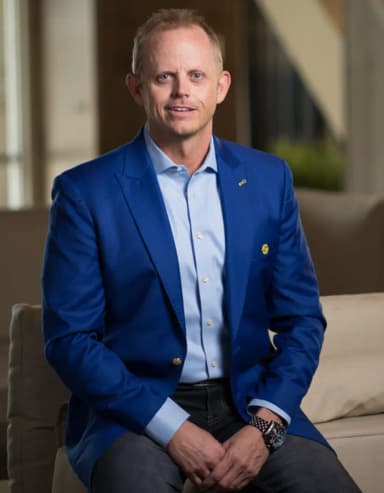
George Wright III is four days into a 14-day series on the 13 core principles from Napoleon Hill's *Think and Grow Rich*, and day four brings one of the most practically powerful ideas in the entire book: auto-suggestion. This is the principle that explains why some people seem to automatically attract success while others keep reinforcing their own limitations, and George breaks down exactly how you can use it to your advantage.
Napoleon Hill described auto-suggestion as the agency of communication between the conscious mind and the subconscious mind. In plain terms, it is the method by which you deliberately feed your subconscious with thoughts that shape your feelings, decisions, and habits. Think of your mind as a garden. Whatever seeds you plant, good or bad, will grow. If you are not actively planting, weeds from the environment around you are doing it for you.
What Is Auto-Suggestion and Why Does It Matter
Your subconscious mind does not distinguish between what is real and what is vividly imagined. It responds to what it is told repeatedly, and especially to what it is told with emotion. That is not pop psychology; it is how your brain is wired. Dr. Joe Dispenza teaches that intentional thoughts and feelings, repeated daily, rewire your brain's synapses through a process neuroscientists summarize as "neurons that fire together wire together." Tony Robbins calls these repeated emotional statements "incantations" rather than affirmations because the emotional charge is what makes them stick.
George connects this directly to the reticular activating system, the part of your brain that filters what you notice and act on. What your conscious mind focuses on repeatedly becomes what your subconscious runs on autopilot. This is the same mechanism that lets you drive a familiar route without thinking, and it is the same mechanism you can harness to build the beliefs that drive your success.
How Your Inner Voice Is Already Programming You
Most entrepreneurs spend far more time thinking about their problems than their possibilities. They worry about sales, second-guess decisions, and stress over growth, often without realizing that this pattern is programming their minds for fear, doubt, and scarcity. Auto-suggestion is not happening only when you sit down to repeat affirmations. It is happening all the time, through every scroll of social media, every conversation with a negative person, every anxious thought you replay at 2 a.m.
"If you're not intentionally programming your mind with empowering beliefs, it's being programmed for you anyway."
That is the core insight. You do not get to opt out of having your mind programmed. You only get to choose whether you are the one doing it intentionally, or whether you are leaving it to circumstance.
The Difference Between Affirmations and Declarations
George highlights a distinction that T. Harv Eker used extensively in his Millionaire Mind Intensives: affirmations become declarations when you say them with genuine emotion. A flat, rote statement read off a card has far less impact than the same words delivered with energy, conviction, and a felt sense of what it would mean if they were already true.
"Declarations are affirmations said with emotion. When you say these statements with emotion, they make a huge difference."
This is why George developed his 12 Prosperity Pillars, a set of present-tense principles he speaks aloud every day. The format matters: present tense, positive, emotionally alive, and repeated consistently. Short statements like "I am focused, I am building the business and life I was meant to live" are not wishful thinking; they are instructions delivered to a subconscious mind that will act on them.
How to Write Your Own Auto-Suggestion Statement
The process starts with what Napoleon Hill calls your definite major purpose: your chief desire, the one goal that matters most right now. Once you have it clearly in mind, the next step is to write it as a clear, present-tense, emotionally charged statement.
"Write a clear, emotional, present-tense goal. For example, I am confidently earning half a million dollars a year, leading a purpose-driven business that changes lives."
From that goal, distill a short affirmation that captures the essence: who you are becoming, what you are building, and why it matters. Keep it specific enough to feel real and short enough to say with conviction.
Why Repetition and Emotion Are the Two Keys
Frequency matters because repetition is how new neural pathways are built. Emotion matters because the subconscious mind responds most strongly to felt experience. Think of the way a movie pulls you in and you briefly lose track of the fact that it is not real. That absorption is exactly the state you want to bring to your affirmation practice.
George also offers a practical technique: record your own voice reading your affirmations and play them back during your morning routine, commute, or workout. Your own voice carries a particular authority over your subconscious that no outside speaker can fully replicate.
Action Steps
- Write your definite major purpose as a clear, present-tense, emotionally charged goal statement. If you have already written one, sharpen it.
- Create a short affirmation, two to four sentences, drawn directly from that goal. Use "I am" language and stay positive and present tense.
- Practice your affirmation daily with full emotional engagement, not as a mechanical recitation but as a felt experience.
- Record yourself reading your affirmations and play the recording back during a daily routine (workout, commute, morning prep).
- Audit your daily inputs: reduce exposure to content and conversations that plant seeds of fear, scarcity, or doubt.
Auto-suggestion is not a passive process and it is not optional. Your mind is being programmed right now. The only question is who is doing the programming. Napoleon Hill identified this principle nearly 90 years ago. The neuroscience has caught up. The tool is available to you today.
It is never too late to start living the life you were meant to live, and auto-suggestion is one of the most direct paths to getting there.