Blake Erickson: [00:00:00] The biggest thing that people get wrong when it comes to scaling is they always believe [00:00:05] it's a game of addition. And I'm telling you, in order to get exponential growth, it is never more. It is by doing [00:00:10] different. And oftentimes actually by doing less. If you already know how to get there, it's not [00:00:15] big enough.
We're all the biggest bottleneck of our company, our ego, our pride. If [00:00:20] you're willing to put some skin in the game, if you're willing to pay me a million bucks, I'll let you co-author this book with me and we can [00:00:25] go out of business together. I said, we're in, let's go. But if you have an exponential goal, it's gonna force the best [00:00:30] thinking, the best performance, and the best leverage out of you.
And that one is gonna take it from 200 stores [00:00:35] to 26,000 stores in the next year and a half. There's one or two things in your business that can create [00:00:40] 99% of the results. Been the biggest thing that's changed is my preferences don't matter[00:00:45] [00:00:50]
George Wright III: Okay, guys. Welcome back to The Daily Mastermind. George Wright III [00:00:55] with your daily dose of inspiration, motivation, and education. I'm really excited today. We're in the studio. Uh, [00:01:00] we're excited to be here with Blake Erickson. Blake, how you doing, brother?
Blake Erickson: Phenomenal. Looking
George Wright III: forward to it. This is gonna be so good, man.
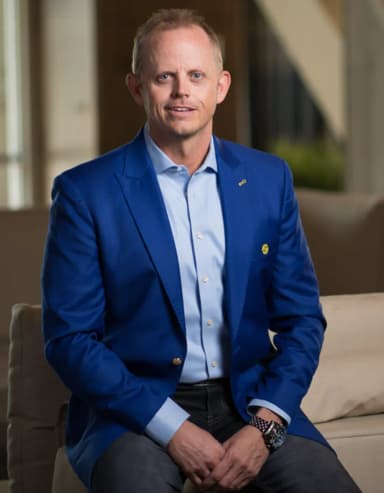
You know why [00:01:05] this is gonna be good, guys? 'Cause if you've read any of the books, and, and, um, Blake is one [00:01:10] of the co-authors of Scaling and The Science of Scaling, and I... Let me give you a little bit of [00:01:15] an intro, 'cause you've probably seen him and his partner, Dr. Benjamin Harding, out there. But at the end of the day, [00:01:20] Blake is really a, a- an entrepreneur.
I mean, you're, you're a speaker, a author, [00:01:25] co-author of The Science of Scaling. Um, you built sales organizations with, uh, up to [00:01:30] 1,200 people you've led, doing eight figures. Um, you had a TEDx Talk. Now you're [00:01:35] advising businesses, over 500 businesses, that are anywhere from [00:01:40] $500,000 to a billion, you know? And so you've really had a tremendous rise in [00:01:45] success, and I wanted to have you today, not only to pick your brain for myself personally, but, uh, but also to [00:01:50] share with our, our audience.
So guys, if you're listening, make sure that you follow and subscribe to [00:01:55] the podcast. We've got a lot of things coming up, but remember, the reason I'm doing this is to help [00:02:00] you really grow your mind, body, money business to create a lifestyle, and the only way you create a lifestyle is to [00:02:05] be able to scale.
And so we're gonna talk business today. So Blake, I- I've got so many [00:02:10] questions for you. I don't know if we have enough time. But I want you to give me a little bit of the backstory, 'cause you had a pretty [00:02:15] successful entrepreneurial career going, um, i- before [00:02:20] just this ca- you know, astronomical success that you've been having with Scaling.
So tell us what [00:02:25] your background was and why you decided to kind of push this direction with your business.
Blake Erickson: So it [00:02:30] all started when I was 18. I started a mission for the Church of Jesus Christ of Latter-day Saints, and, uh, in [00:02:35] that two-year period, I experienced Seeing and leading people and [00:02:40] seeing the impact that that would create and how, how influence could create so much fulfillment [00:02:45] within me.
And so when I was 20 years old, I'm leaving this mission, I'm leaving Peru, and I sit down with [00:02:50] my mentor. And for those that don't know about missions, you have, like, a mission leader that kind of [00:02:55] leads the mission. And I sit down with him, I say, "Okay, I'm going home. I love what I've [00:03:00] done on mission. I've loved leading, I've loved growing, I lo- I've loved scaling what we're doing.
How do I [00:03:05] go do this in the world?" And he said, "Blake, I want you to go home and I want you to [00:03:10] do one thing. I want you to go home and I want you to learn sales." And I'm like, "Okay, that's kind [00:03:15] of, that's kind of an odd, that's kind of an odd suggestion, but okay, I'll do it." And I'm like, "But I, I [00:03:20] really wanna be an entrepreneur like you," because when he was 35 years old, he sold a company, he was a serial [00:03:25] entrepreneur, and he kind of retired.
I was like, "Man, I didn't even know that was possible." And he's like, [00:03:30] "If, if you own the business, opport- opportunities, uh, become possible." [00:03:35] And I'm like, "Okay," so I wanna kind of follow that trajectory. And so when I go home [00:03:40] from, from my mission, I'm like, "Okay, I'm just gonna go start something." [00:03:45] And so I get into window washing, I start a window washing business, and then I create a Christmas light hanging business, and [00:03:50] I get all these, uh, experiences of what not to do as a business owner.
George Wright III: Yeah, right.
Blake Erickson: And [00:03:55] waking up at 4:00 a.m., working till 12, doing everything in the business and really not creating [00:04:00] good systems, good people, anything. And so I learned just by starting, [00:04:05] and I learned everything what not to do, and then I started experiencing some successes. [00:04:10] And at the time, I had a buddy that went out and did what we call summer sales out here in [00:04:15] Utah.
George Wright III: Yeah.
Blake Erickson: And, uh, summer sales is when you go out during the summertime in between [00:04:20] your college semesters and you go sell pest control, solar alarms- Yeah ... whatever it might be.
George Wright III: Yeah. [00:04:25]
Blake Erickson: And he came back and he made $80,000 at 20 years old, and I was like, "This is insane." You're like, "What in the hell?" Yeah. I'm like, "Dude, I've been working 11, $11 an, dollars an hour for[00:04:30] [00:04:35]
the last year." So I was like, "Well, this is my opportunity to go take [00:04:40] what my mentor said and go put it into practice." And so I signed up with him [00:04:45] and I said, "Man, I'm... If, if he can do 80, I'm gonna go try to do 100 in, in four months." [00:04:50] And so I w- I went out 21 years old, and I went and knocked tens of thousands of doors [00:04:55] over a four-month period, and I got this PhD in sales.
So
George Wright III: you did the reps-
Blake Erickson: Literally ... big
George Wright III: [00:05:00] time. Yeah.
Blake Erickson: And from 8:00 a.m. to, to 9:30 p.m. for [00:05:05] four months straight talking to hundreds and hundreds of people a day. And that's kind of where it all [00:05:10] began for me, where I was like, "Okay, uh, I'm not trading my time for money. I'm..." [00:05:15] There's... You get paid according to skill sets, and sales is an elevated skill [00:05:20] set where all of a sudden it's like Okay.
The value you bring is the value you get [00:05:25] paid for. And even though it was in a four-month period making six figures at 20 years old, [00:05:30] was this, was this moment of where possibility was created for me. And I think we all have moments in [00:05:35] our life where possibility gets created and you, you begin seeing what, what you can [00:05:40] make and what could, what could happen impact-wise, financially, whatever that might look like.
And so when I [00:05:45] came home that summer, I said, "Man, how do I go take this to the next level? How do I go scale this?" [00:05:50] And the way that you do it in, in door-to-door sales is you go build teams And, uh, [00:05:55] my, my whole life I just loved being a leader, and so this was right up my alleyway. And [00:06:00] so I went and recruited 40 of my friends that year, and I said, "Come out and let's go sell pest control the [00:06:05] next year."
And so went out and did so. They all had an amazing experience, blessed to just work with incredible [00:06:10] people, and then I four X'd my income at 22 years old. I was like, once again, I [00:06:15] had that- A lot is going on
George Wright III: here ...
Blake Erickson: this is crazy. Yeah. And so the same-
George Wright III: But you're pushing your own mental [00:06:20]
Blake Erickson: limit, right? I mean- Totally, totally.
I mean, if you've been in door-to-door sales, you know, but it is probably the most [00:06:25] competitive game to be in.
George Wright III: Yeah.
Blake Erickson: It's the most fierce game to be in. And usually the older the [00:06:30] world gets, the softer we get, unfortunately.
George Wright III: Yeah, yeah.
Blake Erickson: And so, uh, it-
George Wright III: And I wanna, I wanna comment on this- Please ... 'cause [00:06:35] if you're listening to this, there's a couple things, and success leaves clues.
I wanna make sure people aren't missing this. First of all, you had [00:06:40] this mindset originally before you even got into this where you were looking and you wanted to have [00:06:45] something- Yeah ... and you found it. Yeah. And then you chose skills in sales, and you, you mentioned skills. And I've [00:06:50] found a lot of really, really successful people have that little bit of foundation because it really, talking to people, [00:06:55] communicating, it's the last thing most people wanna do.
But you went out and did it, and then you elevated [00:07:00] and evolved to leadership, and you went out and, and built a team around it. So keep going, but I just [00:07:05] wanted to make sure that people realize there's some real foundational stuff happening with your success that later on will come [00:07:10] back in to really play a, play a role, right?
Blake Erickson: L- let me add to that. There was a, there was a point when I came home from my mission that I sat [00:07:15] down, I got a three by five note card out, and I said, "What do I wanna go accomplish? What are the three things I wanna go accomplish [00:07:20] in the next five years?" And one of them that I wrote down was, "I wanna be a multimillionaire by the age of [00:07:25] 26 years old."
And I was 20. I had, like, 250 bucks in my bank account at the time.
George Wright III: Wow.
Blake Erickson: And one [00:07:30] of the things we teach in The Science of Scaling is your, is your goals shape your present. Yeah. So the future shapes your [00:07:35] present.
George Wright III: Yeah.
Blake Erickson: The goals that you have for yourself dictate your actions and influence [00:07:40] everything that you do.
And so when I set that goal at 20, to your point of, like, having [00:07:45] clarity of knowing what you wanted, it changed everything for me. Because all of a sudden when I, when [00:07:50] I engaged with an individual, when I was saying yes to an opportunity, it was filtered through, could [00:07:55] this get me to the goal?
George Wright III: Mm. Yeah. Yeah.
Blake Erickson: And so everything that I did was, does [00:08:00] this, does this align with that end in mind?
George Wright III: Yeah.
Blake Erickson: And so, uh, as I got into sales, I began, I [00:08:05] began reverse engineering, how do I make that happen? What do I need to do? Who do I need to become-
George Wright III: Got it ...
Blake Erickson: for [00:08:10] that to be realized?
George Wright III: Love it.
Blake Erickson: So finished number two, I say, once again, how do I take this to another level?
[00:08:15] And then we just began just creating recruiters. And so we began building [00:08:20] teams that could build teams that could build teams. And then you built
George Wright III: leaders.
Blake Erickson: That's right. Leaders
George Wright III: who got it, yeah.
Blake Erickson: And so the game was just so fun, man. I turned from [00:08:25] salesman to recruiter to leader to leader of leaders, [00:08:30] and I'm so thankful for just having amazing people around me and, and paving that [00:08:35] path.
But, uh, for five years all I did was just work [00:08:40] with people all day long and negotiate and create trust and lead and [00:08:45] train, and it was like my dream. And so, uh, prior to the [00:08:50] scaling.com, that was, that was kinda my forte, was just being, being a leader of leaders and, [00:08:55] uh, scaling people and helping them create incredible wealth and build teams and learn [00:09:00] amazing skill sets.
Yeah,
George Wright III: I love that. I love that. And I, and we're gonna get into a little bit of the goal-setting process, 'cause I think it's [00:09:05] critical, and it's a re- major piece of Science of Scaling. But I love that you had that [00:09:10] evolution. You know, my, um, my Phoenix brand is, is all based around evolution. You know, p- I [00:09:15] think people grow and build and- Hmm
and evolve their, their person. Like, who do you w- need to become? Who's the [00:09:20] person- Correct ... you need to become? And so, and, and you don't know until you get to the [00:09:25] edges of your comfort zone what you're even capable of, right? But if you don't stretch yourself to that, like you could've [00:09:30] been like, "How many more windows could I wash to be able to do more?"
Instead, you're like, "I gotta, I gotta get something much [00:09:35] bigger." So I really love that you said that. And so you have this [00:09:40] success, because you weren't struggling at the time. Like you, you had success, you were doing more, and then you stretched, and then you were [00:09:45] doing leadership and building teams, and you learned a lot of that foundational skill of [00:09:50] sales.
And then, so you were really doing well, really well. What made [00:09:55] you decide to stretch further, and how did it come about that you reached out and [00:10:00] connected with, uh, your now partner?
Blake Erickson: So, uh, year four of doing [00:10:05] door-to-door sales, we reached that threshold of doing $10 million annual revenue. [00:10:10] And year five comes about, and we r- we repeat what we did in [00:10:15] revenue, and we, and we grew very incrementally.
And that was my wake-up call, because [00:10:20] for the first time, we were, we were like, uh, 2.5 million, 7 [00:10:25] million, 10 million, and then-
George Wright III: You're like, "We just can't lose, man. This is-" Yeah. "This is, it's gonna go to 4 [00:10:30] million."
Blake Erickson: And then we had a repeat year, and I was like, "Oh my gosh, what is going on?" And it just caused me to look [00:10:35] inwardly, and I realized I had began to coast.
And, and this happens oftentimes when you experience success. [00:10:40] You get comfortable, you get complacent, and you just start a- you just start saying the question, "Well, [00:10:45] this is good enough." And so I was making close to a million bucks a year, uh, [00:10:50] being able to invest in real estate. I, it... And that got to a point where I had such a great team where there wasn't [00:10:55] as much required of me as well.
And so I'm 25, 24 years old at the time, [00:11:00] and I'm starting to like settle into- Yeah ... kind of like this lifestyle of comfort. [00:11:05]
George Wright III: Yeah.
Blake Erickson: Gain 40, 50 pounds, and I'm just getting lazy. [00:11:10] And, and I just had this wake-up call where I'm like, "Dude, this is not me, and this is [00:11:15] not what got me here."
George Wright III: Yeah. "
Blake Erickson: And there's no way that this is gonna lead to fulfillment, [00:11:20] impact, purpose, and meaning."
And so I said, "Well, [00:11:25] something has to change." So I either gotta go back, back and say, "Okay, how do we get this to the next level again?" [00:11:30] Or I go, I go get intentionally uncomfortable and [00:11:35] go find- Mm ... something that's gonna go get me uncomfortable again. Mm. But a lot of it was derived from I'd felt so much purpose in [00:11:40] doing what I did in door-to-door, and my learning had began to get maxed out.
George Wright III: Well, plus, you know, [00:11:45] look, the whole reason we do things as business owners, entrepreneurs, is we want more lifestyle. We want it to get easier- Yeah ... and [00:11:50] get leverage, but yet when that happens, then it's not just that you got comfortable and you're successful, you [00:11:55] gain weight, you're not as fulfilled. Like, that's what happens- Totally
with success.
Blake Erickson: Totally.
George Wright III: So I don't know if you just, like, [00:12:00] by nature noticed that or if you had things that brought it out, 'cause I think there's a lot of business owners- Yeah ... that get [00:12:05] comfortable when they grow, and yet how do you keep going? So you at least [00:12:10] recognize that, right?
Blake Erickson: Well, I think, I think just us as, uh, as men, we're [00:12:15] just
We have to pursue purpose.
George Wright III: Yeah.
Blake Erickson: And the greatest fulfillment and transformation comes when we're pursuing [00:12:20] purpose, and I love developing. Like, I'm 28 years old, and so four years from now, [00:12:25] I wanna say, "Man, I can't believe that in four years we accomplished X." Right? Yes. And so I [00:12:30] want development and speed to happen so exponentially, but the moment you start coasting, [00:12:35] the moment you aren't pursuing, like, massive goals, the transformation's just not gonna occur.
Yeah. The speed's [00:12:40] not gonna occur, and so I just started slowing down. Wow. And, um, [00:12:45] so when I recognized this, I said, "You know what? I'm gonna go, I'm gonna go play a different game, and I wanna go play a [00:12:50] much bigger game, and I wanna g- do it in a way that's fully surrounded upon, [00:12:55] like, true impact, making, making an actual difference-
George Wright III: Mm
Blake Erickson: where I [00:13:00] wake up every day and I'm like, 'This is the dream.'" And so I'm, I'm [00:13:05] kind of considering what I'm gonna do, what does that look like, and I get an impression that says, "Call Dr. [00:13:10] Benjamin Hardy." Now, Dr. Benjamin Hardy for me was an individual that I'd met three and a half years previous to [00:13:15] this. We were at a conference.
We met. Uh, he wasn't this big [00:13:20] author yet at the time, but he was starting to get there, and I was like, "This man's amazing. I [00:13:25] can't ... The way this guy's mind works- Yeah ... I've never seen it before."
George Wright III: Yeah, yeah.
Blake Erickson: And we had [00:13:30] kept in touch, like, every six months. Not like we were super close friends. And I gave him a call, [00:13:35] and I said, "Hey, I just felt like I wanted [00:13:40] to call you, and I wanted to let you know that I wanna flood the world with your work."[00:13:45]
And he said, "You know what? I get a lot of these calls."
George Wright III: I was gonna say he's probably [00:13:50] like, "Thank you. That's awesome."
Blake Erickson: You and everybody else. Uh,
George Wright III: yeah. Right.
Blake Erickson: He said, "But, but you're someone I'd be open to [00:13:55] doing it with."
George Wright III: Mm.
Blake Erickson: And so I'm the salesman. He tells me that.
George Wright III: Mm.
Blake Erickson: And I'm like, all right, the [00:14:00] door is open. I gotta make sure that I can continually increase that door [00:14:05] and the likelihood of that.
George Wright III: And at the time, you weren't this icon in the industry- Mm-hmm ... that he [00:14:10] would've been like, "Wow, this guy could really help me grow my..." But you were a sales guy.
Blake Erickson: 25 years old, I, I [00:14:15] built a good business. Sure. I don't have any following. I've never written a book. I don't- I've never [00:14:20] really optimized for credibility.
George Wright III: And you didn't know how it was gonna go, right? Like, he- Totally ... probably like, "What do you mean? Like, where's that going?" Right?
Blake Erickson: [00:14:25] Totally. It was complete- Wow. Okay ... it was totally just a thin air concept. Because he, he's talked about [00:14:30] future self, he's talked about growth, he's talked about who know how, gap and again, so it could have gone anywhere.
George Wright III: Yeah. [00:14:35]
Blake Erickson: And so we just begin talking. I call him, I call him, I call him, and, [00:14:40] and I get more and more information. And at the time there... I won't [00:14:45] name the names, but there, there's big people that we all know that are saying, "Hey, come partner [00:14:50] with me," to him. And, uh, after six months o- [00:14:55] of discussing this, we finished my last summer, and I'm ready to go all in.
I [00:15:00] fly out on August 28th, 2024 to his house, and he at the time was like, "I'm open, [00:15:05] but I'm not there yet."
George Wright III: Yeah.
Blake Erickson: And so I'm getting on the plane, I'm flying there, and I'm like, "How [00:15:10] is this gonna go?" And I just said, "I'm, I'm just going to... I believe the [00:15:15] future belongs o- the, to those that ask for it, and so I'm just gonna go make a big ask."
So we get to his [00:15:20] house, he sits me down and he says, "Well, well tell me what you think we should do. [00:15:25] Like, tell me all the ideas you have." And I said, "Ben Everyone [00:15:30] right now is talking about scaling. It's like the buzzword. But in reality, no one [00:15:35] has taken a principle-based approach to it. Everybody teaches tactics.
Nobody knows the [00:15:40] exact formula on actually how to scale. And also, everybody just... When they think about [00:15:45] scale, they just think about incremental growth. What you're best in the world at is you can teach people, like, how to create [00:15:50] massive change, and so let's go dominate the space of scaling." And he [00:15:55] loved that.
George Wright III: Really?
Blake Erickson: He loved
George Wright III: that. That's amazing.
Blake Erickson: And so he's like, "Okay. Uh, my, my [00:16:00] interest is piqued. Tell me more." And I'm like, "And [00:16:05] with this book that you're writing right now..." He started writing a book called Rapid Transformation.
George Wright III: Mm-hmm.
Blake Erickson: It's about how you [00:16:10] create, like, in a short amount of time, massive change. I said, "We, we should direct this [00:16:15] book towards scaling, and it should be just for business owners that wanna scale."
He's like, [00:16:20] "Okay, I love that." I said, "I've got one last thing for you. And on that book, you should [00:16:25] let me co-author it with you so I can have the credibility needed to be able to go teach, preach, [00:16:30] and, and help build this business." And that's where he was like-
George Wright III: He's like, "Hold- "
Blake Erickson: Oh." ...
George Wright III: hold on, son." "Okay. [00:16:35]
Blake Erickson: Okay, buddy."
George Wright III: "You wanna co-author my book?" Yeah. "Way to jump to the front of the line," right?
Blake Erickson: So [00:16:40] he paused. And I'll never forget it, like 30 seconds, he just paused, and I could just see him, like, looking. [00:16:45] And he said [00:16:50] "That's actually a really smart idea, but I just can't hand you everything that I've been working for for [00:16:55] the last 12, 13 years."
I said, "I d- I did not come here expecting that. I don't [00:17:00] expect anything to be given, and, uh, I didn't-- I also didn't come here to negotiate." [00:17:05] He said, "Well If you're willing to put some skin in the game, if you're willing to pay me a [00:17:10] million bucks, I'll let you co-author this book with me or we can go in business together."
I said, "Okay. [00:17:15] Let me call my wife." Call my wife. Five to seven minutes later, I [00:17:20] text him. I left his house at that point. I text him. I said, "We're in. Let's go." So August 28th- Wow ... [00:17:25] 2024, that's when Scaling.com was born, and that's when, uh, what [00:17:30] we've, what we've now done over the last 18 months all originated.
George Wright III: Well, I love how you just automatically just kind of [00:17:35] bridge into that, but I gotta, I gotta slow you down a second 'cause th- that, not only [00:17:40] did you go in n- not with this, you know, mapped out blueprint plan [00:17:45] of how you're gonna convince him you're gonna do everything. You went in with the big idea, right? But you also [00:17:50] had to go all in.
Yeah. Like, you, you literally, um... That wasn't like, "Hey, I was..." You didn't go [00:17:55] into that thinking, "I'm gonna write a million bucks if I need to write a million." Yeah. I mean, you went into that thinking there's a big [00:18:00] idea. You'll figure it out, right? Yeah. So it's like a lot of successful people I meet. They say yes, and then they figure it out.
Carpe diem, George. [00:18:05] Um, you know, and, and in the moment is probably when that kinda came together. So what did you go [00:18:10] through? 'Cause there's a difference between shifting direction 100% and going [00:18:15] all in. Yeah. Like, that's going all in. In fact, I understand you, you kinda sold real estate and put your stuff on [00:18:20] hold and put your podcast on hold, things like that, to go all in.
Blake Erickson: Yeah.
George Wright III: So for you, that is, I [00:18:25] mean, nothing short of going all in when your pocketbook says it and everything else. So how [00:18:30] did you get yourself there, or were you already ready to go all in on something?
Blake Erickson: Such a great question. So [00:18:35] at the time, I had 15 units of real estate. I had a podcast media company. [00:18:40] I had my own podcast.
I had my door-to-door business. I had a course I was selling. I had a [00:18:45] journal I was selling.
George Wright III: And you
Blake Erickson: were gr- you were doing great. I was doing all these things. It, it was good. Yeah. It wa- they were all- Yeah ... good [00:18:50] things. But the moment I saw something that was exceptional-
George Wright III: Mm ...
Blake Erickson: all the good fell [00:18:55] below the floor.
And so when I saw the potential of the bigger game, [00:19:00] and then also, George, what I knew the bigger game would require of me, that was most [00:19:05] attractive. Oh, that's interesting. Because who I was August 28th- Yeah ... was not the person that [00:19:10] was going to be needed-
George Wright III: Mm ...
Blake Erickson: to get to where we wanted to go.
George Wright III: This is, this is huge, 'cause guys, some [00:19:15] of you are evaluating opportunities based on your current skill level.
Blake Erickson: Mm.
George Wright III: Like, "Can I [00:19:20] do this? I'll go all in." And, and what you're saying, and I think this is a key to [00:19:25] success, is, um, who do I need to become for that to work? So you see it that [00:19:30] two things, right? One is that vision was so big, it pulled you out of your comfort- Yeah ... in, in existence you had, [00:19:35] but also, you weren't concerned with whether you were ready to go there.
You were just thinking about [00:19:40] who you had to be to go there, right? Yeah. That is two really critical things, I think, for, for [00:19:45] exponential growth. Amen. Probably, it's probably a core principle of what you guys teach with Scaling, right? Amen. So you really, you [00:19:50] really went all in- On your future self.
Blake Erickson: Correct.
George Wright III: Wow, dude, that's crazy.
Blake Erickson: [00:19:55] Oh,
George Wright III: it's so fun. I love it. So now, now you're, you're, um, y- well, and, and, and, [00:20:00] and I guess that's, that's probably a pretty important thing to make sure people realize is that scaling isn't just about [00:20:05] the science, and you guys have a formula and a process and... But it, it really is going in all, all in on [00:20:10] your future version of yourself, right?
Yeah. Did you, did you, um, [00:20:15] you had a sense of confidence though because of your success, but you really... Did you at the time [00:20:20] recognize that it was gonna be needing skills and things you didn't have at the time to, to be able to run?
Blake Erickson: I definitely [00:20:25] didn't know what I didn't know. Yeah. Uh, going from door to door to what we now do as [00:20:30] kind of an advisement company, uh, consulting, completely different, right?
And so [00:20:35] different beasts. Mm-hmm. And I was naive going in, no doubt. Like, I thought a lot of it translated, and a lot of it didn't. So [00:20:40] the last year and a half has been a significant learning curve for me, and the best lessons and the best [00:20:45] growth has happened, without a doubt.
George Wright III: I think you've said a couple things I've, I've, I've heard you say [00:20:50] recently about, about scaling, so I wanna kinda shift gears- Yeah
into scaling now. What's the biggest [00:20:55] misconception people have about scaling? Because when you say scaling, it, it's thrown around a lot, like a lot of things- Yeah ... like [00:21:00] authority and whatnot. Like I, I throw around authority sometimes, and people think it's branding or PR. [00:21:05] Um, scaling is not just growing your company or growing it fast.
Like, what, what is your, [00:21:10] your view on scaling, and what are the misconceptions people have about what really scaling is?
Blake Erickson: So we believe there's a [00:21:15] distinction between growth and scale. Most people think that scaling is growth, and growth is... [00:21:20] The average company, uh, determines success. We did a national research study.
An average company [00:21:25] determines a very successful scaling company is 24% annual growth.
George Wright III: [00:21:30] Mm.
Blake Erickson: And we don't believe that's scaling at all. We believe scaling is like I'm doubling, tripling, [00:21:35] quadrupling my company year over year. We're going for 10X in three years or less. That is what scaling is. [00:21:40] 10, 15, 20% annual growth, that is growth, and what you do to grow [00:21:45] your company is not the same thing to scale your company.
It's completely different, uh, [00:21:50] psychologies, completely different strategies, completely different people, pathways, leverage, and they're, [00:21:55] they're two different games. And so that, that's the distinction, uh, from like a [00:22:00] mathematical standpoint, but the biggest, the biggest thing that people get wrong when it comes to [00:22:05] scaling is they always believe it's a game of addition, and they always believe they get there by doing [00:22:10] more.
And I'm telling you, in order to get exponential growth, it is never more. It is by doing different. [00:22:15]
George Wright III: Mm.
Blake Erickson: And oftentimes actually by doing less. And we find the best companies that go [00:22:20] scale exponentially, they do less better, and they go say, "These are the things I go be [00:22:25] world-class at. I'm s- I'm gonna stop dabbling-" And I'm gonna go hone in on the [00:22:30] things I can go be world-class at.
George Wright III: Wow. So they, so it really is a decision up front whether you wanna [00:22:35] grow or scale your business. Yeah. Once you've made that decision, the formula changes.
Blake Erickson: Completely.
George Wright III: [00:22:40] Right? And you've said, you've said you gotta build for scale, um, which I guess that's, that's kinda what you're [00:22:45] referring to, right? Because when you build to grow, you're like, "How many more people and talent and resources [00:22:50] can I put in?"
Whereas if you're gonna grow to scale, the game has to change.
Blake Erickson: Correct.
George Wright III: Right? [00:22:55] So what, when, when you talk about that, um, what do you mean when you say something has to [00:23:00] be built that's capable of scaling? What does that mean?
Blake Erickson: So let's just take hiring, for example. [00:23:05] So if you are hiring for growth, we just wanna grow 15% this year, you can bring a lot [00:23:10] of people in that have no idea what they're doing and then train them how to get there.
But when I'm going for scale, [00:23:15] I can't do that. I have to bring somebody in that brings the how. I need who's that bring the [00:23:20] how. Mm. I can't train the how.
George Wright III: Yeah.
Blake Erickson: So that's just an example from a hiring standpoint. When I think about [00:23:25] distribution, uh, if you wanna grow, just keep doing more of what you're doing.
Put a little more ad [00:23:30] spend in, hit a couple more doors, a couple more phone calls, whatever that might look like, and that's gonna go [00:23:35] get you more results. But if you wanna go get 100% more growth, [00:23:40] 200% or more growth this year, that strategy is probably not the same strategy that's gonna get you [00:23:45] there.
George Wright III: Yeah.
Blake Erickson: You have to begin thinking much more effectively, and oftentimes that means instead of going from one to [00:23:50] one- You have to go to one of many. And so you begin thinking about partnerships
George Wright III: Mm,
Blake Erickson: [00:23:55] collaborations,
George Wright III: joint ventures You begin thinking, mm. Yeah.
Blake Erickson: And you begin thinking in terms of leverage. Rather than [00:24:00] linearly, you all of a sudden begin thinking about exponential leverage.
George Wright III: You know, it's interesting [00:24:05] because, um, I do think that a lot of people, when they, when they... You know, people [00:24:10] hear about terms like the Pareto principle- Yeah ... the 80/20 rule and stuff. They're like, "I gotta do more of my [00:24:15] 20% that gets me 80%." You guys are just, like, scratching that whole thing and saying, "That's growth."
You're saying, "What [00:24:20] we want you to do is get rid of the 80%. Um, get a new 20%." Yeah. Basically, [00:24:25] right?
Blake Erickson: Yeah.
George Wright III: So, um, I guess I should back up a step because I like that you said this. I hadn't heard [00:24:30] this before, even with all... And I've consumed all you guys' books, right? So I- I've, I've heard, [00:24:35] you know, I haven't really heard choose scale over growth first.[00:24:40]
Start there. But then back to what you were saying with your sales background, how [00:24:45] important is it for these founders and business owners to really create a very significant [00:24:50] vision of where they wanna go before they start coming up with all the detail to get there, right? [00:24:55] Because isn't that really what's gonna pull them there?
Like, maybe it's the goals you set. Like, what, what... Speak to [00:25:00] that for a second.
Blake Erickson: I just fundamentally know and believe that everything we do is derived from a goal. [00:25:05] If you are listening to this podcast right now, it is derived from a goal that you want to learn, you wanna [00:25:10] develop, whatever it is. It's influencing your decision right now.
Wherever you're doing, whatever you're doing [00:25:15] after this, whatever you did before, it was derived from a goal, and so the goal you set matters. John Doerr, [00:25:20] who's a venture capitalist billionaire in Silicon Valley, he once said, "A goal properly set is [00:25:25] halfway reached." You're, you're halfway there- Mm ... if you set it correctly because what you [00:25:30] decide to optimize for determines everything that you do.
The problem that you decide to solve, [00:25:35] the puzzle that you, that you're trying to resolve, it's gonna determine [00:25:40] everything that you do.
George Wright III: Like, it filters all your decisions in the present, right?
Blake Erickson: So if you're at $10 million this year [00:25:45] and you wanna go for 11 this year
George Wright III: There's a lot of things that probably could get you there.
Blake Erickson: Correct. But the [00:25:50] moment you say, "I need to go from 10 to 50 this year," all of a sudden, the ways to get there shrink. Mm. [00:25:55] So it takes your system and actually simplifies it. It takes the possible options [00:26:00] to get there, and it turns it into one, two, or three. The people that could get you there, it, it [00:26:05] becomes a lot less than the people that get you from 10 to 11.
So, uh, when you, when [00:26:10] you scale, complexity's the way that you don't get there, and when you go for a bigger goal, it al- it just [00:26:15] actually simplifies everything- Mm ... and shows you the pathways that can get you there. And so [00:26:20] the goal you set matters. What you choose to optimize for matters because it's going [00:26:25] to influence every decision that you make.
And if you have a linear goal, you're gonna make linear decisions. [00:26:30] But if you have an exponential goal, it's gonna force the best thinking, the best performance, and the best leverage out of you.
George Wright III: [00:26:35] So with scaling do- with your company and all these companies you advise, how important is it the [00:26:40] size of the goal that people set, right?
Because if goals are gonna drive back all your filter for [00:26:45] everything- Yeah ... you're doing in the present, and you want them to exponentially grow, right, how important or [00:26:50] critical do you demand that the goal be bigger than they would normally do, right?
Blake Erickson: Yeah. [00:26:55] So our, our rule of thumb is if you already know how to get there, it's not big enough, [00:27:00] and if it also allows you to do what you're currently doing, it's not big enough.
Mm. And so it has to be extended-
George Wright III: [00:27:05] Oh, you force them outside what they're doing.
Blake Erickson: Correct. It has to be either big enough or soon enough or [00:27:10] both, where it's like, "Uh, this wouldn't work."
George Wright III: Do you have an example of that maybe from [00:27:15] somebody you're working with? I'll give you a semi-example.
Blake Erickson: So, uh, let me give you one.
Cody Derner, uh, [00:27:20] $2.2 million revenue. He comes to us. He's been growing his business for over six years at 2.2 million, [00:27:25] and he owns a popcorn company. When he comes to us, he says, "Okay, I have an impossible goal." That's what we [00:27:30] talk about. Like, what, what's the goal so big that's gonna force better thinking? And he said, "I'm gonna go for [00:27:35] $89 million
George Wright III: of re-" Two to 89.
Wow.
Blake Erickson: In three years.
George Wright III: Rock it. Oh, geez.
Blake Erickson: And the timeline's [00:27:40] important because we could say 89 million, it's like, great, you might get there in 30, 40 years, but the timeline's important because it [00:27:45] forces the, the clarity. And so we went through, "Cody, okay, Cody, [00:27:50] what are the pathways to get there?" And he's like, "Th- there, there's very few."
[00:27:55] And one of the things that Cody identified immediately when he realized, "I wanna go to 89," he realized the way he was [00:28:00] currently operating wouldn't get him there because he was in 200 different stores, but imagine this with 200 [00:28:05] different entities.
George Wright III: At two million?
Blake Erickson: Correct.
George Wright III: Oh, jeez.
Blake Erickson: And so he's like, "I'm, I'm on the phone all day [00:28:10] managing these relationships.
I can't scale that. It's too complex. And so how do I resolve [00:28:15] that? How do I resolve that from scale? How do I get to 89 million? Well, I have to get in thousands and thousands of [00:28:20] stores, one, but I can't have thousands and thousands of relationships." Yeah. "So I gotta find the c- [00:28:25] the, the one or two relationships that can get me into thousands of stores."
Mm. So there's only three companies in the United [00:28:30] States that, that are in tens of thousands of stores. Just like any good entrepreneur, he cold [00:28:35] calls them, gets in front of two of them just last month, contracts with one of [00:28:40] them, and that one is gonna take it from 200 stores to 26,000 stores [00:28:45] in the next year and a half.
George Wright III: Wow.
Blake Erickson: All one entity, a simple system, gets [00:28:50] rid of all this fragmentation, and he told me that one partnership is gonna get him [00:28:55] to $89 million in the next bout-
George Wright III: Wow ...
Blake Erickson: by his
George Wright III: timeline. Y- you know what's crazy is probably [00:29:00] with as busy as he was, even though that would've even at the time recognized [00:29:05] that that would've been a solution for him, those are the relationships and actions that you usually don't have [00:29:10] time for.
Totally. And so he would've literally had to clear his focus and his goal 'cause [00:29:15] w- there might be a lot of companies out there that are like, "I, I wanna go to 89 million." They, they do have a... I wanna make sure [00:29:20] y- you guys really hear this if you're listening. A lot of us have really, really big goals, but we don't shrink the [00:29:25] timeframe, which you said is- Correct
free 'cause that, that, that creates clarity, and then you have to put something [00:29:30] in place that allows you to go after that, not just have that there and work it [00:29:35] when you d- when you have time left over from your business you're doing. It really has to come to your focus, right?
Blake Erickson: Correct. Fo-
George Wright III: [00:29:40] Wow, that's a huge example though.
It...
Blake Erickson: The game we are playing is all about focus. If you're an entrepreneur, if you're a business [00:29:45] owner, the degree of your... To the degree you are focused is the degree that you will succeed. I [00:29:50] promise you. '
George Wright III: Cause all these founders and business owners are being pulled a million directions. I mean, that's part of the [00:29:55] game, right?
It's not like we're- you're finding people that are at a level of success that got extra time, right? They're really busy. [00:30:00] Yes. So they literally have to make decisions to create focus and clarity.
Blake Erickson: Yep.
George Wright III: Wow. And that's one [00:30:05] of the things that the podcast, we talk a lot about. Um, you know, Mondays what I try to do is talk about mindset, which is [00:30:10] all about focus, clarity, and discipline.
Mm. That will drive everything else, right? Your [00:30:15] inner game is totally gonna drive the rest. Yeah. So I really love that. So set [00:30:20] wildly high goals in a short timeframe, and then I liked you also [00:30:25] said, um, what you're doing there, it can't be the thing that's gonna get you there 'cause technically if it [00:30:30] was, you'd probably already be doing it, right?
So that's interesting. I really like that. So how [00:30:35] important is it when you're doing scaling and with these companies, 'cause you're dealing with companies [00:30:40] that are doing half million to billions of dollars, right? How important is it- For the [00:30:45] founder, for the person Mm ... like the mindset of the founder to change when really most [00:30:50] of the organization or your business, whether you have two employees or 100 employees, is driving it.
How [00:30:55] important is it the founder themselves, their mindset and their perspective and filter on things?
Blake Erickson: [00:31:00] Majority of the company's success is derived from the founder, period.
George Wright III: So your work you do with companies will be very [00:31:05] focused around that, right?
Blake Erickson: 100%.
George Wright III: So what do you do with that? How do you, how do you structure that?
Blake Erickson: Great question. [00:31:10] So, uh, The Game of Scaling, Tony Robbins, when he wrote in our forward, he said, "Scaling is [00:31:15] actually 80% psy- psychological-
George Wright III: Mm ...
Blake Erickson: and then 20% execution." I believe that. So the [00:31:20] psychology of the founder determines the results of the company. And so we only work with the [00:31:25] founder because we know that's what's gonna flood all the decision-making, the strategy, the hiring, et [00:31:30] cetera.
And so we work, we work with their strategy, and we work with [00:31:35] their psychology. And so we help them and force them to, to think from scale and to operate [00:31:40] from scale. And so they let their future dictate their present, and then we force them also... [00:31:45] When I say force, we help- Yeah ... influence it.
George Wright III: Yeah.
Blake Erickson: Um-
George Wright III: Forcefully.
Yeah, [00:31:50] I like That's what a good advisor, mentor, coach would do anyway, right?
Blake Erickson: [00:31:55] Yeah. So, again, okay We, we want results.
George Wright III: Yeah
Blake Erickson: And we help them deploy a strategy that [00:32:00] can actually get there. That's, that's focus. And so one, we set a goal. Two, then we [00:32:05] relook at the model, because oftentimes the, the model you have is not the same model that's gonna get you to [00:32:10] 10X from now.
And so we, we recreate the model. Oftentimes that means, [00:32:15] uh, going up market, having a bigger ticket, um, [00:32:20] doing, doing more for pe- doing more for less people, for example. And then from there we [00:32:25] look at your team and we, uh, oftentimes, 64% of the time, uh, the team that you [00:32:30] currently have cannot get you to-
George Wright III: Oh, interesting
Blake Erickson: 10X from now.
George Wright III: So you're optimizing what they're [00:32:35] doing, which allows them to free up some time, maybe even grow a little, but, uh, which helps, right? Um, you [00:32:40] optimize that, but then you identify the holes, which you have to have a, you have to have a [00:32:45] direction to be able to do with, right? Correct. Because then it may be that it might be operational, might be leadership, might be context, [00:32:50] collaboration, right?
Um, that's great. So as you do that, and you set [00:32:55] these, these goals and you start to optimize the system, the founder really is the person driving that. [00:33:00] That's why you spend so much time-
Blake Erickson: 100% ...
George Wright III: really on that.
Blake Erickson: 100%. Mm. And we all know this, but we're, [00:33:05] we're all the biggest bottleneck of our company.
George Wright III: For sure.
Blake Erickson: You know?
Our ego, our pride, our- How
George Wright III: much do [00:33:10] you deal with that? Um- It's like, you know, but, but most founders and entrepreneurs, business owners, they wanna grow, [00:33:15] but man, that ego sure likes to get in the way, right?
Blake Erickson: Loves getting in the way. They
George Wright III: want the attention. They want the [00:33:20] growth.
Blake Erickson: And I'll say this, the ones that are the most humble are the ones that go the fastest.
George Wright III: Mm-hmm. That's an [00:33:25] interesting characteristic because you would think, and this is a real dichotomy in success. I've found this [00:33:30] myself. What gets you a lot of times to where you are is that [00:33:35] control, uh, drive, hustle. It's hard for you to [00:33:40] say, "That's what got me here. I'm gonna set that aside and be humble, visionary."[00:33:45]
Blake Erickson: Yeah.
George Wright III: Uh, let go, right? Um, how have you [00:33:50] changed through this process? I'm saying even in the last couple years- Oh, man ... 'cause you grow, grow, grow, evolve, [00:33:55] evolve. Um, and I think it's interesting. I always talk to people. I feel like there's three phases people go through. [00:34:00] The first thing they do is they evolve their mind.
They say, "Okay, my life..." It's my favorite Jim Rohn quote, [00:34:05] "Success is not to be pursued. It's to be attracted by the person that you become," right? You get that. Then once you do that, [00:34:10] you can really go to level two, which is start to unleash your potential in business and growth. But you almost [00:34:15] always, I find, successful founders get to a point where legacy's important, [00:34:20] purpose, passion- Yeah
fulfillment, where you're still ironically unleashing and making really [00:34:25] successful things. But you personally, what do you think has changed the most for you [00:34:30] when, with the, not just the succession accomplished, but the way you're helping [00:34:35] people succeed has kind of shifted probably how you see growth. How, how have you changed the most?
[00:34:40] What's been the most eye-opening for you?
Blake Erickson: I'd say many times I've had to be [00:34:45] tested if I care more about scale than I do myself. [00:34:50] And the Bible teaches no man can serve two masters, for either he'll hate the one or, or [00:34:55] love the other. And oftentimes that happens in scale, which means, uh, [00:35:00] for example, yesterday, I have a really good friend of mine that works in our business, and he's amazing, [00:35:05] and we had to let him go because he wasn't gonna get us to our goal.
And so I could either serve [00:35:10] him and keep him on, which we oftentimes do as business owners-
George Wright III: Yeah ...
Blake Erickson: or I could say, "Am I serving him or am, [00:35:15] am I serving scale?" And so at the beginning, I had things internally, ego, pride, [00:35:20] uh, personal goals that I've had to set aside and [00:35:25] completely get all, like kill them as sacred cows in order to get to [00:35:30] scale.
And so it's just taken any, any sub goal or hidden goal or [00:35:35] lesser goal that's not scale, and it's completely eradicated them off the table. And so even [00:35:40] at the beginning, uh, before revenue, we were thinking from the goal. Our goal was to go from [00:35:45] zero to $120 million annual revenue in two and a half years And, [00:35:50] uh, my partner said we sh- we should bring a CEO in that's done that before [00:35:55] we even had revenue.
And I kinda had this idea of being the CEO.
George Wright III: Yeah, right.
Blake Erickson: [00:36:00] I was like, "Ah, you know, started the company. It feel good, it look good. I think I c- could do good at it." [00:36:05] And I remember having this moment of, of like, "Mm, I want that." I w- I was [00:36:10] wrestling with it. And after talking to him through it, it was this moment of, [00:36:15] am I serving me or am I serving the future of the company?
Am I serving me? Am I more [00:36:20] committed to me or am I more committed to scale? And ultimately we let that CEO come on. He's been [00:36:25] exceptional. And that was a big moment for me where I was like, "Okay, I need to put [00:36:30] that forward for the rest of my time that we're in this business, that scale [00:36:35] dictates all decisions, and my preferences are by the side."
And so that's the big... [00:36:40] been the biggest thing that's changed, is my preferences don't matter.
George Wright III: Yeah. It's, it's [00:36:45] interesting. I think a lot of times we set these wildly important goals, these huge goals, [00:36:50] and we think about, um, that we really want those, but we don't really take [00:36:55] one more step where we say, "Why do we want those?"
'Cause if, if you want those for lifestyle-
Blake Erickson: Yeah ...
George Wright III: spend more time with [00:37:00] family, or in your case, I mean, it's not as simple as saying we're, "Did I wanna take care of my friend or [00:37:05] the business?" It's not the business. The point is your business is responsible for 500 plus companies [00:37:10] and their goals and desires- And their families and their clients
and you are committed to it, right? So it's, it's not as [00:37:15] simple o- as that. So it, it does take some growth, I think. And I, I think we all struggle with that, [00:37:20] right? It's like our ego is one level of it, but also if we're trying to [00:37:25] clarify our vision of something big, I think it's important to realize what, what that's gonna do for us, right?
Yeah. [00:37:30] Um, emotions are really feelings of the things we're really chasing in life, right? And [00:37:35] so big goals can help us to accomplish more time with family and, and those things. So did that help you a little [00:37:40] bit as you were trying to set aside your own personal ego?
Blake Erickson: 100%.
George Wright III: Right?
Blake Erickson: Yeah. You're [00:37:45] spot on.
George Wright III: That's interesting.
Man, I love that. So you've grown quite a bit. [00:37:50] Obviously, you've had a lot of, uh, l- evolutions along the way or, or [00:37:55] levels to where you've had to stretch yourself and grow. Um, but I'm curious with, um- [00:38:00] Is there anything from the business itself, 'cause I, I, I don't want people to walk away from this [00:38:05] thinking, "Man, this company, because of all the foundation of what you set up, just grew with no problems."
Yeah. Like, [00:38:10] "This is, this thing just grew so fast." And so what internal challenges did, did [00:38:15] Scaling.com, did your company have to, to do? Besides kind of this personal one, is there... Did you have to... [00:38:20] 'Cause you didn't, I, I guess my, my way of saying it is you didn't have the plan figured out, the path figured out.
Totally. You just knew the [00:38:25] goal. So what were some of the big changes you guys had to adopt to be able to get where you're going, and maybe now, [00:38:30] you're doing now to grow even further?
Blake Erickson: Yeah, we're totally still figuring it out. Uh, every day [00:38:35] we still think about, okay, are we actually in sync with what we teach?
Are we actually, are, are we practicing what we [00:38:40] preach? And we went from zero to $12 million really quickly, and [00:38:45] once we hit this threshold of 12, uh, we experienced this plateau, [00:38:50] and we're, we're just, we're just coming out of it right now. And, uh, we're [00:38:55] still not, like, exactly sure what happened. I don't know if it was the momentum of just the company [00:39:00] starting, the book coming out, et cetera.
And we were just forced to look in the mirror and say, like, [00:39:05] "Man, what is going on? Where are we off? Where, where are we in the wrong? What have we done wrong?" [00:39:10] And, uh, a, a couple things came from that. One, I would [00:39:15] say we began to add things that weren't required.
George Wright III: Hmm.
Blake Erickson: And [00:39:20] typically, what you do when you're in a period of stagnancy is you think that you need [00:39:25] to go add a bunch of things, and we did that.
And we just recently realized that [00:39:30] we added a bunch of things that we're not committed to being world-class at, and at the end of the day, [00:39:35] isn't gonna make a massive impact. And so, uh, one of the lessons we learned is we need to [00:39:40] optimize for chunks, not slices, and any time we make a decision, we should say, "Hey, is this, is this [00:39:45] gonna make a massive difference or just, like, a really incremental difference?"
And if it's incremental, it probably [00:39:50] doesn't need to exist anyway. Secondly, we brought on, [00:39:55] uh, from a marketing standpoint, we brought on some individuals [00:40:00] that We're, we're playing a different game than we're trying to play
George Wright III: Hmm
Blake Erickson: And [00:40:05] that's been our, probably our har- hardest part because we're trying to do something in our eyes that [00:40:10] hasn't been done before, which is we're an advising and research company, and the space is [00:40:15] filled with, like, a lot of coaches.
We wanna be distinguished from that.
George Wright III: Yes.
Blake Erickson: And so [00:40:20] we've brought, uh, marketing people from that industry, from the coaching industry- Mm-hmm ... in to, [00:40:25] to market our advising and research firm, and they're not created equal. And [00:40:30] so it's a very, it's a very different game. And so we had to learn many times over [00:40:35] that a marketer over here, that game and the things that worked there are actually not [00:40:40] gonna be the same that work for us.
George Wright III: Yeah.
Blake Erickson: And so that was a repeated lesson that we'd had to learn [00:40:45] 'cause we really believe that the who can bring the how, and it took us a while to find the who that could [00:40:50] actually bring the how.
George Wright III: As you grow, you add things as much as the pruning process. [00:40:55] I think it's, it's, it's healthy to add things, and it seems like you added things, but you [00:41:00] very quickly recognized when you needed to prune.
You know, there's so many teachings and principles around- Yeah ... [00:41:05] pruning, right? Um, because you can't grow unless you let that happen, and then you prune back, and you grow even bigger, and [00:41:10] you prune back, and you grow any bigger. So I guess one of the questions I would have is how often do you guys [00:41:15] reevaluate where you're at?
Is this a quarterly, a monthly? Do you wait till you hit a [00:41:20] plateau? What do you tell businesses how often they should step back, take a [00:41:25] 30,000-foot view and say, "Okay, are we still aligned?" Or is that an [00:41:30] every-week process? How often do you guys do that?
Blake Erickson: It's so hard to see the picture when you're in the frame.
George Wright III: Yeah.
Blake Erickson: [00:41:35] And so we have a partner meeting every Thursday, and the, the design of that partner meeting is to get [00:41:40] out of the frame.
George Wright III: Mm. The intention is that. And say- Got it ...
Blake Erickson: are we operating from scale? Where are we [00:41:45] not in line with that? And where are we off track? And-
George Wright III: Just that question could be a [00:41:50] huge ongoing culture, right?
Blake Erickson: And that's what I invite everyone listening. I- [00:41:55] if you are running a business and you're in the day-to-day, you're in the weeds every single day, [00:42:00] allocate time every single week, a couple hours every single week, to just ask yourself, [00:42:05] "Am I operating from scale? Looking at the business holistically, is there anything that's off?[00:42:10]
Is there anyone that we're just keeping here because I wanna keep them here, but [00:42:15] actually isn't moving the needle? Is our culture in line with where we're going? Uh, is the right strategy in [00:42:20] place? Are we actually deploying the best leverage here? Um, are we being aggressive enough?" [00:42:25] Just doing a, like a, a self-evaluation every week as the founder, as the owner, [00:42:30] will help you course correct.
What we oftentimes don't do is we're in the thick of it, [00:42:35] we're in the weeds, and then we look up eight months later and we're like, "How did we get here?"
George Wright III: Yeah.
Blake Erickson: And it's [00:42:40] because you didn't step out of the frame.
George Wright III: You guys are literally the, the, the poster child for that, because at the [00:42:45] end of the day, people could adopt that as part of their every day.
We wanna step [00:42:50] back often. Yeah. But, but, but there's a key probably to intentionally not [00:42:55] trying to build that into your meeting agenda. Yeah. "Hey, are we at scale?" It's intentionally looking and [00:43:00] evaluating from a fresh perspective, are we there, are we not? Um, that's a great, that's a great suggestion for [00:43:05] businesses, especially if they want to scale.
A- or anything else, right? Are we aligned with our goals still? Are we [00:43:10] trying to do that? Um, I'm curious, 'cause now you have something that I, I [00:43:15] love, and that is that you have insights with hundreds- Yeah ... and hundreds, [00:43:20] not just of businesses. There's a lot of companies working with hundreds of businesses.
You're working with businesses [00:43:25] that are intentionally scaling. Are there some... Do you guys pick up lessons and [00:43:30] ideas and, and, and stuff through that?
Blake Erickson: It's so much fun. Any come to
George Wright III: mind? I mean,
Blake Erickson: that's- We, we get [00:43:35] 550 reps every single week, every single month, every single day of [00:43:40] people succeeding, people failing.
And so what we are very intentional about is we dissect [00:43:45] every single case study. So this person 10x, 10x'd. What happened? What [00:43:50] about the founder? What about their business? What did they do? What did they change? What did they not do? What did they [00:43:55] delete? Let's understand all of it. And so anytime we see success, that is, we're [00:44:00] very intentional about that.
And then same with the failures. Okay, why are they stagnant? [00:44:05] Like, what, what has led them to get here? And what's fun about it, George, is [00:44:10] we are trying to do the same thing that our comp- that our clients are trying to do. I love
George Wright III: it.
Blake Erickson: And so what we learn [00:44:15] today, we teach tomorrow. And so not only do we learn a ton from them, but [00:44:20] we're also learning a ton from, uh, our own journey of doing it.
And then on top of that, with [00:44:25] AI and how much data we can get, and we have all these calls. We've done over 7,000 [00:44:30] advisement calls at this point, and we have so much data, and we have national research studies going [00:44:35] on, and we are just taking in all this information to truly understand and bring to the world, [00:44:40] "Hey, this is the, these are the true principles that create scale.
These aren't tactics. They [00:44:45] don't have an expiration date. These are the universal principles. This is the formula." Mm. "This is the [00:44:50] science." And six months from now, a year from now, it's only going to [00:44:55] be more exponential from here on out. And so
George Wright III: it, it- It's interesting 'cause as [00:45:00] a, as a owner of a company that does authority for businesses, one of the best things you can do is actually [00:45:05] practice what you preach.
Yeah. And that's what separates you from coaches and advisors and things because, not that there [00:45:10] aren't value there, but if you truly wanna grow, you want a company that's truly growing- Yeah ... to teach [00:45:15] you, right? Um, and you said something. I couldn't remember what you said, but you wanted to separate yourself because [00:45:20] you guys, uh, you give me this feeling that you're, you're, you're an analytical, science-based, like, [00:45:25] research company as much as you are as an advisory.
Is that, is that the way you guys view it?
Blake Erickson: Exactly.
George Wright III: So you're, [00:45:30] you are literally studying, as well as practicing, the science of [00:45:35] scaling through your own stuff as well as your businesses so that you can then turn around and apply that in [00:45:40] practice with- Correct ... yourself and the businesses. Correct. Wow, that's powerful.
And y- there's no [00:45:45] better way to grow and learn that than to have hundreds or thousands of businesses to learn it with, right? Yeah. 'Cause then [00:45:50] it's not just your experience. That's, that's amazing. Holy cow. Um, wow, [00:45:55] that's great. Well, I, I have a- about 100 more questions, but we're gonna, we're gonna keep it tight.
So I... Couple last [00:46:00] things I wanted to ask you. Let's say a business owner's listening to this, an entrepreneur, and they say, "Man, I, I get it. [00:46:05] Like, I like that. I love the idea. Um, where do I start? Like, do... Is it a [00:46:10] self-evaluation?" Um, you know, and, and we're gonna give them some resources to kinda connect with you.
But what do you [00:46:15] adv- what, what would your advice be to an entrepreneur who's like, "Yeah, man, I've been playing it small. I need [00:46:20] to, I, I need to move to the next level. Where do I start? Is it with me personally? Is it evaluating my [00:46:25] business?" What do you, what do you advise them?
Blake Erickson: I would use myself as an example.
So if you remember, [00:46:30] fat Blake, Blake coasting, comfortable, maybe just been playing s- got, [00:46:35] got to the point where he was playing small. The thing that got me out of it was a goal and a [00:46:40] purpose so big, and I'm telling you, there's nothing more powerful- Wow ... than a mission that has significant [00:46:45] meaning to you.
And so start there. Let that drive you. Do... And, and let it be something [00:46:50] so big that it forces you to change and force you to think differently. So start at the [00:46:55] goal, and then from there, begin to ask yourself the following questions: Where am I out of alignment with that [00:47:00] goal? I use an example. Nick Saban, one of the best college football [00:47:05] coaches of all time, if not the best, his goal was always to win a national championship.
If you [00:47:10] went to Nick Saban's practices or film studies, or you looked at the people he [00:47:15] recruited, uh, to coach or to come play, would you say they're a national championship team? [00:47:20] Is that a national championship practice? Is that a national championship recruit? Mm. The answer is [00:47:25] yes, and so his actions were in line with his goal.
And why [00:47:30] people don't scale is because they have this goal But the rubber doesn't meet the [00:47:35] road. The floor doesn't match the goal. The standards don't match the goal. And so the, quite, [00:47:40] the, the, the second thing that must occur is were you not in alignment with the goal?
George Wright III: [00:47:45] Yeah.
Blake Erickson: What actions need to be come in alignment?
And oftentimes that, that's a game of [00:47:50] subtraction first. Here's all the things I need to get rid of in order to get aligned, [00:47:55] and then it's then adding back in, making the right hires, deploying the right strategy, et cetera, [00:48:00] that then get you aligned with the goal.
George Wright III: Wow, that's powerful. That's powerful. I'll tell you from my own experience, and [00:48:05] I'd love your feedback, I think a lot of times I've set huge goals, and I think people do this, [00:48:10] and they somehow, their internal belief or subconscious maybe doesn't believe yet [00:48:15] they can get there, so their actions don't reflect it.
And I always say to people I w- I work with is, like, if [00:48:20] your actions don't reflect what you believe you want, then it's doubtful you really believe you want it. But I've started to learn over time, it's [00:48:25] just you don't have to necessarily believe or have confidence or know the path as much as be committed to it.
Blake Erickson: [00:48:30] Mm.
George Wright III: If you're committed to it, then you'll, you'll do the actions, even if you don't know. You know? A [00:48:35] lot of, a lot of people that rock climb and mountain climb, they don't know where that next ledge is they're putting their foot on, but, you know, [00:48:40] somebody's telling them it's- Yeah ... it's there. Do it, right? So I guess as long as you're committed to that goal, [00:48:45] what you're saying is then you've got to align your actions with it and clear the deck, right?
Blake Erickson: No doubt.
George Wright III: [00:48:50] Wow.
Blake Erickson: Spot on.
George Wright III: Wow. What's n- what's next on the horizon for Scaling.com? Like, where are you guys headed? [00:48:55] Where, where do you see you guys going in the next little while, and is there anything exciting coming up in the next little bit? [00:49:00]
Blake Erickson: So we believe we're, uh, we're the world's authority on business scaling, and so we want to provide...
There's [00:49:05] 34 million businesses in the United States, and we wanna give all of them the formula to scale. We [00:49:10] wanna give them, "Here's the recipe. I promise if you apply these principles, you can scale." So that is, [00:49:15] that's the goal, that's the vision, that's what we wanna accomplish. Uh, coming out in January [00:49:20] 26, so like you said, we're continually getting new and new [00:49:25] findings.
We're learning new and new- science, [00:49:30] research, data, statistics, experiences, case studies, and we're gonna [00:49:35] continue to publish and produce books. And so our next big thing is we have a book called Power Law [00:49:40] Strategy coming out January 26th, and it is all about how, uh, [00:49:45] there's one or two things in your business that can create 99% of the results.
For example, if you think [00:49:50] about Coty, it was that one partnership. And so how can you apply the power law to [00:49:55] your business- Yeah ... to yourself? If you think about Warren Buffett, there's like one thing [00:50:00] Warren Buffett would do that would create 99% of the results for Berkshire [00:50:05] Hathaway. And so that is what the book is about.
We're incredibly excited. We believe that [00:50:10] paired with The Science of Scaling, it gives you, it gives you the formula and the recipe to grow [00:50:15] a 10X business. I love
George Wright III: it. I love it. Where's the best place for people to go to connect with you and to learn [00:50:20] more, get resources, and take some action?
Blake Erickson: Uh, follow me on Instagram.
I'm most active on Instagram, [00:50:25] theblakeerickson. Would love to connect. I, I love getting to know anybody. [00:50:30] If there's any way that I could help, would love to be of service. And, uh, we do, we [00:50:35] do have a gift for, for you listening.
George Wright III: Awesome.
Blake Erickson: Um, if you go to [00:50:40] scaling.com/freeaudiobook, we have The Science of Scaling free.
You can get the audiobook. [00:50:45] Please listen, and, uh, I, I hope it makes a massive contribution to your business. [00:50:50]
George Wright III: Yeah. Well, I've listened to the audiobook. I've got the book as well, and so I, I definitely highly recommend [00:50:55] it. Of course, I practice a lot of those principles, so thank you, man. I appreciate you being here.
Blake Erickson: Thank [00:51:00] you
George Wright III: so much for having me. This is gonna help a lot of people, I think, uh, in a lot of ways, both from your story, the mindset, [00:51:05] the formula as well. Um, so guys, listen, if you're listening to this episode, do me a favor, [00:51:10] share the episode. Um, I know it'll mean the world to a lot of people, uh, mean the world to me.
[00:51:15] And at the same token, I wanna remind you, and we, we always... You hear me say it all the time, I'm gonna keep saying it. You [00:51:20] know, it's never too late to start creating the life that you were meant to live, but you've gotta take [00:51:25] some action. You gotta self-evaluate. You gotta make the next move. So thanks for being with us.
I look forward to talking with you [00:51:30] again. It's George Wright III with the Blake Erickson on the Dealer Mastermind. Talk [00:51:35] [00:51:40] soon.