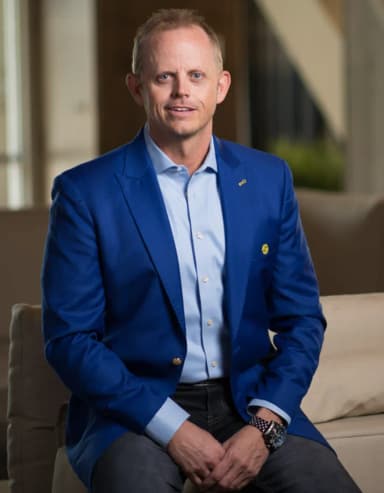
George Wright III opens this episode of The Daily Mastermind with a straightforward challenge: most people think lifelong learning means reading more books or watching more videos. But the real power of learning has nothing to do with how much information you consume. It has everything to do with what you do with that information once you have it.
If you are ready to stop collecting knowledge and start creating new beliefs, this episode delivers a clear framework for how to make that shift.
Why Application Matters More Than Information
George draws a sharp distinction between passive learning and active learning. Attending events, listening to podcasts, and reading books all have value, but none of them will change your life on their own. The transformation happens when you take what you have learned and put it to work in your actual relationships, business, and daily decisions.
He frames this through a belief equation that one of his mentors shared with him:
Learning plus the application of knowledge equals experience. And those experiences create beliefs.
This sequence matters. You do not get new beliefs from information alone. You get them from experience, and experience only comes from applying what you know. If your current beliefs are keeping you stuck, the only way forward is to generate new experiences by acting on new knowledge.
How Your Beliefs Shape Your Results
Your beliefs are not just background noise. They are the engine driving every action you take. If you are not living the life you want, George argues that the gap is almost always a belief gap, not a skill gap or knowledge gap. You already have access to enough information. What you need is to create experiences that expand what you believe is possible.
Pearl Buck captured a piece of this when she said:
If you want to understand today, you have to search yesterday.
George takes this a step further. The past is a useful teacher, but it is not where you live. The goal is to use what you have learned from your history to build toward something bigger. As Napoleon Hill wrote, and George quotes directly:
What the mind of man can conceive and believe it can achieve.
That vision of the future is what lifelong learning is ultimately in service of.
How to Make Your Learning Intentional
Random consumption does not produce reliable results. George recommends being deliberate about what you study and why. Ask yourself what skills or talents you want to master, then seek out resources specifically aimed at those targets. Do not read just to check a box. When you sit down to learn something, be present and focused on how you will apply it.
Repetition is a key part of this process. George points to Think and Grow Rich as an example of a book worth returning to repeatedly throughout your life. Because your experiences and circumstances change over time, the same material will hit differently at different stages, and you will extract new meaning each time.
Why You Need to Stay Open and Teachable
One of the most common traps George identifies is the closed-minded version of experience. People say they have already tried something, or they already know how something works, and so they stop being open to trying it again. But the situation is rarely identical to what it was before. Your beliefs are different, your skills are different, and your context is different.
Success and failure are both learning experiences. The moment you decide you have nothing left to learn from a particular approach, you cut yourself off from a potential breakthrough. Stay open, stay curious, and resist the urge to assume that past results predict future outcomes in a new context.
The Role of Mentors and Your Circle
George is direct about the value of learning from someone who has already done what you want to do. A mentor does not just transfer information; they transfer belief. When you are around people who have applied what you are trying to apply, their confidence becomes contagious. It raises your own belief, which drives action, which generates experience, which builds new beliefs.
Look at the people around you. If you are consistently the highest performer in your group, you are in the wrong group. Surround yourself with people who have leveled up further than you have, people who pull you toward a stronger version of yourself rather than keeping you comfortable where you are.
How Daily Rituals Lock In Growth
Learning without structure tends to fade. George recommends building daily rituals that anchor your growth habits, whether that is reading, working out, meditation, or another consistent practice. These rituals create the discipline and repetition that allow new knowledge to become embedded behavior over time.
The specifics matter less than the consistency. What daily practice can you commit to that keeps you learning and applying at a regular cadence?
Action Steps
- Identify one area where you are consuming information but not applying it, and take one concrete action this week to put that knowledge to work.
- Revisit a book or resource you have already studied, with fresh eyes and your current circumstances in mind, and look for new ways to apply it.
- Audit your inner circle: are the people around you pulling you toward growth or keeping you comfortable? Seek out at least one mentor or peer who has achieved what you are working toward.
- Build or refine a daily learning ritual, even fifteen minutes of focused reading or reflection, and commit to it for the next thirty days.
- When you encounter an idea you have heard before, resist dismissing it. Ask instead: how does this apply to where I am right now?
Lifelong learning is not a passive habit you check off a list. It is an active, intentional cycle of study, application, experience, and belief. Start that cycle today. It is never too late to start living the life you were meant to live.