Spencer Carpenter: [00:00:00] I care way more about being in front of 50 of the right people than 100,000 of the wrong people. And so when you can, when you can tie all this together that, like, an interview is worth your time even if you don't get a call booked out because of all these other things, and it doesn't need to be the most people, it just needs to be the right people, then any interview that's 20 to 45 minutes is probably well worth your time
George Wright III: Okay, guys. Welcome back to the Daily Mastermind. George Wright III with your daily dose of inspiration, motivation, and education. Listen, guys, I'm excited about today because I've done a lot of extra work on this episode and, um, you know, we talk about mind, body, money, business, lifestyle, and we talk about clarity focus for your business so you can grow it, and today we're gonna talk growth, and I've got Spencer Carpenter here on the podcast.
Spencer, it's good to have you, brother
Spencer Carpenter: Hey, George, I really appreciate you having me. Um, I'm really excited for this. We, we just [00:01:00] spent a good t- amount of time prepping, you know, probably more time- Yeah ... than the episode's gonna be, so that means it's gonna be good.
George Wright III: Yeah. No, it really is, and, and guys, just to give you a little framework here.
First of all, let me tell you who Spencer is, and I'll tell you why this show's so important. And, and if you are looking to grow your business, you wanna create authority, you wanna find a way to get your message out and cut through the noise, today is the day. Um, Spencer's the founder of Outlier Audio.
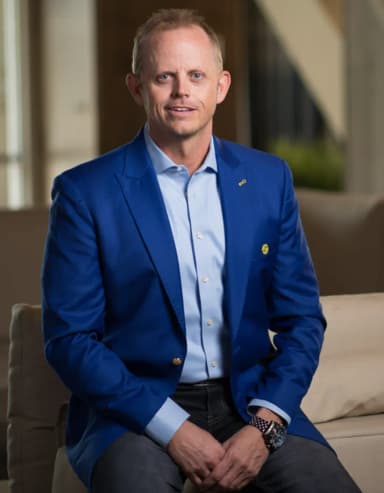
It's a full service podcast booking agency for, like, entrepreneurs and authors, investors, business professionals. But he's booked 3,500-plus podcast interviews since 2020. More than 250 clients. His clients include, like, billion-dollar investment funds and Inc. 500 companies and authors. But he's got over 10 years experience in, like, the music industry and talent management.
He's now brought into podcasting, which you guys know I'm a big fan of. And so today we're gonna talk about how you can use, and the power of really getting some PR, media, and exposure in the marketplace, and I, I reached, I reached out to him. And you guys know I get hundreds of requests to be on the podcast, but I did this because [00:02:00] cutting through the noise, I could tell he was an authority.
So Spencer, we don't have to spend a ton of time on this, but can you explain to everyone what you did to me, the connection of why you went from music and the music talent industry into podcasting, so they know a framework of why you are good at what you do?
Spencer Carpenter: Yeah. So, uh, yeah, I spent 15 years in the music industry, and I, I started off just booking concerts in my little farm town because I wasn't good enough to be in my cousin's band, but I wanted to be involved, and I wanted to help.
And, uh, you could say at the foundation of everything I've ever done, I'm, I'm a supporter. You know, I'm, I don't consider myself talented, but I like to help people that are talented, and that's how I can make, uh, my impression on the world is helping the people that are actually going to change the world.
Um, and, uh, you know, in the music industry, I, I still had a bunch of friends in the entrepreneurship space, and it just dawned on me that we've looked at musicians and actors and actresses and, [00:03:00] um, and athletes. Th- they are all talented at what they do, but we never had the same kind of framing around entrepreneurship.
And it was when I read some- uh, someone said, "We are the, um, the number one barcode producer on the East Coast." So it was, like, for an album. You know, you scan a UPC. Yeah. And I was like, "What a lame thing to say." Right. But, like, that guy's probably a millionaire and talented at what they do. And, and so, um, when COVID came and shut down the music industry, I was like, okay, this isn't just affecting live music.
This is affecting anybody that goes to conferences, expos- Mm ... workshops, meetups, and in-person meetings. And what they can do right now, though, is virtual, and that's podcast. And, um- I, I just kind of saw this as like the platform where you did not have to be the size of an, of an Oprah g- guest to get out there.
And so I really- Yeah ... dug into this and, and [00:04:00] I found podcasts through listening to like BiggerPockets and Real Estate Education, where I thought these people were Grant Cardone level entrepreneurs, and it turns out it was really Joe Schmo investor that was really good at what they did and built a $10 million portfolio.
So I was just like, "Let me go support these people, and just, their time is not best spent doing podcast outreach. But I've got all the time in the world right now." Yeah. "I'm on furl- you know, I'm furloughed, so let me go do that." And, um, yeah, so since that time, as you mentioned, I've booked over 3,500 interviews, um, for over 250 clients and, and that spans from real estate to people in the addiction space to health products and everything in between.
George Wright III: Yeah, it's interesting, uh, the, the ... By the way, thanks for sharing that. Um, I wanna kind of point out to our listeners that, you know, you said you don't consider yourself a talent, but that's what most really talented people say, so, uh, that's, uh, that's good and humble of you to say, but I do know the, the, the background here.
I wanna point out a couple things. Number one, you said talent. I really think that individual [00:05:00] business owners, founders, entrepreneurs, if you're listening to this, you gotta start to see yourself as a talent, not just what you do, but how you do it, your identity, and I ... Uh, that does make a huge, huge difference.
But you also said you want them to be able to focus on what they're doing, and this is a key. Guys, if you wanna scale, you wanna build, you wanna grow, more importantly, you wanna just be happy, and, and you gotta focus on your unique talent and let people do things to support that. So scaling a business and a podcast is a really important way to do it.
So do you think, 'cause look, Spencer, you've worked with a lot of people If someone's looking at, like, whether they have a podcast, they don't, they've thought about it, do you think a lot of people worry about starting one 'cause they don't feel like they're good at talking and, uh, you know, or, or, or ones that are doing guests, maybe some are better than others?
So what advice do you give or what do you, what do you say to people when it comes to podcasting? 'Cause you've just made the point it's a great way for you to cut through the noise, so why are you a big proponent of someone doing [00:06:00] podcasting?
Spencer Carpenter: Yeah. I, I-- What I like is that it's malleable and you can make it whatever you want.
And I've always, I, y- you know, the m- simplest way I've thought about this is like, uh, you remember Larry the Cable Guy?
George Wright III: Yeah. Oh, yeah.
Spencer Carpenter: Larry the Cable Guy could have a podcast called The Fart of the Day, and he farts into his iPhone microphone, and it's three seconds long, and he puts it out at every day, and his, his audience would love it.
Not everybody could do that, but his audience could. Yeah. And so for some people, it's something like that. Other people, it's solo content, uh, about marketing. Uh, others, it's interviews with successful salespeople. And then, you know, we, we were talking about this, that some people use as their own internal, um, validation.
You know- Mm ... if you've got, if you've got a company that has, let's say, 500 employees and you're on a hiring spree, and you need the rest of the people in the company to know who it is you're bringing in You should be interviewing them intern- like in, and have this internal [00:07:00] podcast. Yeah. Um, I know a guy that was a f- he was franchising his business, and he's like, "I need a podcast for my franchisees to come learn about the business as, like, continued education."
So I, w- what I, the reason I like it is that it's very malleable, and you can make it whatever it is you want it to be to serve whatever purpose. And unlike what I did in the pod- you know, in the music industry, I also ran a record label. You, when... That, putting out an album was a nine-month endeavor, and once it's out, it's out.
George Wright III: Yeah.
Spencer Carpenter: But with a podcast, you can change the name, the branding, the direction on a given Tuesday to fit what it is you want. Right on. And then, that, that's from having your own podcast. But then, um, you know, as a guest, it's great because I get to come here and talk to your audience. Yeah. I didn't have to build it.
I get to mone- I, in theory, get to monetize what you've spent your resources on. But I also don't have control over who [00:08:00] it is that's listening. Whereas if I go and start my own podcast, I might not have any listenership, but if I make sure my guest is someone that could be a potential customer, referral source, or expert in the industry to bounce ideas off of, I, there's more control there.
So it, it's, it's, it's funny. Most people don't like to do both. Yes. They are time-consuming. Yeah. But they, there are trade-offs, and sometimes you go through different seasons, and maybe you start as a guest. You eventually start, you know, your own podcast, and you kinda get to build both. Um, and maybe then you're just guesting every now and again, but you're running your own podcast, and I just like that it's malleable, you know?
Yeah, I love that. That, that you can make it whatever you want.
George Wright III: Yeah. I, I, I agree with you 100%. In fact, I still to this day, and there's a lot of strategies we do, direct mail, im- you know, uh, you know, social media, magazines, and we got, we own a, to, a dozen magazines, right? But I, I believe that podcasting is that one thing you can do that, like, kills 10 birds with one stone, right?
You build your authority. Mm-hmm. You got free [00:09:00] content. You got interviews and prospecting. You can end up with visibility of other audiences. You end up with content you can use for a book. So it's huge that way. But the question I guess I have for you is whether you are guesting or have guests on a show, how important is it for them to actually have their strategy or direction identified?
'Cause I see so many people jump into guesting or having guests on a podcast, and they just do it, and they're like, "Man, this is a lot of work. I'm not getting anything out of it." How important for your clients do you emphasize the strategy part?
Spencer Carpenter: I think if you're gonna launch a podcast, you definitely need some strategy there, and that doesn't mean your first 10 episodes have to be perfect.
Those can be done with friends. You gotta get your reps in. Yeah. I think if you're gonna be a guest, yes, you should have strategy, but there's far more opportunities out there where if you- You don't need to be perfect. And like you could go find a new podcast that's low-hanging fruit to, to break the ice as a guest.
Yeah. And from there you can kind of figure [00:10:00] it out a little bit more. But with all that said, it's not difficult to get your strategy in place. I'm just-- I like to speak to people on all levels of the spectrum of comfortability. I know some people that could go in with no strategy and no thought-
George Wright III: Yes ...
Spencer Carpenter: but their energy is gonna deliver.
They know what it is they need to do, and that's one of the most important things I like to remind people, whether it's about the topics or their lack of media training or the fact that they're an introvert. Matt, this is just you and me talking.
George Wright III: Yes.
Spencer Carpenter: Everyone will hear it later, but there's no audience.
And so any introvert can do it. And also, you invited me on to be me, and nobody can be me better than I can, and nobody has my expertise or my m- the way I think about things except for me. And so if you get paid- Love it ... to do anything in this world You have some skill set that is more than the average person, maybe not the average person in your industry, but at least the average person.
Yeah. [00:11:00] And you have some insights and some experiences that you can share. And I, I mean, when it comes to topics, sometimes I say to people, like financial planners legally all do the same thing. Yeah. Many of them actually don't know anything about investing, and if you're a financial planner, please don't take that personally.
I'm just saying you've been taught, like these are the index funds that we allow you to invest in. Some have more skill sets than that, but like legally, they all do similar things. However, if you can provide your expertise, like your, your perspective. Like I work with small business owners because I know that many of them think they can just sell their business one day, and it's...
and they're retired, and that's not true. They need to set that up for four years before they can sell it. That's a perspective that not all financial planners can provide, and that can make you stand out amongst small business owners.
George Wright III: Yeah. No, that's, that's big. I, I actually, I, I agree with you on all those fronts, and I think a lot of people just don't put enough [00:12:00] intention into what they're doing, and it's such a powerful tool.
Let's shift gears for a minute and get really to why I wanted to bring you on the podcast. Let's talk about the power of being a guest, number one. Mm-hmm. And, and maybe you wanna speak to that first, but then I want that to lead us into, you've got a pretty cool framework that you've developed over thousands of interviews and, and lots of clients.
I would like you to share that framework with our listeners that are considering getting on shows or being guests. So if you wanna speak first to ki- what, what is the, what is the real benefit or power of being a guest on a show, and then what's the framework you've developed that really will help them to be a great guest and get stuff out of it?
Spencer Carpenter: Yeah, I mean, the power really is the long form, uh, opportunity. You know, it... Podcasting takes the, um, the education... I mean, at least in this, you know, category of podcasting, it takes the education that comes from audiobooks, which I found to be kind of boring, with the entertainment value of Howard Stern and the on-demand, uh, [00:13:00] capabilities of like Spotify.
You know, before there was a radio, you couldn't decide what you were listening to. Audiobooks were boring, and, you know, the Howard Stern stuff was great, but it was mostly kind of comedy. It wasn't also going into personal development and business. Yeah. Yeah. So the power here is really that, again, going back to the most basic, let's just say you think that your job is boring.
You know your job is boring, but it's your job. You sell insurance or something. Um- The way you can stand out is by being able to show your personality- Yeah,
George Wright III: be
Spencer Carpenter: you ... and your ba- Yeah, how did you get into it? Um, why... You know, was there some real motivation, um, beyond just, like, this is a job I applied for? Um, but being able to show your personality, that you, you're likable.
People can hear a smile even in, like, an audio-only format. They can hear the la- you know, the laughter and things like that, and so that's really helpful. Um, and, and let's just say this is a, you know, podcast can range [00:14:00] from 20 minutes to 60, sometimes more, but that's all time you're building rapport with the listener- Yes
who you haven't met yet. So if they eventually reach out, it might be cold to you, but it's actually pretty warm to them. Yeah. And that was like I, I listened to a daily podcast for several years, and then the host tweeted out, "Hey, I'm in Philadelphia. Does anybody wanna grab a beer?" And I was like, "Yo, I'll, I'll go.
I'll meet up with you." And I started talking to him about, like, this new job I had and giving him some background, and I said, "Yeah, as you know, I was in the music industry for 10 years leading up..." And he was-- And I was like, oh, wait, no, he doesn't know me. I know him. And that was, like, really powerful. Like, I knew his investments.
I knew that he had a sister that had passed away. I knew that he had a, a newborn that he had to take off life support after 10 days. He knew nothing about me, but I knew all of this about him because I'd spent so much time listening to him day after day. And so that's like- Spencer,
George Wright III: how-- I wanna ask you something.
How [00:15:00] important is that? Because I think a lot of people think of a podcast as like, "I'm on a stage. I'm gonna put this perfect script together and go." And, and reality TV's a big thing, so, like, how important is it for you to embed you into your stuff, whether you're as a guest or a host, versus, like, I have this perfect script that I gotta get out every time?
Spencer Carpenter: It's, it's really important. And, and, uh, in an age of social media, it's really easy to put your phone up in front of your face and put on your radio DJ voice- Yeah ... and then put out that 30-second clip. It's r- it's much harder to, like, not be authentic after talking for 45 minutes.
George Wright III: Mm.
Spencer Carpenter: You know? Yeah.
George Wright III: Got it.
Yeah.
Spencer Carpenter: Um, th- so I think that that's like, that is one of the things I really like about this is, like, you, you can't fake it all the time even if you want to.
George Wright III: Right.
Spencer Carpenter: Um, you know, there's- You
George Wright III: can try, but it eventually comes through, yeah.
Spencer Carpenter: Yeah, and, and, and, like, this isn't the same interview I've had with 10 other people because this isn't...
I didn't send you... Like, I sent you ideas of [00:16:00] topics, but you kinda came up with what you wanted to speak about on your own without it being l- this also isn't gotcha journalism. Right. You're not trying to stump me. We're trying to have a conversation that will benefit the listeners. Yeah. And so- I love it
it's really easy just, to just be yourself and let that shine through, and let people decide whether or not they resonate with that or not.
George Wright III: Yeah, and if you're authentic and you've got the, the right purpose and direction and clarity around what you do, then it will, it will work out. Okay, so talk to me about li- and listen, if you're listening to this now, now I want you to take some notes because success leaves clues, and th- and, and Spencer's booked thousands of interviews.
He's worked with... And this is, like, there's a lot of VAs and people out there that do stuff, but he's worked with some really top-tier clients, and so you've built this framework that I know comes from experience, not just a cool, novel idea. So explain this KAOR framework that you have, and what
Spencer Carpenter: is it? Yeah, so yeah.
Uh, uh, KAOR stands for keywords, audience, [00:17:00] outcomes, and reputable figures. And this can be used for not just developing topics, but researching shows. So I work with a lot of people in real estate, um, and so the keywords that a lot of those people are looking for are, like, accredited investor. They want to be in front of accredited investor, but they are real estate investors.
So, like, the, the, the key word is real estate investing. The audience is accredited investors. The outcome is usually, you know, they want to be financially independent or something like that. And so the KAO, uh, I'm sorry, the KAO is a really important part in terms of being able to identify keywords that you should be using in your pitch and in your topics and in your research to find shows that make sense for you to go on.
George Wright III: Mm.
Spencer Carpenter: Got it. The audience is then, you know, who, who are you trying to be in front of? Because there are shows such as real estate investing for engineers. That, that's an, uh, if you're trying to work with engineers or get them as [00:18:00] your accredited investors and raise money from them, that's a show you wanna, you wanna be on.
But also, y- you need to then be able to develop topics that are relevant to engineers. Lots of engineers have golden handcuffs. They get-- They went to school, they got a great job, they don't wanna leave it because they make a lot of money, but they don't actually love it anymore. Mm-hmm. And so being able to identify topics that are specific to engineers is how you can stand out.
And so that is kind of-- That also kind of ties into the outcome there. Um, and the reputable figures part is really, you know, that's not really what you put into your audience or your to- uh, I'm sorry, your research or your topics. The reputable figures is like Go do-- go look up people that are doing what you're doing.
You said success leaves clues. So-
George Wright III: Yeah ...
Spencer Carpenter: who is someone else in your industry that's maybe a couple steps ahead of you? You can Google them, see what podcasts they have been on, what they have talked about- Hmm ... and then kind of iterate from there. Um, [00:19:00] I don't recommend using Cody Sanchez as a reputable-- 'cause she's been on so many pod- she's got a huge brand.
Yeah, right, true. Yeah, yeah. But, like, look for the person that is, you know, a few steps ahead of you, that maybe you've got 5,000 LinkedIn followers, they've got 20,000, but they're not the biggest name in the indus- Go see what podcasts are inviting them on, because they might not be going on just the top.
Got it. They're gonna be going on mid-level and some of the bigger, smaller podcasts that, like, are accessible to you.
George Wright III: Yeah. No, this is, this is really good. So, so sum, sum up these, these steps again one more time for me, and then I wanna ask you a couple of follow-ups.
Spencer Carpenter: Yeah, so you wanna identify three to five keywords.
You wanna identify who your audience is, and that could be more than one audience, but it, maybe it's just one. You wanna identify what the outcome for that audience is and string those together to create topics. So, you know, you want to help accredited investors invest in real [00:20:00] estate passively so that they can retire early.
That's stringing together those, those three. Uh, and that- that's a mouthful. You, you can't just say that. Yeah. Yeah. You, like, you gotta get more specific. But that's also why I think having, um, thinking about, like, what your, what your perspective is, because you might be in an industry such as financial planning where you can't say, you can't step out of line too much.
Mm. But you then can then, you can't reinvent the wheel. Maybe you can't, you literally can't have IP or novel investment strategies, but you can then tie in, like, what's your experience? What is your background? What is your perspective? And that can actually be what makes you stand out versus the actual, you know, keywords, audience, outcome.
George Wright III: Yeah. No, I love that. I love that. And, and, you know, there's a lot of perceptions and expectations when people get booked, what they're gonna get out of the show, how they get out of it. What do you try to identify to someone that wants to start getting booked on podcasts [00:21:00] as a, as a priority? In other words, I know a lot of people have come in and said, "Oh, you know, how many sales am I gonna make out of these podcast appearances?"
Or, "How, how, how am I gonna get leads?" Or, you know, and that's not necessarily the objective they should be going for, correct? Like, what do you try to set for expectations for people and overall when they start doing podcasting, and is this something that you wanna have a cumulative effect on? Give me some s- some advice there.
Spencer Carpenter: Yeah, I think it's important first to just understand what all you get when you do a podcast interview. Good idea. So you get a relationship with the host. The host could potentially be a customer. Yes. They could be a referral source. You and I before this were talking about doing some business together.
So it is a networking opportunity on the, on the front end. You then get additional SEO, and some people might be like, "My SEO is fine." Yeah, but more is great. You know? Yeah, right. Your, your episode is gonna come out usually on YouTube and Apple and Spotify. These things, these are platforms that other people in your industry might not have at all.
They only [00:22:00] have their website. Like George, I don't care about what you say about yourself on your website. Right. Just to be quite frank. Yeah, right. I wanna hear what other people have to say. I wanna hear you talk- Good point ... on your podcast. If alls you've got for SEO that you've invested in is- Is you
your website where you say great things about yourself, your LinkedIn where you say great things about yourself- Right, right ... and your Instagram where you say great things about yourself, it does no- it doesn't do a whole lot. So I, I like that this is diversified SEO as well. Mm. It's, it's also that, like, if you do a dozen podcasts, your show might come up on, uh, your link for Apple might come up in my Google, but maybe someone else's show on Spotify comes out, someone else's on YouTube, and it diversifies it a lot in the SEO.
George Wright III: Yeah. So- That's a great point, by the way ... I'm not an SEO expert. I love that. No, no, that's very good. Yeah. And, and credibility comes from, uh, I, I always tell people this, you can talk all you want, but credibility comes from people featuring you. Yep. So when [00:23:00] someone else is talking about you, your credibility is undeniable.
That's the difference. Mm-hmm.
Spencer Carpenter: And they don't always wanna go listen to all 12 interviews you've done, they just wanna see that you've done 12, that you've been invited- Correct ... 12 times. And so, um, understanding that you're getting that relationship, you're getting the SEO, you're getting the diversification, but then you're also getting content.
Like, not everybody is producing content, but even if I don't have a content machine and marketing machine right now, I'm gonna collect this audio and video, it's gonna go in my drop- uh, in my Google Drive, and maybe when it's time, I will put it out. Currently, my podcast- Mm ... I've got four listeners. I don't care.
It feeds my LinkedIn content, and that is- Yeah, good point ... that's the only marketing machine I really have. Yeah. Is it's easier for me to talk with someone like you than think about what it is I want to write down as a LinkedIn post. And so if all of the, if you see value in all of these, even if you [00:24:00] don't get a c- a call booked or a direct ROI from a podcast interview- Right
you did get all of these other things. And, and the hard part is it's not quantifiable until it's quantifiable. Yeah. And what I mean by that is, like, I've had a client, he was a CPA attorney, that- He did not get any conversions until the 15th interview. But at that point he got- Oh, yeah. Good point ... four conversions.
Yeah. And it was $80,000 in initial legal fees. If they're still with him, he's collected over a million from that one interview. But in the meantime, he was also building up all of those other things, and I know he's done business with some of the hosts later on down the road. So it's, it's, it's, it's-- The, the...
Your question was what is the right thing to consider? Someone posted they went on Diary of a CEO, which is the biggest entrepreneurship podcast, and they didn't sell a single book. So is the biggest audience The best? No.
George Wright III: Yeah.
Spencer Carpenter: I would ca- I care way more about being in front of 50 of the right [00:25:00] people than 100,000 of the wrong people.
And so when you can, when you can tie all this together that, like, an interview is worth your time even if you don't get a call booked out because of all these other things, and it doesn't need to be the most people, it just needs to be the right people, then any interview that's 20 to 45 minutes is probably well worth your time.
George Wright III: Yeah, I couldn't emphasize it any more because I, I'll tell you, I tell people they're very shortsighted if they're looking for a direct ROI, and the reason is this: how, how do you measure the fact that an interview will get you authority, SEO, legacy content, long-term content? 'Cause remember, the podcast interviews, YouTubes, or blogs, they live for a long time, and if you're an authority, a lot of your deals may come six months, a year down the road.
It might come the next day, but the point is if you go in, it's how you look at thing... You know, it's, it's funny Wayne Dyer talks about, you know, when you change the way you look at things, the things you look at change. When you look at it now as I'm building a personal [00:26:00] brand that's a legacy asset for my company, people think of brands as, like, promotional.
Your brand is an asset. It will continue- Mm-hmm ... to pay you over time, and y- when you get reps for that and other people featuring you, that stuff lives on forever. That is a pretty powerful thing. So yeah, I, I'll tell you man- Well, I- ... I've got, like, this, like, huge list of questions. Go ahead and finish your thought.
Spencer Carpenter: I, I was just gonna say I also think about, like, the, the hard part a- also about the quantification is, like, when you cons- There's a lot of ROI that can come from podcasts that you would never consider or think of, such as let's just say you're a realtor in your hometown. You know, you're not, if you're a realtor, you're not typically national.
Yeah. You're working within your, your spot. How many people did you meet with, um, to become your realtor that got added to your email list but never actually converted with you? There's probably a lot. Mm. Most email lists are, are people that have never converted with you. But as the local realtor, if every [00:27:00] monthly email you send out you can say, "By the way, I was on this podcast this, this month," you're now looking national to people- Yeah
that are local to you. Yeah. They don't know the difference. But there's a benefit- I'm not saying
George Wright III: you should trick them ...
Spencer Carpenter: to the local. Yes, right, right. And, and, and they might have been on the fence. They might have just been watching your journey. It might not have been the right time. But now they see, like, you're getting out of your hometown, and, and- Yeah
it, it, that touchpoint is something that could convert people to come to you when it's time to sell their house that, like, it wasn't 'cause they listened to the interview. It's not- Yeah ... it's not anything you even said on the... It's, it's that they see that you got this invite. It just, it builds your authority and your credibility further.
Um, and that's just one thing. It's, there's no way to actually quantify that unless they say, "Yeah, I wasn't gonna work with you, but then I saw you were on a podcast." Yeah. And they're never gonna say that to you.
George Wright III: No, no, no, but there, but there, there is quan- There is ways to, but just not the expectation. I will, I'll say this as we kinda finish up here.
Um, what p- most successful [00:28:00] people don't think about is the idea that you are your business. You are your brand. Your business is not. So if you build your authority and your brand, and you, you, you have this legacy content, for example, but, and you stop trying to tie it just to the thing you're selling right now, what if...
I'll give you an example for me. I'm doing a podcast that over time, the things I'm doing have changed. Apparel company, uh, uh, I mean, I still have these, right? Apparel company, nutrition, um, marketing, uh, you know, mentoring, all these things. But what if next week you wanna do something else as well? It's your personal brand and all of that authority that carries over.
If you're just- Mm-hmm ... trying to sell on podcasts your product and your widget, and three years from now you're doing something else, that, that brand is not gonna extend and carry over. So you gotta remember that the power of the asset of your brand is why you're going out there. Now, of course, you can talk about frameworks and things like this, but I think people in the industry know, Spencer, that you do a lot of [00:29:00] really top-tier things, and if you're asked to talk on a specific topic, it's one thing, but your personal brand and authority carries past that for other things- Mm
that you're doing, you know, as an investor and a businessman and, you know, entrepreneur. So listen, man, I, I really appreciate you, uh, being on the show, and like I said, I got a big, long list of questions, but we're gonna have to bring you back. For listeners, what is the best way for them to, for example, um, get, get, get this core framework that you have or get in touch with you?
Give me the best ways for them to connect.
Spencer Carpenter: Yeah, if you find me on LinkedIn, that's where I'm active. Um, I'm also gonna send you a link that you can put in the show description with a link to the KAOR worksheet. Um, and with that, you know, it, there's a video that kinda just walks you through how to fill it out, and that's something you can use to work out your topics, um, and some of your ideas, and from there, like, go sign up for Podmatch.
I'll also send a link for that. That's a platform where your host can connect with guests, and that's a great place to start for 20 bucks a month or something. So I'll send you links for both of those. You can throw them in the description and [00:30:00] people can e- they can get started with podcasts today if they want- Yeah
to go through those two things.
George Wright III: I love it. I love it. No, that's perfect. Well, thanks, Spencer, and guys, listen, if you've gotten some value out of the episode today, make sure you share it, make sure that you push it out there, and also hit me up on Daily Mastermind. Let me know what you're working on, what you're dealing with.
Uh, let's celebrate some wins, but also I'm, I'm always open for topic ideas that'll help you because it's never too late to start creating the life you're meant to live and, and, and, and it's gonna take all of these areas. It's gonna take focus. That's why we're here. That's why we're trying to help you out.
So once again, thanks for being part of the show, and we'll talk with you soon. Have a great day