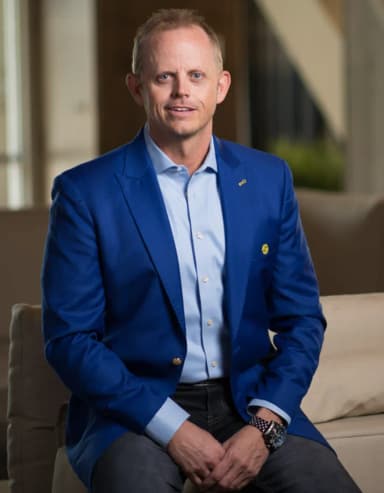
George Wright III has spent decades behind the scenes of some of the biggest stages in the world, working with speakers like Tony Robbins, Robert Kiyosaki, and others who have moved millions of people to action. In this episode of The Daily Mastermind, he steps out from behind the curtain and shares what he has learned about becoming a compelling, confident presenter yourself.
Whether you break into a cold sweat at the thought of speaking in front of a group or you simply want to sharpen your stage presence, the principles George walks through in this episode are practical, proven, and immediately usable.
Why Public Speaking Fear Is Normal (and Temporary)
Almost everyone is afraid of public speaking at first. George admits he was terrified early in his career, even while producing events for world-class speakers on international stages. What changed was not talent; it was reps.
"Nothing is going to help you feel comfortable when you're outside your comfort zone like being outside your comfort zone."
The discomfort does not disappear overnight, but it does shrink each time you step into it. Every presentation you give, no matter how small the audience, builds the foundation for the presenter you are becoming.
How to Speak From the Heart
The most effective presentations are not the most polished ones; they are the most authentic ones. When you stop trying to sound like someone else and simply show up as yourself, your words, body language, and energy all align. That alignment is what an audience feels and responds to.
Authenticity is not an excuse to be unprepared. It means you know your material well enough that your personality can come through naturally, without forcing a persona that does not fit.
Why You Need to Write It Out
One of the most common mistakes presenters make is assuming they can wing it from an outline. George is direct on this point: write out your presentation. Know it well enough that you do not need to read it, but have it there as a safety net.
Writing forces you to think clearly about the structure and flow of what you want to say. Rehearsing from a written draft eliminates the awkward pauses, the filler words, and the gaps that erode your credibility in front of an audience.
"Practice will bring confidence."
The more you rehearse, the smoother you become. Your audience's confidence in you rises in direct proportion to your own comfort with the material.
How to Connect With Your Audience in the First 60 Seconds
A presentation is not a monologue; it is a conversation. George emphasizes that connection with your audience needs to happen within the first 60 seconds. After that, it becomes much harder to win people back if you have lost them.
Make eye contact. Ask questions. Slow down. Use a story from your own life that invites the audience in. Personal stories are one of the most powerful tools a presenter has because they create relatability and trust in a way that data and bullet points simply cannot.
What a Strong Open and Close Look Like
George offers a classic framework that has stood the test of time: tell your audience what you are going to tell them, tell them, then tell them what you told them. It sounds simple because it is, and it works.
Open by setting expectations. Close by reviewing the key points you want people to carry with them. Ask them to apply what they have learned, and end on something positive and memorable. The close is your last impression, and it should land with purpose.
How to Treat Public Speaking as a Learnable Skill
Here is the truth most people skip: public speaking is a skill, not a talent. You can study it, practice it, and get measurably better at it over time. Take a course. Watch great speakers. Read books on communication and persuasion. Treat it like any professional competency you want to develop.
"Your confidence will go up in direct relation to your comfort level with your topic."
The gap between where you are and where you want to be as a presenter closes faster than most people expect once they commit to showing up and doing the work.
Action Steps
- Start your next presentation by writing it out in full, not just an outline. Rehearse until you know it without reading it.
- Identify one small speaking opportunity this week: a team meeting, a community group, a social gathering, and take it.
- Focus on connecting with your audience in the first 60 seconds through eye contact, a question, or a brief personal story.
- Study one professional speaker you admire and identify two or three specific techniques they use that you can apply.
- Use the open-tell-close framework: tell them what you will cover, cover it, then summarize what you told them before closing.
Influence is one of the most valuable skills you can develop, and it lives at the intersection of clarity, confidence, and connection. George Wright III reminds us that none of those things are reserved for a select few. They are earned through consistent effort. It is never too late to start living the life you were meant to live, and that starts with finding your voice.