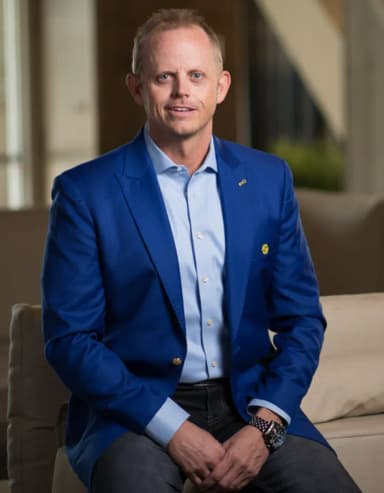
George Wright III, host of The Daily Mastermind, opens this episode with a Vince Lombardi quote that sets the tone for everything that follows: success is not just about outcomes, it is about the quality of effort and intention you bring to the task at hand. From that foundation, George walks through a five-part framework for crafting a personal mission statement that can serve as both compass and mile marker for daily decisions.
If you have ever tried to sum up your entire life in a single sentence and come up short, you are in good company. George admits the same struggle. What he found, through years of work with his mentor Robert Stuber, is that five focused mini statements can do more than any single sweeping declaration ever could.
Why a Personal Mission Statement Matters More Than Goals
Most people spend enormous energy setting goals, tracking targets, and measuring outcomes. What is often missing is the deeper layer beneath all of that: a clear sense of what you are actually here to do, how you want to feel, and what kind of person you are becoming.
A personal mission statement is not a goal. It is a mile marker and a compass. It gives your goals a direction and your daily choices a meaning. Without it, you might achieve a great deal and still feel unfulfilled. With it, even ordinary days take on a sense of purpose.
The price of success is hard work, dedication to the job at hand, and the determination that whether we win or lose, we have applied the best of ourselves to the task at hand. (Vince Lombardi)
This quote points to something deeper than results. The feeling of full commitment, of showing up completely, matters as much as the outcome. That emotional clarity is exactly what a mission statement is designed to capture and sustain.
Start with the Right Questions
Before you write a single word of your mission statement, George invites you to sit with a few foundational questions. What is the purpose of your life? Why are you here? What do you want to experience? And perhaps most importantly: how do you want to feel on a day-to-day basis?
George argues that we do not actually want things so much as we want the emotions those things bring us. If you do not think carefully about how you want to feel or what you want to experience, it is nearly impossible to craft a statement that genuinely reflects your life. Answer those questions first, then begin writing.
The Five Areas of Your Personal Mission Statement
George's framework organizes your mission into five distinct areas rather than one impossible single sentence.
1. Your Life Purpose. What are you choosing to do with your life? Your purpose can grow from your unique talent, but at its core it is what gives you fulfillment and drives you forward. George's own purpose is to empower people around him to unleash their potential and live their best lives. Yours should be equally specific and equally yours.
2. Your Empowering Self-Definition. This is your identity statement. It is not about what you have already achieved; it is about who you are choosing to be. An example from the episode:
I am someone with the power to accomplish my important goals and dreams. I can accomplish what I truly desire by making the decision and taking the actions necessary.
This kind of self-definition does not depend on external results. It is an intention you set deliberately, and it shapes every action that follows. The key, George emphasizes, is to set the intention consciously rather than letting it drift.
3. The Question Your Life Answers. George offers a compelling framing device: what question do you want your life to answer? Rather than forcing a declarative mission statement, try identifying the question your existence most wants to resolve. For George, it is something like: how can I use my talents to create the biggest impact and legacy in the world around me? A powerful question pulls you forward and gives your daily effort a consistent direction.
4. Your Mission in Action. Your mission is your strategy and your drive. If your life purpose answers why, your mission answers how. It is the practical application of your unique talent in service of others. Think of it as the bridge between your inner gifts and the people you are here to help.
5. Your Influence on Others. How do you want to affect the people around you? What kind of energy and impact do you want to bring to your relationships, your work, and your community? For George, this means inspiring, motivating, and supporting the people in his world. Most people focus only on career and output; the real power, George argues, comes from staying focused on the kind of influence you want to have.
How These Five Pieces Work Together
Think of the five areas as a single integrated picture rather than five separate items. Your purpose tells you what you are here to do. Your self-definition tells you who you are becoming. The question your life answers gives you a north star. Your mission connects your talent to service. Your influence determines the ripple effect you want to create.
Together, they form a framework that is broad enough to give your life meaning and specific enough to actually guide decisions. Review them regularly, especially when you are making a significant choice about your time, your career, or your relationships.
Action Steps
- Set aside 20 to 30 minutes with a journal and write your answers to each of the five areas: life purpose, empowering self-definition, the question your life answers, your mission in action, and your influence on others.
- Write without filtering yourself. Let the language be yours, not what sounds impressive to someone else.
- Draft one statement for each area, then read all five together and notice what feels true and what needs refinement.
- Post your five statements somewhere visible and revisit them weekly, particularly when making decisions about your time or direction.
- Ask yourself each day: am I living in alignment with these statements?
Your personal mission statement is not a luxury reserved for executives or motivational speakers. It is a practical tool for anyone who wants to live with intention. If life is worth living, it is worth living the right way, in the most fulfilled way possible. It is never too late to start living the life you were meant to live.