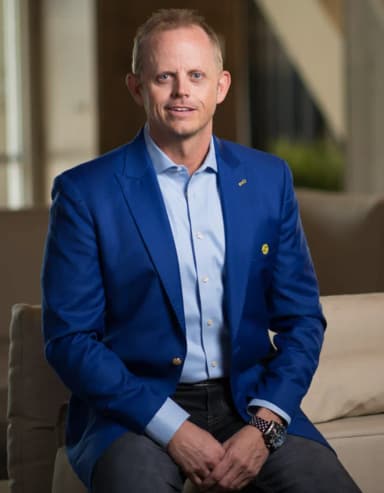
All right, welcome back to The Daily Mastermind, George Wright III, with your daily dose of inspiration, motivation, and education. I'm joined by a good friend of mine, Paul Roberts, down in the OC. How are you doing, Paul? I'm doing good here today. I'm actually sitting out in beautiful Sun City here today at my house in Sun City, watching the sun here and getting ready to go out in the pool here. I know. You know what? You've got a busy life like me, but you definitely enjoy it as well. And so for those of you listening, before we get too far down the rabbit hole, I want you to know that we're going to talk about some really cool business stuff today. And I'm going to introduce you to who Paul is. But if you're listening to this for the first time, I want you to make sure that you smash that subscribe button. I want you to not miss any episodes. We're going to be doing a lot of stuff here, especially with the topics we're talking about today. So Paul Roberts is the founder of OC Talk Radio. Okay, he's at Orange County's only online business radio and live stream production. I think one of the things and the reasons I had him on the show today is he's an innovator when it comes to live broadcasting and modern podcast distribution. He's a digital media consultant. He's had 20 years. He's one of the pioneers in live, you know, podcasting. You can tell by the old gray beard I'm a pioneer here, right? Yeah, yeah. No, but you have a lot of experience and you've helped to really move this industry. So tell us what got you into live broadcast and what led you to this transition from traditional radio into digital and broadcasting through podcasts. It's a wild story. It took most of my life. I started off as a kid in real radio. I ran the college station at the University of Michigan a million years ago and then went into real radio as a rock and roll DJ, WNYK, K94. Biggest market I got to was in Norfolk, Virginia. This is in the 80s. And that was when radio started to change. It became, we were one of the first automated stations. And I said, I'm out. This isn't for me. I'd come in and I'd say, that was the Beach Boys. That was the Beatles. And then I'd leave and they'd put it all together. I said, this isn't, I'm not spinning the record and taking requests and building a playlist. So I left, came to California to seek my fame and fortune. And many years later, after doing, working in PR, entertainment PR for Johnny Mathis and Anthony Quinn, a whole bunch of others, and then corporate PR for Brunswick and Sundance, hot tubs and a whole bunch of other companies hit the Great Recession. The one we forgot, there's been a couple of these now, the 2008 one that we thought would never come again. And it wiped out not just my business, but my whole world of media. Newspapers disappeared, radio stations disappeared, TV, that was the start of the decline of traditional media. So I was in a real fix. I'm in my 50s. What am I going to do? How am I going to survive? And I rediscovered podcasting had just started. And I said, kind of like what I did as a kid, maybe we'll use it if we can't get somebody to tell you a story we'll tell the story and thought you know we'll build brand authority as you say we'll get the story out our way rather than trying to beg one of the declining or the fewer and fewer media outlets to tell the story and that's how I got into it and then quickly discovered this is the business oh my goodness forget about PR and I flushed that down the tubes and started an online radio station because nobody knew what a podcast was. Now nobody knows what a radio station is. I should rechange it back. But that was it. That was the birth of it. This was 15 years ago. Yeah. And I think it's interesting that for those of you listening, you haven't picked it up already. Paul Roberts, I mean, his initials are PR. So this guy's got a PR background. I was born to do it. And Paul, I always tell people when it comes to building authority, which I believe is what's going to cut through the noise, the first level is branding. You do need to have some branding. But then the next one is PR and media, you know, placement and awareness and visibility, but ultimately authority comes from truly creating, you know, omnipresence, but also from a much higher level. So why do most, and so this is why what we do is so key, right? Couldn't agree more. It's not just to throw content out or to throw an ad out or to just, you know, tell your story. People have got to see it as the real deal. More than ever, they sniff through and say, that doesn't smell real. That sounds manufactured here. That's why I love your live, because I was going to ask you, why do most entrepreneurs struggle to get traction with content? Like why are they putting stuff out and not getting anywhere? How many hours have we got to talk about this? It's been a struggle. I think it's going to get worse with AI because people are saying, I don't even want to make the stuff. Just have the robot make it. Just fill up the channel with anything we'll do. Any picture, any sound, any video we'll do. And it won't do. It's got to be compelling. It's got to be interesting. And above all, it's got to have some value to it. Why else am I watching this stuff? It can't just be popcorn. It can't just make you feel good for two seconds or sugar candy. So you've got to become, I always say what nobody wants to become, your own media company. You have to learn not just how to tell your story, what the stories are and how to tell them, but you've got to create the content yourself. You're going to have your own TV station, radio station, newspaper, whether that's a blog, a written blog, an audio podcast, or even a video podcast or YouTube channel. You've got to master the technique or get somebody to do it for you like us. Yeah. And really, you know, if you can have a core piece of content, the rest will come along for the ride. And we'll kind of talk about that. But how important is it for consistency? Because inconsistency really makes a huge difference for visibility as well, right? Absolutely. And I always tell people when they start, I say, ask them one question, why are you doing this? And they all say, I don't know, everybody else is doing it. That's not a good answer. What do you want to get out of this? and we can talk about it. Lots of different choices. And then the second thing is, how often are you going to do this? And they're like, I don't know, whenever I can. I said, it doesn't work that way. In my model, you're committing to do it on a regular basis, like a radio station. Every Tuesday at two o'clock, that's your show. And we're going live and we're going to tell the world something's coming on. And if you can't make it that day, we're either going to rerun something or pre-record something that we're going to run. But we're getting you to do what you don't want to do, which goes to the core of your question. I'll do it whenever I feel like. I'll tweet whenever I feel like it. I'll write a blog whenever I find the time. I'll create a video. I'll do five and then I won't do one for five months. The failure of most content is to start with it's not interesting. But the second thing is they do it inconsistently whenever they can find the time and irregularly. I never know when the next one's coming. So you got to come up with them. If you're going to build an audience and make a commitment to them, then you've got to tell them, Here's how often I do it, and here's when it comes out. And what's the, like, I think 100% agree with what you're saying, and I think some people are still caught up in the PR mix So before we get too much into podcasting how do you view the difference between PR and just media and actually creating a media company or legacy long content What do you see as the differences? Because people are still out there trying to just get PR versus creating content. The world's changed. When I started this in the 80s, both left radio and came into first entertainment PR and then corporate PR, there was a clear delineation. There was an ad agency who created, who bought ads for you, who it was paid attention, right? They used to call it. Then they used to say PR was earned. You had to convince somebody that it was a good story to tell. You couldn't buy your way into the LA Times or onto CNN or into the local newspaper on the radio station. So you had to understand what they were looking for, what there, and that's where you needed usually a PR professional, had the context, had the knowledge, and would pitch you. I was there, they used to call them press agents in the old days. I was your agent. I was trying to sell a story to somebody here. So one you bought, one you earned, and then there was also promotional agencies that people would go in and do product placements or special events or whatever, some promotional thing, one-time thing. Those were very clearly delineated. Those started merging many years ago and now agencies are digital agencies, social agencies, I don't know, influence. They have these mixture of names and they kind of try and do it all. And in the process, I think they've confused people what it is. PR is supposed to be somebody else talking about you. An ad is you talking about yourself. So if I've got a product, I've got an idea, and I want to tell you the features and benefits, then it's probably an ad. But if I want to tell you my story or the company's story or our customer's story, that's probably PR in some sense. Now, how does that fit in with the world of social media and influencers? I don't know. Again, it's all merging together. So is that a separate content? Is that similar content? We'd have to debate that. I'm not sure anymore. Yeah. And even PR itself with purchased or earned media is changing quite a bit because of the digital age, right? I've noticed you could get something. First of all, if you wanted to get in entrepreneur magazine, Inc. Magazine, things like this. Number one, you don't control the narrative like you would podcasting. And then you don't know when and what's going to get in. But right now, most of those PR channels are very digital. And the reader is literally, well, not only have they shrunk, but people are getting in those channels. And the whole goal of online is to distract you, the reader, from finishing your article. So they're trying to throw in ads and banners and all kinds of things. So you don't even really get as much visibility as you used to, right? That's a good point, right? It was part of the PR person's job was not just to pitch it, but to help shape it, to influence it, whatever way you could. And in many cases, I'd say the better we wrote it and structured it, the more likely they would just cut and paste it and put it into Entrepreneur Magazine or the LA Times or the Business Journal or whatever, because they had a million stories they had to create all day long. So I had to pitch them on the idea and seconds I I had to say, it's a good idea. And then we had to construct it for them. And we didn't write it, but we would try and piece it together and help them write it. Now, today, I don't know. I don't know. PR is so changed. PR is more about, I don't know, agencies now are reputational and strategic and stuff. They're not trying to just do placements, media placements. And the PR is coming from so many different animals. But I always come back to the idea that if you want to really control the narrative, You've got to create the content and you've got to get featured in the content. And so why did you decide to go down the path of podcasting and what are the big differences? So if somebody's out there trying to decide they want to go get some PR, whether it's paid or earned, versus do their own content with podcasting, what are your biggest feelings around podcasting and what's the difference? Again, podcasting, like everything else, has gone through an evolution and it probably still hasn't reached its final stage yet. We're in a state of flux. Just as agencies aren't clear what they do anymore, they try and do it all. Podcasting is now trying to do it all. Podcasting was simply an audio medium. I thought its power was twofold. It's a recurring story. So if you like this one, come back and hear the next one, the next one. It's serialized. It's like a, in fact, one of the big huge podcast hits was called Serial, about a serial murder. Did he do it or didn't he do it? That NPR put out was one of the first ones that put podcasting, got millions of listens. And it was a serialized story. One week he did, maybe he didn't do it, and then he'd give another point of view. So I thought it was serialized. You'd come back and hear one rather than once and done. And it was, this is key, it was long-form storytelling. In a world where everything's gotten shorter and quicker, time to a snippet, a soundbite, a tweet, you have 30 minutes or more to tell your story. Why? Because people are stuck in a car, they're at the gym, they've got time to kill, tell me a story, just like an audio book. I'll hear one chapter after another. So I thought it was very clearly defined. And then came along this video. People said, you got to stick a camera in it. Why? I can't. If I watch, then I can't drive. I can't walk. I can only listen to it. And they said, that's OK. We want to see it. And now I think at least half or more of the podcasts have video to them. And the number one place to hear a podcast is no longer iTunes or its competitor, Spotify. It's YouTube. It's YouTube. That's right. And that's one of the reasons why I think you have taken. And tell us, tell our listeners how OC Talk Radio takes one conversation and turns it into multiple assets and why you should think of podcasting as more than just audio now. For all of those reasons, it's how people consume content. So clearly I thought it was just radio. It was an ongoing. And what was different is that it's serialized. We're going to do one conversation to the next. And it's longer than a typical radio interview. It's usually in the beginning we did an hour. I think they're like 30 minutes. That's the average gym time, walk time, drive time. So all of that was great until video intruded into it. And now you've got more complexity because you've got to have cameras and lights, not just sound. You've got to make it visually interesting as well as verbally interesting. But the flip side of that is you get more out of it. So when you've gone through all this effort, you and I have created an interview here today and locked it all in. And here we are spending time to do it. and you're going to take this probably not just put it up on YouTube as a video, but you're going to put it up on iTunes and Spotify and a million other places for an audio only version of it. And then you probably chop it into little clips and put it on Instagram and TikTok and YouTube shorts So what is it Is it a radio show Is it a TV show Is it Instagram or clips It all of that And maybe you get it transcribed and turn it into a blog I can give you countless examples of how you can repurpose this and reuse it, which makes the effort worthwhile if you put that kind of payoff to it here. Yeah, I look at it as a content ecosystem. At the end of the day, and the result we're trying to get is authority, but at the end of the day, if you're listening to this, like Paul said- Watching it or seeing a clip about it. We're going to have one podcast. It's going to turn into an audio, a video, a blog. It's going to turn into clips, reels. It's going to go to syndicated to 15 different places for podcasts. Right. You know, a dozen different social media channels and all from one strategic conversation. How important have you found, especially in live broadcasting story? How does storytelling come into play when it comes to your content right now? It's the key. It's the one thing I'm pushing people all the time. and I'll give you the example. I had a client, a big hospital and they wanted to come in and talk about their machines and their doctors and their endowments. And I said, that's not a podcast. That's the content we put out in our newsletter and our ads and our marketing channels. I said, come up with something else. Like what? How about the people you save and the people who save them, the doctors? They said, that's it. And they've been doing now for four years where we just tell the doctor's story, tell the patient's story and storytelling. Businesses are not- It still drives to the result, right? The point is you've got to get there by engaging the listener. Exactly. And I say people stories. And nobody wants to, they don't want to tell product stories. They don't want to tell numbers stories. You've got a great story to tell. Yeah, I saw the opportunity and here it is. Ta-da! There's the, what was the struggle? How did you get there? I want to hear the human part of it. It's like a movie. The movie is mostly made up of the struggle. You've got to find the girl. I found the girl. You've got to get the bomb. I found the bomb. It's that middle part, that struggle in there, that human story. And that's what most businesses don't want to tell or know how to tell. How do you help businesses when, you know, there might be somebody listening to this going, you know what, man, I just, I don't know if I can podcast. I don't know if I'd be good at it. I might get on a camera. What do you tell people that are like, I know what you're saying makes sense, but I'm just not comfortable with it. And they're starting though to realize they need to do something like this. What do you tell them? If you don't exist on that phone, you don't exist anymore here. So unless they can find you, and it's the phone now, So it's got to be audio and video and clips and all that kind of stuff. Written is part of it, but that doesn't read well on a small phone. So whether you want to or not, you're going to have to find a way to figure out how to do it. And either get a coach or find somebody like us, a producer, we'll help you. We don't just, not just a recording studio. You get the guest, we'll do the rest. We'll help you. And if you're open to it, we'll work with you and show you how to get better on camera, how to sound better, what things you can do with it to push it out afterwards. I think the most clever, and there's always new things. You guys have built magazines around. It never occurred to me to take the content, turn it into a blog, a written piece of content. And in reverse, I'm doing these things live. You're still basically recording them and putting them out later. I've got this extra live album. So we're all still experimenting with other ways that we can engage an audience. Some people do want to read. That's a powerful tool. And you and I have talked about doing more of that. At the same time, I think live creates an urgency to it. I can watch this anytime. But this is live right now. This is where I am. This is my dog right now. This is me talking. There's a certain urgency to listening to live. It cuts through. And it's to your question. How do you cut through the noise? How do you get people to click and say, follow, listen, subscribe? Yeah, plus I think that, look, we all know already that people like the real deal. That's why reality TV is such a big deal. So live is such a great opportunity. Even though it's not real. Even though we found it, it's all fake. They force people into fights. In other words, don't worry about being polished. Don't worry about having it all figured out right. So tell me why you've really doubled down into live with a reason you really believe that's a great, and I know you do everything else as well, but tell me why you really love to do live stream. We're very unique. We do live. Everybody's terrified of live. And I said, when I did real radio, we didn't worry about it. If we screwed up, we kept going. You learn not to screw up. So you just go with it. And if it's really bad, you can stop it and cut it out and save it later or something here. But live does a couple of things. I'll give you a different aspect of it that nobody ever thinks about. We're both trying to get guests. Because I think podcasting is not just audio blogging. That's what it was in the beginning. Audio blogging. I'm going to tell my story rather than write it because it was too hard to write it. But here's my tip. Here's my five takeaways. Here's my content of the day. As we turned it into interviews, which I think most podcasts are like this, audio or video, then how do you get the guest to show up? if it's live, they run red lights to get here because they've told somebody it's live. If it's a recording, nine out of 10 times they'll call them and say, did I agree to that? Oh, I'm busy today. I'm sick today. Let's do it another day. We'll record it another day. So it gets them to show up. It gets the guests to promote it. If I say, come on my recorded podcast, you're not going to promote it because you don't know when it's going to go out. But if it's live, you're going to tell people to tune in. So they're not just bringing the content, that they probably bring you an audience and they show up on time. And then they're excited and they're nervous. If you're trying to sell somebody, imagine putting them in that, you're the power position and they're in the, you know, they're the scared. Did I do okay? Everybody who gets off always asks me, did I do okay? I'm like, yeah, you did fine. We're glad you're here. I love that angle. I actually think that not only the urgency and the promotion, but I believe, and if you're listening to this, I believe that not only has it been noisy because of AI and everything, that authorities will cut through the noise. But I think live is what cuts through all of that, meaning people don't know what's real unless it's real. And nothing more real than live. Right, exactly. And all it's raw and we screw up and we make mistakes. And that's what people look for. In the same way now that they literally take multi-gazillion dollar movies and they jar the camera and make it look like a handheld thing because they want it to feel like it's live. They really do. That is a big thing. Let me ask you another question as we kind of get to the end here. You have used this also, I think, podcasting, when you use it as a strategy, when you're building authority as a strategy, it goes to the next level. And OC Talk Radio is now working with local businesses. They're working with local entrepreneurs, I mean, nationally as well. But how has doing this driven your business locally because you're doing interviews, because you're doing live stream? It's interesting. You know, people still think that this is a do-it-yourself medium. And in some sense it is You can go get a mic and go get a camera you can figure lights camera and all that kind of stuff Then why don you do it Because they don know it isn just recording it it what to do with it how to distribute it as well So we built a platform a place. I don't know why there aren't more of these. A curated place where there are, in our case, Orange County business conversations here. The City of Hope Hospital, UCI Law School, the Hispanic Chamber, a real estate show. We've got all these kinds of local business shows. They might have a wider audience than that, like UCI Law School or the City of Hope Hospital, but basically they're doing it as a local conversation. And that's something that's disappeared. As local radio stations and TV stations have shrunk or disappeared, where do you tell the local story? You're in Utah. Where do people talk about business of where you are or where I am? So I think there's a missing place. Maybe we're the model for it or maybe we're a model of how it can be done, but I think there's a there's an interest in that and it's amazing to me how 15 years later people accept us like we're a radio station we're not shooting through the ether we're shooting through the ether net but and the difference is when it goes out it doesn't fade away and disappear into the air it gets recorded and archived forever so it's not really a radio station but we set these shows up so they are on a regular schedule at a regular day and time and it's local content primarily local stories, local people telling stories. And I get invited to the craziest things all the time, partly because I think we do a good job and partly because there's nobody else in town. Fifth biggest county in America, and we have no radio station, TV station, and barely a newspaper left anymore. Yeah, it's one of those things where there's a lot of affinity to locale-based and to being live, and it builds your authority. Because look, at the end of the day, what most people want to be is they want to be the most recognized person in their field, in their area, and the only way to do that is to create that, and you can literally create that now. And you either tell the story yourself and say, look at me, look at what I know, look at who I know. That's part of what we're all doing here. Or in the old days, you got somebody else to say, hey, he's the guy. Whether they invited you on stage and you were part of a talk, or whether you're written up in the LA Times or the local newspaper, somebody else branded you with that somebody else endorsed you as they're the leader they're the expert that's why they're on the panel that's why they're in this interview so that was kind of there's still some of that but more and more you've got to create that content that that emphasizes i'm not just any guy i'm the guy yeah and then there's nothing does that like a brand so where do you think my last question is where do you think live podcasting and digital radio are headed Where do you think that's kind of going? I really think, now this is controversial and everybody would disagree with me in the radio world. I think this is the future of it. As radio stations continually fire their local staffs, Cumulus and Clear Channel that turned into iHeart have both gone through bankruptcies, multiple bankruptcies as they keep it. The people who bought up all these radio stations in the 80s and 90s and thought they'd program them nationally have found out that doesn't work anymore. They've eliminated the local voice. So I really think the future of local voices is something like we're doing online radio stations, live podcasting, whatever you want to call it, maybe combined with live events and stuff, and maybe someday live news channels and local things, something hyper local. We're narrowcasting, not broadcasting. And that day is still coming, but right now most people disagree with me. No, I really agree that narrowcasting is going to be a key. I do think live is going to be cutting through the noise. people will know what's real and what's not real. And I think if you do it like anything else, in a strategic way, it will grow your business, grow their businesses, and it'll be very synergistic. So awesome, man. I love the conversation and I love what we've been able to cover. Is there anything else you would like to add to this topic for our listeners? The frustrating thing I have is I've built this idea of a radio station as we've built an audience, a substantial audience here in Orange County, but people don't realize that they can be part of it and they could do it themselves. They never call me and say, hey, how do I get a show? Just like you could go probably to your local radio station and for a certain fee, a big fee in their case, you can probably get a show, the local financial show or the local real estate show. We tried to do that same radio model, but a far more effective way. So I wish more people would realize they could do this. And I realized it and I wish they recognized that they should do this. Well, I think it's going to be happening. And for those of you listening, I'm glad you're with us here today. but one of my companies, Authority Media Network, we're going to be partnering up with the OC and you're going to see some things happen because we don't play around. I'm excited. We get to the next level, in between magazines, podcasts, media network, our context connections, there's going to be some great stuff happening. So I hope you've learned some stuff from listening today. I hope that you will really just become aware, think through what you do and why you do it. Be strategic. Understand that there is a way for you to attract opportunities as an authority. And Paul, I appreciate you being with me today. And isn't that really the key? It's attraction. Yes. It's the law of attraction. It isn't just pushing it out. Anything will do. Content will do. A billboard will do. A direct mail piece will do. Just keep flooding the market with something and somehow throwing against the wall. I think those days are gone. I think there's much more targeted stuff that people are searching for. And if it's good audio, video, written content, it will attract people. It will bring people to you. And separate you from the competition. At the end of the day, I don't look for guests anymore. I mean, my inbox has got a couple hundred requests in there. Me too. We just sort them, right? We just sort through the deals. However, I do think that we are building some really big influential networks. And I think, you know, if you're listening to this and you want to be part of that, I'll put some links in the show notes as well. Paul, how do they connect with you? What's the easiest way for people to get in touch with you? Just Paul.Roberts. put a period between my first and last name, paul.roberts at octalkradio.net, because we're a network, or at least we hope that this will grow into a network of these kinds of stations. I love it. And I'll put some links to the OCTalk Radio show and the YouTube channel and whatnot. So we'll do that as well. So thank you for being here. And listen, if you're listening to this show and you've gotten some value, part of our mastermind, please share the show. Help us to spread the message. And if you have ideas and you want some questions answered, hit us up on The Daily Mastermind on Facebook, Instagram, TikTok, YouTube. And I'll put some links in the show notes, as I said. And once again, we appreciate you being here with us today. You are masterminding with Paul Roberts, George Wright III, and we'll look forward to talking with you more tomorrow. Have a great day.