The Daily Mastermind
ALL GUESTS
Guest

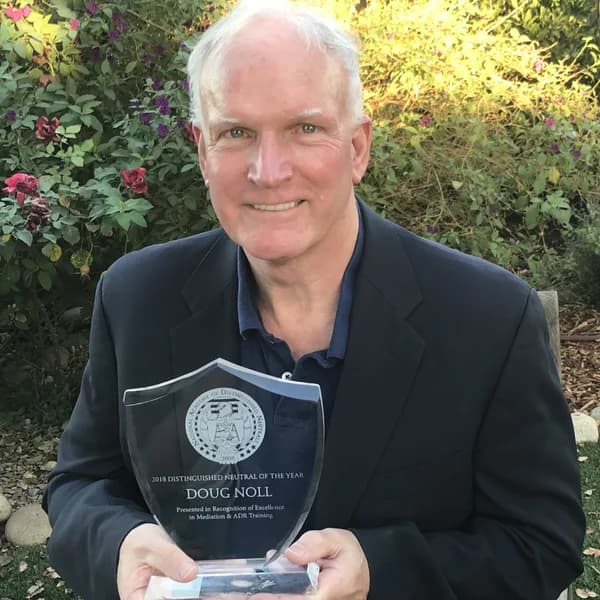
Douglas E. Noll

Attorney-Turned-Peacemaker, Mediator & Author
Sierra Nevada, California
Douglas E. Noll
Background

About Douglas E. Noll

Conflict ResolutionDe-EscalationMediationEmotional IntelligenceLeadership

Douglas E. Noll is an expert in resolving complex and emotional conflicts — a lawyer turned peacemaker, mediator, and leadership consultant. After 22 years as a trial lawyer, he shifted to mediation and leadership development, earning recognition as one of the Best Lawyers in America and a Northern California Super Lawyer. He co-founded the pro bono Prison of Peace project and was named California Attorney of the Year in 2012.

An acclaimed author, Doug has written award-winning books including De-Escalate and Elusive Peace. He teaches at Pepperdine's Straus Institute for Dispute Resolution and is a sought-after trainer and lecturer on peacemaking and conflict resolution. Outside his professional life, he is a skilled violinist, pilot, tai chi master, and chef. He lives in the Sierra Nevada, California, with his wife Aleya.

On The Daily Mastermind, Doug sat down with George Wright III to break down how to de-escalate conflict and calm an angry person in 90 seconds: the neuroscience of affect labeling drawn from a UCLA brain-scanning study, why emotional intelligence is a test rather than a skillset, the difference between Type 1 and Type 2 listening, and why human beings are emotional rather than rational creatures.
Key Insights

Key takeaways from Douglas

01
Affect labeling calms any brain — guaranteed.
Name what another person is feeling out loud and the brain's emotional centers go quiet while the prefrontal cortex re-engages. Every human brain is hardwired for it, regardless of culture or language, and it works whether or not they know it's happening.
02
Emotional intelligence is a test, not a skill.
EQ simply measures three learnable competencies: self-awareness, self-regulation, and empathy. Practice one concrete skill — affect labeling — and all three improve automatically.
03
Stop listening for yourself.
Type 1 listening advances your own agenda; Type 2 listening exists only to make the other person feel deeply heard. That shift makes people feel safe, builds loyalty, and forges a connection in 90 seconds that is unbreakable.
04
People are emotional, not rational.
Rationality is a 4,000-year-old myth. Once you observe people through an emotional lens, conflict stops being confusing — you can see the patterns, predict what's coming, and know exactly what to say.
Find Douglas

Connect with Douglas

Visit dougnoll.comInstagram