
The Daily Mastermind
ALL GUESTS
Guest

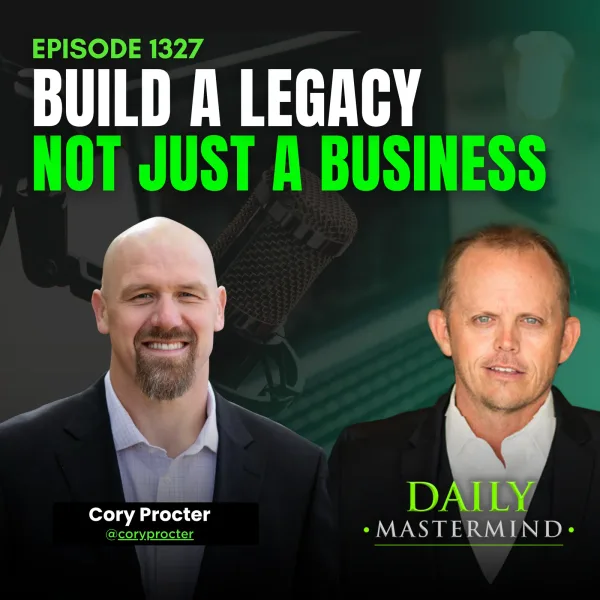
Cory Procter

Founder of ProCapital Wealth Management, Former NFL Player
Cory Procter
Background

About Cory Procter

Wealth ManagementEstate PlanningAsset ProtectionFinancial PlanningLegacy Building

Cory Procter is the founder of Pro Capital, where he builds coordinated financial strategies for entrepreneurs, business owners, and families. He started the firm after watching accomplished people pay a steep price for one recurring failure: their CPA, attorney, financial advisor, and other professionals all working independently instead of together. Pro Capital pulls those advisors under a single strategy, so tax planning, legal structures, investments, estate planning, and risk management move in the same direction. Before wealth management, Procter spent six years in the NFL, mostly with the Dallas Cowboys. He is the author of Built Not Broke.

The work is personal. In high school, his family was sued after a car accident and filed for bankruptcy within a year, losing their house and their vehicles. He carried that into the league, where he earned close to minimum salary in five of his six seasons and studied his own finances instead of upgrading his lifestyle. He calls what he built a vault — a structure no lawsuit, theft, or shock could undo. More than fifteen years out of football, he says his family is better off financially now than during his playing days, which is rare in a league where most players struggle after retirement.

On The Daily Mastermind, Procter joined George Wright III for a conversation about why successful founders build valuable companies without ever building protected personal wealth. They covered the blind spots he sees most: asset titling that quietly overrides a will, balance sheets nobody has updated in years, estate documents that were drafted but never funded, and blended families working from generic templates. Procter also made the case for systematic owner distributions as the habit that forces founders to understand their real unit economics and move money out of one asset and into several.
Key Insights

Key takeaways from Cory

01
How an asset is titled supersedes even a properly drafted will.
A house or brokerage account held in one spouse's name alone can bypass the will entirely and land in probate — public, slow, and frustrating. Procter reviews titling first, because the legal form of ownership determines where an asset goes regardless of stated intentions.
02
A balance sheet you never update becomes a problem at the worst moment.
Entrepreneurs buy and sell real estate, brokerage positions, and other assets for years without consolidating them anywhere. Procter lost two clients to fast-moving cancer diagnoses in a single year. Current records are what make a sudden event survivable for the people left behind.
03
Systematic distributions expose whether the business actually has margin.
Set an automatic distribution schedule for owners and partners instead of reinvesting every dollar. If the distributions can't be funded, that gap tells you the truth about your unit economics and cash flow — and the money that does come out funds diversification outside the business.
04
An estate plan is only useful once it is funded and aligned.
Procter describes a couple with a ten million dollar joint brokerage account who had never realized one spouse's children could be disinherited entirely if the surviving spouse remarried. Blended families need documents that match yours, mine, and ours — not a template.
05
Founders stay too close to operations to see their own financial picture.
"The business is one tree in the forest." Owners get stuck on low-value tasks instead of graduating into higher-level decisions, and in that constant motion they never take revenue off the table to build wealth outside the company.