The Daily Mastermind
ALL GUESTS
Guest

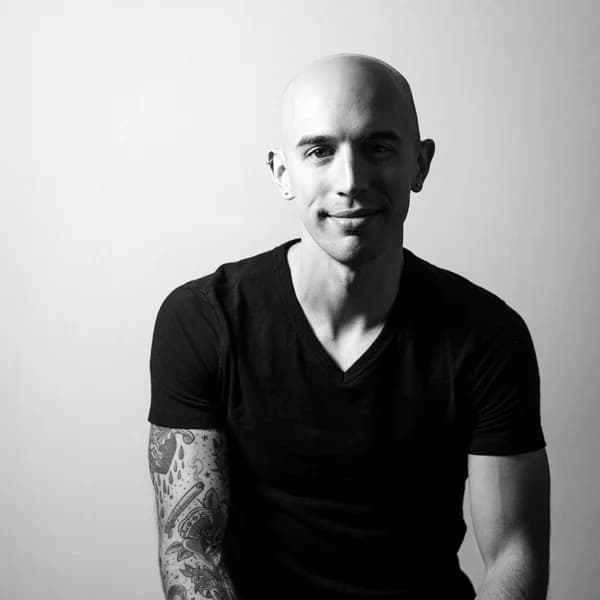
Adrian Rosebrock

CEO of Chief of AI, Founder of PyImageSearch
Adrian Rosebrock
Background

About Adrian Rosebrock

Artificial IntelligenceComputer VisionAI StrategyAI GovernanceProprietary DataMachine Learning

Adrian Rosebrock holds a PhD in computer science and artificial intelligence and is the CEO of Chief of AI, a fractional team that helps organizations get a real return on their AI investment. He started as an entrepreneur at 19, building two apps in college — the first covered his car payment, the second covered his rent. In his final year of grad school he launched PyImageSearch, an education platform in a narrow and difficult niche: computer vision and deep learning, the science of writing software that can see what is in an image.

PyImageSearch became the world's largest computer vision education platform before it was acquired in 2021. Adrian understood the theory from his PhD work but had struggled with implementation, and assumed others had too. He wrote nine books, two courses, and more than 500 tutorials — all by hand, before generative AI existed — covering face recognition, license plate recognition, and the vision systems behind self-driving cars. The site grew into a top-20,000 property worldwide with half a million people on the email list. After the exit, friends in entrepreneur communities kept asking him to vet AI solutions and review roadmaps. Chief of AI grew out of those conversations.

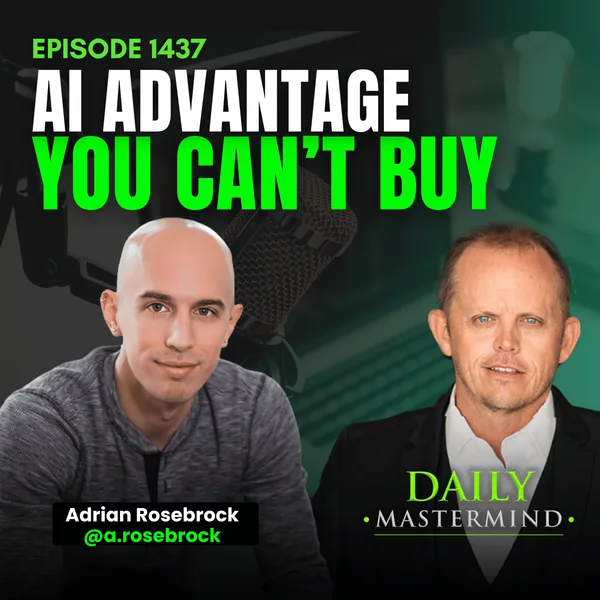
On The Daily Mastermind, Adrian sat down with George Wright III for a conversation about why the AI edge you can purchase isn't an edge at all. They walked through his three waves of AI adoption, the buy-modify-build grid he uses to decide where AI belongs in a business, the tokenomics risk sitting under every company built on cheap inference, and the governance failures that create real legal liability. His argument throughout: the moat is your own data, your own processes, and the human relationships no model can reproduce.
Key Insights

Key takeaways from Adrian

01
There is no moat around a $20 a month account.
Every competitor can buy the same tools tomorrow. Adrian's framing: look internally first — what is your actual competitive advantage, what do you do that no one else does — and engineer your AI efforts around that instead of around the tooling.
02
AI adoption is moving through three waves, and the metric changes each time.
Wave one, access, roughly 2022 to 2026, measured how many people were using AI. Wave two, economics, 2025 to 2028, asks about cost, ROI, and governance. Wave three, differentiation, 2028 to 2032, is decided by proprietary data and custom models.
03
Bridgewater's advantage came from years of recording its own reasoning.
Off-the-shelf prompting got the team about 50% accuracy — a coin flip. Expert prompts reached 60–70%. Fine-tuning a model on Bridgewater's own documented decisions pushed it past 80%, and self-hosting cut token costs by 14x, making them independent of any provider's pricing.
04
Use the differentiation-versus-risk grid before you spend a dollar.
Low differentiation? Buy off the shelf, even for high-risk systems like a CRM. High differentiation with moderate risk — a lender's underwriting process — is the modify zone: find something 70–80% of the way there and customize. Build from scratch only when the work is both highly differentiating and high consequence.
05
The boring mistake — no AI policy — is the one that creates liability.
Adrian described a Midwest bank that had to self-report after an employee uploaded personally identifiable information to ChatGPT. His fix: written policies plus employee education, network monitoring at the firewall or VPN level, and blocking local downloads so files stay in permissioned cloud folders.
06
An average of an average is why AI content gets ignored.
A language model is trained on the average of the internet and every response is drawn from those weights, reducing variance. That's why personalized outreach stopped working once everyone automated it. Adrian's answer: use AI to strip back-office work off people so they spend more time with customers.
Find Adrian

Connect with Adrian

Visit chiefofai.comLinkedIn