The Daily Mastermind
→ALL EPISODES
Episode 1362 · Oct 7, 2026

Your Business Is Not Your Identity

Rod Khleif
·
Watch
Listen

If your business failed tomorrow, who would you be?

Most founders can't answer that question — and that silence is the problem. On this episode of The Daily Mastermind, George Wright III opens with that exact challenge, then brings in multifamily real estate investor and bestselling author Rod Khleif, who lost $50 million in the 2008 crash and came out the other side with his sense of self intact. The lesson at the center of the conversation is simple and brutal: your business is your vehicle, not your identity. Confuse the two, and every bad quarter becomes a verdict on your worth.

Rod Khleif on Why Your Vehicle Should Never Be Your Identity

Rod Khleif is a Dutch immigrant who arrived in the United States at six years old with almost nothing and was flipping burgers at McDonald's at fourteen. He went on to own more than 2,000 homes and thousands of apartment units, founded the Lifetime Cashflow Academy — where students now own over 300,000 verified units — and hosts one of the largest commercial real estate podcasts in the world with roughly 30 million downloads.

He has also built roughly 30 businesses, and by his own count, most of them failed spectacularly. That track record is exactly why his warning carries weight.

You can never allow your vehicle — i.e. real estate, or buying a business, or stocks, or crypto — never allow your vehicle to be your identity. And I've never done that.

Real estate, crypto, your agency, your SaaS company — those are vehicles. Vehicles break down. Vehicles get totaled. When the vehicle *is* you, a market correction stops being a business problem and becomes an existential one. Rod has watched that play out in the worst possible way, pointing to people who took their own lives in 2008, in the Great Depression, and more recently in the crypto collapse. His framing is blunt because the stakes are: *that* failed. You're not a failure.

How George Wright III Learned That Failure Isn't Fatal

George shares his own version of this story. He once built a large business that suffered major failures, and the fallout spread far beyond the balance sheet. It made him question his identity, his effectiveness, his abilities — and it bled into every area of his life.

That season is what led to an article he wrote with one of his mentors called *Failure Is Better Than Success*. The realization was that failure delivers the lessons success never will, but only if you frame it that way. Frame it as proof you're not good enough, and it flattens you. Frame it as data, and it launches you forward.

We fail our way to success.

Rod has the same philosophy with a better name for it. He doesn't call his failed businesses failures — he calls them seminars. Thirty businesses, a handful of real wins, and a long list of what he describes as spectacular flaming seminars. The tuition was expensive. The education was real.

What Happens When Your Business and Your Identity Merge

George lays out the practical cost of fusing who you are with what you build. When your identity and your business are the same thing, you lose objectivity. You hold on to the wrong deal, the wrong hire, the wrong strategy for far too long because walking away would feel like admitting something about yourself. You avoid risks you should take because a public loss would be a public indictment. And you take every ordinary business setback personally.

None of that makes you a better operator. It makes you a slower, more defensive, more fragile one. Separating the two isn't detachment — it's what allows you to make clear-eyed decisions when the market turns.

Why Separation Creates Better Decisions in a Down Market

Rod points out that the current environment is full of opportunity precisely because so many people are frozen. Roughly 10,000 people a day are turning 65 and own businesses. Multifamily is in a meltdown, with operators in trouble and apartment complexes trading for less than they cost to build. He's buying senior housing below replacement cost right now. But as he puts it, it's very easy to get sucked into the fear of where we are. The founders who can see opportunity in a scary market are usually the ones whose self-worth isn't riding on the headline.

The House on the Beach and the Science of Achievement vs. the Art of Fulfillment

Rod's most revealing story isn't about the loss. It's about the win.

He spent 20 years working toward a magnificent waterfront home — beach on one side, boats on the back, a waterfall you walked through to reach the pool, a spiral staircase wrapped in aquariums that cost nearly $200,000. Two months after he moved in, he was floating in that pool at night, looking up at what he describes as a testament to his ego, built because he got picked on in school and never felt good enough. And he got depressed.

He pulled three lessons out of that night. First, never achieve a big goal without other goals lined up behind it. Second, it was never about the goal — goals create hunger and burning desire, but happiness comes from progress and growth. Third, and biggest: he had been completely focused on himself.

That same year he met Tony Robbins and learned about feeding families. He called his brother in Denver and said, "Bro, let's feed five families." The third house changed everything — a single mother of five whose husband had left, who started crying when she saw the food and toys. Her kids cried. Rod cried. He was hooked.

In the 26 years since, he has fed more than 160,000 children in his area over the holidays, delivered tens of thousands of backpacks filled with school supplies, and donated thousands of teddy bears to local police departments for officers to give children in traumatic situations.

Achievement's a science. But fulfillment's an art. You gotta figure out what juices you.

And his answer to anyone who says they'll give back once they have money: you want the money? Give back now.

Action Steps

  • Answer the question honestly: if your business disappeared tomorrow, who would you be? Write down who you are apart from your title, revenue, and results.
  • Name your vehicle out loud — real estate, your agency, your fund, your product — and consciously separate it from your identity. It failed; you didn't.
  • Reframe your biggest loss as a seminar. List three specific lessons it taught you and how you've applied them.
  • Line up the next goal *before* you hit the current one, so achievement doesn't drop you into a void.
  • Pick one way to give back this month, before you feel "ready." Fulfillment is an art you practice, not a reward you earn later.

Your business will have good quarters and bad ones. It may even fail. That's the nature of a vehicle. But who you are was never up for negotiation in the first place — and as George says, it's never too late to start living the life you were meant to live. You've just got to create it.
About the guest

Rod Khleif

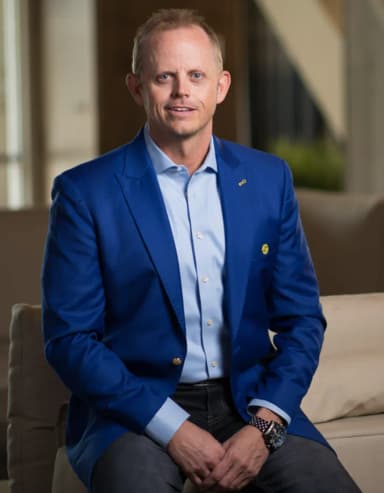
Rod Khleif is a Sarasota based multifamily investor, best-selling author, and top ranked podcast host who rebuilt a real estate empire after losing $50M in the 2008 crash. Today, he leads one of the most successful real estate investing coaching communities with 260,000 student owned units. He supports his mission of abundance through the Tiny Hands Foundation, which has fed more than 160,000 children. Rod combines his market knowledge with a strong personal comeback story. He offers clear, honest advice on building wealth that can withstand recessions. He also shares insights on setting goals and running purpose driven businesses. This makes him a trusted voice in the community.

READ THE FULL TRANSCRIPT

[00:00:05] Welcome back to The Daily Mastermind. George Wright III [00:00:10] with your daily dose of inspiration, motivation, and education. I wanna ask you a question [00:00:15] today because I think this is something that most of us have not stopped [00:00:20] to truly think about, but it's affecting every single day of your life. If your business [00:00:25] failed tomorrow, who would you be? Because most founders, the o- the, [00:00:30] you know, the honest answer is, "I don't know," and that's the problem. Most founders, most [00:00:35] entrepreneurs are so ingrained in their business that their identity is shaped by what they do. [00:00:40] Let's, let's do an exercise. Imagine your net worth going up to [00:00:45] 17 million in one single year while you slept, [00:00:50] and then losing $50 million two years later [00:00:55] I mean, it might be hard for you to even imagine, but how would you react to that? How [00:01:00] would that affect your identity? See, I'm gonna talk to you in a minute about, uh, a gentleman that I [00:01:05] interviewed named Rod Khleif, and Rod, um, shares a pretty interesting story. But [00:01:10] this is the point that I want you to get out of this. Most founders don't just run their business. [00:01:15] They are their business. They describe themselves and their identity as [00:01:20] their business. So every single bad quarter feels like a personal failure. And when [00:01:25] your identity and your business are the same thing, you really lose objectivity. [00:01:30] You hold on too long, you avoid risks that you should take, and you take [00:01:35] hits personally. And, and, and those, those are all things you should not be [00:01:40] doing. Uh, you know, I'll give you an example. I had a, a period of time where I had built a rather [00:01:45] large business. I won't go into all the details on this, um, episode because it's not as important, [00:01:50] but we had some major failures with that business, and it really set me back. [00:01:55] It made me question my identity, my, you know, um, my [00:02:00] effectiveness, my, my abilities, all of those types of things, and my life in [00:02:05] all areas were affected by it, and it really made me step back. You probably heard me, um, [00:02:10] talk about an article I wrote a while back with one of my mentors called Failure Is Better Than Success. [00:02:15] This is the point in time when I realized that failure, a lot of times, can be the [00:02:20] greatest lessons for you, and if you shape it that way, it doesn't affect you in a negative way. It [00:02:25] affects you in propelling you forward. So I interviewed Rod Khleif a little while back. He's [00:02:30] a Dutch immigrant who survived in the US. Uh, he, he basically got here when he was six years [00:02:35] old, and he grew up with very, very little. And, you know, he was basically flipping burgers [00:02:40] at 14 years old, like I was, at McDonald's. You know, he had o- But now, if you go [00:02:45] back fast-forward, he's owned over 2,000 homes and thousands of apartment units. [00:02:50] He founded the Lifetime Cashflow Academy, where his students own over [00:02:55] 300,000 verified units, by the way, and he hosts one of the largest commercial real estate [00:03:00] podcasts with about 30 million downloads. And beyond business, this guy has a [00:03:05] foundation which has fed more than 160,000 children over the holidays. But the reason I wanna [00:03:10] play this clip for you from one of the recent interviews I did is he talks about how in [00:03:15] 2008 he lost $50 million. And he wasn't over-leveraged. He owed, [00:03:20] um, only about 30 cents on the dollar But the thought is, [00:03:25] and, and this is the point that I really want you to pay attention to, is when he talks about the idea that, [00:03:30] um, and it's, it's sort of like he has this way of thinking about failure, and he calls his failure [00:03:35] seminars. And the one rule that he used to keep from being destroyed by the [00:03:40] losses, he'll share that with you. He even talks about the identity statements that he still posts on his [00:03:45] wall today. But he's got a great way of helping you to shape your identity [00:03:50] in a positive and proactive way. And, and I really do believe this is one of the most [00:03:55] important things that a founder and entrepreneur can focus on, is how they shape and their [00:04:00] philosophy around their identity. So listen for the difference between, you know, your vehicle and your [00:04:05] identity, and, you know, it might be the most valuable thing that you hear this week. So I, I really want [00:04:10] you to listen to this carefully, and I hope it brings you some value. If it does, please share [00:04:15] this episode. But without any further ado, we'll get right into it Rod Khleif: The key here is, and there's so much [00:04:20] opportunity right now, George, my God, to buy businesses. There's 10,000 people a day turning [00:04:25] 65 that own businesses. To buy real estate. Multifamily's in a meltdown right now. There's a lot of [00:04:30] operators in trouble. I'm, I mean, you can buy deals for less than they cost to build. I'm buying the senior [00:04:35] housing for less than it costs to build. There's tons of apartment complexes out there being sold for less than they cost to [00:04:40] build. But, it's very easy to get sucked into the fear of where we are right now.[00:04:45] And, um, I completely lost it. Well, and you George Wright III: probably... I, I was gonna ask you- But, yeah ... 'cause you, you pro- [00:04:50] you had mindset all the way up until that big loss, and so that foundation- Oh, that's what I was gonna say ... probably helped you as well. Yeah. But also, [00:04:55] like, you had to- Yeah ... what triggered you to get out of it, you know? Rod Khleif: Okay. So here's the thing that I wanna tell [00:05:00] people. That's why I went off on a sidetrack here. It's, it's you can never allow your [00:05:05] vehicle, i.e. real estate or buying a business or stocks or crypto, never [00:05:10] allow your vehicle to be your identity. And I've never done that. Hmm. I built... I, I call them seminars, right, when they [00:05:15] fail. I've built 30 businesses so far in my career. Several were tens of millions of dollars. Two right now are. [00:05:20] However, most were spectacular flaming seminars, okay? And 'cause we fail our [00:05:25] way to success. I love that word. That's George Wright III: great. Seminars. Yeah. Learning, Rod Khleif: basically. Yeah. Yeah. We fail our way to success. But, the key is [00:05:30] to not allow it to be your identity. If it's your identity, people kill themselves when they when they [00:05:35] connect their business, their vehicle to their identity. That's the critical piece here. Allow it to be [00:05:40] your vehicle. So I've had vehicles that have failed. It was a big vehicle that failed in 2008. But [00:05:45] you know what? If it's not your identity, it's okay. That failed. You're not a failure. That's the key. People kill themselves. Like [00:05:50] I said, that crypto guy shot himself in the head in his Lambo about a year ago, and people jump off buildings. They did in [00:05:55] '08, they did in the Great Depression, because it's their identity. So I just wanna flag that for the [00:06:00] entrepreneurs that are listening. Never identify with the vehicle. George Wright III: you've got a foundation as well, right? Rod Khleif: Oh, let [00:06:05] me talk about that real quick, sure. Tell me about that real quick. So I told you about that house I built on the beach across the [00:06:10] bay here that my ex-wife got. Yeah. Well, this place was magnificent. I owned the beach on one side, um, [00:06:15] boats on the backside. It was called a Gulf De Bay. It was a slice through an island, big waterfall, second floor balcony [00:06:20] into the pool. You had to walk through the waterfall to get... The pool was in magazines. Big spiral staircase up through the middle.[00:06:25] I'll land the plane with this. On the second floor, I had aquariums built around the staircase. Cost me almost 200 grand. [00:06:30] So this gives you an idea of the house. It's worth about 12 million now. Well, I worked for that thing for [00:06:35] 20 years, okay? Two months after I moved in, I'm floating in the pool at night and I'm looking up at this [00:06:40] testament to the, to my ego, which is really what it was, 'cause I got picked on in school and I had this [00:06:45] thing where I didn't feel like I was good enough, and it was to prove to the fricking world I was good enough. I mean, if that didn't do it, forget [00:06:50] it. Right. You know? And so I'm looking up at this testament to my ego, and I got depressed, and this was only two months [00:06:55] after I bought it, okay? And so there were three messages in that. One was you should [00:07:00] never achieve a big goal without having other goals lined up behind it, so keep that in mind. That was one piece. [00:07:05] Second piece is it's never about the goals. You need them to create that hunger and that burning desire, [00:07:10] but happiness comes from progress and growth, and I didn't know what I was gonna do next. So that was the second piece. But the [00:07:15] third big one was I'd been totally focused on me. Rod, Rod, Rod, show the world I matter. Ugh, [00:07:20] blah, blah, blah. Well, that's the, that's the year I met Tony Robbins, and you know Tony feeds families. [00:07:25] Well, I'm like- Mm-hmm ... what a concept. Do something for someone else. I'm embarrassed to say I had to be 40 to get that memo. [00:07:30] I called my brother, uh, in, uh, Denver and I, and I was gonna go visit him for Thanksgiving. I'm like, [00:07:35] "Bro, let's feed five families." So we bought food and toys for their kids if we knew that... He called his church to find out who needed [00:07:40] help. Third family changed my life, George. We go up to this house. It's this, it's a single Hispanic woman [00:07:45] with five kids. Her husband had left her. She comes out, she sees all the food and the toys. She starts [00:07:50] crying. Her kids come out. Two of the older ones start crying. I start crying, and I'm hooked. And please know- Mm ... there's no ego in [00:07:55] this. There's a real message in this, so don't tune out. In the last 26 years, I've fed over [00:08:00] 160,000 children in my area here for the holidays, f- for at-risk kids that wouldn't have a [00:08:05] holiday meal. Done holiday meals. I've done tens of thousands of backpacks filled with school supplies to [00:08:10] local kids that don't have the basic supplies for school. Don't get me started on that. Mm. I've done thousands and [00:08:15] thousands of teddy bears to local police departments for their officers to keep in their vehicles if they encounter a child that's been in a [00:08:20] traumatic situation. The reason I bring this up As Tony Robbins calls it, the science [00:08:25] of achievement versus the art of fulfillment. Achievement's a science. You wanna learn real estate, get your ass to my [00:08:30] boot camp, okay? Yeah. Go to Rod's Links. You'll, you, you ... I promise you'll be glad you did. But fulfillment's an [00:08:35] art. You gotta figure out what juices you. For me, it's kids, and, and the elderly. But for, uh, originally it was kids. And, [00:08:40] and so figure out what it is. Give back right now. Don't say, "Oh, well, you had money, that's why you gave back." You want the [00:08:45] money? Give back. That's how God works, okay? George Wright III: I hope that you've not only, you know, been inspired and [00:08:50] motivated, but maybe you've learned a few things. You've gotten your focus and a little bit of your attention into the right area. But [00:08:55] like always, I've told you, listen, it's never too late to start living the life that you were meant to live. You've gotta [00:09:00] create it, though. You've gotta take your time, and you've gotta make it happen. So I appreciate you being with us here today. [00:09:05] Once again, this is The Daily Mastermind. Look forward to talking with you guys more tomorrow. Have a great [00:09:10] [00:09:15] [00:09:20] day.

Free to Join

Join the Mastermind — free.

Get the Prosperity Pillars poster, the First 30 Days guide, and the weekly Prosperity Report — the week's biggest ideas in a 5-minute read.

See the free starter bundle
About the host
George Wright III, host of The Daily Mastermind

George Wright III

George Wright III is an entrepreneur, investor, and the host of The Daily Mastermind. Over more than two decades he has founded and scaled several multimillion-dollar companies and built a renowned seminar business that put some of the world's biggest names and brands on stage. With 25+ years across marketing, sales, and executive leadership, he's made a career of turning bold ideas into results — and momentum into lasting growth.

Today his mission is singular: empower driven entrepreneurs everywhere to master their mindset, unlock their potential, and live their ultimate destiny. Through The Daily Mastermind, George shares the Prosperity Principles and strategies that help people create massive change — in their business and in their life.

MORE ABOUT GEORGE→