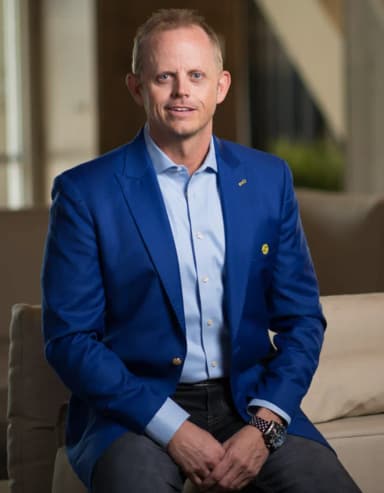
TDM - Ryan Sauers
Ryan Sauers: [00:00:00] AI can help us prep to go in the boardroom or have the meeting, but it can't go in there for us. [00:00:05] And my point of saying that is I see more and more stuff coming to me from emails or stuff that people [00:00:10] that usually are about a three-word email person that now write these glorious emails, and I'm like- that's pure Chat [00:00:15] GPT. That's- It's not you. Yeah. That is not their brand. That's not how they talk. And again, I think just because [00:00:20] it's it's faster, just because you can do it doesn't mean you should do it.
George Wright III: [00:00:25] [00:00:30] All right, welcome back to The Daily Mastermind, George Wright III with [00:00:35] your daily dose of inspiration, motivation, and education. Listen, guys, I'm excited [00:00:40] today because we've got a guest on the show. I've been trying to get up with him, and I think you're gonna be really excited. We've [00:00:45] got Ryan T.
Sauers in the house. How you doing, Ryan?
Ryan Sauers: Hey, George. How you doing, buddy? Thanks so much.
George Wright III: [00:00:50] Yeah. No, listen, I I'm excited because we're gonna be talking about leadership, trust, communication, and [00:00:55] let me give if your first time listening, make sure you do me a favor and subscribe to the show.
You're gonna, you're gonna see some really [00:01:00] cool stuff coming out. We got a lot of great information today. But let me give you a quick intro to Ryan. He's got [00:01:05] 30 years of experience in leadership, communication, marketing, business. As a keynote speaker, [00:01:10] university professor, entrepreneur, media host but he's written multiple books, Everyone Is in [00:01:15] Sales and Would You Buy from You?
And you have another book coming out pretty soon here, right?
Ryan Sauers: I do. And [00:01:20] I'll tease it out with saying is Would You Follow You? Talking about leadership, looking in the mirror and seeing are we [00:01:25] gonna follow ourselves with all our great advice.
George Wright III: I, the, the reason I love this and the reason I wanted to have you on is I [00:01:30] always as a marketer, as you are I believe that business growth with on, with authority and [00:01:35] marketing and leadership and trust is so important, but the founder behind the business and the identity and the, [00:01:40] the individual behind the business is so important, so I'm sure we're gonna get into that.
But your book has a pretty [00:01:45] powerful question that you got coming up when you just said that, would you follow you? What ins- what, what inspired, by the way, what [00:01:50] inspired you to go this direction with another book?
Ryan Sauers: So I guess if you were looking at trilogies, we start with [00:01:55] Everyone's in Sales, and it really was George, a communications book.
I said, let's take the word sales, good connotation, bad [00:02:00] connotation," and said, if you're communicating something, if you're passionate about it you're trying to sell, whether you wanna call it [00:02:05] sales or not." And then Would You Buy from You? Your Brand Makes a Difference was, you're really only competing with yourself, in [00:02:10] marketing a brand.
No one can be George Wright III. No one can be Ryan Sowers, good or bad, right?
And and I spent [00:02:15] years saying, what do I wanna, what do I wanna say?" And I went round and round, and then one day, I was walking down the beach. I'm like, "I wait, I got it. [00:02:20] Would you follow you?" And then it was leading and communicating with [00:02:25] clarity in a distracted world.
And, how do we cut through that? So we're [00:02:30] gonna talk about, we're about halfway through with it, and we're talking about, the mirror. As a leader, w- I'm [00:02:35] saying all these things, doing all these, espousing, I think, the best qualities, but are other people actually listening and following?
And [00:02:40] then the message and then the movement. And so we're in the midst of it, so I'm teasing it out here first, [00:02:45] folks. But yeah, that, that's what came to me.
George Wright III: I actually love it, and that's why I kinda wanna start with it. We're gonna... I [00:02:50] wanna dig into communication and trust and and leadership.
But I do have one other follow-up question on that [00:02:55] because what in your mind, you've been around a lot of businesses, a lot of leaders, what really separates [00:03:00] someone who has a leadership title from someone who is, pe- someone that people [00:03:05] genuinely wanna follow?
Ryan Sauers: I love the question. I say oftentimes when I'm teaching graduate students, for [00:03:10] example, I said, "Guys, ideally we have a great manager and a great leader."
But I said, "I've seen managers with a title that couldn't [00:03:15] lead their way out of a paper bag. People are following them because they have to, not because they want to." I said, y- "You get a [00:03:20] leader who's a nonprofit leader or you're not paying people to do something and people follow them, that's a [00:03:25] true leader," versus somebody that's doing it because they have to get their income or whatever.[00:03:30]
So I gave this story recently, George, just to pivot off that. I said, "If you had a star [00:03:35] senior football player and he's the captain and he's got the title and he's going to four-year ride i- in [00:03:40] college, and he comes late to practice, doesn't do anything extra," I said, "Does he have the [00:03:45] title?"
And I said, "Yeah." And I said, "Would you follow him?" And people said, "No." I said, "But what if you took a freshman [00:03:50] who doesn't play much, he's on special teams, he goes above and beyond, he helps the [00:03:55] coaches, he breaks down film, he's... Everybody wants to talk to him. Would you follow him?" And they're like, [00:04:00] "Absolutely."
I said, "So who's the leader?" And that's you
George Wright III: know- Yeah. This idea of leader and title has got to be mutually [00:04:05] exclusive, right? Yes.
Ryan Sauers: It
George Wright III: really is.
Ryan Sauers: Yeah. The ti- the title is, it's great if it's [00:04:10] there, but a lot of people I see are following sometimes because they have to, not because they [00:04:15] want to.
George Wright III: Yeah. That's such a great point, and I think people need to realize that they can be a leader at any [00:04:20] point. So this is really good. I'm looking forward to the book. I wanna get into communication, and so maybe you could give us a quick [00:04:25] backdrop of what, what took you down this path. Why, your background what, what brought you down this path of communication?
[00:04:30] Because you've got now a, a pretty good presence when it comes to speaking and keynoting and doing [00:04:35] media. So what is it that with communication and that specifically [00:04:40] drew you to that topic?
Ryan Sauers: It's funny my undergrad, I started out and I was like, I don't know what I wanna do.
Is it [00:04:45] business? Is, communication degree?" And, I always go back and say communications or communication. And in that first book, I actually [00:04:50] reframed sales to communications, plural, to saying, this is a two-way dialogue, [00:04:55] not a one-way monologue. But, at the crux of it, George, honestly, [00:05:00] everything I've done and every blessing I've had has been, whether it's writing national articles or [00:05:05] writing books or, when I did my dissertation when I got my doctorate in organizational leadership [00:05:10] or speaking or being a media host, we were talking about that before we went on air.
[00:05:15] And, every bit of that comes back to our verbal and non-verbal and written [00:05:20] communications. And so I'm so passionate about the subject and, preach to [00:05:25] anybody who will listen like, "Hey, you wanna stay ahead of AI? Be human and triple down on these [00:05:30] skills."
George Wright III: Yeah. It's so important because if you wanna be a leader, you gotta be able to communicate.
But I [00:05:35] think that anybody in business anywhere. You kinda talk about I don't know if this is in your first book or whatnot, but you [00:05:40] talk about the gap between intention and impact, and I'm curious what you mean by that when you talk [00:05:45] about this gap between your intention and impact.
Ryan Sauers: Yeah, again, in working with a lot of [00:05:50] executives, it could be, let's pivot from our pastors or nonprofit executive leaders. Their [00:05:55] intentions are solid. The impact they have is oftentimes not [00:06:00] understood. For example, somebody, I'll walk in consulting and they say, "Ryan, you're full on to talk to whoever [00:06:05] here.
We have a very open door policy." And the more and more I talk to people, they're like, "Yeah, the door's open, but [00:06:10] we're not welcome to talk." And the door's- Yeah ... open, Ryan, if but no one wants to [00:06:15] listen. And so that's sometimes we think we're saying these things or we're putting a [00:06:20] mission and vision statement on the wall, but no one knows what it even is, and that's where we have these [00:06:25] grandiose core values and beliefs or whatever, and 90% of the organization says, "We don't even know what it [00:06:30] is."
And that's where I feel there's a gap.
George Wright III: Yeah, I really actually think that's probably one of the biggest mistakes. I'm [00:06:35] curious, what other, what are some other, big mistakes that you see business owners and leaders [00:06:40] making when it comes to communication? What are some of the down- downsides that they've been not identifying?
Ryan Sauers: [00:06:45] I'll tell you one, George, I think is one of the biggest ones. It's gonna be a part of the new book. I'll tease that out. No [00:06:50] response is still a response. And, so many people, they could say they're [00:06:55] busy, they forgot, they lost it. Maybe they're too arrogant to re- remember the, it's not [00:07:00] important to them.
But what I always come back to is what you're conveying is whatever your reason is, it comes across [00:07:05] in the wrong con- context. Whatever your... When you don't respond in any fashion, you are [00:07:10] communicating something. And oftentimes I have managers, lea- leaders, if you will, say, "I didn't, I, [00:07:15] that wasn't my intention."
I said, "I know it wasn't your intention, but that's how it comes across."
George Wright III: Yeah, [00:07:20] and I don't th- I think more and more people realize too late in the game that your communication is affecting it, [00:07:25] whether you do communication badly or whether you don't communicate, so I think you're absolutely right. How can [00:07:30] leaders and business owners, whether it's with internal clients, customers, whatever it is, how [00:07:35] can they be more intentional with the way that they communicate?
What are some of the strategies or [00:07:40] tactics you give people in order to really create effective communication?
Ryan Sauers: I [00:07:45] think one thing right now I'm saying, use AI to be a tool to be more efficient, to expedite [00:07:50] what you're working on so you have more time for personal relationships.
I've been saying recently, AI can help us prep [00:07:55] to go in the boardroom or have the meeting, but it can't go in there for us. And I think, yeah, some people don't [00:08:00] understand it, wanna complain, like when social media came out. You got some people just trying to... and my point of [00:08:05] saying that is I see more and more stuff coming to me from emails or stuff that people that I've- [00:08:10] You know, usually are about a three-word email person that now write these glorious emails, and I'm like- that's [00:08:15] pure Chat GPT. That's- It's not you. Yeah. That is not their brand. That's not how they talk. And again, I [00:08:20] think just because it's it's f- faster, just because you can do it doesn't mean you should do it. And so [00:08:25] again I just come back to that in- intention we have in our head versus the [00:08:30] impact, and we...
Some of the strategies are taking a breath, the 24-hour rule, [00:08:35] like in sports. Not being faster against isn't always better. And are we truly [00:08:40] listening? Are we really stopping in our crazy fast-moving world to, to listen to what somebody's really saying? Or are we just making a [00:08:45] quick judgment to shoot off another email, text, social post or whatever?
George Wright III: Yeah. It's it [00:08:50] is crazy with this new AI world, and I know that's a big part of what you try to communicate when you're working with [00:08:55] leaders and organizations. You've even used that term is it's, getting more human-to-human connection. I'm [00:09:00] curious why that's, even becoming more important today.
You've alluded to it, but...
Ryan Sauers: Yeah. It's funny. You-- in my [00:09:05] second book, believe it or not, this... I've had a hiatus here. Did a dissertation in 2022, so that was like a book, in, in [00:09:10] between, which was on entrepreneurship and leadership. But 2015 is when "Would You Buy From You?" came [00:09:15] out, and I started talking about #humantohuman.
Little did I realize, 11 years later, [00:09:20] that's become even more important. I didn't... probably you nor anybody we've read about artificial intelligence, but to see [00:09:25] how probably when I jumped on it four, AI about four years ago, no one was even talking about it. [00:09:30] So it kinda reminds me of a supercharged version of when social media came out 20 years later.
Of [00:09:35] people changing everything. And so again, this human to human is saying, [00:09:40] only George can be George, only Ryan can be Ryan. I tell my students, "Why are you in, in school? [00:09:45] Why are you getting a graduate degree?" Because if AI can do every Excel thing and do all that stuff, [00:09:50] and you can't bring any value to the organization or company you're working with, you can't shake a hand [00:09:55] or build a relationship or be human, then, it's a scary world where you got bots talking to [00:10:00] bots, and then, do the human beings even matter?
And of course they do but people have to have the skills and continue to [00:10:05] develop the skills, these soft skills, communication and leadership, because they matter more than ever.
George Wright III: [00:10:10] Yeah. Like, when you're working with leaders and things, how do you help these entrepreneurs embrace the [00:10:15] technology without losing the personal connection?
Ryan Sauers: Yeah. It's... y- you get [00:10:20] three extremes. You get the people who wanna jump in and "We love this. We're gonna turn everything over to that." I'm like, "Then you're losing your brand. You're [00:10:25] losing, who you are." On the other hand, you get people who go, "I don't even understand it. I just like to make funny images."
[00:10:30] I'm like, "Okay, you're not even in the game here." A- and so again, you've got to take people-- I try to [00:10:35] meet people where they are. I always say 18 to 88, and say, how do we dumb this down? How do we [00:10:40] increase you up?" Depending on where you are, and, use these tools to our advantage.
And, again, when [00:10:45] social media came out, sure, back then Twitter, now X, you could put stuff out, this vir- the regular [00:10:50] post, and there was a huge audience. The, the... It's a whole different ballgame 20 years later. So with [00:10:55] AI it can't replace us. It has to make us more efficient.
[00:11:00] But I guess what I'm trying to say is I feel we have a greater opportunity as [00:11:05] leaders as entrepreneurs than n- in 2026, 2027 than ever [00:11:10] to embrace our humanity and use these tools just like we use a hammer or a screwdriver or [00:11:15] whatever, because if everything's becoming automated, if everything's a chat box, is [00:11:20] everything, text us for faster service, and we bring the humanity into it, some people who've been around the block a [00:11:25] long time go, "Wait a second.
Are you saying what's new school could be old school?" And I'm like, "Exactly." [00:11:30]
George Wright III: Yeah. That is so true, and I think it is gonna be more and more... the more I get messages, the more I [00:11:35] interact with companies, clients, and everything else, the more AI I see creeping in, and you start to tune [00:11:40] it out. At some point, you're gonna tune it out, but you for sure will digress in your [00:11:45] relationship with them because you know you're getting automated responses.
In fact, I can't even tell you, like, how many times [00:11:50] this week I've replied back with They're even starting to use terms like "This is [00:11:55] not an automated bot." And you're like, "Bro, like I just talked to you five minutes ago. This is clearly a, a [00:12:00] cold email you just sent from an automated bot." And then, "Ah, you caught me red-handed."
You know what, man? Y- it-- you can joke [00:12:05] about it, but at the end of the day, you're losing trust, you're losing [00:12:10] relationship which is actually a great way to pivot into this because I think that trust seems to be a [00:12:15] very ambiguous term that everybody's like, "Yeah, of course I wanna build trust," and stuff.
But you really do [00:12:20] emphasize this. There's an important it's an important thing for leaders to build trust with their [00:12:25] teams, right?
Ryan Sauers: I couldn't agree more. It... And again, it-- my, my newest endeavor has been walking in with [00:12:30] 18, 19, 20-year-olds into some of these 50, 60 person classrooms.
They, obviously I'm a [00:12:35] lot older. And then how do you build trust when people have, spent a generation on their phone? They don't know what [00:12:40] 9/11 is. Somebody told me the other day they didn't know who Garth Brooks was. And so you... but what I see, whether it's the 18, [00:12:45] 19, 20 or 50, 40 or 50 or 60, you build that trust, [00:12:50] and you can take your team, like the good to great.
You can take and drive the bus anywhere. And [00:12:55] you and a lot of times I put together crazy kinda looking teams, but they're so [00:13:00] invested and so they got your back. Even if they're not making the money they should at a period of time 'cause they [00:13:05] know they got, you got them. And again I have the most fun with that, and it's about being [00:13:10] authentic.
It's about being transparent. It's about being genuine. And it's also about, hey, as a leader, you gotta [00:13:15] be the first one to say, "That's my bad. That is on me. I'll make up..." And, you and I had something the other day, and [00:13:20] you showed me your leadership and won't say any more than that, but you just showed me your leadership real time George.
[00:13:25] And to me, that's just what it's at, is that you... people wanna be around real, transparent, [00:13:30] authentic, genuine people.
George Wright III: Yeah. It's I actually had a, a situation come up just recently because as the [00:13:35] host of the Franklin Planner Podcast, I interview s-some of the world's top authors and [00:13:40] athletes and on my podcast as well.
Super shout out to the audience 'cause we're cranking the ratings right [00:13:45] now. But but I, I do have some automations, and I do this for the benefit of my team. I wanna make sure that [00:13:50] when the episodes go out, they know automatically where all the links are and how they can share it and things, [00:13:55] because I don't have time to just sit and grab all those links.
And automated message went out just a little premature, [00:14:00] and I had to just own it. I had to go, "Hey, man I apologize this, this went out a little early, [00:14:05] but, here's the situation." It's one of the reasons why when I use automation, I do not let [00:14:10] the team use my name in the automation.
You can say, "Hey, it's from the Daily Mastermind team. It's from Franklin [00:14:15] Planner team." And when you do that, p- look- People love it. In fact, it's funny, Ryan, because we [00:14:20] with our magazines, we do-- You know, we just crossed, 10,000 interviews of executives just in Valiant CEO. [00:14:25] And people don't even mind being interviewed by AI now if you tell them it's [00:14:30] AI because the trust factor has to be there.
And so it's just a crazy world. But I [00:14:35] was gonna ask you, because you have so much experience in this, what are some of the ways that you [00:14:40] communicate-- you can build trust with your team? What are some [00:14:45] proactive ways? 'Cause of course, the obvious, like I, I wanna be authentic and do things.
But do you have [00:14:50] certain strategies or tactics you give or suggestions you give for leaders to proactively build [00:14:55] trust with their team?
Ryan Sauers: I do. What I use is I use a lot of humor. I'm the first to, when [00:15:00] people-- When I walk into a room and what they're expecting or when they read a bio, I [00:15:05] want them to say, "Look," I'll call myself on that, make them laugh.
Sometimes I'll poke a joke at myself to let them [00:15:10] know, "Hey, I... Life's not," I don't take myself that seriously. And I think I've seen a lot of people go, "Oh, this is [00:15:15] not what I was expecting." And I think when, no one wants to be around, The best example I could have is [00:15:20] I've been saying this a lot recently, George.
This is-- I guess this is my philosophy is no one wants to be around-- If you think about [00:15:25] social media, it's a highlight reel and it's a lowlight reel. "Hey, my daughter just got married. Hey, [00:15:30] please pray for my grandmother. She's in the hospital." But no one said, "Hey, my computer just died and water [00:15:35] went on it."
Yeah, most people aren't posting the 80% of life. And so I think the more real [00:15:40] and just down to earth we can do and keeping promises and when we-- Like you said before, [00:15:45] if something goes out, and it happens to me all the time, I'm saying, "Look, I gave you my word on that.
We'll fix that [00:15:50] 100%, sor- But hey, you got a sneak peek, like in your thing, of something I was gonna do." And people [00:15:55] will trust you if you're gonna use technology, if it's George or Ryan or whoever [00:16:00] saying, "Hey, trust me on this." But, it's earned way over time, and it can be [00:16:05] lost in a second.
George Wright III: It's it's a great strategy though because in the end of the day, I think [00:16:10] most leaders stress and have anxiety so much about what their results are and how they're [00:16:15] perceived and everything like this.
And when you can just sit back and be like, "Look, man, just..." Trust is actually built by being [00:16:20] authentic. Being authentic actually takes pressure off you a little bit, so that's not a, that's not a bad thing. I do [00:16:25] think a lot of people get in scenarios where they have to rebuild trust though, and so I'm curious, what would you [00:16:30] recommend or suggest when someone has damaged the trust level and has to rebuild it?
Ryan Sauers: Yeah, it goes into [00:16:35] that, the branding part of my second book is I think we realize, in our America or whatever, [00:16:40] quicker you can jump on something and say, "Man- That's not me. I screwed up. I'll make it right. [00:16:45] I wanna earn your, your respect and privilege back."
But the longer we sit and go the reason, it wasn't really my [00:16:50] fault," and all this stuff. You see it through the media and the news. The quicker an athlete or a person goes, [00:16:55] "Dude I'll take responsibility. It's on me. Let's move forward. I'm gonna earn it back," versus continuing to blame things, [00:17:00] blame circumstances.
Because I think what you do there, George, is you get people that are watching [00:17:05] like, "This guy's not taking ownership for anything. They just keep doubling down on what they didn't do." And I [00:17:10] think if you come out and everybody realizes we're human, and, you gotta s- you gotta earn it [00:17:15] back.
But most people are willing to watch and see if you can do that versus making a bunch of [00:17:20] excuses.
George Wright III: Yeah, taking responsibility is a big one, right? So you can really get a lot [00:17:25] of damage control just by starting with that. So yeah, okay, s- I really wanted to get a, [00:17:30] a couple more things in here with this episode because I wanted to talk to you about your personal philosophy on [00:17:35] things.
And one of the things I did wanna ask you though is: How can someone honestly evaluate [00:17:40] if they're the kind of leader that other peoples will wanna follow? 'Cause it's tough to evaluate yourself [00:17:45] without feedback. But is there a way someone can say, "Look, I wanna I wanna really honestly [00:17:50] evaluate if I'm the kind of person people wanna follow"?
Ryan Sauers: Yeah, I use assessments all the time. And one of the most [00:17:55] powerful is the 360-degree assessment. Because, in traditional evaluations, managers, [00:18:00] leadership, we do an evaluation on an employee. But we're not getting what do their peers think? What do the vendors think? What do the [00:18:05] suppliers think?
What does upper management think? What does the guy below him think? What-- We just see this one prism [00:18:10] view, and so that's one tool, whether it's a tool or not. But also finding out, [00:18:15] okay, you can be the boss, you can be the leader, you can espouse all this stuff, but what do people really say when you're [00:18:20] not in the room?
Jeff Bezos had that. And so it's... I think you've gotta find [00:18:25] people who are in your circle, that you know they have your best interest, [00:18:30] but they're willing to tell you the truth. And I've have some of my best friends in my life that have been, "Ryan-" [00:18:35] You do know that you've told me this story four times and every...
Or whatever it is, and I'm like, [00:18:40] "I'm sorry." But I don't the higher you go up, I guess I would say to your listeners or to you, the-- you [00:18:45] got more and more people who just went, "Oh, that's great. I agree. That's awesome. That's a great idea." And sometimes you need people to say, [00:18:50] "You know what?
I like it, but I'm not understanding it," or whatever, and you gotta welcome... Where I, when I was younger, I wanted to [00:18:55] kinda why don't you like it? You should like it." But sometimes you, if it's people that you know really care about you, you go, "What am [00:19:00] I missing here?" And sometimes that's why I postponed book three, 'cause I was like I'm not certain what I [00:19:05] wanna say," and I had people around me go, and it makes sense until it started gelling.
But it [00:19:10] took people close to me going, "I like some of it, but I'm not sure I follow all of it." And that's [00:19:15] when I think you realize you're really being that, like I said, that transparent because you're listening to [00:19:20] people, whether you agree or disagree, and trying to get feedback and trying to get better.
George Wright III: Yeah, I think it's the difference [00:19:25] between leaders or individuals that are just trying to get their point out and get their message out [00:19:30] versus take feedback because there are true reasons they wanna make a change, an impact and results. And it's only [00:19:35] gonna come from being two-way communication, right?
Ryan Sauers: And I'll say this one time. I said it in a speech recently. I said, y- everybody's in [00:19:40] a, in an office, and you walk past, and you're the leader, manager, whatever the title is, and you walk past, [00:19:45] Cindy, who works for you, and 'Cindy, you have a good weekend,' and you're moving 100 miles an hour."
And I'll demonstrate this at the speech like, [00:19:50] "Hey, Cindy, how you doing?" Patting on the desk. And I'm walking as fast as I can and then she's "Hey, you got a [00:19:55] second?" And I'm like, "Ugh." And I said, "Do you see my body language? Did I really wanna stop?" My answer was I was checking a [00:20:00] box.
I was just being friendly and... But did I really wanna sit down and 10 minutes and hear about her weekend? And if I'm being [00:20:05] honest, no, 'cause I was moving on to the next thing. And so people can sniff that stuff out and see it, so [00:20:10] I'll demonstrate that a lot, and people go, "Oh my God. That's so true." And I'm like, "We all do it."
It's just being [00:20:15] aware and saying, "If we're gonna ask, we gotta really mean it, or just don't ask."
George Wright III: Yeah, exactly. You gotta really mean it or just [00:20:20] don't ask. And you're right, 'cause people sniff that out pretty quick. If there was something that you you know, p- [00:20:25] personally with all your experience and things, if there's a certain thing that you would challenge our listeners to [00:20:30] change whether it's le- leadership, communication, trust, marketing, what would be something you'd [00:20:35] challenge them to change in how they lead their teams?
Ryan Sauers: I think we get [00:20:40] people that, they start growing bigger and bigger organizations, and they maybe get a little [00:20:45] too, they're too high in the sky and that they've forgotten where they came from and they're not [00:20:50] really going and saying, "Hey, am I still..." One of my findings in my dissertation on leadership was, [00:20:55] are you still willing to go back and have the work ethic to do what you did 20 or 30 years ago or are you above [00:21:00] that now?
And some, some people are like, "I don't want... Dude, I did that for 20 years. I'm not doing that." Then it's [00:21:05] kinda easy to see for the follower, if you will, of going, "Yeah, he's saying he would do it, but there's no way he's [00:21:10] coming up here on a Saturday night if we have a leak." And if you're willing to do what you did to get to where [00:21:15] you are, not that you want to, but if you're still willing to do it, then I think that is a l- [00:21:20] message to leaders because people are watching whether we realize it or not.
George Wright III: Yeah, that's why I love the, the [00:21:25] titles of the book. It, you could very easily go out with leadership, communication, things like this, but when you pose a question, would [00:21:30] you follow you? That, that's something that kinda is self-reflective. Would you buy from you? Would you [00:21:35] follow you?
I think it's something that not only-- 'cause the answers are always in the questions, so I think that's a, a [00:21:40] super good way to do that. I'm pers- I'm kinda curious personally on from your end, what are, [00:21:45] and I like to ask most of our guests this, what are the daily rituals that you have [00:21:50] as an entrepreneur, founder, leader whatever, that keep you solid on track with what you're [00:21:55] clear on doing and the impact you're trying to make?
And do you have daily rituals that you generally apply on a day-to-day? [00:22:00]
Ryan Sauers: I try yeah, I do. I try to always have time for, to be grateful [00:22:05] for the life that, we get to do these shows and get to do these things and just be grateful for all the [00:22:10] people I've met in my life and how I showed a class the other day the Steve Jobs commencement speech the other day, [00:22:15] and he was talking about you can't connect the dots going backwards.
You can't connect the dots going forward, but going backwards. And I can see my [00:22:20] career, oh, that happened then. Being thankful, prayer, gratitude doing my best to get [00:22:25] some exercise in of some capacity every day. Whether I accomplish it or not, it's a goal. [00:22:30] Trying to give every human I can, I mean this with everything in me, George, whether it's a student, [00:22:35] whether it's another CEO, whether it's a person I'm interviewing, just a kind word and [00:22:40] just to sometimes it's a pat on the back when I see somebody's really upset or d- I just say, "Hey, you got this."[00:22:45]
And it's just something I try to live by of going, you just don't know, and I've especially seen [00:22:50] it more in the last couple years with the younger generation, the depression and the anxiety, and you just don't [00:22:55] know when somebody is at their breaking point, and those kind words, which is a daily thing I [00:23:00] try to do and I mean it.
I'm not saying it 'cause and that-- They're like, sometimes they come back and go, "That made [00:23:05] my-- That turned me around." And that's kind of a daily ritual for me. Sometimes it's, it [00:23:10] wears me out, but I try to look ev-even at the grocery store, somebody that looks like they're on their third job.
I'm like, [00:23:15] "Hey, you doing all right?" And they're like, "Eh, I'm making it." I'm like, "Hey, you're doing great. I appreciate you." And every word [00:23:20] of that, and that's kinda my mantra is meeting people where they are whether they're a multimillionaire [00:23:25] or, living on the street or any age in between of I'm not better than them.
I've worked hard to get to where I [00:23:30] am, but again, am I willing to do what it takes to keep growing? And the answer is yeah.
George Wright III: Yeah, it's a [00:23:35] great daily practice 'cause it keeps you humble, keeps you authentic, and I think a lot of people, if you were to say that to them, they'd say, "Yeah, [00:23:40] that's a great idea, and, w-we should do that."
But having it as a daily intention is actually a [00:23:45] great feeder for staying and maintaining a, a, a good leader demeanor and identity, [00:23:50] and so I really like that. This has been great, man. I really think you've got a lot to, to bring. I'm excited about your new [00:23:55] book and things. What would, before we take off, is there any last thought, idea, strategy, tip [00:24:00] you would wanna leave for our audience, entrepreneurs, business owners?
Ryan Sauers: No matter what your age, no matter how much money you have is [00:24:05] if you do any stage of life. I was talking to somebody the other day, and they have done very well in their business.
They said, "Ryan, I wanna [00:24:10] become-- I'd like to go back and be a high school basketball coach." But he-- and I was laughing 'cause he was being serious. [00:24:15] But what I would say is, and I tell a lot of people, "If you do what you love, all the [00:24:20] money and stuff's gonna follow. And i-if you do things for the wrong reasons or the wrong intentions or [00:24:25] whatever you're gonna be not the happiest person."
And there's a lot of people I see that... [00:24:30] or A business owner sometimes, probably like you, George, I love what I do and I love to [00:24:35] work and do a lot of things, but then you gotta realize, all right, I also gotta balance all the other parts of my life, my family, my friends, [00:24:40] and my health.
And I think I would just say be purposeful, be deliberate, be [00:24:45] intentional about what matters the most. And like Covey said, put first things first. But I've [00:24:50] over the years said also put last things last. So if it's hiring a marketing [00:24:55] person or a coach, don't wait till that day we really need this.
The last thing I'd say is I knew the Ca- [00:25:00] know the Cathy family of Chick-fil-A, and Dan Cathy, who inherited it from his father Truett, [00:25:05] Andrew, the grandson, is now running it. And Dan said, "Ryan, we transitioned [00:25:10] from me running it to Andrew when times were good, not in chaos." And that's always [00:25:15] stuck with me, 'cause most companies make a transition or when there's panic or...
And I think operating [00:25:20] out of that place of what's the word? Being calm and being deliberate, purposeful, intentional is a great place to be. [00:25:25]
George Wright III: Yeah, that's great advice. I really think that's really good. There's like a bunch of stuff packed in there, so I hope I hope [00:25:30] everybody caught that, 'cause that is great advice, especially for individuals that are trying to, you can [00:25:35] get-- you can be very successful and not fulfilled. You can be very successful and not be doing what matters most. And at the [00:25:40] same token, you wanna be intentional with your life. I really believe that's huge. So thank you so much for being on the show, man. I [00:25:45] really appreciate you.
How's the b- easiest way for people to get ahold of you? Just, And I'll put your contact details and [00:25:50] things in the show notes as well.
Ryan Sauers: Right now is just go... If someone should shoot me an email from the show right now while [00:25:55] we're reconstruction and things, just ryan@ryansowers.com.
That'll come right to me. I'd love [00:26:00] to hear from anybody that, you know... A- and or social handles, Ryan TSowers or [00:26:05] Ryan Sowers is LinkedIn, TikTok, Instagram, Facebook, YouTube [00:26:10] going back to X and Twitter in the day. So no, George it's a pleasure. And the last thing I would just say is, sure, if you're finishing out, [00:26:15] tell those leaders out there not to believe everything they're seeing online for from influencers and stuff, because a lot of [00:26:20] it's very not real and people haven't been there, done that.
So make sure they do their homework about who they're [00:26:25] bringing in.
George Wright III: Yeah, I'm a big f- I'm a big advocate of that because with this AI world, people are [00:26:30] gobbling up the attention, but they're gobbling it up with everybody's an expert now that they got access to AI. So it's, [00:26:35] it really is looking for the authority.
It's really looking, cutting through. If you're listening to this, that's great advice. You wanna make [00:26:40] sure you take that up. And also, I would encourage you to share this show and contact me. Let me know what you're [00:26:45] up to. Let me know what you're struggling with. Let me know what you're winning at.
That's the reason we do this show. Our goal is to help you drive [00:26:50] and grow your mind, body, money, business, and create the lifestyle that you were meant to live. But [00:26:55] you gotta be proactive. Nobody's gonna come looking for you. You gotta get in and get involved. So thank you guys for listening. [00:27:00] Thanks Ryan for being here and we'll look forward to having you guys tomorrow on the show.
Have a great day.
[00:27:05] [00:27:10]