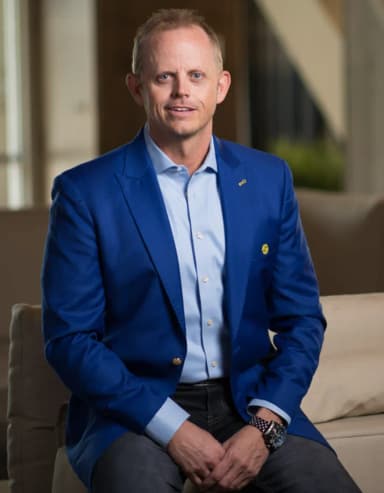
We don't deal with our boss. We deal with our childhood that's laid over who we make our boss to be. I hate to say it. It sounds icky, but I haven't met a person yet who doesn't overlay their childhood over every single relationship. Okay, welcome back to The Daily Mastermind. George Wright III with your daily dose of inspiration, motivation, and education. I tell you what. I'm excited today because we've got a guy that I brought on the podcast that I think real similar with him. We've got some of the same focus and passion. And so Mark J. Silverman, it's good to have you on the show, brother. Thank you for having me. I appreciate it. Yeah, this is good because you have a passion about a topic that I think is a growing concern. I know we share that thought. But just so everyone knows a little bit more about you, if you don't know Mark, he's an executive coach with more than 20 years of leadership and executive coaching experience. but he's got a bestseller, The Rising Leader Handbook. He's also written other books, Only Tens, 2.0, and The Difference. But he's also the host of The Rising Leader Podcast. And he works with entrepreneurs, founders, and executives, basically to build resilience and capacity, so that they can lead more effectively under pressure. So what I'd like you to do, Mark, if you wouldn't mind, because you actually have a very interesting story that a lot of people probably haven't heard of, but it's the basis and foundation for why you're so good at what you do when it comes to working with executive leadership. So give us the backdrop on what you kind of went through. So I started off life pretty successful as an alcoholic and a drug addict and a guy who couldn't get out of his own way. I went to college for about a month and the drugs and the alcohol couldn't sustain that. And I saw people who could do that. I couldn't do two things at once. I'm good at one thing and one thing only at a time. And it wasn't until 1989 when I was 27 years old that I got sober. My brother lived in Washington, D.C., and he was chasing me all around the country. We didn't have the internet back then, trying to find where I was and where I was living. And I came here and I got sober, wound up going to college, wound up, you know, at 27. I graduated in my 40s, but I went to college, got married, had kids. And slowly, when I got out of the restaurant business, I got a sales job. And all of a sudden, I went from a guy who made $26,000 a year in his early 30s. I remember when my wife and I got married, I said to her, I may never be more than a waiter. And she was all right with that. But all of a sudden, I started getting really successful. I started doubling my income every single year. to where I was making half a million bucks a year. I was the committee chair for the Boy Scouts. I was third grade basketball coach. I was a pillar of the community. Doing it all. Drove a sports car, had the million dollar house, had the Hugo Boss suits. But what I learned is that there was a lot of reasons why I was an alcoholic and a drug addict. One of them was ADHD, undiagnosed. But childhood trauma and things like that, that come calling in midlife that I think a lot of people ignore. We try to work it away. We try to, we try to do everything we can not to listen. You know, these days we're starting to talk about mental health for men a little bit more, but just a little bit more. We're still kind of, you know, the manosphere is still about toughing it out these days. And when that stuff starts to come up, that's an opportunity for it to come up, see the light and leave and heal and shift gears. And I think we get a whisper and then a shout to change gears and do things differently somewhere in our 40s and 50s. And if we don't listen, women tend to kind of go into burnout and adrenal fatigue. Men tend to blow shit up. Yeah, exactly. We blow up our marriages. We blow up our businesses. We blow up our health. We do something, anything to change whatever we're feeling. So that's what happened to me. And I didn't know it. So my marriage fell apart and stone cold sober and I was getting sick all the time and having panic attacks. And I was just suicidal and I wanted to die. And I know I couldn't do that because I wouldn't leave that legacy for my kids. And what I did instead was I just went about trying to survive. I decided I was going to run the Marine Corps Marathon, which I couldn't run a mile. And I decided I wanted to make a million dollars because I really thought I was going to die any minute now. And I wanted to leave a million dollars for my kids and my ex-wife. And that year, I ran the Marine Corps Marathon and I made the million dollars. And the coolest thing about that was while I was training, I was listening to every self-help book known to man, every spiritual book. I was learning to journal. I was doing EMDR and trauma therapy. So at the end of that year, my career was back on fire and my health was better. My kids were doing good. My ex-wife was doing good. And that's when coaching came into my life. I remember getting a call from an author. I signed up for one of his, my first ever retreat. And he called me and he said, and he calls me out of the blue. And he says, Mark, Spirit told me you should come to my coaching program. I'm like, Spirit told you what? I'm a sales guy. Right. And how do you know my name? Like, you're this famous guy. Anyway, long story short, I took one coaching class. He told me he would give me all my money back if I didn't like it. I could do any of his programs. He just has to follow his calling. And it was my ex-wife who said, I have been trying to figure out what you should teach people. Like, you have so much to do. We didn't know what it was. We thought it might be human resources. But like, you can't make half a million dollars a year in human resources. So finally, it was coaching. And that's when I found kind of a duck to water. Like I was finally in my element being in people lives and being a champion for their best selves being an honest voice confronting them when other people wouldn confront them on things And I just watched people lives start to soar So that was about 14 years ago. So I'm still here. Yeah. And it's interesting because your backdrop, and I appreciate you sharing that with us. And I think a lot of people listening to this probably could relate and they could probably see what you're talking about because whether they do talk about it openly or not, most entrepreneurs, founders, and business owners are dealing with a lot of stress, doing a lot of things. And they probably have been through some of those ups and massive downs as well. And so now you're coaching and working with these high-level executives. And you talk about the fact that you really believe, and most of these individuals are in leadership positions, but you believe that leadership problem is usually a capacity problem. And so I want you to kind of help us understand, I want to first diagnose really what most people are dealing with so we can talk a little bit about some of the framework you give these leaders. But explain to me what you mean when you say you think they're dealing with a capacity problem. Okay. Let's just say you're talking to your significant other, your wife or your kids or something like that. Generally, if they come to you with a question or something's happening, you know how to handle it. And if you don't know how to handle it, you can work through it and figure it out. You can have a tough conversation with your wife. Now, let's say you're super tired. You're super overwhelmed. You've just read an article about how your business is about, you know, your business sector is about to go into the toilet, right? And your allostatic load starts to go up. You're scrolling Twitter and all of a sudden, you know, you're pretty clear on who you're supposed to hate and all this stuff. And your allostatic load, which is that load, that amount of stress that's in your body at any given time. So when you're kind of in a great place and you're on vacation and everything's working, your allostatic load is low. But most of us are walking around with that allostatic load up to our necks so that we don't have a lot of capacity or room to give people mulligans. So that same conversation that if you were in a great space with low allostatic load, you would be able to handle it or work through it if it was tough. Now you don't have any room for that. Now we go into the corporate world. Nine times out of 10, my clients are 10 times smarter than me. They know what they're doing. They make hundreds of millions of dollar decisions every single day. but they call me when they lose their shit. They go, Mark, I was in a meeting and the CEO questioned me and I lost it and I fumbled it and I didn't know, but I knew the information. I don't understand why that happened. And then we have to go back and go, what was going on with you at that moment? So the first thing we have to, the first layer is a reader's digest version of how to handle yourself. Like when I say this, everybody's going to go, duh, why am I listening to this podcast? But how's your food? Are you eating healthy food? Have you gotten a good night's sleep? Have you spent time with your family? Have you had downtime? Have you had playtime? Do you have some kind of contemplation program or spiritual endeavor that helps you get a bigger perspective? Everybody knows that's important. Everybody could write that down on a meme on their Instagram today. How many of us practice that? Well, not only that, and it's important because I want to make sure people listening to this are hearing that because we all know how to lose weight, how to get more energy, how to do these things, but we don't do it. So the awareness is the thing I really want to double down on. What you're saying is how many actually even think about it or analyze it or are aware of it, right? Right. And I'll worry about it next week. Next week, I'll get to the gym. Next year, when it slows down, this will happen. And we just push it and we push it and we push it. And I call myself the ghost of Christmas future. You know, most of my clients are somewhere in their 30s and 40s, some in their 50s. I'm 64 years old. I'm like, if I'm in better shape than you, there is a problem here, right? Because again, I'm the ghost of Christmas future. I've seen too many heart attacks. I've seen the strokes. I've seen these things happen. I've seen marriages fall apart. So we do the jacks are better piece. But then that's not going to do it. So now you're going to work and you're rested and you're in a good place. But you're still going to have the, you know, like, so the Rising Leader Handbook is separated into four main focuses. Leading up, being a trusted advisor. Leading across, leading on a team of other leaders. Then leading your team, then leading yourself. What happens when you have a boss, and we all know this, is we don't deal with our boss. we deal with our childhood that's laid over who we make our boss to be. I hate to say it. It sounds icky, but I haven't met a person yet who doesn't overlay their childhood over every single relationship. Now you go into the leadership team. You're on a team with other balls to the wall, talented people. Some of them are political. Some of them are underhanded. Some of them are awesome. All of them have agendas. All of them have needs. All of them need resources. And you're You're in cooperation for moving the organization forward, but you're in competition for position, all kinds of stuff. How do you navigate that? Now, all of a sudden, you're in junior high school. I don't know about you, but I don't know any 12 to 14-year-old who has handled life well. No. Yeah, exactly. And that's why people say, what is with the leadership? We're all adults here. Why are we acting like we're in junior high school? It's because of all these triggers and all these things that we lay over every single relationship. So when I'm working with a client and they come back to me and I tell them all my clients get unlimited access to me. They can call me any time of the day or night because I have really good boundaries and none of them abuse it. I can't get them to abuse it. But the best coaching is I was just in a meeting. I just had a fight with so-and-so over this. I don't understand why that happened. And then we can unpack it and slowly figure out what did you make that mean? They said this. What did you make that mean? What happened in your body And we start to unwind that So now leading your team is also the same thing Now we do leading you And leading you is last in the book on purpose because we want to go through how you act in the world with all these people, people in authority, people on the side of you, people who work for you. How do you act there? Now we start mapping out who you are, what your triggers are, what your values are, where your blind spots are. And once you become a student of who you are and how you operate in the world, now you can start taking some of those overlays off. You're never, ever going to take off all the overlays. But you start taking off the massive ones, the one that you walk around with all the time that people don't respect me. So the second someone says something that doesn't respect you, you're on it. You're you're you're so on it. Right. So you start taking these big ones and you start not taking the bait. Right. You start seeing yourself go for it and then asking a question instead of reacting. And one of one of my favorite exercises to do is when when someone has a rageaholic CEO, which I don't know if you've ever met one of those. But CEOs, most of the time, they're under pretty big pressure. So they'll bark orders. They'll say things, especially with a driver personality type, without any other sugarcoating. And any person on the team can take it any different way. Uh, for me, for my clients, uh, their job is to watch, do, uh, to ask questions, to figure out what's really behind the question or the, or the, or the snapping of the, of the CEO and watch their shoulders relax. If you can unearth what's really going on. So when the CEO or anybody snaps is, it could be, they don't have information and they're panicking. It could be, they feel out of control, right? It could any number of things. And when you figure that out and you're able to give it to them, all of a sudden you're the trusted advisor. Well, and it's a real leadership trait. And that's a real leadership trait for people to have, right? Because, you know, leadership really fails when, you know, you're reactive. You've got to be a little more proactive. I'm kind of curious when you talk to your clients, because I know you've said that, you know, leadership fails when the pressure you have doesn't meet your capacity and, you know, you become aware of why that is. how do you help your clients build up capacity? In other words, you know, being aware of all the things that are triggering things is one half of the equation. The other half being how do you just expand your ability and your capacity to take on more? Or is that not something that you want them to do? No, it's totally something I want them to do. It's almost like a shock collar for an electric fence for a dog. Yeah, the boundary is here and you can move it out, right? And what I want them to do is I want them to walk up to the fence and get shocked. Then I want them to walk up again and get shocked again. And slowly, two things happen when they do that. They get used to the shock, so they don't react to the shock. And the second thing is the battery in the collar goes down. So we handle it from both ends. We work on the inner stuff of why does this mean this to me? Why does this trigger to me? And then the outside is, so I used to tell my clients when I first became a coach, they can't talk to you that way. You need to set a boundary. You need to sit down and have a conversation. Now it's, I can't wait till they sit. I can't wait till they disrespect you. Build capacity. That is the best thing that can ever happen to you. If they can disrespect you and you don't care. Yeah. Yeah. Get to the point where you're a little more numb to it and you'll be able to deal with it better in addition to working on how you can deal with it better. Right? A hundred percent. So that's where capacity comes in. That's how your capacity starts to grow. When you can handle a little bit more than you did the day before, just a little bit more. And when you fail, it's just you getting your nervous system used to being in that uncomfortable position. I love it. I love it. That's so true. I really like that a lot. Well, let me ask you this. So people are dealing with pressure all the time, especially entrepreneurs and business owners. What are some of the signs that they really need to be aware of? Because there might be obvious ones, right? There might be some subtle ones as well that they are starting to get to their capacity other than when they blow up, right? Like, what are some ways that they can really look at the earliest signs that pressure is beginning to affect their actual delivery, their leadership, and their results that they're accomplishing? Sure. When they become more autocratic versus collaborative. If you find yourself barking orders, you're starting to move into a more stressed. That's a great sign. I love that. Yeah. Yeah. It's also, you know, when there's less curiosity, when you're not curious, when you can't look behind, that's it. When you're getting triggered often, when you're blaming, the second you're blaming or resentful is when you should look at yourself. self. For me, I know I haven't asked for what I wanted, set a boundary, or created an agreement if I'm resentful. So when you start to feel that, when you start to feel they don't do this, that should be your automatic trigger to go, huh, where wasn't I clear? What are my expectations that are not being met that I have not had a conversation about. Yeah, so let's really hammer that home here because, listen, if you're listening to this and you're feeling some of those signs of, you know, barking out orders and, you know, having a shorter patience and things, then what you need to look at is, say that again, the three things that you know that you need to start to look at to be able to fix that. So again, where have I not set a boundary? Okay. where have I not asked for what I wanted and where have I not created an agreement where there was an expectation I like the objectivity of that in other words you not just looking to fix yourself and what you dealing with It a real specific tangible tactical thing that you should be doing in order to help both yourself and set your boundaries and capacity So I really like that a lot. And that's a solution people can start to look at rather than just, I need to lessen my load. I need to not be so pressured. It's collaborative. It brings you into relationship. Yeah. Well, and things are becoming, look, digital overwhelm, AI, you know, the marketplace. That's kind of one of the last things I wanted to ask you is what kind of leadership mindset do you believe is going to be more critical than ever over the next, you know, two to three to five years, especially going into a lot of what we're dealing with right now? Where do you try to push or where do you think the mindset of leaders needs to go? So I'll turn that question around for you. Where do you think the world's going? Where do you think business is going? Do you know? What do I think personally? I mean, because things are getting automated and people are taking on more and more all the time. And I think what's happening is— But do you know what the world is going to look like a year from now? No, you have no idea. It's totally uncertain. Do you know what the geopolitical world is going to look like? Could be anywhere. No idea. Right? You throw a dart at it. When I was growing up, when you were growing up, there was some semblance of an order to what was next. And actually, there's even far less now. You have even let things could change tomorrow. You don't even have any idea, right? There's there's we have we don't know a thing about what's going to happen. So how do you plan for that? And the question the thing is, you can't plan for that. You can you can play whack-a-mole and try and try and guess. And some people are going to be where the puck is going to be. And a lot of people are not going to be where the puck is going to be. That's that's the hardest thing to do. The best thing to do is to be prepared and to be prepared. So let's say I'm going into a conversation with someone who I am at odds with. I have no idea who they're going to be, what they're going to be, what their triggers are going to be. Me being prepared is having my asks clear, my story straight, my facts straight, and myself in a state of calm and focus so that I can be the best I can be in that conversation. and I can be prepared for whatever direction that conversation goes. Same thing for the world. Make sure that if it's finance, make sure that you have several lines of finances. You don't know which one's going to be important, but if you need different sources of credit, make sure you have several sources of credit. But for me, it's more how do you accept the unacceptable? How do you accept things that are not fair? I think things are going to happen in business, in life, in politics that just don't feel fair. And when something doesn't feel fair, when you have a problem like that, you generally have two problems. The first problem is the problem. The second problem is this shouldn't happen. This shouldn't be this way. This isn't fair. And you're dealing with that problem. We want to get rid of that first. Life isn't fair. Life is going to happen the way life is going to happen. If it happens to you, it happens to you. Now, put all your resources into dealing with the problem. As the Navy SEAL says, work the problem. And you have to get yourself into a place. And that's the push-ups that you need to do now. The push-ups to do now are how do you get your spiritual life in order? How do you get your mental health in order? How do you get your nervous system in order? so that as things come at you, you just handle them as they come. Yeah, I think that's, it's interesting that, you know, a lot of times when I'm working with founders and entrepreneurs, I tell them, look, your success, happiness, peace of mind, fulfillment, and even progress is going to be in direct proportion to your ability to deal with uncertainty. And being prepared is a great piece of advice for doing that. You know, of course, we want a level of certainty in our life, but your ability to live outside your comfort zone and with uncertainty, because that's just the world we live in is very important. So, well, listen, Mark, I really appreciate you spending time with us here today. Before we take off, though, is there any other thoughts or recommendations, ideas that you have for individuals that might be dealing with a little bit of overwhelm, stress, burnout, and then how can they connect with you? Where's the best place to find you? The advice I have is put yourself on the list. You know, like you're probably a parent, you're probably a spouse, You know, like you're an employer and you just care about everybody in your life. That whole oxygen mask on yourself or you can't feed people from an empty teacup, you know, is so true. Put the oxygen mask on yourself. Be a little selfish so that you have something to give. Because if you're burnt out, there's just – you're not going to be able to help. And then if you want to get in touch with me, I'm on all the socials. And it's MarkJSilverman.com. mark the letter J silverman.com. And you can get my book only tens, which is my book about how to be an entrepreneur with ADHD for free there and a whole bunch of other resources. I have most of my resources are free. I love it. I love it. No, this is great. And this is a very important conversation. It's one of the reasons why I wanted to have you on is because I think a lot of us are trying to fix and create strategies and tactics and all these things for our business and our life and our relationships, communication. And we don't stop to think about the underlying pressure that's happening and how we can be prepared with it. So thank you so much for that. Listen, guys, do me a favor and share this show. I want to hear from you. I want to know what you're working on. Give us a update. Let us know what you're winning at. We can celebrate or what you're dealing with. We can help you a little bit more. That's the purpose of the Daily Mastermind. That's why I did it. I really believe that it's never too late to start living the life that you're meant to live, but you do need to get proactive and touch base with us. So thank you for being with us. Make sure you share the show. Once again, this is George Wright III. It's been the Daily Mastermind. with Mark J. Silverman. Have a great day.