The Daily Mastermind
ALL EPISODES
Episode 883 · Nov 29, 2023

How to Build Courage by Redefining What Success Means

Listen

Fear is the invisible wall between where you are and where you want to be. In this episode of The Daily Mastermind, George Wright III draws on Og Mandino's *University of Success* to explore why most people stay stuck inside their comfort zones and what it actually takes to break free. The answer, it turns out, has everything to do with how you define success in the first place.

George opens with a quote from Benjamin Hardy that sets the tone for everything that follows: "How you see yourself is how you act." If you see yourself as someone who plays it safe, you will play it safe. If you see yourself as someone who takes bold action, you will take bold action. Your identity is the engine, and courage is the fuel.

Why People Stay Stuck in Their Comfort Zone

Most people know they have unique talents. Most people listening to a podcast like this are entrepreneurs who understand that their best opportunities lie outside their current circumstances. And yet, day after day, they find themselves doing the same tasks, exerting the same minimal effort, and waiting for life to throw them a bone.

The culprit is fear. But here is what George wants you to understand: fear does not shrink when you avoid risk. It grows. As Og Mandino put it, "boredom is the legacy of fear." The less action you take, the more bored you become, and the more bored you become, the harder it feels to act. It is a self-reinforcing cycle, and breaking it requires a willingness to feel uncomfortable.

The Case for Taking More Risks

George makes a simple but powerful observation: life is already full of risk. Relationships, health, finances, business, none of these come with guarantees. You are taking risks every day whether you choose to or not. So the real question is not whether to take risks but whether you are taking risks that move you toward what you actually want.

Think of it like investing. You weigh the potential reward against the potential downside and make a calculated decision. The higher the risk, the greater the reward, and yes, the greater the fear. That fear is not a stop sign; it is a signal that something meaningful is at stake.

George also draws on Tony Robbins and others in the personal development space who have noted that human beings are wired to need some stress and uncertainty. We are designed to adapt, to stretch, to grow. Too much stress is harmful, but zero stress is its own kind of damage. The goal is balance, and that balance is personal. There is no one-size-fits-all answer. You have to know your own risk tolerance and weigh it against what you genuinely want your life to look like.

The Paradox of Control

One of the most honest moments in this episode comes when George addresses the need for control. Many people resist risk not because they fear failure exactly, but because they fear losing control. If I stay in my lane, the thinking goes, at least I know what to expect.

But George offers a counterintuitive principle:

The highest form of control is when one surrenders all control.

He illustrates it with the experience of learning to ride a bike, ski, or swing a golf club. You can study all the mechanics you want, but progress does not happen until you let go of the mental grip and just do it. The same is true in business and in life. What you already know, what already exists inside your comfort zone, is not going to get you past it. Growth requires releasing your attachment to the outcome.

Letting go, paradoxically, gives you the most control. Facing your fear gives you the most courage. It is not logical, but it is true.

How to Redefine Success So Fear Loses Its Power

Here is where the episode delivers its sharpest insight. George asks you to examine your definition of success. If your definition is "winning the game" or "reaching a certain destination," you are setting yourself up for paralysis. Every step toward that destination carries the risk of falling short, and that risk produces fear.

But what if you changed the definition? What if, instead, "to try is to succeed"?

When you accept that trying is succeeding, failure stops being a verdict. It becomes a data point, a step closer to your goal. You no longer need perfect conditions to act. You no longer need a guarantee. You just need the willingness to step forward, and that willingness is courage.

How you see yourself is how you act.

Benjamin Hardy's words from the opening now land differently. If you see yourself as someone who tries, who takes risks, who grows through uncertainty, then that is exactly how you will act. Courage is not the absence of fear. It is the decision to move in spite of it.

Action Steps

  • Identify one area where fear or the need for control has kept you from taking action, and take one small step forward this week.
  • Assess your personal risk tolerance honestly. What level of uncertainty can you handle while still making progress toward your goals?
  • Rewrite your definition of success. Replace "achieving the outcome" with "making the attempt" and notice how that shift changes your willingness to act.
  • Practice letting go in a low-stakes area of your life, whether that is a new physical skill or delegating a task, and observe what happens when you stop gripping so tightly.
  • Share this episode with someone who is sitting on the sidelines. Saying out loud what you want to start doing creates accountability and accelerates your growth.

The life you want is on the other side of the risks you have been avoiding. George Wright III reminds you that boredom, fear, and stagnation are not permanent conditions; they are symptoms of playing it too safe. Start seeing every attempt as a success, let go of the need to control the outcome, and watch courage become your default mode. It is never too late to start living the life you were meant to live.
READ THE FULL TRANSCRIPT

Welcome back to The Daily Mastermind. George Wright III here with your daily dose of inspiration, motivation, and education. I hope you're having a great day. We're going to start out today with the quote of the day by Benjamin Hardy. And the quote is, how you see yourself is how you act. Once again, how you see yourself is how you act. Great thought. Today, I want to talk to you about courage. One of the things I love about the Daily Mastermind is that it's become a real daily ritual for myself. You know, I'm always learning and growing and needing inspiration, motivation, and education as well. So when I learn, I get to share some of those thoughts with you. So I had a great reading session today where I kind of was going through some things in Ogmandino's book, University of Success, and it got me thinking. So let me ask you a question. You know you have innate talents and unique talents and abilities, and listening to this podcast, I know you want to achieve various levels of success in your life, but you're faced with opportunities and experiences every single day. So what is it that's holding you back most times from going after what you really want, what you really desire? What is it that's holding you back most of the time from going after what you desire? What's keeping you from taking risks and getting outside your comfort zone? You know, are you living too deep inside your comfort zone? Are you content with spending your days doing the same tasks, the same, you know, minimal effort or whatever it takes to get by? I know that because you're listening to this podcast, you know, most people listening to the podcast are entrepreneurs. So we know we have unique talents. We know we have and need, more importantly, we need to get outside our comfort zone to get what we want in life. And yet, you know that most of these successes and opportunities and adventures that you have, they lie outside your comfort zone and your circumstances. you know you know that it takes risk because risk is one of those keys to the gateway of success so what is it that's holding you back from taking more risks you know how do you how do you develop the courage to really move forward and face your fears and uncertainties and that's kind of some stuff that I was looking at when I was reading this chapter out of the book from University of Success the other day and I came across it and I had some really really good thoughts here by Ogmandino, he said something that really impacted me and it made me think. And hopefully, you know, it would make you think as well. He started by saying, hopefully you're really hurting deep inside. And I thought, why is that the case? Well, I think it's obvious because people don't make change when they feel good They not as willing to take risks when they feel good They change when they fed up I mean think about that in your life Is it usually when you hit your you know rock bottom or certain challenges and things that you really have made changes in your life? I mean, it definitely has been for me. You know, when you go through business setbacks or, you know, divorce or different relationship issues that you may have and things, that's when it really makes you take some change and take some assessment of where you're at. I mean, life itself is full of risks. And so why don't you take challenges and risks when you know that you're risking all these things anyway? Life is going to throw things at you whether you take risks or not. You know, risk taking in life is a lot like investing money. You need to just sit back and you need to determine if taking the risk is going to be outweighed by the rewards. I mean, it's really as simple as that. And yet the higher the risk, the more reward you're going to get. And the higher the risk, unfortunately, the more fear is going to set in, right? When you're doing things in life or in investing that bring a lot of risk, a lot of fear is going to set in. and some of you the older you get the more difficult it's going to be to take risks but you know sometimes the real cure is risk to your fear right the real cure for fear is risk because change is something that will sort of wake you up we're all given time in our life and we all need to decide what we're going to do with our time and you know we need to understand also you've You've heard me talk about this before. Tony Robbins, you know, individuals that are in the personal development arena have talked about how as human beings, we do need some stress and some risk and some uncertainty. We need that uncertainty to sort of fulfill our inner nature. That's why we get to the point where sometimes we need a change. And we're designed, quite honestly, we're designed to operate in times of stress, to keep us safe and adapt to life. and we're built to be able to handle some stress. Of course, too much stress is not good either. We need to learn to balance that. So how do you create that balance between risk and reward and not too much risk? Well, how we do that, I think what I've learned over time is different for every individual. There's definitely no one-size-fits-all answer to this. We each need to evaluate what levels of risk that we can take and yet also fulfill our needs. Because some people don't need a lot of risk and they're more content with where they're at, right? So it's all about balance when it comes to risk. But we need to be able to weigh that against our own definition of success. Because I think it's not just about how much risk we're able to take. It's a lot to do with what we want in our lives. You know this is back to your vision If you want a lot of things in your life you have to be willing and able to take more risks and um you know augmandino had made another comment which was great it he said boredom is the legacy of fear meaning you know the more you fear the less action you take the more bored you may become in life and you're left with that boredom so are you i mean you may be feeling bored in your life are you giving into your fears are you feeling like your life is kind of a treadmill. You know, risk-taking ironically is really the cure to that. It's the cure to fear and to boredom. So I go back to how you, you know, talk about taking risks and this idea of does the rewards outweigh the risk payoff? You need to experiment a little. I think my recommendation for you is to determine your level of risk tolerance. You're going to have to explore and experiment and take opportunities to get outside your comfort zone. Because the point is, is you've got to make yourself feel exhilarated and excited with life and have some degree of uncertainty while also making progress to your goals and just sort of balance what works best for you. Because look, your best life, it's going to come when you learn to create some excitement and experience and variety in your life. Because that's when you're really living. That's when you're really going to enjoy and create the best experiences. I've seen most people, you know, they sit on the sidelines of life waiting for the right opportunities or for life to throw them a bone, you know, or waiting for some, you know, opportunity to come in front of them. You know, don't be the person that's waiting for life to come to you. Be willing to jump in the game and start playing and taking risks so that you enjoy your life. And, you know, by default, you will create massive success and growth. You know, another challenge that we face, I know I definitely have struggled with, is this need for control. This need for control sort of outweighs sometimes the risk and it's your way of trying to mitigate fear. And what I've learned is that you can try to label and control everything in your life or you can start to let go, right? There's a real paradox and this whole idea of control, and it goes something like this. The highest form of control is when one surrenders all control. It's a real paradox because, you know, you've heard that phrase that you never really own something unless you're able to give it away. And, you know, another example of this, you know, you could take like learning to ride a bike or I don't know if you've ever learned to ski, water ski or snow ski. if you think about it you can learn all the mechanics and you can kind of control what you do and how you're doing it but it's not until you just let go that you can really it's hard to explain but you can really start to make progress you can't it's or maybe if you've ever gone golfing you're trying to figure out the mechanics of holding the the club and swinging and all these things yeah at some point you have learn that stuff but then you just got to let go and do it And you know we always learn best by losing ourselves and our identity and our need for control because what we already know isn't going to get us where we want to be. You know, what we have inside of our comfort zone is not going to take us past that. Ultimately, we create the highest level of courage when we surrender ourselves to whatever activity that we're learning and you know the the irony here is that you also get the best returns and the biggest rewards in life by being willing to let go and so it's a real it is a real paradox right letting go you know facing your fear gives you the most courage letting go gives you the most control it's it's a really crazy thing but it's something you need to learn and accept so I just kind of ask you this what do you want in your life because what you want in your life will determine how much courage you need it'll determine how much you need to face your fears and that balance that you'll create and as I mentioned earlier you need to weigh that against your definition of success because look if your definition of success is winning the game or getting to a point that's not going to serve you you need to choose a different definition like for example to try is to succeed see when you change your definition of success and winning the game to trying is succeeding and you accept failure is just another step closer towards your goal and you sort of redefine your definition of success that's when you become really empowered and that's when you can you know stop having fear stop you and start becoming empowered and more courageous. That's when courage starts to take shape and truly drive your actions and results that you experience in life. So I encourage you to choose courage. I encourage you to face your fears. You know, I encourage you to question your definition of success and to start seeing trying and facing your fears as your definition of success because that'll empower you and that'll definitely help you to see more results in your life. You're going to be living your best life and you're going to start to attract the best version of yourself by letting go. And that's my thought for today. I hope that's something that'll help you. If you feel it has, then I'd encourage you to share this episode and share this episode and this podcast with someone you know. Talk to them about what you want to start doing more to face your fears. Put it out there. It'll help you to grow if you do that. And as a default, it'll also really help us. and I appreciate your support for the podcast. I'm so glad. I appreciate you listening today. I hope that there's some good thoughts there for you. And once again, I look forward to talking with you more this week. This has been The Daily Mastermind and my name is George Wright III. Have a great day.

About the host
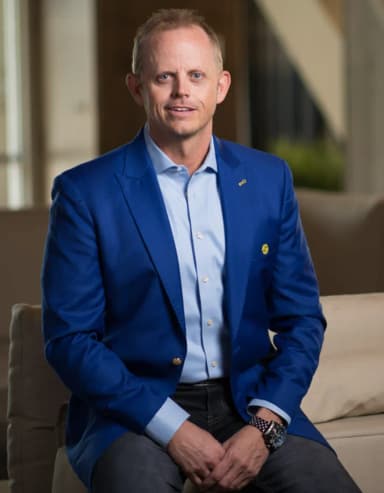
George Wright III, host of The Daily Mastermind

George Wright III

George Wright III is an entrepreneur, investor, and the host of The Daily Mastermind. Over more than two decades he has founded and scaled several multimillion-dollar companies and built a renowned seminar business that put some of the world's biggest names and brands on stage. With 25+ years across marketing, sales, and executive leadership, he's made a career of turning bold ideas into results — and momentum into lasting growth.

Today his mission is singular: empower driven entrepreneurs everywhere to master their mindset, unlock their potential, and live their ultimate destiny. Through The Daily Mastermind, George shares the Prosperity Principles and strategies that help people create massive change — in their business and in their life.

MORE ABOUT GEORGE