The Daily Mastermind
ALL EPISODES
Episode 1342 · Aug 25, 2026

Buck Joffrey on What Rich People Do Differently With Their Money

Buck Joffrey
·
Watch
Listen

On this episode of The Daily Mastermind, host George Wright III sits down with Buck Joffrey, a former neurosurgeon turned entrepreneur, real estate investor, and host of the Wealth Formula podcast. Buck has been involved in more than two billion dollars in real estate transactions and wrote Seven Secrets of Eternal Wealth. He joins George to break down why high income professionals often struggle to build real wealth and what separates people who compound their money from people who simply earn a big paycheck.

Buck's path took him from a top neurosurgery program at Michigan into cosmetic surgery, then fully into entrepreneurship and investing. He explains that the shift was not about escaping medicine but about wanting a life that did not require sacrificing sleep, family, and health for a career. That same problem solving mindset from medical training, he says, carries directly into how he approaches business and investing today.

The Mathematical Wealth Formula Explained

Buck built what he calls the Mathematical Wealth Formula to help professionals think about money in a structured way. It comes down to three components: mass (how much you actually invest), velocity (how quickly you get your money back), and leverage (how you multiply returns using other people's money or resources). He is careful to note that leverage cuts both ways, referencing Charlie Munger's warning that liquor, leverage, and ladies are the three things that make a smart man broke.

The bigger insight is about mindset. Successful entrepreneurs, Buck argues, are often terrible investors because the same risk tolerance that built their business gets misapplied to their personal portfolio. Instead of treating investing as a separate discipline, they either dump everything back into their own company or hand it off entirely to a wealth advisor without understanding what is happening with their money.

Why You Should Treat Your Finances Like a Business

One of the clearest themes in the conversation is that your personal finances deserve the same attention you give your company. Buck points out the irony that entrepreneurs would never let an outsider run their business without oversight, yet they do exactly that with a financial advisor who defaults to cookie cutter mutual funds.

Entrepreneurs successful entrepreneurs are some of the worst investors out there and the reason is that what got us here is a lot of risk taking and a lot of crazy stuff that we did right. So when you look at investing it's different. It's a different concept right.

His advice is to build a second business around your money, one with its own goals, tracking, and active decision making, rather than treating it as an afterthought.

Tax Strategy as a Wealth Building Tool

Buck shares a real example of a urologist earning seven hundred thousand dollars a year in W2 income who felt stuck with few options. The solution involved buying a vacation property and operating it as a long term vacation rental. Using cost segregation studies and current tax law provisions, a significant portion of the down payment can be written off against W2 income in the same year.

The result is a strategy where the tax benefit alone can be substantial, on top of residual rental income. Buck frames this as proof that the biggest lever in wealth building for high earners is not always finding a higher return, it is reducing what leaves the business (your finances) through taxes.

Understanding Macro Trends and Real Estate Opportunity

Buck spends significant time on his podcast connecting macroeconomic trends to investment decisions, and he does the same here. He points to core inflation numbers dropping closer to the Federal Reserve's target and argues that artificial intelligence will act as a major deflationary force over the coming years, both of which point toward interest rates declining over the next three to four years.

Because real estate values are so closely tied to interest rates, the asset class has taken a beating over the past several years even as other markets, including stocks, have run hot. Buck references closing on an apartment building in Dallas at roughly fifty percent of its 2021 valuation, a forty five million dollar asset, as an example of real estate being heavily discounted right now. His broader point is that the best investors look for what is on sale rather than following herd mentality into markets that already feel hot.

The Golden Handcuffs Holding Professionals Back

George and Buck also discuss why so many high income professionals never make the leap into building outside wealth despite wanting to. Buck's theory ties back to the traits that made these professionals successful in school: they followed a curriculum, excelled within a defined system, and rarely deviated from it. When it comes to investing, the only "curriculum" most professionals are given is to hand their money to a wealth advisor, so that becomes the default path even when it does not serve them well.

Action Steps

  • Separate your personal finances into their own "business" with clear goals, tracking, and active oversight.
  • Explore tax strategies available to high W2 earners, such as vacation rental properties combined with cost segregation studies.
  • Pay attention to macro trends like interest rates and inflation before deciding where to allocate new investments.
  • Look for discounted, out of favor asset classes rather than following the crowd into markets that are already priced up.
  • Avoid over concentrating your net worth in your own business; get money working in a separate vehicle as early as possible.

Buck Joffrey's approach boils down to a simple but often ignored principle: treat your money with the same intentionality and discipline you bring to your business. Whether it is understanding leverage, capturing tax advantages, or reading macro trends before everyone else catches on, the habits that build lasting wealth are learnable, and they start with taking personal responsibility for your financial future.
About the guest

Buck Joffrey

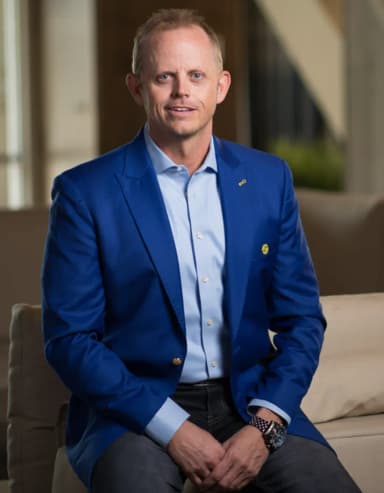
Buck Joffrey, MD, is a surgeon-turned-entrepreneur, real estate investor, and financial educator. As the host of the Wealth Formula Podcast and author of the international best-selling book 7 Secrets of Eternal Wealth, he helps high-income professionals—including physicians, dentists, attorneys, and business owners—build lasting wealth through entrepreneurship, passive investing, cash-flow strategies, and alternative investments. His mission is to help successful professionals escape the "golden handcuffs" of traditional careers and achieve greater financial freedom.

READ THE FULL TRANSCRIPT

Buck Joffrey: [00:00:00] it was like a guy who already was making 5, 600 grand a year as you [00:00:05] know early young doctor was trying to figure out what do I do with this [00:00:10] next? As opposed to like how do I get out of my how do I get out of my 9:00 to 5:00? That's not [00:00:15] what I was trying to do right? I wanted to know the tricks of the trade and I wanted to know what the [00:00:20] secrets were. And so they weren't talking to me so I started my own podcast. ​ George Wright III: [00:00:25] [00:00:30] Okay guys. Welcome back to The Daily [00:00:35] Mastermind. George Wright III with your daily dose of inspiration, motivation, and education. I'm [00:00:40] really excited today because we're gonna bring you a little bit of wealth and I've got a neurosurgeon [00:00:45] turned entrepreneur success Buck Joffrey on the show today. Buck how are you doing? Buck Joffrey: [00:00:50] Good. How are you? George Wright III: I'm good. I'm good. We had a chance to talk a little bit before so I'll make sure people understand who you are. [00:00:55] But guys if you're listening to this podcast make sure that you do me a favor and follow. [00:01:00] We have some really cool stuff coming out. We've got the brand-new Prosperity Report newsletter on [00:01:05] the weekly. We've got some great interviews coming up with Stephen M. R. Covey and several other bestselling [00:01:10] authors. As many of you know I get hundreds of requests a week for the show and I kind of filter through these. But the reason I brought [00:01:15] on Buck Joffrey is he's got a very unique story and so I'm gonna give Buck I'm gonna give everybody a [00:01:20] little bit of your background. This gentleman on the show today is a former neurosurgeon turned entrepreneur real estate [00:01:25] investor and financial educator. He's been involved with more than two billion in real estate transactions. He's [00:01:30] built multiple businesses himself. He's the host of the Wealth Formula podcast where he [00:01:35] helps high-income professionals really rethink their traditional approach to wealth [00:01:40] building. Author of Seven Secrets of Eternal Wealth and creator of the Mathematical Wealth Formula. A lot of [00:01:45] great information here. So Buck if you would do me a favor it's probably the biggest question I [00:01:50] had. What made you move from being a neurosurgeon to a full-time [00:01:55] investor and entrepreneur? Buck Joffrey: So there was one more step. I went from neuro to, [00:02:00] plastics. George Wright III: Okay. Well yeah maybe you give me that too 'cause there's a that's still not a bridge that I [00:02:05] would expect. So tell me what happened there Buck Joffrey: I mean when I was in med school I was just a [00:02:10] hardcore academic kinda guy and really interested. But then and so I got into neurosurgery one of the top [00:02:15] programs in the country at Michigan and I spent a couple years there and realized I [00:02:20] love this brain stuff. I love everything about it for the fact except for the fact that I don't ever sleep [00:02:25] anymore. And I looked at like my professors right? Michigan was great but most of the [00:02:30] places when I went to med school at Northwestern they had over 100% divorce rate and they would [00:02:35] compensate by having 10 kids and that kind of thing. I didn't really see myself in that kind of [00:02:40] life forever. So I knew that if I went down the hole of cosmetics and that no one needs an [00:02:45] emergency facelift in the middle of the night. So that's the direction I ultimately went and [00:02:50] became less academic and more entrepreneurial and that was the route for that. George Wright III: But you come with a [00:02:55] background and I'm curious 'cause your background of detail I mean to be a neurosurgeon obviously and [00:03:00] even in that area it's something that had you thinking a certain way. And I believe obviously I don't know [00:03:05] if there's parallels that you have in your investing now that you pulled from your previous career or [00:03:10] whether that equipped you differently or is it just a different world for you now? Buck Joffrey: It is a different world. I think there are a [00:03:15] lot of parallels in all this stuff right? In order to go to medical school they take make you take organic [00:03:20] chemistry is not because it has anything to do with anything in that you're gonna deal with in medicine but it's a way of [00:03:25] thinking. And being able to solve puzzles and solve [00:03:30] problems I actually see not necessarily with the clinical medicine stuff but with a lot of the research side of [00:03:35] the things I was doing that type of thinking I think is significantly parallel with [00:03:40] entrepreneurship because you're really trying to think about like solutions to problems. [00:03:45] And so I do see a big parallel there George Wright III: You got started in investing. You're doing a lot of [00:03:50] education now. You're working with a lot of people but you talk about this mathematical wealth formula. That's one of the things that I really [00:03:55] wanted to have you help us understand. What's the core principle behind that and does it define [00:04:00] your approach to investing? Buck Joffrey: it's really simple and I think the reason I [00:04:05] bring it up is just like you know business people professionals just don't think [00:04:10] about money period right? And so put it in an equation and maybe you'll get some attention from [00:04:15] people right? But you know it's it's just that, uh... And you know I'm sort of ripping off [00:04:20] Isaac Newton in the way it's framed. But wealth growth is really simple right? If you did [00:04:25] take mass meaning actually how much you invest right? And [00:04:30] then it's a product of that velocity which is how quickly you get your money [00:04:35] back. And then it's leverage right? Now leverage is a tricky thing [00:04:40] but it is something that can create inordinate levels [00:04:45] of wealth compared to not using leverage. Although as Charlie Munger said [00:04:50] leverage is tricky because what did he say? There are three things that make a [00:04:55] smart man broke and it was liquor leverage George Wright III: Yeah, exactly. So true. Yeah. Buck Joffrey: [00:05:00] And liquor, leverage, and ladies. But the most important concept here to me and this is really important is [00:05:05] that I think especially with entrepreneurs we get so fixated [00:05:10] on our own businesses that we don't think about money as a separate entity from our [00:05:15] own business. So entrepreneurs successful entrepreneurs are some of the worst investors out [00:05:20] there and the reason is that what got us here is a lot of risk-taking and a lot of [00:05:25] like crazy stuff that we did right? So when you look at investing it's different. It's a different [00:05:30] concept right? Like now probably the biggest thing is getting your money in there. So instead of [00:05:35] dumping every penny you got into your own business and creating a situation where if that fails you have no [00:05:40] money you're actually creating a second business with your money. And trying to get money in there as [00:05:45] soon as possible is really important. And now I'm 52 and I realize that more than ever [00:05:50] now. There's things that I go back and I think Gosh if I'd just had just stopped putting more money into my [00:05:55] business maybe put a little bit here it would've been fantastic right? But I didn't do that. [00:06:00] So that along with understanding there's more to investing than [00:06:05] simply giving it to a wealth advisor. Because this is another business for [00:06:10] you. I mean as an entrepreneur would you just take somebody who you [00:06:15] have no idea how good they are how smart they are whatever would you just give them the [00:06:20] reins on that business and say Hey you go do it. Uh I I'm not gonna I'm not gonna look? George Wright III: [00:06:25] Yeah it's pretty ironic because not only would you not do that with a business but um it's it's [00:06:30] ironic to me that there are people that literally that's their profession. Like let me [00:06:35] start a business for you and I'll just manage your money and you won't even check on it. Buck Joffrey: [00:06:40] Exactly. And the remarkable thing about that and I know this from being under the trunk on [00:06:45] that side of the business is that side of the business is so cookie cutter [00:06:50] right? I mean essentially they're just gonna put you in various mutual funds you know just like [00:06:55] you could have this here this here and this there. I mean if you wanna do it that way fine. You can do [00:07:00] it yourself. I mean that's just crazy to have these huge fees on top of [00:07:05] it to do that. Of course my I advocate for a little bit more sophisticated [00:07:10] approach which includes alternative assets like real estate and other things like that. [00:07:15] A lot of that is because of tax plays and the use of leverage. So George Wright III: Yeah it's interesting [00:07:20] to me because it's a real catch-22 scenario. A lot of professionals don't have [00:07:25] time so they're like I want to be able to put my money somewhere that it will work for me and I don't have to [00:07:30] manage it and yet I want it to grow but I'm not willing to put the focus and time on it. So they want a little bit of [00:07:35] leverage but they don't want the responsibility but their expectation is high. [00:07:40] So I get it like especially you know whether... I like the framework by the way of looking at [00:07:45] it like another business especially if you're an entrepreneur or business person cause now it it shifts how [00:07:50] you look at it manage it grow it devote time to it which I think [00:07:55] everyone should with money. And so you work with a lot of professionals meaning individuals that [00:08:00] maybe get very high rate of return on their time. You know maybe they don't have a lot of [00:08:05] residual compared to that but they might have a book of business or they might have a clientele. But where do you [00:08:10] start with individuals like that if they wanna start building income outside of their profession? [00:08:15] Maybe they have had a traditional money manager or somebody. Where do you recommend that they start [00:08:20] when they don't have any time? Buck Joffrey: Gosh I mean it depends because everybody's situation is very different. [00:08:25] But let me just give you an example. I had one guy who emailed me and said this [00:08:30] You know I make seven hundred grand. It's all W2 income. I listen to your [00:08:35] show. I'm not sure what there is that I can actually do. So a big [00:08:40] component again going back to the business model going back to the framework of looking at this as a [00:08:45] business is with regard to your investments you have money [00:08:50] coming in you have money coming out. The biggest thing that's coming out is taxes George Wright III: Mm-hmm. Buck Joffrey: right? [00:08:55] So my first focus a lot of times is do you realize there are really [00:09:00] some options for some real tax benefits? So and this guy you know he's a [00:09:05] full-time urologist and he didn't have time to go out there and any desire to [00:09:10] go out there and be a landlord or something like that. However there are ways to get around [00:09:15] that. And one of the things that we talked about is he had an interest in buying a [00:09:20] vacation house for his family. So we talked about Well why don't you do [00:09:25] this? Why don't you buy one and then put it out there as a vacation rental long-term vacation [00:09:30] rental? Now that's not just because you get some money out of it. But [00:09:35] interestingly enough what happens is the way that the laws are set up for long-term [00:09:40] rentals, you can do various types of engineering studies [00:09:45] called cost segregation studies, and then you can use some of the Trump tax laws, [00:09:50] where essentially say you put you know thirty percent down [00:09:55] on a million dollar property you could [00:10:00] essentially take a write-off for that full thirty percent against your W2 income. So [00:10:05] essentially you're having the government buy you a house for rental. Now so [00:10:10] that in itself is the huge benefit. Of course he's gonna get a tax he's gonna get [00:10:15] residual income from that as well. But so I don't think it's a focus of simply going in [00:10:20] there and saying How do I increase my returns? Just like in a business you make [00:10:25] money you spend money and what the difference is is your delta is your profit. And [00:10:30] taxes is something that almost no one really pays attention to and there's a lot of room [00:10:35] for George Wright III: Yeah that's a huge part of strategy for most wealth builders. And it's interesting I don't wanna [00:10:40] say it's easy but it's definitely simple things that you can do if you have the right connections and clearly it [00:10:45] is for you as well but tax strategy tax planning is such a critical [00:10:50] aspect especially if you are paying a lot in taxes. That's one of the simplest ways [00:10:55] to be able to put money right back in, and then you take the compounding effect into play and it's lights out. [00:11:00] So what do you think 'cause you're working with a lot of people right now what do you think are the biggest traps that people have [00:11:05] that are keeping them dependent on their career and not prioritizing? 'Cause when you ask [00:11:10] most professionals, they're saying I need to get something outside what I'm doing. I need to leverage my [00:11:15] time. I need to grow wealth but they don't do it. What is it what's holding them back? Buck Joffrey: Well I think it's [00:11:20] like you remember that a lot of these people who are professionals and highly [00:11:25] specialized were really good students, right? You mentioned Robert Kiyosaki offline. I've met [00:11:30] Robert multiple times and had great conversations with him. And he has that book called a [00:11:35] Students Work for C Students and B Students Work for the Government right? And I said, "Robert, you know why A [00:11:40] students, work for C students? It's because A students had everything [00:11:45] in the world to lose in school because they were great there. C students had nothing to [00:11:50] lose, and so those C students were the ones who became entrepreneurs and hit it big right? [00:11:55] So bottom line George Wright III: is the golden handcuffs, right? Part of it is just the fact that you [00:12:00] have it Buck Joffrey: Yeah I mean think about it like if you had nothing but [00:12:05] success in school and you have nothing but success and everybody's lauding you and telling you how [00:12:10] great you are, and the path that you took is basically a curriculum. That's the [00:12:15] only thing you're gonna stick to. You're not gonna go outside of curriculum right? So now [00:12:20] investing and what is the curriculum that high-paid professionals get for [00:12:25] education? There's none. It's basically just make sure you hand it over to a responsible [00:12:30] wealth advisor right? And I don't know who wrote that script but it's George Wright III: [00:12:35] Yeah. Buck Joffrey: tells me it's the wealth advisors. George Wright III: there, right? Hand it over to me, I'll [00:12:40] run it for you no worries. And because they've got a name plaque or whatever with a company I think you know [00:12:45] people are a little more skeptical now. But even like we talked about before the show there's so much more education and [00:12:50] information out there right now. I don't even think it's education as much [00:12:55] as being around professionals that you know like like yourself you've got 2 [00:13:00] billion in real estate transactions taught a lot of lessons there a lot of lot of [00:13:05] Buck Joffrey: Oh yeah George Wright III: and and things that have happened, right? So what do you generally have as [00:13:10] a kind of a core curriculum or strategy as you start to work with individuals where's your [00:13:15] primary focus right now with wealth building long term? Buck Joffrey: that's where [00:13:20] macro comes in macroeconomics and also understanding where each market [00:13:25] is at right? Um George Wright III: In your podcast by the way I just kinda mention for our [00:13:30] listeners you really do focus on a lot of the macroeconomics and it's not [00:13:35] just education on wealth investing because you feel that the macroeconomics are [00:13:40] what drive the rest of the equation. Buck Joffrey: 100%. 100%. Like the goal for me is [00:13:45] listen the goal for me is to look at what's happening in [00:13:50] macro and then relate it back to the markets the different markets and [00:13:55] then trying to use that to project out what happens next right? So if you look at [00:14:00] so right now if you look at the way what's going on in [00:14:05] macro you have a relatively high interest rate environment. And even though this Iran thing [00:14:10] is really making things difficult the long-term trajectory for interest [00:14:15] rates and I just say long-term I'll say the next three to four years is [00:14:20] likely rates coming down. And the reason for that is that rates are gonna follow [00:14:25] inflation right? And inflation right now is higher because of the whole oil [00:14:30] crisis. If you look at core CPI which takes out energy and stuff it's [00:14:35] dropped. It's down to like 2.4% which is pretty close to what the Fed is looking for at 2% anyway. [00:14:40] There's this big thing in the room called artificial intelligence that is [00:14:45] gonna make everything massively more productive and it's enormous deflationary [00:14:50] force over the next few years. And so to me over the next few [00:14:55] years and I'm saying again three to four years we're looking in my opinion at rates coming down. But I don't think they're [00:15:00] gonna come down to like 0% like they were before but I think they're gonna come down. [00:15:05] So how does that matter? Okay. Well market-wise the stock market [00:15:10] is pretty hot right now. I'm not saying it's probably is a bubble, but the bubble is [00:15:15] probably gonna last, you George Wright III: Yeah, Buck Joffrey: So it just depends. You're playing a little bit of [00:15:20] musical chairs there, but I don't blame anybody for jumping in and riding it for the [00:15:25] next few years 'cause I don't think it's going anywhere right? But one of the things [00:15:30] about investors that do really really well is they try to look around and [00:15:35] say What's on sale? George Wright III: Yeah. Yeah yeah Buck Joffrey: [00:15:40] Yeah. And real estate took an absolute beating in the [00:15:45] last four or five years because of rates going up so quickly and real estate being [00:15:50] based so heavily on interest rates. Just for perspective we just closed on [00:15:55] a apartment building in Dallas at 50% of what it was acquired [00:16:00] for back in 2021. 50% and we're [00:16:05] talking about you know a $45 million asset. So, George Wright III: [00:16:10] Yeah, so timing and economics in different markets as well as around the world I mean it's all [00:16:15] driving a lot of this Buck Joffrey: Yeah, 100%. And now if you look at it you're like real [00:16:20] estate is the red-headed stepchild right? But That's a good thing for an [00:16:25] investor to George Wright III: Yeah, exactly. Yeah Buck Joffrey: Great. But the herd mentality is never gonna lead you there, [00:16:30] right? It's only if you really understand the big picture and you say [00:16:35] The next three or four years probably rates are gonna come down and real estate right now [00:16:40] is just taking a beating and it's massively discounted and it [00:16:45] is heavily rate-dependent. I should probably focus on there. So that's one of the big things we're [00:16:50] focusing on. An alternative we talked about that we also had an airline fund, [00:16:55] right? And it did extremely well. And right now though we [00:17:00] exited because there's massive amounts of froth in that market believe it or not. I don't know why but there's a massive amount [00:17:05] of froth. And we're not gonna do that for a while. It was great but we just don't think we're gonna [00:17:10] be able to get the same money. We're not gonna be able to make George Wright III: Understanding those little trends, that's [00:17:15] important as well. I also wanted to ask you about um so your book, Seven Secrets [00:17:20] of Eternal Wealth what are those Can you break those down for us? Buck Joffrey: Yeah. I mean I'll [00:17:25] just you know give you a broad overview which is I'm a Robert Kiyosaki inspired guy and his books are so [00:17:30] simplistic but then all of a sudden somehow there's always a aha moment, right? [00:17:35] So a lot of my stuff is, my concepts are simply about investing in assets that you [00:17:40] can you know see feel touch. Investing in things that cash [00:17:45] flow, investing in things that people need AI is a huge force. What do people need? Well [00:17:50] they still need to live somewhere. Self-storage is a good one. I mean listen why? People need to put their [00:17:55] stuff somewhere you know. So it's just more basic concepts along that line. It's [00:18:00] definitely not like a super sophisticated manual, George Wright III: You know it's interesting though, when it comes to timeless [00:18:05] principles and success principles you know over the years last 30 35 years I mean I've been [00:18:10] fortunate enough and I don't say it to ever impress anybody I just say it to impress upon people that I've been [00:18:15] around and in the rooms with individuals and the way they think and how they think is probably [00:18:20] more important than the things they think. But it always comes back to very simple [00:18:25] overall principles like you said stuff you can touch and feel trends you can see. [00:18:30] But I think having the conversations which is one of the reasons I like your podcast is [00:18:35] having the conversations about what's happening, it gets you thinking it gets you moving forward in the direction of [00:18:40] what am I noticing? If you can change how you think when you change the way you look [00:18:45] at things the things you look at change. And so you you see opportunities in in down markets. You see [00:18:50] you know things like that. Um i'm curious why you decided to do a podcast. Was it just... [00:18:55] Was it a marketing play? Was it conversations? Did you do it for you? Buck Joffrey: I started [00:19:00] podcasting, I think in 2014 or '15 and it was before people were podcasting very [00:19:05] much. I did it initially 'cause I was a podcast listener. And I finished my training around 2009 [00:19:10] and '10 and started buying some real estate on my own and really was looking for some education [00:19:15] and trying to understand what to do. And I was making a lot of money just even in medicine [00:19:20] at that point as a cosmetic surgeon. And came from a real estate family. [00:19:25] My dad's not like a real estate mogul but He was like a scrappy guy. Bought a [00:19:30] lot of duplexes and all that kind of stuff right? That's how I grew up. So I was looking at buying [00:19:35] buildings but I also wanted an education on what is it that like these rich people do [00:19:40] that's different from what I'm being told to do? 'Cause I know they do stuff differently. I know they pay less [00:19:45] taxes. I George Wright III: Yeah, for sure Buck Joffrey: I know they're compounding at a faster rate than every... [00:19:50] So I started listening to podcasts and I learned a lot but the problem is [00:19:55] there wasn't any podcast that spoke to me. George Wright III: Mm-hmm. Buck Joffrey: And when I say to me [00:20:00] it was like a guy who already was making 5 600 grand a year as you know [00:20:05] early young doctor and was trying to figure [00:20:10] out what do I do with this next? As opposed to like how do I get out of my how do I get out of my [00:20:15] 9:00 to 5:00? That's not what I was trying to do right? I just wanted to know how to... I wanted to know [00:20:20] the tricks of the trade and I wanted to know what the secrets were. And so they [00:20:25] weren't talking to me so I started my own podcast. And then that became something that I think a lot [00:20:30] of people started to follow. I was buying real estate and It occurred to me from talking to some [00:20:35] folks that there's a lot of people who wanted to invest in real estate but didn't have time and that's when I [00:20:40] started my investor group. And so instead of buying you know eight [00:20:45] units or 15 units in Chicago we started buying 300 units in Dallas or [00:20:50] 400 units George Wright III: How cool is that? It's interesting how podca And the reason I ask you that is I you know I started [00:20:55] the Daily Mastermind as a daily ritual for myself. Motivation inspiration consistency and [00:21:00] the amount of contacts and connections and things I've found along the way speaking. I mean Franklin Planner asked me to [00:21:05] be their co-host. Like these things just come by default but it wasn't my intention and I think it comes back to [00:21:10] proximity of people that you want to think like and emulate and learn [00:21:15] from and grow together. And with your investor group now you're making some major major changes. [00:21:20] So anyway I appreciate you mentioning that I appreciate you coming on the show. I look forward to these conversations and I [00:21:25] think people always like you said they glean these little aha moments from [00:21:30] sometimes the simplest conversations and that's why we do them and that's all that matters. That's the impact we make. [00:21:35] Is there any before we take off here If you were gonna give one piece of advice to someone who [00:21:40] is a entrepreneur, founder business owner professional that is looking to kinda [00:21:45] get a little bit more of a proactive approach to building long-term wealth what would be your [00:21:50] advice? Buck Joffrey: Yeah I think I think we hit it on it before which is the the [00:21:55] framework of looking at your personal finances as a business that [00:22:00] you own, that you run, and taking personal responsibility for that. [00:22:05] That to me is the number one thing. I mean, y- y- George Wright III: I love Buck Joffrey: you [00:22:10] take nothing else from what I'm saying, I think that's the biggest thing George Wright III: I love it, and I think that [00:22:15] principle extends to a lot of things in your life if you're listening to this. In other words, don't [00:22:20] dabble. , Go deep. How you do anything is how you do everything so if you're gonna do something you're gonna invest [00:22:25] treat it like a business. Treat it like... And that perspective I love it. I actually haven't heard that before. I've [00:22:30] heard a lot of things but I love the perspective 'cause I'm an entrepreneur too. As a serial entrepreneur. So [00:22:35] Buck I appreciate you being with us on the show, man. I look forward to more conversations. And if you're listening to [00:22:40] this I want you to do me a favor and share this show and give me some feedback. Let me know what you're dealing [00:22:45] with what you're working on what you're struggling with but also the wins that you have. I wanna get that feedback. You can hit [00:22:50] me up at dailymastermind.com. And we look for feedback. Like I said and I end most of the [00:22:55] shows this way, it is never too... It doesn't matter where you're at. If you have been investing, you haven't, you've had success, [00:23:00] downtime, up, whatever, it's never too late to start creating that life you were meant to live. The, [00:23:05] your best life, the one that is giving you your time and your freedom, but you've [00:23:10] got to be intentional. And so if you do that, you treat it like a business like Buck said, I think you'll [00:23:15] see some results. So thank you so much for being with us. I look forward to talking with you more. Once again this is George Wright [00:23:20] III with Buck Joffrey on The Daily Mastermind. ​[00:23:25] [00:23:30] [00:23:35] [00:23:40]

Free to Join

Join the Mastermind — free.

Get the Prosperity Pillars poster, the First 30 Days guide, and the weekly Prosperity Report — the week's biggest ideas in a 5-minute read.

About the host
George Wright III, host of The Daily Mastermind

George Wright III

George Wright III is an entrepreneur, investor, and the host of The Daily Mastermind. Over more than two decades he has founded and scaled several multimillion-dollar companies and built a renowned seminar business that put some of the world's biggest names and brands on stage. With 25+ years across marketing, sales, and executive leadership, he's made a career of turning bold ideas into results — and momentum into lasting growth.

Today his mission is singular: empower driven entrepreneurs everywhere to master their mindset, unlock their potential, and live their ultimate destiny. Through The Daily Mastermind, George shares the Prosperity Principles and strategies that help people create massive change — in their business and in their life.

MORE ABOUT GEORGE