Speaker 6: And I went through the developing world. I went Mozambique, Mongolia, through China and, and, and, and Tanzania, different countries in sub-Saharan Africa, and was solving problems in, in that field, and still do a lot of work in that arena. And then as I was working on all that, the issue with health became more and more apparent.
I then found nothing allopathic would work for me for my own health as I went through this journey, and then I had to learn all these different solutions that would help reverse that. I became good at, as a, uh, actually in business as an entrepreneur- Mm ... uh, through, uh, e- especially through storytelling and some of the companies that were getting me to do that
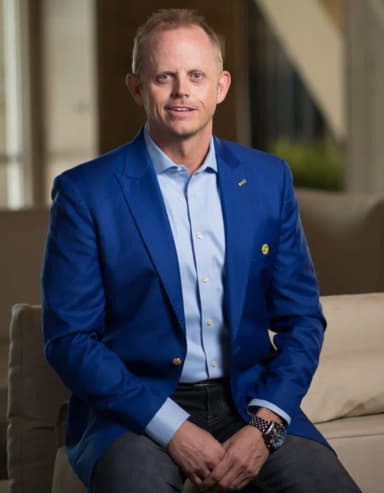
Speaker 7: Okay, guys. Welcome back to the Daily Mastermind. George Wright III with your daily dose of inspiration, motivation, and education, and I'm really excited. You know, I've been at Board of Advisors all week, and I've been, um, around some real high net worth, high-end individuals, super smart, super innovative, and I was able to, at the last [00:01:00] minute, pull into the studio here Jonathan Otto, who is, uh, he, he's the founder of Red Life.
How are you doing, brother?
Speaker 6: Yeah, doing great. Thank you.
Speaker 7: Man, I am so glad I got time with you, for a lot of reasons, which you're gonna find out pretty quickly here. Um, you know, look, you're an innovator in health and wellness and optimization, which is something I really like to promote on here, but I gotta ask you right out of the chutes, this is something people are gonna say, "What are you talking about?"
You are a proponent of drinking your urine.
Speaker 6: Yeah.
Speaker 7: What is that all about? And then we're gonna get back into some other things, but I, you gotta tell me what's up with that.
Speaker 6: Yeah. Yeah, sure. Yeah, Bear Grylls gets celebrities to drink urine for survival on his show, right? So I'm not the only weirdo, right? And then on the other side, you've got, uh, UFC fighters, boxers that were known for doing it, champion fighters that would say that they would just regenerate so fast, and then NFL quarterbacks, and, uh, your Super Bowl players that would, would use it for, like, repairing their, their sprained ankle and things like this.
So you'll hear about it in different sectors, and then, and then you start digging more, and you realize it was all through the medical [00:02:00] textbooks, and it was part of... It was in the British m- Medical Journal, the medical, Oxford Medical Symposium, Nature Magazine, Science Magazine, and they were studying it, and that's why there's so many extracts of urine in all different types, kinds, kinds of medication for cancer, blood clots, urokinase, urea for skin.
That's why people are paying so much for that. So I think that people deserve to know, and then click right about- Well,
Speaker 7: and the reason I brought that up- Yeah, yeah ... is because everybody's got all this information on optimization and peptides and this and that, and then you come out of left field, and people will think, "He just came up with this crazy idea."
No, it's actually backed in science and textbooks and things like this. Yeah. And so br- just because people just tuning in are probably like- Yeah, yeah ... "What are you guys talking about?"
Speaker 6: Exactly.
Speaker 7: Tell us what we're talking about here.
Speaker 6: Oh, yeah, w- well, we g- we're talking about health and, and, and wellness, like, in a very aggressive- Pr- you know, solving major problems.
So like let's say, for example, if you've got a, a mother or a mother-in-law or a father or somebody with aching, you know, chronic pain that they can't get rid of, or you've got they or you have memory loss, or things have never been sa- the same post-COVID [00:03:00] and your vision is worsening, and just countless things.
Uh, thyroid function failing, or maybe not you, but your wife is, or, or your husband is having a hard time in bed and it's just not as strong as it used to be down there. Yeah, yeah, yeah. And, uh, all of these problems are actually all the same thing, which is w- the weirdest thing, and that, that they're categories of symptoms, that those experiences are real, but it's just the absence of fully functioning, correctly functioning cells and mitochondria.
Yeah. And so then there are things that are catch-alls-
Speaker 7: The reason I bring this up is, you know, people are dealing with so much trouble right now. They, they've got anxiety, stress, um, they're dealing with overload, digital overload. And, and I've, I've really, especially lately, I've realized that what you just said, it all comes back down at a cellular level that your body is meant to optimize.
But people are trying so many random things right now. And here you are, you're making some major, um, headway in a lot of really high-end conversations. You're being, [00:04:00] you know, interviewed by top talent. You are actually being... You're talking to and, and giving advice and getting advice from some of the top doctors, some of the top experts in the field.
And it all stems around how to optimize and live a better life and be healthy and not just be okay with the way you feel. So do, for our listeners that don't know you, back up for a minute and tell them your story. Like how, why did you get into this whole arena in the first place? Hmm. What brought you into optimizing your health?
Tell us where you're from- Yeah. Yeah ... and what you're doing.
Speaker 6: Yeah. Awesome. So I grew up in Australia, and I grew up in a small town in Australia called Newcastle. I had a, had a big, big vision as a child to solve problems, which is really interesting that a child would kind of think about that. But I think all children do.
If the, and if, if they're given the right opportunities, they, they'll, they will be able to unlock that. I've got, I've got little children. I'm 40. I have a seven-year-old, a five-year-old, and a baby on the way due in August. First- Oh, congrats, yeah ... first girl, two boys and, and one girl. Congrats. Thank you, bro.
And so I, I grew up you know, wanting to make a difference. I, I started [00:05:00] sponsoring children when I was seven by delivering newspapers. And so, y- you know, my mom instead, when she saw me, like, cry my heart out when I'd seen a World Vision commercial saying, you know, "This child doesn't have to suffer. You can help this child," and I believed it, and then I wanted to do something.
And she then said, "Well, you could do something." So I, I saw that if there's a problem, you can solve it. I think the reason why we don't solve problems the way we could is because we don't love enough.
Speaker 7: Mm.
Speaker 6: We don't, we don't obsess over things enough, and we don't try to find... It's like we're lazy in our, in our thought processes and our solutions.
We just kind of, like, fail once it's too hard, and-
Speaker 7: You said you got this, this, this passion and love early on. Yeah. Do you think that's what's sustaining you through all of the potential downsides of everything you're doing- Yeah ... is just your, your pure love for wanting to make a change?
Speaker 6: Yeah. Yeah, it's so much bigger.
Speaker 7: 'Cause it can't just be motivational to get attacked all the time, right?
Speaker 6: So- No, exactly. And, but it can roll off your back if you really care about what you're doing- Mm ... and so that your, your focus is so, so true. Like, y- y- I, uh... You know, there's a woman that ran into me last night. She's like, "I followed your work for forever."
And so this is a [00:06:00] small community up here. And then Krista, another woman that- Yeah ... I don't know if you saw that case. She had MS. Yeah. But she's like, "Five years ago, I found you, and, you know, I had MS, and I should be in a wheelchair now. And it was you and one other doctor, Dr. Terry Wahls, who she had MS, so it was you and, and her that I followed for the last five years.
I... You're the reason why I'm not in a wheelchair." And- Wow ... that was here in this small community. It was, like, not, not a- Man ... huge turnout.
Speaker 7: Yeah.
Speaker 6: So, yeah, like, it wa- it's so motivating. So my point there, George, is that, that that is what I look at. So yeah, I sometimes read comments, but that's not... Whatever it says is not-
Speaker 7: You're too focused on the result that you're getting.
Yeah. And even in the whole health space right now, everyone's treating problems, uh, but they're really symptoms. They're not the real nature course of the problem. And so you're getting all these positive results, and you got your head down focused on the results. So what led you into all this alternative type- Yeah
of stuff, especially red light?
Speaker 6: Yeah, it was, uh, yeah. And, and, and to kind of, like, put a pin on, on a loop [00:07:00] on the, the early childhood stuff, I, I was sick as a kid, Lyme disease, chronic fatigue syndrome, cytomegalovirus, Epstein-Barr, Ross River fever, glandular fever, chronic boils breaking out on my body. Oh. So I had a lot of problems as a kid And then by my early 20s, I had to quit full-time work, uh, because I was t- too fatigued to be able to survive.
I'm twice the age now at 40, and, and, you know, you've... I think you've seen me just kind of- Yeah ... slugging it out. Yeah. And, um, my CEO was here yesterday, and he was explaining me, describing me to his mom, who's like, "Who's your boss? Like, how is he like?" 'Cause he, uh... And he said, "He's like a hummingbird that's drunk a, a Red Bull."
Speaker 7: Right. Exactly. And that's what people would describe you as, right?
Speaker 6: Oh, really? Yeah. I don't know, right? So, and you know, everyone has ups and downs. Like, it's, uh, yeah, we, I still, you know, everyone still has some challenging days or whatever. We're still living in a toxic world, so it's not this, like, fairy tale ending.
Yeah. Like, I'm, you know, we're still kinda in that day-to-day combat against problems. But yes, I have an amazing life, and I'm so grateful. And so, you know, I [00:08:00] battled all these health challenges, learnt these different, uh, you know, skillsets. G- had a degree in journalism and media production, and then in p- education as a post-graduate degree.
And I went through the developing world. I went Mozambique, Mongolia, through China, and, and, and, and Tanzania, different countries in sub-Saharan Africa, and was solving problems in, in that field, and still do a lot of work in that arena. And then as I was working on all that, the issue with health became more and more apparent.
I then found nothing allopathic would work for me for my own health as I went through this journey, and then I had to learn all these different solutions that would help reverse that. I became good at, as a, uh, actually in business as an entrepreneur- Hmm ... uh, through, uh, e- especially through storytelling and some of the companies that were getting me to do that.
And the investigative journalism, that combination of storytelling to make film, and then, and investigative journalism then landed me to work with a group called The Truth About Cancer, and I became a producer for them. That was 12 years ago. Okay. So that red-pilled me with the world's best doctors that were [00:09:00] all kind of either...
We helped network them through that film, like around 120 of the world's best doctors- Hmm ... and get people connected that were often kind of running from, and, uh, from the limelight because of all the stories that were going out-
Speaker 7: Right.
Speaker 6: Okay. Yeah ... about people getting offed- Right ... like whacked and, and, and-
Speaker 7: Yeah.
Yeah. They wanted to stay out of the spotlight.
Speaker 6: Yeah. But we were then able to help network people together and then learn a lot more and get way more data, and then I was able to... Like 20 years ago, for example, then I was, uh, 20 years ago was when Dr. Tony Jimenez was writing, um, s- uh, let me see if my bag was here.
Uh, he, 'cause he wrote a really nice recommendation on my book, The Cancer Off Switch. But he was saying, uh, that, uh, he was using red light therapy 20 years ago in the clinic, and 12 years ago when I was there, we, I saw What that was doing, and then it became more apparent. And to, to this day now, it's we're supplying the red light devices for his clinic and for the patients for the follow-up program.
So he's, he respects my research, my ability to innovate and to solve problems and make good- Yeah ... things. And so then [00:10:00] that's what he wants his patients to have so that they can get
Speaker 7: the best results. But you've developed up these con- these conversations, these connections, these relationships with your background in business and led you into red light.
And I think, you know, maybe some people listening to this are like, "Yeah, red light, I get it. You know, you go lay in a tanning bed, you get a little red light or something." Mm. But I don't think they really understand- Yeah ... what's actually happening. Can you- Yeah ... can you give us a little bit of that too?
Yeah. Like break it down and, and just help us understand not only just the benefits, but what is it and why you, why you're so really focused on it right now?
Speaker 6: Yeah, exactly. So look at plants, right? They need light, and so if you were trying to grow a field and you decided that light wasn't important, you're just gonna do water and fertilizer, then w- would you get growth on your plants?
Speaker 7: No.
Speaker 6: So the light is essential.
Speaker 7: Right.
Speaker 6: Right? For sure. So but then why aren't people thinking that? You think that plants and humans aren't the same-
Speaker 7: Yeah, no, they are ...
Speaker 6: in, in this, in this mechanism? And both have mitochondria.
Speaker 7: Right.
Speaker 6: Both y- need light to convert cellular energy through the mitochondria.
Speaker 7: Yeah.
Speaker 6: So and, and then-
Speaker 7: But people don't think of it as like a nourishing [00:11:00] thing, um, i- in their part of their day-to-day, right?
Yeah. It's just they either have it or they don't, and they don't really... They're not aware of it.
Speaker 6: Exactly. So and it should be a daily thing, uh, ideally, if not, like every other day. But biologically, if you look into the world, you'll see that red light appears twice a day, sunrise and sunset. So you're actually supposed to have it just after you wake up and just before you go to bed.
Speaker 7: Mm-hmm.
Speaker 6: That's what your body's designed for. It's a switch. Notice that people are tired during the day-
Speaker 7: Yeah ...
Speaker 6: and wide during the night Does that sound like there's not a switch that hasn't been switched on and off? Yeah, something wrong. So you're supposed to get this- Mm ... in the morning. And then when the UCL University studied this, University College London, they found that three minutes with the eyes open looking into red light, 670 nanometers, 17% improvement in eyesight immediately for people over 40.
If they did in the afternoon, no benefit. But it... So it had to be morning. But-
Speaker 7: Oh, really? What's the p- what, uh, so the timing is literally how we're wired as well, right?
Speaker 6: Yeah, yeah.
Speaker 7: Oh, interesting.
Speaker 6: This is telling you exactly what I'm saying, so it's switching the brain on. And, and eyes are part of the brain, so what's that [00:12:00] telling you about what it's doing for your brain function?
Speaker 7: And that was- Which affects your entire body.
Speaker 6: Yeah.
Speaker 7: Ah,
Speaker 6: yeah. Three minutes. Yes, exactly. Yeah, yeah. That's another good point. And modulates the thyroid and the heart and everything. Yeah. It's like a s- a super computer, but everything is connected, and the serotonin is produced in the gut, and-
Speaker 7: Yeah, it's like turning on your computer, you know?
Yeah. Like y- you've not turned it on. Okay, I got you.
Speaker 6: Yeah. Exa- yeah, it would be the most important part. And that's the reason why, when you think about it, we've got eyes on the front o- of our heads and the front of our... It's technically the front of our brain, so that when we would get light in, it would get through straight into the brain.
So it's the only area that's like an op- uh, like open, like an open organ.
Speaker 7: Yeah.
Speaker 6: Like, your heart is not exposed.
Speaker 7: Right. Nothing else, really. Yeah.
Speaker 6: Yeah. So but right into the brain, the most critical aspect. And so it, m- now it gets really mind-blowing. So you've got mitochondria, and they typically range in, like, one, three, four, 5,000 per cell in your thyroid or your heart, only in your organs- Yeah
and your bones.
Speaker 7: Okay.
Speaker 6: Okay? Now, in the brain, up to hundreds of thousands per cell. So you're [00:13:00] supposed to get it into the brain. And what do people do when they do red light? Close their eyes, put goggles on. Right. What are you supposed to do? Get it straight into your brain. What, why do I know that to be safe?
University College London tested three minutes, tested 45 minutes, both were completely safe. And then you go, okay, look at a radiance, so then match to your radiance, which is typically 50 milliwatts, which you could then be a lit- little bit further away from a more powerful device, or you could dim down a device if you're concerned about that.
I've not yet seen anyone have any challenges with that, and clinically about 100 million people have been treated with red light, no adverse effects.
Speaker 7: Why do you think, why do you think it is though that e- e- everyone has either been trained or thought or assumed that it's the opposite, that you gotta close your eyes, that you're not gonna- Oh
why, what, what is it?
Speaker 6: Manufacturers having to kind of toe the line and- Mm ... because the eyes are sensitive, like you may feel that sensitivity. And if your li- eyes are really kind of messed up because of issues, then they're gonna have to adjust, and so you may be a like little uncomfortable. It's not gonna be painful- Yeah
but just like, "Oh, this is bright. Ah."
Speaker 7: Yeah, yeah. Right? So- Go the other way. Yeah. Right.
Speaker 6: Got it. Yeah. But, but [00:14:00] if you do it even just for a few days, then you'll start realizing, "Wow, my eye- I'm not squinting so much anymore." Your eyes is way too sensitive. And, and the way to do this without a red light device would be to look at the sunrise and sunset.
Speaker 7: Mm.
Speaker 6: And I had some friends mess with this, it kind of makes sense to me, which is where you close your eyes and you look, you, uh, face your f- face towards the sun. So when it hits your eyelids, it's putting a red tint, so you're still getting the red into your eye- Interesting ... because the blood- So and
Speaker 7: the significance of red light versus light, right?
Like, is it just a safer range of what's going on? I mean-
Speaker 6: It is actually, interestingly enough, the safest. That's true. And it's the deepest penetrating. Both red and near-infrared are the deepest penetration. Got it. So all the other colors are shallower, and that's why you'll see blue light, which you are seeing here.
Yes. So this is, this is blue. Blue light always gets a bad name, uh, but it's, it shouldn't get a bad name universally, okay? 'Cause i- if it's a consistent source, it's very good. That's why you see blue during the day. You see blue in a rainbow.
Speaker 7: Right.
Speaker 6: And the blue light studies are showing that it's the best for circadian rhythm.
It's best for skin rejuvenation because it's so shallow. Got it. It lands shallow.
Speaker 7: Got it. I think it's [00:15:00] just associated with the fact that people are in digital overload and all that. It has nothing to do with really the light itself, right?
Speaker 6: Yes, and it's flicker rate. Mm. So whether it's whatever color it is, if it is high flicker rate, then that's the damaging effect, and you'll see that with cameras.
Oh. You'll be like- Yes ... "Oh, why does my footage look all choppy?" It's 'cause you- Yeah ... your camera can see the flicker rate, whereas if I turn something like
Speaker 7: this
Speaker 6: on The, it won't register any flicker
Speaker 7: Yeah
Speaker 6: Yeah
Speaker 7: Well, it's like we have, so we have in our screen, in our, in our studio we've got a 4K digital screen that's 20 feet, and the, the, the cameras pick it up.
Like, they pick it up, right? So-
Speaker 6: Yep.
Speaker 7: Yeah ... so well that's a re- That's, so that's actually not just red light, that's a mix.
Speaker 6: Yeah, yeah, yeah. So you see blue-
Speaker 7: We're in the studio, we're actually looking at a panel, a red light panel, so.
Speaker 6: Yep. And so you'll see everything you can't see is near-infrared, which in this case is 800 up to 1060.
And so that, because they're dual lights, they're, it's there, but you could read it with a meter and you'd see it show up. So here we've got, yeah, your blue, ye- This yellow color is 590, which is [00:16:00] shallow again. Okay. But it's still, still, the blue is the one that you ideally wouldn't look into. Yeah. So you would take that out if you're gonna do, like, a session of that, which I just do by, by doing this, like this.
And then- You
Speaker 7: just pull that back ...
Speaker 6: on, and then- Oh, got it ... and then watch this. If I could put it in just red and yellow Look how bright that goes.
Speaker 7: Wow, that is bright.
Speaker 6: And is that interesting that the studies-
Speaker 7: You know, it's also interesting because if you're not used to light, it's like I could even just walk outside after being in all day, that my, my eyes are so sensitive, and they're, like, trying to, trying to close, right?
Wow. Um, but the... So that would be naturally why most people just kind of move away from-
Speaker 6: Yeah ... light. Exactly. But it, it's, wearing glasses is, i- has created some of this issue. Wearing sunglasses has created the issue. Mm. And, uh, seed oils and gluten and, you know, not all gluten, but wheat gluten is, is, is a big issue.
Just toxic diets are causing everything not to function as well. But y- the easiest thing to do is just to do the red light in the morning. I have not yet seen it not work for [00:17:00] someone, which is really weird. Uh, typically I'd see, okay, it's working for a lot of people, but I've not yet seen it be, uh, really effective.
Speaker 7: So it's interesting to me because you kind of explained why, uh, looking into red light and why that's something that will affect the brain directly. Yeah. But it's not just about looking at the light, right? Isn't it, is it, is it s- it's penetrating skin and organ. Yeah. Like, help me understand, like, the other benefits of red light.
Speaker 6: Okay, cool. So when it gets through the... It, like, this'll, the red may, may stop generally when it hits the clothes in this case- Mm-hmm ... which is unfortunate, but I'm not gonna get naked, okay?
Speaker 7: Yeah, that would be a YouTube channel, for sure. That, that I have some views. But yeah, no, I
Speaker 6: get it. Yeah. Yeah, yeah. So, so, um, and then once it gets through, it, it'll land in, especially in the, the organ cells and the bone cells.
A- and it, it will improve circulation of all blood cells and that type of thing, but, but really, the, the mitochondria in the organ cells are the big money makers here in this sense because the mitochondria receive the [00:18:00] light through what are called mitochondrial chromophores. These are light receptors.
So you have all these light receptors in your body, and that should just kind of make you clear on how, how essential this is. Once they receive light, they produce a substance called ATP, adenosine triphosphate, and that's cellular energy. Mm. Yes. So cells can do everything in it, with energy and nothing without it.
So-
Speaker 7: So it's feeding the energy of the cells at a, at a cellular level.
Speaker 6: Yes. So it's the same as putting gas in a gas tank. It's the same as charging an electric car. And so you just have to think then what then could it do, and, and the answer is everything. The re- everything that cells are supposed to do.
And-
Speaker 7: That they're already pre-wired to do to- Yes ... maintain homeostasis of the body and everything else, right? Yes.
Speaker 6: Got it. Exactly. And, and part of the reason why it's doing that is because it's like a tuning fork. So it's, it's like there's a frequency that it's sending through to the body- Mm-hmm ... that's creating normalcy.
So that it's the bo- 'cause we're basically putting a vibration through the body that's causing the body to say, "Oh, yeah, that's what [00:19:00] we're supposed to be." And when we've got all these other things interfering as well, you've got Wi-Fi and EMFs-
Speaker 7: Oh, houses have changed ...
Speaker 6: and then that's causing different vibrations that are opposite to what you want, and whereas red light is gonna help normalize all these things, which is really fascinating.
Speaker 7: And there, and there, there, there, there've gotta be different, um, levels or, or frequencies of red light. I mean, what- Yeah ... what's, I mean, because I think a lot of people, you can't just, you know, jump on Amazon and order red light and, and feel like it's, you know, one is all the same, right?
Speaker 6: Yeah, exactly. Like, so here you've got, for example, there's, there you've got just yellow, right?
And then you've got, you've got different wavelengths of light. In this case, this is This is 480, which is, in this case, h- here's, here's the 480.
Speaker 7: Okay.
Speaker 6: Right? Here's just- Blue light. Yep, exactly. Here's just near-infrared. This is 810, 830, 850. And so you can see a little tint in there. Can you see that tint?
Speaker 7: Mm-hmm. Yes. Yeah.
Speaker 6: Yeah, and then you'll still feel a bit of warmth. We're not trying to get warmth out, it's just, it's just some of the [00:20:00] energy about 10% Kind
Speaker 7: of the frequency that it's at?
Speaker 6: Well, 10% of the energy is going into heat, but 90% into light, and that's why they're so effective. Yeah. And that's why the radiance is so high.
It's so bright. It's penetrating cells at the highest level. And then you, if you just stacked in other therapies, like change the diet, uh, you know, cleanse the liver- Nutrition,
Speaker 7: fitness, cleanse. Got it. You know, and there's so much information out there right now. This is why I wanted to kinda have you on, because I think there's a lot of ideas, there's a lot of strategy, but, uh, but a lot of people don't understand the benefits, the uses, the way to use it, the w- how to do it.
How do you go about educating the marketplace right now? I mean, what is your... 'Cause I know you're passionate, not just about the products and the way they can create results, but how are you educating the marketplace, and where does somebody start?
Speaker 6: Yeah.
Speaker 7: Like, where does somebody start learning about what to do and how to, you know, how to really optimize their health using some of this stuff that clearly is based not, not just in, um, long-term studies, but it's, you know, it's got a lot more access to information nowadays, so you now, you know about it.
Speaker 6: Yeah, exactly. So okay, so [00:21:00] somebody getting started, one, uh, when it comes to knowledge and information, Grok, ChatGPT, Google, and then just put in red light therapy, put in that condition, and, and then put red light therapy next to it. And then why don't you even put five in and put it in a chat or to Grok and then- Mm-hmm
and then say, "Show me the best studies on red light therapy for all these, and show me the outcomes, show me the results."
Speaker 7: Wow.
Speaker 6: Uh, "Show me the timeframes that they should expect that in, and what else they did," w- like for example, if they took methylene blue, because the studies I mentioned, they were, most of the cancer ones are either methylene blue or something like that, curcumin, berberine, something that activated the light, the light.
And then, so what did they take in addition? When did they take it in proximity to the light? So did they take it half an hour before? Did they take it an hour before? Yeah. And it will just tell you when they took it, what wavelength of light was used in the study.
Speaker 7: It's interesting the amount of info you can get now- Yeah
because it's not like you even have to look very hard. Like you're saying, you can go into these search tools or AI, and you can find very specific targeted stuff.
Speaker 6: Yeah,
Speaker 7: exactly. You would think [00:22:00] there wouldn't be that much information targeted.
Speaker 6: Yeah.
Speaker 7: This just shows there's a lot out there, right?
Speaker 6: Exactly, yes.
Speaker 7: It's so- Now, so you've talked about a lot of chronic disease- Yeah ... chronic problems. Um, but what about, like, the, the average, a high-level executive that's just dealing with stress and anxiety and things like that? Same, same goes for that? Yeah. Cellular energy, increase in your performance, increase in your energy, your, your brain fog, your thought reaction, things like that?
Speaker 6: Exactly, exactly. The studies done on depression were testing people an hour after red light, and then an hour again after the, that first hour, and there's dramatic improvements hour over hour- Mm ... which is amazing to get such a quick response. And so, you know, anxiety, depression are deeply connected. Uh, they're, and they're also connected to dementia.
You'll have a five times risk for dementia if you have depression. And then we're all sitting on a spectrum. None of us are- Yeah, yeah ... none of us are, like-
Speaker 7: Everybody's an individual, right?
Speaker 6: Yeah, and, and
Speaker 7: the, the people- But at the cellular level, our bodies are all designed to be able to help us with whatever we need if we give it the right nutrients, and that's why it's always [00:23:00] fascinated me, the, um, fueling your body at a cellular level.
Mm. I've really started to ta- uh, you know, looking at that more. And, and, and really if your body is designed To do whatever it needs to do to, to optimize. It's really just feeding it what it needs, right?
Speaker 6: Everything could be better, so for the high-functioning, uh, executive that feels like, "You know, I'm kind of on top of the world, man.
I'm invincible. Thanks, George. Thanks, Jonathan, man." Can always feel
Speaker 7: better.
Speaker 6: Yeah, that's mediocrity, and it, it doesn't serve you. Don't think like that. What's the point? If you thought like that with business, then, then what... Okay, well, then why not... Uh, why, why are you trying to grow your business
Speaker 7: then? Yeah. Oh, yeah What's the point?
It... Because you think about it in certain areas, but I think it's also that some people maybe don't feel that those are options or, or that they... You know, p- There's a... It's a badge of honor to feel like you are tired 'cause you grind, right? Or- ...
Speaker 6: you
Speaker 7: know. You know what I'm saying? Like, it- Sacrificing for your
Speaker 6: family
Speaker 7: you don't... Yeah, you're sacrificing. Yeah. And it's, and it's something you should do, but you don't have to do. Doesn't your family love
Speaker 6: that? They hate that.
Speaker 7: Yeah.
Speaker 6: Exactly. Yeah, they... What they wanna see you is... They don't...
Speaker 7: They- Well, they want you to be healthy and happy-
Speaker 6: Yeah, exactly ... and,
Speaker 7: and see you.
Speaker 6: Exactly.
They don't want you to [00:24:00] die for them. They want you to live for them. And yes, I would die for my family, but what I need to do, and it's not a but, it's an and, I'm here to live for them. Therefore, it... The happier I am, the healthier I am- Yeah ... the better I am at having more time, en- energy, attention for them.
And it, uh, it's no excuse, and it's, it's self-sabotage. And look, self-hatred manifests in so many different ways. Yeah. And it could be just simply that you neglect doing things- Correct ... that you knew that you should do, that is actually just... It, it's the... You don't believe that you're precious enough to God as you are, so you always have to be doing something.
And unless you're suffering, you're not making penance for your sins. Why? That's just... It's all a lie.
Speaker 7: Yeah, and it might be habitual at this point, right? Like, some people just, they, they have been for so long, um, living the life the way they have that they just al- they don't... They're not aware. So I love your message because you're, you're creating awareness and you're, you're educating.
And, and, and yes, truly, there is a lot of information, and i- the more individualized awareness you have, the more you're gonna create a result. [00:25:00] Um, and, and by the way, I'm gonna, in the show notes, if you're listening to this, I'm gonna include a bunch of links because I want you to, um, follow Jonathan, talk a little bit more, get a little bit more deeper into these knowledge points.
But just realize that, you know, it- It's never too late to start living the life you were meant to live, like your, your ultimate life if, if you take some action. And I, and I, and, and I'm glad that you made it so simple about research rather than, "Yeah, I gotta go study a course and do all the research you did," because now it makes it easier.
But let's say somebody starts getting educated and then they wanna go to the next level. Are you such a big proponent of red light because you believe that is like a staple, like that is a core piece of what you can do? Because there's a lot out there. People are like, "My buddy's telling me about peptides.
My buddy's telling me about..." You know, you, you got, you know, got, um, TRT and peptides and quantum health and cellular stuff and supplements and all kinds of different things, but you, you really believe that red light is a core of that, right?
Speaker 6: I do. I do. My grandma was falling over, my grandma on my wife's side.
My, my grandma on my side, I helped get her to 98 years old, and she lived a great life, and I, I still miss her, and [00:26:00] it was only, you know, a year and a half ago now. But my, my grandma on my side, on, on my wife's side, sorry, she, she's 87, and she was falling over and she split her head and had to get stitches.
The reason why she's falling over, there's something happening that caused a cognitive decline really rapidly over the last few years. I couldn't tell her to stop taking those things that she was taking. All toxins end up, you know, doing the same type of damage. They're all damaging the mitochondria.
Anyway, so I sent her home with a red light so it could repair this, where she's got all the stitches, 16 stitches in her head. You know, I couldn't get her to take all these supplements and stay dedicated to that, but she's doing it twice a day. Um- Yeah, yeah ... you know, which is amazing, so she's started-
Speaker 7: Steps, those steps.
Yeah. She, yeah. You gotta
Speaker 6: start
Speaker 7: somewhere. You could, you could one today. But she, you saw some major dramatic results happen right off the bat. Yeah. I think you're right. I think if, because you're passionate, obviously I, I can, I can, I can sense your energy- Yeah ... and your passion around it, but it's, it's literally the thing that's probably gonna create the, the, the biggest, widest impact at the most uh, appropriate thing for most people, so I can see that now.
Yeah. Yeah, it's beautiful. So if somebody wants to, um, you know, learn more about or get access [00:27:00] to Red Light and stuff- Yeah ... and, and by the way, how do they connect with you?
Speaker 6: Yeah, absolutely. So on the where you can find these tools, right? And look at what I'm doing, there's... and there's a, there's an awesome free training as well here.
It's at myredlight.com.
Speaker 7: Okay.
Speaker 6: So myredlight.com.
Speaker 7: Okay.
Speaker 6: And then by the way, we should give a code to this audience. What, what, uh, name would you, should we give?
Speaker 7: Yeah, would you? Just Mastermind.
Speaker 6: Mastermind. All right. Yeah, let's
Speaker 7: do
Speaker 6: it. Yeah, we can do it. So Mastermind, and then I'll, I'll give a code to this audience- Okay
for 20, 25% off.
Speaker 7: Oh, wow. That's awesome.
Speaker 6: Yeah, no. Yeah, that's
Speaker 7: great.
Speaker 6: That's great. Thank you. Yeah. Yeah. And then so Mastermind25 would be the code for any single items, and then we'll push it to 30% for the bundle, so Mastermind30. So that, that'll be active right away. We'll, I- Excellent ... I'll tell my guys right now, and so anyone watching this right now, it's va- it's valid.
And we'll keep that just for a s- a short window, so make sure people grab it while it's available if, if that's what you want. But- Great ... you can watch all the training, get all the information. It's a, it's a, it's really important to understand this, and, uh, you'll see there's a reason why we're supplying to these top clinics.
And for the entrepreneurs watching or anyone that's, like, [00:28:00] really dedicated to success, if you get an inferior product, you're not likely to use it- Right ... for starters.
Speaker 7: Right.
Speaker 6: And then what if it was, like, 50% or e- even, let's say if it was a 70% of what the other one was at 100, think about how much time you're investing.
Yeah. Like, if you invested, let's say you invested half an hour a day, n- you don't have to do that much. You could do 50 minutes a day, your life would be changed. I, I, that's what I've seen. But let's say you're doing half an hour a day or something like that, you add up what your time is worth- Right ... and then you're literally- Right
just like, why would you- Effectiveness,
Speaker 7: yeah ... yeah.
Speaker 6: That
Speaker 7: makes
Speaker 6: total sense. You, you get the best- Yeah ... in this area. Like, you know, save, like skip corners on, I don't know, like- A holiday or something like that, like, or whatever. Uh, y- what, what could you skip
Speaker 7: and what do you think you probably- Well, there's so many things, you know, with your health, and that's why I'm a big proponent of this, and man, I, I really do wish we had a ton more time, 'cause I, there's a lot, whole bunch of questions we're gonna probably talk about after the fact.
Might even have to have you back for our academy. Mm-hmm. Um, but, you know, at the end of the day, I just wanna make sure if you're listening to this that you really take this message home, is that you don't [00:29:00] have to live, uh, subpar. You don't have to live mediocre. You don't have to settle for, um, even what some people think now, stress, anxiety, depres- is, is a secondary thing to chronic illness.
That is something you don't have to live with either, even stress and anxiety. So I think that prioritizing your health is probably the number one thing that I recommend for people- Yeah ... to do, and I think, and I appreciate you being here too, by the way. Of course. I mean, this has been great. I'm so glad I was able to pull you aside.
Speaker 6: Yeah, this was
Speaker 7: awesome. Um, and, uh, so listen, if you're listening to this message, make sure you share. Um, let us know what you're working on, and is there anything else before we take off- Oh, yeah ... you would like to, uh, to add?
Speaker 6: I, I was just, I, like, I was just wanting to make it really simple. Like, people on the go, like, I'm traveling with this.
Like, I, I, we, I did an event with Tim Tebow. We do some of the work in fighting human trafficking, but he wanted all his VIPs to get this, and, you know, so, like, people like Ryan Garcia and all, like, uh, Lance Armstrong- Yeah ... and Mark Calaway, the-
Speaker 7: Yeah ... The Undertaker It's a
Speaker 6: portable,
Speaker 7: portable red light, yeah.
Speaker 6: Yeah, and so it's, it's got five of the, of, of the best wavelengths. And so anyway, I was just showing that as an example, which, you know, a few hundred dollars, right? [00:30:00] I
Speaker 7: love
Speaker 6: it. So a few hundred dollars or, or, or, you know, a thousand dollars, or, you know, whatever. You can have a look at the different options, but and then also people can look at, uh, breaking that down on monthly payments if they want, 'cause it, it ends up being cheaper.
Like, what you would pay to go do, like, an hour s- uh, people don't do hour sessions. They do, like, 20-minute sessions or 15, typically around this, you know, 75 to $150 range. So on average, about 100. So, like, what it would cost to do a few months on, uh, you know, on going into a clinic- Right ... to go in either every other day, you would, you, it would be, you would have something to own for life for the next, you know, 20 years or 50.
Y- y- they, they've rated it to last about that long. But- Yeah ... you know, so just- That's long ... you'll have enough to last a long time. So anyway, it's just-
Speaker 7: Well, the, the, the- ...
Speaker 6: wanna try to make it possible ...
Speaker 7: the thing is, is you, you, that's, that's what I've noticed about you, is, uh, you're not only passionate about it, you've got a lot of knowledge.
You're very, very, um, well-known in this space, and so, but you're also trying to find ways to make it possible. Yeah. It's like anything else. You can have the best solution in the world, but if nobody can get access to it or use it, or they feel [00:31:00] like it's out of their reach, they're not gonna do anything with it.
Yeah. I think you make a, a really good case for why, um, it costs you more not to do something- Yeah ... to help yourself, and look at the intangibles of your family, your wel- your health, your wealth, everything that gets affected by it, right? So health- Yeah ... is very, very important, and that's why, um, I, I, I appreciate you being here, but I also, I feel like there's some, um- things that are changing at real time speed right now- Yeah
when education, knowledge, trends. And so that's why I wanna, um, put your, your contacts and stuff in our show notes as well. Yeah. Because I think if people follow you, they're gonna stay ahead of the trends. They're gonna- Yeah ... stay ahead of what's going on, and they'll be able to sort through what's real and what's not.
Yeah. Because there's a lot of noise out there right now in the space of optimization, but there are some core pillars that are consistent. Yeah. And so that's why I've, I've started to learn a lot about red light as well, so I appreciate it.
Speaker 6: Oh, that's such, that's so awesome.
Speaker 7: I wanna hear from you as well, whether you're dealing with things or whether you just wanna celebrate some wins.
Hit me up on The Daily Mastermind and I'll talk with you soon. Have a great [00:32:00] day.