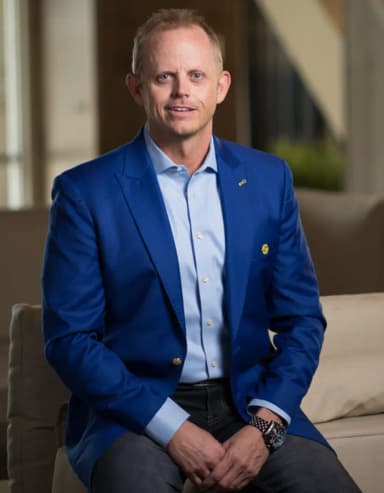
George Wright III, host of The Daily Mastermind, dedicates this episode to one of the most underrated tools in any entrepreneur's toolkit: self-awareness. In a world where hustle and execution get most of the attention, George makes the case that knowing yourself deeply is the prerequisite for building a business and life that actually fulfills you.
Whether you are a CEO, business owner, or rising executive, this episode gives you a practical framework for turning self-awareness into a competitive edge.
Why Self-Awareness Is the Compass Every Entrepreneur Needs
Most people move through their days reacting rather than responding. They make decisions based on habit, comfort, or pressure, without pausing to ask why. George describes self-awareness as the compass that guides you when you are standing at a crossroads with two very different paths ahead.
Self-awareness, if you really think about it, very few people are self-aware in life. Are you aware of why you do the things you do, the decisions you make, the emotions you have, the philosophy you have that you apply, the filter you apply to life?
When you know your strengths, your weaknesses, your core values, and your unique talents, you stop flipping coins at decision points. You move with clarity and intention.
How Self-Awareness Improves Your Leadership
The most direct benefit George highlights is stronger leadership. When you understand how you show up for your team, how your communication lands, and what emotional patterns you carry into meetings and one-on-ones, you become dramatically more effective as a leader. Organizations grow when the person at the top grows first.
Self-awareness also builds what George calls enhanced emotional intelligence: the ability to recognize how emotions affect your judgment and redirect yourself toward productive action instead of reaction.
What Blind Spots Are Costing Your Business
One of the sharpest sections of this episode is George's treatment of blind spots. These are the habits, assumptions, and personality patterns that others can see clearly but that you consistently miss. George compares them to a small crack in a windshield: easy to ignore at first, but ultimately blocking your view and affecting every turn you make.
Our personal blind spots can really also hurt our environment. Your blind spots can really hurt your team's morale. It can hurt your decision making. It can hurt ultimately your business growth in general.
Blind spots do not just slow your personal development. They affect culture, team performance, and the bottom line. Identifying them requires courage and a willingness to be honest with yourself, but that honesty is exactly what separates leaders who plateau from those who keep growing.
How to Build Adaptability and Resilience Through Self-Knowledge
Two of the benefits George emphasizes most are adaptability and resilience. In a business environment where conditions shift constantly, the leaders who adapt fastest are the ones who know themselves. They understand their default responses under pressure and can consciously choose a better path.
Resilience works the same way. You cannot consistently bounce back from setbacks if you have not studied how you process failure, disappointment, or uncertainty. Self-awareness gives you that map.
Practical Strategies to Develop Self-Awareness Right Now
George does not leave this in the abstract. He shares concrete tools and practices you can start today.
Daily mindfulness or meditation helps slow your thinking down and create space to observe yourself rather than just react. Apps like Headspace make it easy to build a consistent practice without having to figure out the structure on your own.
Journaling is another cornerstone habit. George uses the Day One app to capture thoughts, emotions, and observations across multiple journals organized by category. Writing down what you feel, how you feel it, and why helps you spot recurring patterns over time.
Feedback from mentors, peers, and colleagues is equally valuable. Asking trusted people how you show up, and genuinely listening to the answers, surfaces the blind spots you cannot see alone. George also notes that high-level CEOs often work with coaches specifically because they lack a peer at their level who can offer honest perspective without fear.
For reading, George recommends the book "Emotional Intelligence" for understanding what drives you emotionally, and "The 7 Habits of Highly Effective People" by Stephen R. Covey for building self-reflection and proactive thinking into your daily life.
Why Fulfillment Follows Self-Awareness
George shares a candid observation: many people who are busy, driven, and productive still feel empty or unfulfilled. His explanation is that they are chasing goals that do not align with what they actually value at the core. They are grinding toward someone else's definition of success.
Self-awareness closes that gap. When you understand what you genuinely want and why you want it, you stop building the wrong things. You start creating a business and life that actually reflect who you are.
Action Steps
- Start a daily journaling practice. Use an app like Day One or a simple notebook. Write for five to ten minutes about what you are feeling, why, and what decisions you are facing.
- Schedule a weekly period of quiet reflection or meditation. Apps like Headspace provide guided structure if you are new to the practice.
- Ask a trusted colleague, mentor, or coach one honest question: "What is one thing I consistently do that holds me or the team back?" Listen without defending.
- Read "Emotional Intelligence" or "The 7 Habits of Highly Effective People" by Stephen R. Covey to deepen your understanding of yourself and how you operate.
- Identify one blind spot you already suspect you have. Write down its impact on your team or business and commit to one specific action to address it.
Self-awareness is not a soft skill. It is the foundation that every other business skill is built on. George Wright III puts it plainly: the better you know yourself, the better you lead, the better you decide, and the closer you get to the life you were meant to live. It is never too late to start living the life you were meant to live.