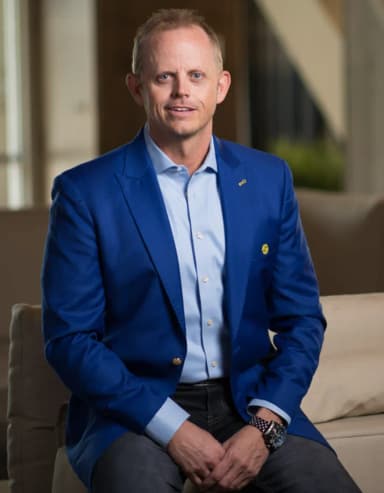
George Wright III, host of The Daily Mastermind, believes one of the fastest ways to level up is to extract the essential lesson from great books rather than waiting until you have time to read them cover to cover. In this solo episode, he rapid-fires the single most powerful takeaway from roughly twenty top personal development and business books, giving you a week's worth of ammunition in about ten minutes.
Why Book Summaries Are a Legitimate Growth Strategy
George has spent decades reading, but he also admits he has long relied on executive summaries to hack books and pull the golden nuggets out quickly. His goal is to do that work for you once a week so you can keep growing even when your schedule is packed. The quote he opens with sets the tone perfectly: Walt Disney's words, "If you can dream it, you can do it."
Mindset and Happiness: What the Research Actually Says
Dan Harris's book "10% Happier" argues that mindfulness will not eliminate your problems, but it will help you respond to them rather than react. That shift alone is worth the read.
Mindfulness helps you realize that striving for success is fine as long as you accept that the outcome is outside your control.
Epictetus, in "The Manual for Living," offers a stoic counterpart: some things are in your control and some are not. Confuse the two and you will spend your life chasing things that are neither as desirable nor as important as they seemed. David Eagleman's "Incognito" pushes the idea further, noting that conscious thought has a surprisingly small impact on your life and that most behavior is driven by the unconscious mind.
Taking Massive Action and Setting Goals That Scare You
Grant Cardone's "The 10X Rule" makes a blunt case: the biggest mistake most people make is not setting goals high enough. Set targets that are ten times greater than what you think you can achieve, then take actions ten times greater than you think are necessary.
Taking massive action is the only way to fulfill your true potential.
Tim Harford's "Adapt" adds a complementary idea that removes the fear of starting: when trying something new, do it on a scale where failure is survivable, then seek feedback and learn as you go. Start bold, start smart, and keep adjusting.
Building Wealth and Running a Profitable Business
Three books on this list hit the financial theme hard. Mike Michalowicz's "Profit First" says to take your profit before you pay your expenses and run your business on what you can afford today, not what you hope to afford someday. Darren Hardy's "The Compound Effect" reminds you that huge rewards come from small, seemingly insignificant actions repeated over time, and that you cannot improve what you do not measure. "The Richest Man in Babylon" distills centuries of wealth wisdom into one core principle: save at least ten percent of everything you earn, separate your necessary expenses from your desires, and eliminate procrastination before it eliminates your future.
You cannot arrive at the fullest measure of success until you crush the spirit of procrastination within you.
The Power of Your Network and Your Environment
Several books on George's list circle back to the same truth: who you surround yourself with determines who you become. Jason Gaynard's "Mastermind Dinners" argues that hosting dinners with like-minded people is one of the most powerful ways to build strong business relationships. Be intentional about who you invite, look for uncommon commonalities among guests, and take responsibility for the quality of your inner circle. Your network is your net worth.
Judith Harris's "The Nurture Assumption" reinforces this from a research angle. Children learn far more from their peer group than from their parents, and the same principle applies to adults: your environment shapes your character and determines the kind of person you become, whether you are conscious of it or not.
Finding Meaning, Possibility, and Purpose
Tom Rath's "Are You Fully Charged" identifies three keys to showing up at your best every day: doing work that gives you meaning, having positive social interactions, and taking care of your energy. Giving more drives meaning in a way that chasing personal happiness alone never does, and people who invest in experiences over material things are consistently happier for it.
Rosamund and Benjamin Zander's "The Art of Possibility" adds that everything in life is an invention. Focus on the possibilities around you in any situation rather than measuring yourself against others, and your problems begin to fade.
Derek Sivers' "Anything You Want" puts it simply: too many people spend their lives pursuing things that do not actually make them happy. George pairs this with a Jim Carrey line he loves: you can fail at what you don't like, so you may as well do what you want.
Action Steps
- Pick one book from this list that resonates with where you are right now and commit to reading or listening to it this month.
- Apply the Profit First principle personally: set aside a percentage of every dollar you earn before paying any expense.
- Audit your inner circle. Honestly assess whether the five people you spend the most time with are pulling you toward your goals.
- Practice one act of mindfulness this week, even a two-minute pause before reacting to a stressful situation.
- Set one goal that feels uncomfortably large, then identify the first action you can take today at a scale where failure is survivable.
Every book on this list took its author years to live and write. George distilled the best of them into ten minutes because he believes your growth should not have to wait for a perfect schedule. It is never too late to start living the life you were meant to live.