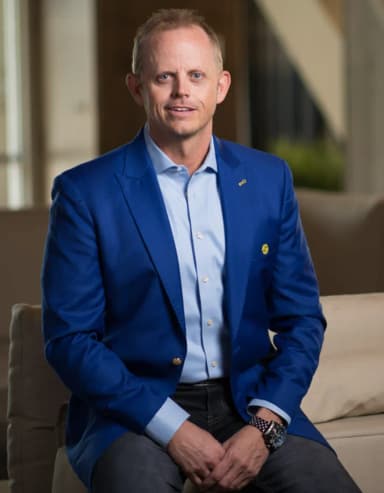
In episode 790 of The Daily Mastermind, George Wright III continues his deep dive into Napoleon Hill's *Think and Grow Rich*, covering chapters four through six: specialized knowledge, imagination, and organized planning. This trio of principles forms the practical core of Hill's roadmap, moving you from desire and belief into the real work of building the life you want.
If you caught the previous episode on desire, faith, and auto-suggestion, you know the inner foundation is already laid. Now it is time to build on it with strategy, creativity, and a concrete plan.
Why Specialized Knowledge Is Your Competitive Edge
George opens with a point that cuts through a lot of conventional wisdom: knowledge alone is not power. As Napoleon Hill frames it, knowledge is only powerful when it is organized into a definite plan of action and directed toward a specific goal or path. Sitting on a stockpile of information without applying it is just mental clutter.
The goal is not to become a generalist who knows a little about everything. You need to drill deep into the specific area where you are working toward results. George identifies what he calls the quadrant of unique talent: the intersection of what you are excellent at and what you are genuinely passionate about. That is where your specialized knowledge should live and grow.
Practical ways to build that knowledge include setting aside dedicated daily time for focused learning, taking courses specific to your subject, finding the most authoritative and concise resources on your topic, and associating with people who have already produced results in that area. Your mastermind group, which George covers in the next episode, is one of the most powerful vehicles for this kind of knowledge transfer.
The key reminder: stay relevant. The world moves fast, and resting on yesterday's expertise is a slow path backward.
How Imagination Fuels Everything You Create
One of Napoleon Hill's most quoted lines appears in this section, and George cites it directly:
Whatever the mind of man can conceive and believe it can achieve.
George calls your imagination one of your most powerful gifts, and the reasoning is straightforward: everything that exists in the physical world was first created in the mind. Your business, your relationships, your health, your financial life, all of it started as a thought. The only real ceiling on what you can build is the ceiling you place on your own thinking.
This is not abstract philosophy. It is a practical argument for treating visualization as a daily discipline. Imagination is a muscle. The more you use it deliberately, the stronger it becomes and the more precisely it can serve you.
George also points to a counterintuitive insight from Napoleon Hill: limitations are not obstacles to imagination, they are the triggers for it. Frank Lloyd Wright captured this idea well:
The human race built most notably when limitations were greatest and therefore when most was required of our imagination in order to build at it.
When circumstances tighten, the people who thrive are the ones who refuse to accept the situation as fixed and instead ask what else is possible. Ryan Holiday's framing from *The Obstacle Is the Way* echoes the same principle: the path through the obstacle runs outside your comfort zone, and imagination is the tool that gets you there.
What Organized Planning Actually Requires
Desire and imagination are the fuel. Organized planning is the engine. George is direct: a person without a plan is like a ship without a course, with no clear destination and a certainty of trouble ahead. Every person who has risen above average circumstances has done so with some form of deliberate plan.
When building your plan, do not try to figure out everything alone. Bring in people who have the knowledge, skills, and experience relevant to what you are trying to accomplish. The mastermind group principle applies here, and George returns to it throughout this series.
Napoleon Hill identifies 11 characteristics of great leaders that are essential to executing any solid plan. George walks through all of them:
1. Unwavering courage 2. Self-control 3. A keen sense of justice 4. Definiteness of direction 5. Definiteness of plans 6. The habit of doing more than you are paid for 7. A pleasing personality 8. Sympathy and understanding 9. Mastery of detail 10. Willingness to assume full responsibility 11. Cooperation
George highlights a few of these worth lingering on. On sympathy and understanding, he quotes Stephen Covey's principle:
Seek first to understand, then to be understood.
On the habit of doing more than you are paid for, he offers a simple truth: how you do anything is how you do everything. Putting in more than the minimum is not just good ethics, it compounds over time into results and reputation.
Leadership, as George frames it, is not just for executives. You are the leader of your own life, your relationships, and whatever work you are doing in the world. These 11 traits apply to anyone serious about executing on a plan.
How the Six Chapters Work Together
George closes the episode with a clean summary of the full arc covered across both days:
- Desire: Create a vivid, burning picture of what you want.
- Faith: Apply the decision of faith before the belief is fully formed.
- Auto-suggestion: Use affirmations to program your subconscious toward your goal.
- Specialized knowledge: Dig deep into the knowledge and skills your goal requires.
- Imagination: Use visualization and creative thinking as your primary fuel.
- Organized planning: Build a definite, detailed plan and get help to execute it.
Each of these builds on the last. The desire pulls you forward. Faith and affirmations prepare your mind. Specialized knowledge gives you the tools. Imagination keeps you adaptive and creative. And organized planning turns all of it into action.
Action Steps
- Identify the one area of specialized knowledge most critical to your current goal and schedule at least 20 minutes of focused learning on it daily.
- Review Napoleon Hill's 11 leadership characteristics and honestly assess which two or three you need to develop most urgently.
- Start a daily visualization practice: spend five minutes each morning forming a clear mental image of your desired outcome.
- Map out the key elements of your plan on paper, noting where you need other people's knowledge or experience to fill gaps.
- Find or strengthen your mastermind group by connecting with at least one person who is ahead of you in your area of focus.
Think and Grow Rich is not a passive read. It is a framework for action, and these six principles are the proof. Build the knowledge. Use the imagination. Make the plan. It is never too late to start living the life you were meant to live.