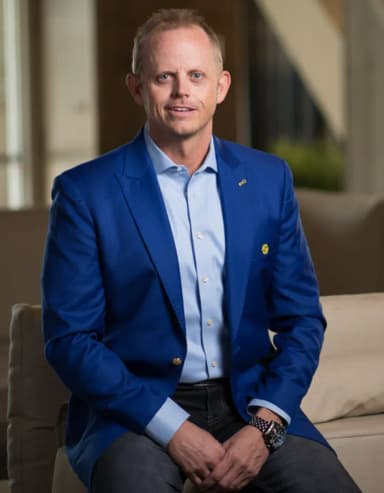
George Wright III opens this episode of The Daily Mastermind by revisiting a theme he introduced the day before: money and success are results, not causes. If you want different outcomes, you have to work at the level of cause. Today he goes deeper, walking you through a specific framework that some of the world's most respected thought leaders have used to explain why your life looks the way it does and how to change it.
That framework is the manifestation equation.
What Is the Manifestation Equation?
The equation is straightforward but powerful. As George explains:
your thoughts lead to your feelings which will lead to your actions that create your results
Every outcome in your life, every relationship, every financial situation, every health result, traces back through a chain that starts with a thought. That thought generates a feeling. That feeling drives an action. That action produces a result. If you don't like your results, the place to intervene is not the result itself but the thought that started the chain.
Why Your Past Is Running the Show
Here is where most people get stuck. Your current thoughts are not random. They are built from the accumulated weight of every past experience you have had. The beliefs you formed in childhood, the failures you remember, the successes you may have discounted as luck, all of it has been quietly programming your internal filter.
George points out that if you say you want to be successful but you are not taking the actions that lead to success, that is a signal. It means you do not truly believe, at a deep level, that success is available to you. Your actions always tell the truth about your beliefs, even when your words do not.
The good news is that your history is not your destiny:
your past does not create your future. Your past does not define you.
This distinction matters. Your past is a teacher, not a life sentence. When you recognize that your past experiences are inputs to your belief system rather than permanent facts about who you are, you gain the ability to update the system.
The Four Steps to Rewiring Your Beliefs
George lays out a four-step process for actually doing this work. It is not theoretical. It is practical and sequential.
Step 1: Awareness. You have to see what is actually happening. Most people monitor their actions but never examine the beliefs and past experiences driving those actions. Awareness means going one level deeper, observing not just what you do but why you believe what you believe.
Step 2: Understanding. Once you are aware of a limiting belief, the next step is understanding where it came from and why it made sense at the time. This is not about blame or judgment. It is about making sense of the pattern so it loses its unconscious grip on you.
Step 3: Disassociation. This is the step that creates real freedom. Disassociation means recognizing that you are not your past. The experiences you went through shaped you, but they do not define you. You can acknowledge them without being controlled by them.
Step 4: Daily Rituals. Awareness, understanding, and disassociation mean little without consistent practice. Rituals are how you override old programming with new behavior. George connects this directly to the concept of your comfort zone, which is simply a boundary drawn by your past experience. When you build rituals that push you just beyond that boundary, you expand what feels possible and you stop living on autopilot.
How the Comfort Zone Connects to the Equation
Your comfort zone is not a character trait. It is a byproduct of your belief system. It is the range of action that feels consistent with what your past has told you is safe and achievable. Every time you step outside that zone, even briefly, you are creating evidence that challenges the old belief. Over time, those small acts of discomfort accumulate into a genuinely new baseline.
This is why George emphasizes rituals so consistently across the podcast. It is not about motivation or inspiration in the moment. It is about building a daily practice that keeps you in productive discomfort, so your beliefs are always evolving rather than calcifying.
Why This Framework Is Worth Returning To
George has spent more than 25 years studying and working alongside thought leaders, authors, and high performers. The manifestation equation is not new, but it is durable. It keeps surfacing across disciplines because it reflects something true about human psychology: lasting change happens from the inside out.
When you try to change results without changing thoughts, you are treating symptoms. When you change thoughts, which requires going through the four steps above, the feelings, actions, and results shift as a natural consequence.
it's never too late to start living the life that you're meant to live
That line is not just encouragement. It is a statement about the mechanics of change. Because the equation starts with your thoughts, and you can choose to intervene in your thoughts at any time, the window for transformation never fully closes.
Action Steps
- Write down one result in your life you want to change and trace it backward through the equation: what action led to it, what feeling preceded that action, and what thought or belief is driving that feeling.
- Practice daily awareness by spending five minutes each morning observing your thoughts without judgment, noting which ones are rooted in past experience rather than present reality.
- Identify one belief that is limiting you and apply the four steps: name it (awareness), understand where it came from (understanding), remind yourself it is not who you are (disassociation), and build one small ritual that challenges it daily.
- Share this episode with someone who is working on their mindset. Teaching reinforces your own learning.
The manifestation equation has been a cornerstone of personal development for decades because it is honest about where change actually begins. It begins in your mind, long before it appears in your results. As George Wright III reminds his listeners every day, it is never too late to start living the life you were meant to live.