
The Daily Mastermind
ALL EPISODES
Episode 785 · May 31, 2023

Living in the Now: Access the Power of the Present Moment

Listen

George Wright III returns for part two of his three-part series on *The Power of Now* by Eckhart Tolle, digging into chapter three on moving deeply into the now. If you caught part one, you already know the core premise: you are not your mind, and most of your problems cannot be solved by the same thinking that created them. Today George unpacks two practical strategies that build on that foundation, helping you access the present moment and break free from the grip of psychological time.

Why You Keep Missing the Present Moment

Most people spend nearly all of their mental energy either replaying the past or worrying about the future. According to Tolle, the mind is hardwired to anchor itself in time, cycling through old memories, old stories about identity, and anxious projections forward. The present moment, the only place where real results are created, gets almost no attention at all. George frames this as the central problem: you cannot take effective action in a moment you are never fully inhabiting.

How to Access the Power of Now Through Daily Practice

The first strategy Tolle offers is deceptively simple: make a daily practice of disconnecting from the past and the future. George recommends building mindfulness habits using tools like the Waking Up app by Sam Harris or the Calm Meditation app, though he notes that Headspace and many others work just as well. The medium matters less than the consistency. Whether you prefer guided meditation, silent sitting, or theory-based reflection, the goal is the same: develop awareness of the present moment on a regular, disciplined basis.

When you build this habit, you start to notice something remarkable. Most fear, stress, and negative emotion lives in time, not in the actual present moment. Even when something hard happens, the moment itself passes quickly. What lingers is your mind's grip on it.

How to Become the Silent Observer of Your Mind

The second strategy is becoming what Tolle calls the watcher of your mind. George is careful to make a crucial distinction here: you want to be a silent watcher, not a critical one. Many people attempt mindfulness and then beat themselves up every time their thoughts drift to the past or the future. That self-criticism is itself a problem the mind is creating.

Tolle addresses this directly in the passage George reads aloud:

Intense presence is needed when certain situations trigger you. They're going to trigger a reaction of a strong emotional charge, such as when your self-image is being threatened, a challenge comes into your life that triggers fear, or things go wrong, or an emotional complex problem is brought up from the past. In these instances, the tendency for you is to become unconscious.

The reactive pattern that follows, justifying, attacking, defending, is not really you. It is a habitual survival mode. The antidote is not to criticize yourself for it but to simply observe it. George pulls directly from the text:

Identification with the mind itself and what it's doing gives it more energy. Observation of the mind withdraws energy from it.

That is the shift. When you focus on the problem, you feed it. When you observe the mind moving toward the problem, you step back and reclaim your power.

The Difference Between Psychological Time and Clock Time

One of the more nuanced ideas in this chapter is the distinction between clock time and psychological time. Clock time is useful and necessary. You have schedules, goals, and projects. You learn from past mistakes and apply those lessons going forward. That is healthy engagement with time.

Psychological time is different. It is when the mind turns a past mistake into an identity, when guilt or remorse becomes a permanent fixture of your self-image. It is when the pursuit of a goal stops being about the work in front of you and becomes an obsessive search for future validation or completeness.

As Tolle writes, the enlightened person's main focus of attention is always the now, but they continue to use clock time while remaining free of psychological time. George applies this practically: work your schedule, work your plan, but do not let your goals become a story about who you are or are not. Stay anchored in the step directly in front of you.

Why Observation Beats Problem-Solving

There is a paradox at the heart of this chapter. The more you try to think your way out of stress, fear, and anxiety, the more energy you pour into the problem. But the moment you become the silent observer, watching the mind move toward its familiar grooves, you begin to withdraw that energy. You do not have to solve anything. You just have to notice it.

George emphasizes that this is not passive. It takes active daily practice, a commitment to building the habit of monitoring where your mind is going and why. The payoff, as he describes it, is quantum leaps in your ability to create results, because you are no longer spending your mental energy feeding the problems that drain you.

Action Steps

  • Start or deepen a daily mindfulness or meditation practice using an app like Waking Up, Calm, or Headspace. Even five minutes a day builds the habit.
  • Practice being the silent observer: notice when your mind drifts to the past or future, and simply note it without self-criticism or reaction.
  • Learn to distinguish clock time from psychological time. Use your schedule and goals as tools, not as measures of your worth or identity.
  • When a strong emotional reaction arises, pause and name it as a mind pattern rather than identifying with it.
  • Carry one question into your day: am I living in this moment, or am I living in a story about the past or the future?

Tomorrow George closes out the series with part three, covering how negativity and suffering are rooted in time and how to eliminate negative emotions by staying present. He also promises strategies for living your actual life instead of your situation. It is never too late to start living the life you were meant to live, and it starts right now.
READ THE FULL TRANSCRIPT

All right, welcome back to The Daily Mastermind. My name is George Wright III, and this is your daily dose of inspiration, motivation, and education. This is day two, part two, of a three-part series I'm doing on a book that I just absolutely love right now. It's one I've read before called The Power of Now by Eckhart Tolle, and that's spelled T-O-L-L-E, by the way, tall, Eckhart, E-C-K-H-A-R-T, T-O-L-L-E. Anyway, love this book, and there's this one particular chapter that we're reviewing, and it's about moving deeply into the now, because we know that the more present you can become, the more results you're going to get. And yesterday, we talked about a couple of key ideas, and that was part of this chapter that I kind of read and went through with you. We talked about don't seek yourself in the mind. Remember, you're not your mind and the problems of the mind, which are pretty much everything that we're dealing with every day, can't be solved with the mind. And so you have to shift to where you just get present and present in the moment. And you have to also, we talked about this idea that you have to end the delusion of time because the mind is tied to time. It's always moving towards past situations or future vision. It's always tied to your memories of the past or anticipation of the future. And so the more you move towards the present, the more you'll avoid this idea of time that your mind tends to gravitate towards. The other thing we mentioned is that nothing exists outside the present moment. And so the sad thing is that most of us are not living in the present. We're not executing the present. We're not taking action in the present because we're so caught up in the past and the future. There really is only just the present, which is now. And the present is where you're going to get your results. And so that's why this is so incredibly important for you to understand, moving into now and moving into the present. So today what I want to do is I want to shift to a couple more ideas in that exact same chapter three, moving deeply into the now. And the first idea is that of accessing the power of the now. This is the strategy, right? This is accessing the present moment. And so the first thing that Eckhart talks about is make a practice to disconnect yourself from the past and the future. Like I said earlier, most of us spend 99.9% of our time thinking about the past or anticipating or worrying about the future. And so making a practice to disconnect is a key. Now this is why we talk about mindfulness or meditation. We're really just putting focus on this. And there's a lot of tools to do this. I use actually a couple of different apps because they're a little different. One is the Waking Up app by Sam Harris, and another one is the Calm Meditation app. But there a lot of them out there like Headspace and many others Because whether you want guided meditation non meditation whether you want theory whatever it is the whole goal here is to create mindfulness and mindfulness is just being aware of the present moment everything around you what's going on and so when you make a practice of this and you start to create that discipline you'll really get grounded in the present moment because you're going to find that most of the problems worry stress fear negative emotions and things we'll talk about tomorrow are all grounded in time of the past or the future. They're generally not in that exact specific moment. And even if they were because something happened, that moment passes and yet we hang on to it. And so you have to start obsessing and observing when your mind, this is a strategy you need to do, start watching and noticing when your mind shifts towards the past, the way you're, the story you're telling yourself, your identity, whatever it is, or your future, the stress and worry and things. When you can start to become more and more observant of that and you make that a habit, you're going to find some huge, huge leaps, quantum leaps in your ability to create results. Now, there's a note that he has in here, and I think this is very important. You need to become the watcher, that third party, kind of like I talked about with a couple other episodes that we've talked about. You need to become the watcher of your mind because that's when you become empowered, when you know where your mind's going. But, and this is a really important note, be the silent watcher. Be the silent watcher. And what I mean by that is don't notice that your mind constantly goes to the past or the future or the stories you're telling yourself and then make it a problem. See, that's what a lot of us do. We start criticizing ourselves. We start becoming hard on ourselves. And so I'm going to read you just a quick passage out of this book. And he says, intense presence is needed when certain situations trigger you. They're going to trigger a reaction of a strong emotional charge, such as when your self-image is being threatened, a challenge comes into your life that triggers fear, or things go wrong, or an emotional complex problem is brought up from the past. In these instances, the tendency for you is to become unconscious. You know, the reaction or emotion takes over you. You just become the problem. You're wrapped up in it just like you would be in a movie, right? I'm paraphrasing. And so you act out. You justify. You make wrong, attack. You defend. You say things you shouldn't say, except that that isn't you. It's just a reaction pattern. The mind is in a habitual survival mode that you're used to doing. So don't criticize yourself. I'm adding some commentary here. Don't start to create a problem out of it. because identification with the mind itself and what it's doing gives it more energy. Observation of the mind withdraws energy from it. I hope you got that. When you just get caught up in the problem, what you focus on grows and you're giving energy to the problem in the mind But when you observe the mind you taking the energy away and you becoming empowered Identification with the mind creates more time So if you identifying with the problem all you doing is giving it more time Observation of the mind opens up a whole dimension of timelessness. The energy that is withdrawn from the mind, it happens when you turn to the presence. Once you can simply choose to step out of that problem and notice that it's happening, you become empowered. And I really love that. So we've got to make a habit. You have to absolutely in your daily rituals start to make a habit of monitoring your mind. Where is it going? Why is it going to the past and the future? And remember, it isn't actually to figure it out. It's just to be aware of it. Because the minute you become aware that your mind is going back to all these bad memories or situations, or this always happens to me, or the minute your mind goes to what you've got to get done or what you're stressed about or anxious about, that's the minute you're unconscious. You're not consciously living your life and you're not going to get results. So you have to do that. So that becoming mindful is so important. And then the other thought that he leads with in this chapter is you have to let go of psychological time. Now, obviously, we have to be aware of time. We have schedules. We have things we have to do. But he makes a very interesting distinction here, which I have not really thought of before, and maybe it will help you. But there's a difference between psychological time and clock time. In other words, the mind gets caught up in psychological time. You know, the past emotions and negative experiences and our self-identity and what we tell ourselves, our stories. But there is such a thing as clock time. Look, you've got to get things done. You've got to get projects done. You've learned from experience. Now you're going to move forward. And I'm going to read you just a quick thought on that that he says. And this might add some clarity for you as well. He says, The enlightened person's main focus of attention is always the now. In other words, that's the goal, right? But they are still peripherally aware of time. In other words, there really is no time if you're focused in the present. It's just the now. But you have to be aware of time in general. In other words, they continue to use clock time, but they're free of psychological time. So using clock time or getting wrapped up into psychological time are two totally different things. Be alert as you practice so that you don't unwittingly transform your clock time into psychological time. For example, if you make a mistake in the past and you learn from it now, then you're just using clock time. You're using it to your advantage. On the other hand, if you dwell on it mentally and create self-criticism or remorse or guilt comes up and then you're making the mistake of me or mine, you make it part of your sense of self and identity, it now become psychological time which is always linked to a false sense of identity Non necessarily and this is an example of a heavy burden of psychological time See if you can move on you wrapped up in psychological time. But if you look, so then he goes on to say, if you set yourself a goal and work towards it, then you're using clock time because you're just working towards a goal. You're aware of where you want to go, but you honor and give the fullest attention to each step that you're doing at that moment. That, by the way, is how you get results. And if you then become, for example, excessively focused on your goal, or perhaps you're seeking happiness and fulfillment, which are all, you know, usually things we project into the future, or more complete sense of self by the things you're doing, this is no longer clock time. You're now getting wrapped up in a psychological time. And I really love this because I think if we can make a practice, and this is what I want you to really take away from this episode, if we can make a practice of creating mindfulness for the present moment, it will eliminate, we're going to talk about this tomorrow, so many of our problems that are caught up in the stories we tell ourselves from the past, the anticipation and stress of the future. So we've got to make a daily practice of meditation, mindfulness, or at least becoming that silent observer. Remember, not the critical observer, the silent observer. And then we have to let go of this psychological time and know the difference. Work your schedule, work your plan, but don't let that become an obsession to create something in the future or to overcome, you know, validation from the past. It's so, so important. So now tomorrow, what we're going to do, we're going to get into some really good stuff. I'm hoping I can fit it all in for you. we're going to talk about how negativity and suffering are all rooted in time and how we can eliminate literally all negative emotions by focusing on the present and we're also going to talk about how to truly live your life and not your situation right so many of us are living our situation and not our life and then i'll give you a couple of strategies on how to create a real quantum leap in results with your present moment so that's what we're looking forward to talking about tomorrow. That'll be our third segment of this chapter three out of the book. I hope you've had an amazing week so far, and I hope you will join me by giving me some feedback. I really want to hear from you. Is this stuff that's resonating with you? Is it helping you? Is it something that gets your awareness just slightly out of that normal business entrepreneurial mode that might give you some more awareness? Hit me up on The Daily Mastermind on Facebook or Instagram. DM me, message me. I need to hear from you because I want to be able to help you and support you, and I look forward to talking with you more tomorrow. This is George Wright III and this has been the Daily Master. Have a great day.

About the host
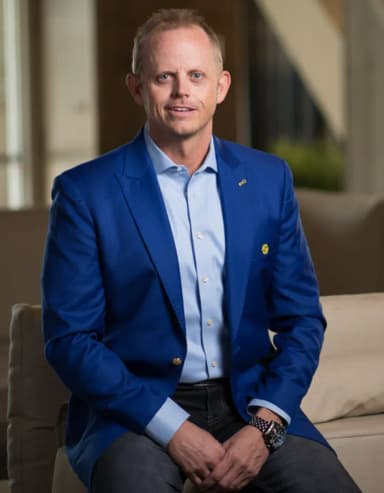
George Wright III, host of The Daily Mastermind

George Wright III

George Wright III is an entrepreneur, investor, and the host of The Daily Mastermind. Over more than two decades he has founded and scaled several multimillion-dollar companies and built a renowned seminar business that put some of the world's biggest names and brands on stage. With 25+ years across marketing, sales, and executive leadership, he's made a career of turning bold ideas into results — and momentum into lasting growth.

Today his mission is singular: empower driven entrepreneurs everywhere to master their mindset, unlock their potential, and live their ultimate destiny. Through The Daily Mastermind, George shares the Prosperity Principles and strategies that help people create massive change — in their business and in their life.

MORE ABOUT GEORGE