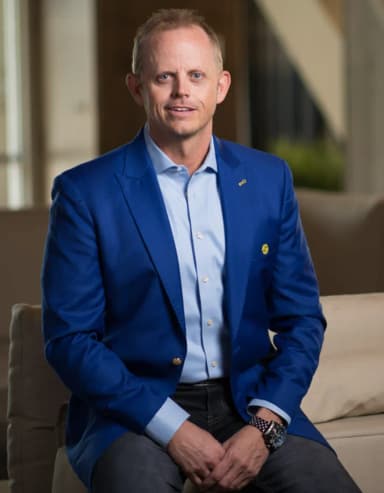
What if a single word held the key to your wealth, your health, and your happiness? On The Daily Mastermind, host George Wright III delivers a focused Monday prosperity principle that may be the simplest and most powerful idea you encounter this week. That word is: philosophy.
Not philosophy in an academic sense, but your personal philosophy, the belief system that quietly runs in the background of every choice you make, every relationship you build, and every result you get.
What Your Philosophy Actually Is
Your philosophy is your belief system. It is the lens through which you see the world, interpret situations, and decide how to respond. As George explains, whether you have consciously built those beliefs or not, they have been built for you. They are already running. The only question is whether they are guiding you toward success or away from it.
Think of two people in the same job. One person believes the role is an opportunity to learn, grow, and advance. The other views it as a grind, feels their boss is always working against them, and sees no path forward. Same job, same circumstances, dramatically different trajectories. The only variable is their philosophy.
Does Life Happen To You or For You?
One of the most direct questions George raises in this episode is this: do you believe life happens to you or for you?
What would your life look like if you stopped playing it safe?
That opening quote, from Eric Thomas, sets the tone perfectly. When you hold a "life happens to me" philosophy, every setback feels like an attack. When you shift to "life happens for me," challenges become information. You stop reacting and start responding.
That shift in philosophy alone, before you change your habits, your schedule, or your finances, can begin changing your outcomes.
Your Money Blueprint
George spent significant time working with T. Harv Eker, author of "The Secrets of the Millionaire Mind," a multiple New York Times bestseller. Harv's central insight was that he could predict your financial future in ten minutes because most people operate from an unconscious money philosophy, what Harv called a money blueprint.
Money is not something that you go after. Money is the result of your philosophy.
Are you focused on making a living and paying bills, or are you building financial independence? The answer reveals your money philosophy. When you shift to an investing mindset where every dollar earned is an asset to be directed rather than spent, your financial results begin to follow.
Philosophy on Health and Energy
The same principle applies to your body. George asks a pointed question: do you eat to live, or do you live to eat? Do you view exercise as sacrifice, or as fuel for energy and mental clarity?
George frames his own approach clearly: he works out because it makes him perform better. When exercise becomes a tool for clarity and energy rather than a chore, the philosophy shifts, and so does the consistency. Some of the world's top athletes eat with precise intention because they understand that food is energy, not entertainment.
Why Surface Changes Never Last
Here is the insight that ties it all together. George draws directly on a principle he learned from T. Harv Eker:
Until you change your philosophy and beliefs, nothing's going to change in your life long term. Nothing.
You can change your habits, your diet, your circle, your job. But if the underlying beliefs stay the same, the same patterns re-emerge. You are changing the fruit without addressing the root. Long-term, lasting change requires changing the belief system that produces the results you are currently getting.
The good news George offers is significant: it does not require a complete overhaul. Small changes in your philosophy can produce major changes in your prosperity. One degree of shift in your beliefs, consistently held, redirects the entire arc of your life.
Happiness Rooted in Belief
One area George highlights that often goes overlooked is your philosophy on happiness itself. Do you achieve things in order to be happy, or do you happily achieve? Do you want to have the things you want, or do you want the things you have?
These are not abstract questions. They reveal whether you are living in a state of pursuit or a state of presence. Your happiness philosophy shapes how you experience everything: your work, your relationships, your sense of enough.
Action Steps
- Identify your current philosophy. Before anything can change, you need conscious awareness of what you actually believe about money, health, relationships, and success. Write down your beliefs without filtering them.
- Audit where your beliefs came from. Were they chosen, or were they handed to you by environment, upbringing, or habit? Awareness gives you the power to decide which ones to keep.
- Examine your money philosophy. Are you making a living or building financial independence? Start asking how every dollar can be directed, not just spent.
- Reframe how you view exercise and food. If you see workouts as sacrifice, shift the frame: they are energy and clarity tools. A small belief change here can transform your consistency.
- Remember that your past does not define you. You are not locked in by old habits or former results. Your destiny is shaped by your decisions, and you may be only one or two decisions away from a significant change in direction.
Your philosophy is not fixed. It is not inherited and permanent. It can be examined, challenged, and changed. As George Wright III reminds us, it is never too late to start living the life you were meant to live.