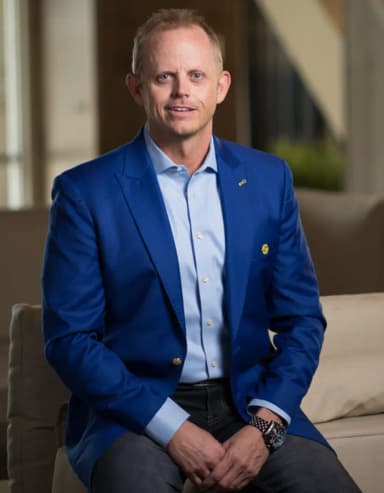
welcome back to the daily mastermind george wright the third with your daily dose of inspiration motivation and education and i'm super pumped to have a special guest on the podcast today henry marsh hey henry how are you i'm doing great hey george it's so good to see you again i can't believe our paths are crossing again so much fun to see you and to be on your podcast i know it is a small world when you get into those. First of all, there's so much going on. So it was really good to run into you. And it brought back a lot of memories of some massive success I witnessed that you had. So one of the reasons I wanted to bring you on, and for those of you listening that do not know Henry, let me give you a quick background because this guy is pretty much all over. Besides being an author of The Breakthrough Factor, he's a four-time U.S. Olympian team member. He's ranked number one in the world three different times, held American records for a quarter century, inducted into the U.S. track and field hall and fame, set four American records, crushed it in business, transitioned his sports into business. And that's why I wanted to have him on. But also this book he wrote, The Breakthrough Factor, going from success to significance, you guys will remember, it's one of the main things that I've focused on. So Henry, you have an amazing background, and I think it's the way you think and how you operate. So I'm glad you're here. Maybe you can fill in the blanks a little bit for us. Give us that bridge from all the celebrity athlete status to business. Well, first of all, George, I think I have to pinch myself because I look back on my life. I'm going, how in the world did that happen? And but when I think about it, there are some there's some connective tissues there through everything that creates success in your life. And if I really have to start someplace, it's birth and the family I was born into. I had such amazing genealogy. My grandfather, who I was named after, his name was Henry D. Moyle. I'm Henry D. Marsh. He was a very, very successful businessman, very high in his religion, his church. And he taught me principles. And here was the most important principle that he taught. And it was this. And I have it. He hand wrote it and I have a copy of it. It says, you can accomplish anything of a righteous nature if you have the faith, the desire, and are willing to do the work. And that was kind of the programming that I grew up with. My mom and my dad were there. It's like, there's nothing you can't do and we're here to help you. And so you're programmed for success to start with and given the right environment and tools to make that success happen. And so I start with how I'm programmed as individual through my upbringing. And so many people, it's like, don't do that, or don't do that, or you can't do that. And they're programmed for failure. And I look at successful people and I love to be around. In fact, I wrote the book to understand people and look at people's experiences and how it drives them today. And I love to be around successful people. I love to be around every people because I just like to learn about why they are the way they are. And that's my study is why are we the way we are? What factors were like, I have some good friends that were very successful in my past business. and one I'm thinking of in particular, he was raised in a very poor area of LA and had to take a different route home every day. Now, somebody that's raised in that environment, one of two things is going to happen. One, they're going to become that way where that's who they are. They're not going to ever succeed in life. Or two, they're going to say to themselves, there's no way I'm going to be like this. I'm going to make it successful. And they're highly motivated and they go out. And this one particular person became multi-multi-millionaire. And because he used that environment, that circumstance as motivation to be different. I was just in the perfect environment. You couldn't have better parents. My dad was a Harvard Law graduate. Everything I did, when we moved, for instance, the first thing you did is want to talk to the track coach to make sure that I was in the right environment. And so I had the perfect environment to start with, the perfect programming to be successful. Success is just how you are. Yeah, I got to tell you, Henry, I love that you started with that because a lot of people and there might be people thinking, well, I didn't grow up in that environment or that type of thing. But what I love about what you said is I wanted to start with this because it doesn't matter where you're at. You start with the foundation. You start with the programming and you can get this part of the reason we do this podcast. Right. But the fact that you went straight there shows how important it is to have the foundation and your environment. So, yeah, keep going. Yeah. And so in the book, you know, it's about stress. I did a stress management program for Franklin Covey, and that was the curriculum for it. And it was really about not what your circumstances are. Stress is not what's happening around you. It's your response to what happens around you. And so the example I just used of somebody raised in a bad environment, how did he respond to that? So we have a choice in our life. We're not victims. We're creators. We're creators of our lives based upon how we interpret it. And the problem is people take their life experiences and interpret it the wrong way that holds them back and limits it. So first of all, I just feel very blessed to have been raised in an incredible environment. I have seven brothers and sisters, all highly successful. Why? They were raised in the right environment to be successful. They had a mindset of success. We didn't get paid to make A's. We just did, you know, in school and success. So anyway, I start there. And then as I look back on the career, you know, I found track, track and field, and I didn't know I had a gift for it. It wasn't until ninth grade where I broke a city record. They said, wow, I must have a talent for this. And I think that's the other thing that's really important because I thought a lot about that. If I had never been on that track team in ninth grade, I would have never known I could have been an Olympic athlete, have been number one in the world. Yeah. You know, but how many people never find their talents? My mom used to say when I was growing up. She put us in everything. I was in football. I grew up in Texas where sports is fabulous. Football, basketball, run track, baseball, golf, tennis. She put me in everything. And her philosophy was, I'm going to put you in everything and see if I can find one thing you do well. And if you do that well, then you now learn how to do anything well. Yeah, guys, listen to what he's saying there, because what you're thinking is, well, I got to find my thing. I got to find my talent. Henry didn't just go jump into track and field. He was in all these things and found his talent. I love that you said that. Did you naturally or did it take you some work to figure out that's what you wanted to do? Or is that kind of one of the things you how did you identify it as your talent? Or was it that you just did really well at it? Well, in seventh and eighth grade, I didn't do very well in it. And finally, ninth grade, all of a sudden I blossomed. You know, you have your growth spurts. Yeah, but and I'm very energetic person by nature. So, you know, you have to start with what your DNA is and what your talents are. I remember when I was young and growing up in Dallas, we didn't watch TV. And during the commercials, you know what I do? I was bored with commercials. So I saw how far I could run up the street and back during the commercial. That's great. That's great. So you just find what you love doing. But in ninth grade, I just started running a lot and I broke a city record. I realized I had that talent. But I think about so many kids that never find their talents yeah and so you start with the foundation and then you tried all these things you found your talent So okay So fast forward just a little bit though you competed at the highest levels. I mean, the highest levels of athletics. What were some of the core principles that you then used when you bridged into business? Okay. Let's start with the core principle that I have found in athletics. Let's start there. I had, I was meant and I was mentored by amazing people. A guy named Bill Bowerman, one of the founders of Nike, was my personal coach. And what a phenomenal mentor he was. But he taught me some really important principles. I won't get into all the track principles, but I'll summarize it with this to keep it short. I'll summarize saying, ordinary, consistent effort, what creates extraordinary results. Okay, say that again. This is a core principle. I want people to listen. Say that one more time. Very important. Consistent, ordinary effort produces extraordinary results. In other words, I never missed a workout. Two workouts a day, six days a week, 11 months out of the year, 13 straight years, top 10 in the world, because I never missed. It was not that I did phenomenal workouts. Guys were doing much harder workouts than I was. But I also learned another principle that Bowerman taught me, and that was you stay within yourself. He said, after every workout, you should have felt like you could have done a little bit more. I'm going, what? But what I found was we had date goal paces and you just stayed on schedule. You kept that progression going. You didn't go do too much. I found that the people who choke in life, and this is very critical also, George, very critical. The difference between successful people and failures is their self-talk. I have found that so many people let the negative thoughts stay. Everybody gets a negative thought, but the key is the minute I get it, it's gone. And I focus on the positive. Before every race, I would see everything that could possibly happen. Who's in it? What might they do? If they did this, what will I do? If they do this, what will I do? So I was programmed for success when I walked in. I never missed one championship final. Out of all the Olympics, the world championships, Pan American Games, national championships, all the prelims, never once did I not make a final because I was programmed for success. Well, so Henry, I got to ask you this because consistency is key. Stay within yourself. I think a lot of people might hear you also because you are energetic and you've got so much success. They might think, wow, this guy just like ran right through life, you know. But you, in your inner game, you had to deal with, I'm sure, a lot of upset, obstacles, losses, and things like that as well. Is that what you mean when you say stay within yourself but also your inner game, right? How did you deal with that? How much time do you have to talk about all my losses? Right. I know. Well, you know, but overcoming that, you clearly did multiple times. Well, let me give one example that I think is a good example to pedify how you use your losses for success. 1983 World Championships. I'm in second place making a charge on the leader at the Wasp. My race is steeplechase. We have barriers. You jump over on the track. The last barrier, I'm charging the leader. I hit it. And I collapsed to the ground and end up in eighth place. the next year was the best year of my career in fact five days after that I set an American record in Berlin because we you use your success either say okay I failed or dadgummit I'm gonna go do much better Henry what was that guys listen what he said here this was Olympics I mean it's not like he had a bad week right so this was something he trained for a long time and had a loss do you think your failures actually pushed you harder than some of your successes motivated you absolutely Without a doubt. Yeah, the next year I broke an American record that lasted a long time. It was number one in the world. Yes. So how you deal with it, obviously, like you said, how you deal with it. But it's like, you know, guys. After it happens, what do you say to yourself? Did you say, okay, that was my ceiling. I blew it. I'm no good. Or I'm going to go do something great because of that. I'm going to go train harder. I'm going to find a better way. And how do you one-up that? Because there's so many people that are maybe getting a degree of success in their life, And then they're like, okay, I'm going into it. So you went into business after that. Like you had all of these levels of achievement and accomplishment. How do you continue to motivate yourself or drive yourself to the next level, to the next thing? Again, I thought in my life is a natural progression. Number one, my father was a Harvard Law graduate. I'm going to be an attorney. I was programmed to be an attorney, I guess. Okay. So I made my first Olympic team as an undergraduate. I made my second Olympic team when I was in law school. I made my third Olympic team when I was practicing law. I made my fourth Olympic team when I was working at Franklin Covey as one of the owners of Franklin Covey. So I always had a plan A and a plan B. And I think this is also very important for people in their lives. Have your plan A and your plan B. Your plan A is what's taking care of you right now. Your plan B is what you want to become your plan A. But I always knew that I could be injured. I'm done with track. And back in those days, you know, I was making a good living running track in addition to the law and other things. but it was plan A and plan B doing both. And I found that actually helped my running to be able to take my focus off and work on other things. So I had a career path of law just because of my upbringing. But when I started practicing law, I realized that's not me. And here's what happened. I was sitting in my office one day, realizing that I got paid by the hour. I got paid by how many clients I brought in and how many hours did I spend working on their project. And I'm going, I need equity. I need to make money while I'm sleeping. I need to be in front of five people in an hour instead of one. I need to be in front of a hundred people during that hour instead of one. I need to be in front of a thousand people during that hour instead of one. And I had a big revelation about you have to have equity rather than and make money while you sleep rather than being paid by the hour. From that point forward, it changed everything I did in business. Yeah, that's a principle that so many people that I've interviewed and been around this idea of leverage, right? You can top out where you want to be at. But at the end of the day, leverage is what creates wealth. Leverage is what creates lifestyle, not getting paid more and working more hours. So that's a pretty key principle. It was revolutionary for me in my life. Evolutionary, revolutionary, all that. And so I took a leave of absence from the law firm to train for the 84 Olympics. and in 84, I left the law firm on leave of absence and never went back. And at that point, I started looking for opportunities. I did some fun things. I was a sports reporter for CBS and Salt Lake with Jim Nance and Craig Buller. I had a blast interviewing coaches and the jazz players in their locker room afterwards because I love sports, but I didn't see that as long term. So I didn't do that a long time. I started a company helping amateur athletes and we won't go into all the amateur rules in the transition, but I helped with that. I served on the executive board of the U.S. Olympic Committee. I was chair of the Athletes Advisory Council, served on the executive board of the Salt Lake Olympic Committee. So I was very involved with my legal background and working with sports and those areas. That's a whole nother podcast. Yeah. Well, but you are a hustler too. And what's interesting is there's a lot of founders and owners and business and entrepreneurs that rely on hustle But I noticed in your book you talk about why long thinking is often the real breakthrough advantage And it seemed to me that you had like you said your plan A plan B but your real focus was on what was going to get you something bigger long not the short-term hours for dollars. Yeah, looking for those opportunities to create those equity opportunities. And so my first one that I really did was Franklin Covey. So it was Franklin International Institute when I first started with it, and I became a part owner. And I said, I'm going to create wealth for this company. So I'm going to start my own division. I'm going to write my book. I'm going to write my curriculum. And in exchange for that, you're going to give me ownership of the company. So that was my first breakthrough. And so then I became a part owner of FranklinCovey. And obviously, you make more money as an owner than you do as an employee. And I did that until when we had the digital planners come along and they kind of replaced. The FranklinCovey planner was amazing. Still the best tool I've ever used in my life. But the paper got replaced with digital. And so I saw the writing on the wall and said, okay, I need to move on. And so I left the company deciding what I was going to do. And that's when it hit me. I'm going to start my own company. And I knew all the Olympic athletes, good friends with all the sports because of my U.S. Olympic committee. I knew how to create nutritional products. I'm going to start my own company. And that was the vision. And that was the start of a company called Mono V that went worldwide, that did billions of dollars. and yeah, setting records. I'm very well familiar. Yes, setting records and doing everything it could. So it's funny because you continue to find breakthroughs into new areas that you seem to love. And, but just to be clear, I felt like a lot of the principles you're talking about were the core principles you continue to use no matter where you went in business and in life, right? Absolutely, yeah. Those principles don't change. And I even look now because now I'm starting another company, Olive Global, which is phenomenal. And I wish I had time to talk about that one today. But what I have found doing this, it's just like second nature now. It's like to run is second nature for me because I've run so much. And this is so much fun because I know what to do. I've experienced it all. It's like walking. Well, and you have this common theme of ownership too. And I wanted to ask you a question I had written down, which was, you know, you talk about ownership, but I think you kind of talk a little bit about why mental and emotional ownership is critical for leaders. But someone that doesn't feel fulfilled with what they're doing and they're starting to get some success patterns like you are, what do you recommend for people that are like, I don't know what my plan B is. I don't know what I want to do. You didn't know what you wanted to do. All these things came because you were moving forward, correct? Exactly. But here's the principle, and here's what happens. When you program yourself, when I program myself that I want to do equity, I want leverage, I found it. But then my subconscious is looking for it. Your subconscious is very powerful. That's why when we talked earlier about having negative thoughts and positive thoughts, you self-program yourself. If I let a negative thought in, it's going to happen. How many people say, you know, playing tennis, all my kids were like college tennis players. And it's like, okay, don't double fault. Don't double fault. Boom, you double fault. Yeah. Instead of saying, oh, here's where I'm going to hit the second server. Here's how it's going to go and seeing the positive. And so we program ourselves. And so if I program myself, okay, I'm going to find a leverage opportunity. They will come to you. Yeah. You will find them. I'm doing it with my kids right now. I've got a couple of kids. I'm looking at business opportunities. And it's interesting because I know what I'm trying to find for them and they're starting to appear. Yeah. How much time do you spend personally in your life with your business, with your kids, whatever else, focused on emphasizing the importance of the beliefs, right? Because I know in your book you talked about behavior follows belief, and it's like how – and very few people think about what's really driving their behavior. They're just setting goals and trying to go after it. How important are your beliefs connected to, like, the mindset that you're talking about? Oh, I mean, that's it. I mean, your beliefs drive everything. And so how you – your beliefs are your program. Your program comes from your life experiences. And so how you programmed yourself becomes your beliefs. And so what I taught people like in my course and my book and stuff was I taught people, okay, if you're not getting the results, what's the belief driving it? And we have to change the belief. How do we get beliefs? I mean, this is a whole nother podcast. How do we get beliefs? How do we change beliefs? And that's what drives the success. And absolutely. Like I have a belief I taught my kids and my dad used to teach me. He said, Henry, you're the sum total of your experiences. Yeah. Okay, dad, whatever you say, I didn't get it. I get it now. It's about experiences in life. I told my kids, for instance, let me give you an example. I told my kids when they're growing up, once a year, I want to do something you'll never forget. What do you want to do? My kids are tennis players. We want to go to Wimbledon. I took my two boys to Wimbledon. I asked my two girls, what do you want to do? We want to go to Mall of America. yeah right exactly but we'll never forget those trips their experiences we are a fabric of our experiences that's who we are yeah i love memories i have six kids eight kids six grandkids now and it's like it's memories it's the if life was worth living it's worth creating those but i think the principle you mentioned i just want to double down for those listening and we talk about this belief cycle of like your actions are determined by your beliefs and you know so if your beliefs drive your actions, they're going to create your results. It is 100% started with your beliefs. And I find it interesting because a lot of people I'll come across where they say they believe something, but their actions don't validate. And I always say, it's like, if your actions don't reflect your beliefs, it's doubtful you really believe it. So how does someone start to work on their beliefs? Is it just these core foundational things that they've got to continue to pursue? Okay, let me give you one other principle that will dramatically change your life. And so So anybody listen, if you don't want your life dramatically changed for the better, turn this off right now. But here it is. Don't do that. This is one thing that I've tried to teach and I've done myself and it really made a huge difference in my life. And this is it. Oh, shoot. We're out of time, aren't we? Okay. We're good. Let's keep going. You got it. We'll go as long as we need. I'm joking. I'm joking. Everybody about had a heart attack and pulled off the road. So he's still going. Here it is. And this, I promise you, if you will do this simple question, every time you have a decision to make, simply ask yourself one year from today, when I look back on today, what will I be glad I decided to do? It changed my life because then it gave the long-term perspective rather than short-term. So we're in a society of short-term satisfaction and we don't pay the price for long-term sacrifice. twice a day 11 months out of the year i'm doing my workouts i you know i might be snowing the morning i'm out running or whatever because i know that i can that decision a year from now is what i'm gonna be glad i did yeah i'll tell you that it makes the biggest difference to something you just talked about family how many times did i have a choice i can't tell you how many times i applied that principle i had a business thing or one of my kids things every time i went to my kids things and because a year from now that's what i'm gonna be glad i did well isn't it literally i mean besides the subtitle of your book, right? Isn't it literally always end up at some point, success to significance? Isn't it in the end, you know, even the things we're trying to get in life, the car and the money and the travel and the experiences are all the great feelings that you want to have And in the end it is about significance So Henry what for you you wrote this book it literally titled that what for you is significance And how do you define significance Well let me give you an example Both my wife and I have our own foundations And so one of the things I was able to do as a result of the success is start a foundation. And I started a foundation and we bought and started a charter school for high function autistic kids. Why? Because I adopted one. And I have a son who I adopted. He was born one pound, 12 ounces. I spent three months in neonatal with him. And so he's special needs. He's 24 now. And so the foundation paid for the school. It's called the Spectrum Academy. And it had a waiting list to get in because the need was so great. And they've done phenomenal. They bought me out Finally, they expanded to high school, did another campus. And it's just, that's what brings you the satisfaction. Yeah. You know, and then I've done, I won't go into all the details, but let me suffice you to say that I've done things with my kids. I said, kids, I'd rather do this now than give you money when I die and you go do something. I want to be a part. And it has been so much fun. And maybe another podcast, I can go into details on that stuff. but how I structured helping my kids and so that they created their own value in life. And then I can supplement that for their needs and legacy. It's legacy, right? Yeah. Then my donations like to my college, instead of just giving them money, we set up scholarships. So we have four athletic scholarships that are endowed so that they will be perpetuated. So we wanted to do things that, you know, carried on. And I did them in my kids, not my name. I did my kids' names, one in tennis because they played tennis. I had a daughter who was a cheerleader. We did cheerleading scholarship, you know, and then we did the running scholarships also. But yeah, so you know what? So let's do this. And you're right. I wish we had a bunch more time. Let's flip the script for just a minute. Let's assume because there were a lot of people out there right now, maybe even functioning at a high success level, but they're feeling stuck. They're feeling like they're not on track. They maybe aren't aligned with what their real true purpose feels, whatever it is, what would you as a successful person, the way you think, what would you say to somebody that's kind of struggling to kind of sort of find significance or get unstuck from the mindset of a winner and successful person? Like what would be your suggestion or strategy or recommendation advice? To me, it's pretty simple. Find somebody to help. There's so much need out there. My wife started a foundation because of her life experiences we going into. It's called Bridge to Hope. And we collect things to give to people that are in need. When people are depressed, there's a simple solution. Find somebody who's worse off than you, and they're there, and go help them. The way to feel good about yourself is just helping others. And if you're stuck, go find something to help, somebody to help in an area that you like to. For running, I could go coach, or I could go help special needs kids because that's so much of my life because of my adopted son. And so it's find something that an area that's significant to you, but help somebody. Service and helping always makes you feel better about yourself. Yeah, I think that people, it's funny, that's a common answer from very successful people is stop being about you. Get outside yourself and go help somebody else. So before we go, I do want to ask you, what is your latest project? Because I've been dying to know I've been following your career over time. You do intersect with us too, right? With Franklin Covey and the Planner episodes we do. podcast. We'll just take a quick why and why, why did you decide to do what you're going to do? And what is it you're doing? I'm just curious. Well, I felt like I still needed to make a difference in the world. And when I start a business, it's to help people. So in a couple ways, one, I want to help people that are associated with me, you know, take care of their families. And two, I want to help our clients, the people that use our products make a big difference in our lives. And so I was very fortunate. And sometimes I just go, I don't know why this falls in my lap, but about seven years ago, I ran across a company that I became associated with that came up with a technology that they could actually make substances part of water such that it passes right through the blood-brain barrier. So things that people are having to get injections for, they can take a drop and be instantly absorbed through the blood-brain barrier. A lot of people take drops, say, oh, we got a drop, but it goes right to the gut and gets destroyed. This doesn't. I've got exclusivity of this technology that I can use for the most common things now. Peptides, NAD, Myers cocktail, vitamins, weight loss. It's all the rage, weight loss and peptides and optimization. I got a technology nobody else has that can do it with a micro dosing, simple and more cost effective. So I'm really excited. I haven't launched it yet, so I can't tell everybody all about it, but it's going to launch in the next month. No, it's good, but I will tell you one of the things I noticed, I'm going to make sure I I make this comment. If you weren't listening and paying attention like you should be, he started this thing because of significance. The point is, is you're driven by something more than this like really cool technology. It's also ironic that people that are driven by that and successful people somehow always align with really cool opportunities. So, you know, those things intersect at the end of the day. So I love it. I love it. We'll have to definitely touch base and see where we can connect and follow the journey. But pretty much everything you've done has had some massive success. So before we take off, is there anything that you feel, first of all, how can people connect with you? What's the easiest way to connect? And I'm happy to put some links in the show notes as well. Yeah, right now the company is Olive Global, O-L-I-V without the E, Olive Global. And that's where they can find me. That's where I'm going to be really out. And I love being with people. And so I do meetings for them. We do phone calls. We do all sorts. We do trips together. And we'll have a lot. I want to have fun. I'm only going to do things. and everything I do, I try to make fun. That's another secret. Like my workouts, every day we try to make it fun. What am I going to do today to make the workout fun? Try to have fun in life. Enjoy life. Enjoy life. In fact, I was just with a big leader that was with my past company who's going to come and join me now. And he's very successful, doesn't have to work. Like I don't have to go work. And he doesn't have to work. And he said, Henry, I'm bored. He's going to come and join us. He's going to go to work because he's bored. He wants to go do something. He wants to go make a difference. Feel good about himself. That's the other thing. And it helps you feel good about yourself when you help other people and go do something. So anyway. Yeah, I love have fun. I definitely love the idea of doing something you love and helping other people. And at the end of the day, when those things all come together, it doesn't matter where you're at. At the end of the day, you want to be able to contribute as well. So I appreciate you being here with us. I think I'll put some links in the show notes to where to connect with you and the company and your book and things like that. But if you're listening to this, whether you're top of your game or you're trying to level up or you're feeling stuck. Remember, it's these success principles that are constantly out there for you that are timeless principles, but you have to take action. And I truly believe that it's never too late for you to start creating the life that you were meant to live, but you need to surround yourself with the right people, the right environment, like Henry talked about, and you've got to take action and you've got to really work on that inner game as well. So thanks for being here with us. Share this show. And if you have any questions at all, hit me up on the Daily Mastermind, Facebook, Instagram, and we'll look forward to talking with you more tomorrow. Everybody have a great day.