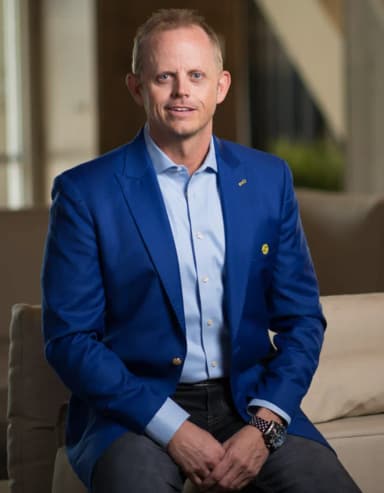
welcome back to the daily mastermind george rake the third with your daily dose of inspiration motivation and education and we are getting ready to drop some massive value for you today i'm excited because we're here with rob kessler who is by far one of the most diversified guys i've talked to in the last little while rob's an inventor a businessman 20 years in sales multiple Industries. He's the inventor of the Million Dollar Collar and now another shirt line, GoTilus. But he's had all kinds of history, which we're going to get into. And I'm really excited to have you here, Rob, man. Welcome to the podcast. Thank you. Thanks so much. Good to see you. Yeah, it was great because we were able to talk before we got going and we've just got so many things. But one of the things I noticed is that you're just super passionate about what you do, which I think a lot of people feel stuck in where they're at, but they just don't, they don't follow enough of their passions. So let's go back like a little bit here. And can you give us a little bit of a entry into the entrepreneurial world? Were you like six years old doing lemonade stands or did you make a transition into entrepreneurship? Tell us a little bit of the backdrop. Let's take a few minutes on that. Yeah, no, my dad had started a business when I was, I think two or three years old. And so by the time I got to be seven or eight, really weird, but he would give me my allowance, which is like five bucks a week, and then lunch money for the week on Sunday night. And he would do it for me and my brother and be like, okay, if you want to be an idiot and spend all their money on Monday and Tuesday, you're going to starve on Wednesday, Thursday, Friday. So oddly at 10, 11 years old, I'm getting this financial, this financial schooling and trying to be responsible with money pretty early. So I was fortunate to have my dad do that. At the same time, I was cutting grasses and just always had a, I don't know, I just feel like I got this entrepreneur thing from him. Nice. That's where that started. And then one of my first jobs in high school was at a little soccer volleyball store. And the guy day one handed me a key to the store, gave me a code to the alarm and said, you're part of the team. This is your business now too. And just made me feel at 17 years old an idiot kid that I had some ownership in this business. And it was cool because I started doing inventory ordering and I was doing a little bit of accounting and like sales. I would go up at night and hear the whole star part, remodel and relay everything out. And then it's just like, whatever you want to do, man. Wow. So you had an owner mentality. Was it because he started that or did you develop that? Because there's not a lot of people out there right now. Obviously, most of our listeners have an owner mentality because that's what they want to pursue. But did you had a job but did you have that owner mentality or did that situation set you up for that i guess looking back i did because i did the lawn cutting and of course since i got a lot from dad i only got five dollars to cut his lawn and all the neighbors yeah yeah 15 dollars so i was like your last yeah no you got no special favors from dad for sure yeah okay so i was always like okay and i literally i kid you not at 12 13 years old i would be stop adjusting your color Oh, hey, we're going to talk about that in a second. Oh my gosh. Good night. Okay. Keep going. Keep going. Yeah. At 13, I would be walking with the lawnmower and I was basically on a dead end street. Somebody is going to drive by and see me cutting this grass so good that they're going to hire me to do their grass. That's awesome. As I was pushing the lawnmower at 13 years old. Yeah. That's a great point. I'm going to put a pin in that for a second because I talk all the time with people about, it doesn't matter whether you have a job, you have a business, whether you're actually doing what you believe you're going to end up doing. How you do anything is how you do everything. And so if you're mowing a lawn and you're 17 years old, or I don't care if you're not where you want to be and you're 40 years old and you're still on a job, how you have that mentality of doing anything and everything is going to determine your trajectory. And I think that's probably, I'm sure you would agree, what took you on the path is having that owner mentality. Yeah. Yeah. And I can't remember who said that. I think it was Bill Chamberlain maybe, but somebody was like, provide more service than you ever, than anybody ever expects. And you'll get more back. I can't remember what the quote was, but it was, it just always felt like that resonated with me even long before I ever heard the quote. So it was just always put my back. Yeah. Yeah. I find so many people that are like, ah, I hate my job. I'm not doing black because I want to do something else. And they don't realize that it's, there is no cut and dry black. It's how you are as an individual. hey, let's transition into something because you made a comment and I actually brought it up earlier. So this is a comment, guys, just in full disclosure that I brought up myself. I always, when I, if you're not watching this on YouTube, you're in the podcast, I usually wear dress shirts. A lot of times lately you see me in like a t-shirt and a hat. Whereas most of you knew most of my career, it's like suits, right? Nonstop suits. But I wear dress shirts untucked right now and stuff. But this idea of the collar always freaking drove me crazy because I like collar stays And then the lapel kind of on the shirt always just wrinkles up and I can start the crap out of it. It still doesn't. So I run across Rob and he makes this, he created this company Million Dollar Collar. And I want to have him talk to us about how that happened because it's a cool story. And I got to tell you, man, it seems like the most amazing thing. And sometimes the most obvious things that you're like, God, man, why didn't I think of that? Are the most incredible things. Rob, tell us the story behind Million Dollar Collar. What's the deal there? How did it come about? So basically dress shirts to me were always the go-to when I wanted to look at my now wife. We're dating. We're going to go out to the bars. We're going to go out. She looks incredible. I can't go out on a t-shirt. So I put on a dress shirt and I just, I hated always wearing ties. I think it was probably from my car salesman days when they forced me to wear one. So yeah, you unbutton a couple of buttons and then it just was always sagging and dripping, especially if you put a jacket on. So comes to get married. I get married on the beach in Jamaica, totally casual. feet in the sand. My brand new freshly pressed shirt is a crumbled mess within 30 minutes. It was starged. It was ironed. It was perfect. And all day long in this humid Jamaican air, I'm just yanking at my collar, trying to get the front to sit up. You can see my ink top underneath. It just looked terrible. So I came home from the wedding after looking at all our photos. I said, man, this is a problem. I searched all over the internet and everything was some kind of kitchen collar state. I love working stiffs, which is the magnets that helps bring the collar in, but it doesn't the front of the shirt with the buttons in the holes is called the placket and that is the part that has no structure because dress shirts were designed to be buttoned all the way up and wore with the tie so they never had to have that structure in there so I took the idea of a collar stay I made it nine inches long I put it down the front of the shirt where the buttons and the holes are and that's a million dollar collar we call it a placket stay so it's kind of like exactly like collar stay except just for the placket so it is sewn into your shirts you You can take all of your shirts. And I know a lot of people out there probably have really nice shirts. I've personally done a custom guy $700 dress shirt. And I've also done $11 H&M throwaway shirt. So it's really for every dress shirt. It's for every collared shirt because there's just no structure in the front. And so if you like that clean business casual look, we call it the perfect me. You know, the tie used to be what drew your attention up to your face. And now when you don't wear a tie, if you got this lumpy clumpy plaque, it just is distracting. And it's one of those fine details that you don't really notice until you notice. And then when you notice, you can't not notice. I get people time. They're like, man, you've made me acutely aware of a problem I never knew I had, but thank you and I'm glad you did it. So let me comment a couple of things on this and then I want to go to the next evolution of what you doing but guys I want to I want to draw some attention here First of all I say it all the time success leaves clues And all of us are dealing with problems every day that affect our life. Here, he had a problem and he identified a solution, which obviously was not a very easy process, which we can talk about, but success leaves clues. The problem was, and we all face it, if you're an entrepreneur, if you're a business owner, you ever dress sharp, which you should, if you ever want to be successful, a lot of these big entrepreneurs now that wear t-shirts, it's because they freaking don't care and they don't need to care. But let me tell you how you look, dress for success. There's something to it. The second thing is how you look and slash feel will determine your attitude, your energy and everything. And Rob, you hit it right on. Look, we know that if you want to look and feel good, you're going to dress nice. And if you're sloppy, Even if you think you've got this killer shirt on, but it looks sloppy, people are going to judge. Whether you like it or not, people are going to judge. And I think your appearance will make a massive difference. And so here's something that hit a niche and a need for you. But also that's one of the success secrets, right? Scratch your own itch. And that's something you're passionate about. So I really love that. And I also think it probably wasn't simple. I just want you to touch for a second on like you just, you cut something out, put it in a shirt. you were good to go or was this like revisions and investment and time and how did it how long did it take you i'm just curious to evolve the million dollar collar and was there a big break at some point or did you just go out and hustle so from the inception point of our what our wedding came home the very first item was a piece of cardboard which i knew wasn't going to be the permanent solution but i just wanted to see a little bit of structure made a difference and i showed it to my new broad. She's oh my God, I finally get what you've been bitching about all these years trying to get this straight. Obviously cardboard is not going to work. So I went through the house. I had these flexible cutting boards. I had mini blind milk cartons. Oh wow. I was like, I tried all those plastics and then I would wash it. I would dry a shirt and then I would send it to the dry cleaner and it would just completely melt and ruin the shirt. So I ruined like a hundred shirts trying to figure this out and I learned that They flash press your shirt, 460 degrees when you send a shirt to the dry clean. So it's insane. And even the high temperature plastics, they start to fail at 275. So that wasn't going to be close enough. And I never wanted to invent and sell this $2 product and ruin your two or $300 shirt. Has to be buying $300 shirts for every $2 product I sold. I kept working and I kept grinding. The pattern, if you look at the different styles changed insanely. there's just a ton of different styles and so I finally ended up with a plastics company we developed this material it's really wild because it's super lightweight it's super flexible it's rigid enough to hold up the collar but it's still soft enough to be sewn through got to hold in there's a couple stitches right here where the collar band and the placket meet so the beauty is every dress shirt made the same as always two layers and reason why I have it inside of the shirt is if you look at my placket you can see the inside and you can see the outside so if you remember in the 90s when girls had the clear you know bra strap yeah they weren't very clear they weren't very hidden so there's just with the millions of patterns out there it's literally the second easiest tailoring or alteration that can be done behind replacing a button i we're in 650 dry cleaners and tailors and they all say it's just super easy to do so it is this weird extra step where you order for me and you go drop off your shirts and get it sewn in. But once it's in, it'll last like the shirt. You never have to think about it again. It's always there. And you just always look incredible. I will say, ironically, it actually, on one hand, my first thought was that, oh, you got to do a little bit of work. But then the logical thing I thought of was, God, I don't want to go buy like 50 new shirts. So it's actually cool because I've already invested in shirts. You could do that. So I really love that. But listen, guys, I want to point out something else. A lot of you entrepreneurs and business owners and people that are trying new things, you dabble. You don't go deep and you don't do what it takes. You heard him mention things like they flash press at 450 degrees and these things will fail at 275 and you've tried this and cardboard and blinds. Listen, if you're going to do anything, if it's worth doing well, it's worth doing and it takes persistency and time and commitment. And so I don't want to, everybody listens to the success stories. I don't want to brush over the fact that you had to go really deep to know what they press, when they press, what kind of materials, how it works, what to do with it. And then to think through self-alteration versus the next evolution we'll talk about. That just is a testament for individuals to realize that when you, the key to it is you were interested and passionate about it. So listen, guys, a lot of good ideas out there, but if you find one tied to your interest and passion, you'll be able to be consistent, persistent, and go deep because dabbling will never make you money long-term. It requires that persistence. So you did a lot of success with this and you evolved. Now you were selling while you were evolving, right? You didn't just evolve it till you thought it was perfect and then went out and sold one version or how did that go? No, I did not want to ruin anybody's shirt. So I did not sell any until I knew that the material wouldn't fail. So I'm thinking from an entrepreneur's mind, I wanted them to be shorter. I get the materials made in rolls and they're die cut out, which these are my old, these are my die cuts right here. So I'm thinking, okay, they're shorter. I get more in a roll and it costs less. And then we're doing them and then you put it on, it would just do this like Travolta 70s because they were so long because they were too short. It's got it. So now they're about eight and a half inches long, which will get you past this third button. And then because they overlap, it just gives you this really nice, clean, it just bounces back. It's always in there. So that version you have, that's the same version. Nothing's changed on it. It's just the kind of the main deal. I've changed the dye tutting process slightly. And so the day itself has adjusted very minutely. But yeah, overall, the whole thing is just. Oh, right on. But it also flows with the shirt. That's beautiful. So you went to a new, you noticed a need and you decided to now expand into your own shirtline. What's the reason you decided to diversify? And was there a point in time you felt you had gone deep enough with the million dollar collar that you wanted to expand? Or did you want to, or did you need it and you needed to fill that need? And so you expanded. What was the reason behind that? And what did you end up doing? So we went originally day one. And I got to in October of 2015 and in January of 2016, I was in New York partner making presentations to all the biggest brands. And we were talking about licensing this and getting it in the shirts. And they said, oh, it sounds like a good idea, but we really don't know if our customer even cares that much. So we said, okay, we'll sell direct to consumer. And so we just started selling these on our website. We got a couple of YouTube fashion influencers to do reviews of the product. And as time was going on, I kept hearing that it's such a pain and install. This is, I don't want to take the extra step. I don't know how to sew. And it's like, all right, fine. How do I make it easier for a customer to try this out? So I went and started buying wholesale because I'm in the screen printing embroidery business at one point. Um, I knew that I could buy shirts at wholesale. So I got a, uh, an account to buy Calvin Klein and a bunch of brand shirts that you know, and say, okay, fine. You don't want to take that process. Why don't you go buy a Tommy Hilfiger shirt that you already know and love? You know what size you are, so I won't have to deal with as much returns and exchanges. I bought them sewed my product in and then sold these done shirts So you can just try it That where you want to go Then we started doing all these dry cleaning trade shows We got into a bunch of dry cleaners and then people would still be like why can I just make you do it I like there 40 dry cleaners and 100 tailors If you hit a nine iron, you're going to hit somebody within the circular of your house. Yeah. So people kept asking for it though. Okay. We have a VIP service that you can mail in five to 15 shirts and we'll sew it in and fold them all up and send them right back to you. Got that service. To me, it's always, how do I make it as easy as possible for someone to try my product? Yeah, you are solving the needs along the way with your primary product. I really love that. And yet, I also think sometimes a lot of entrepreneurs have shiny objects to do. I could do this. I could do this. I could do this. But I like how it evolved and went towards a natural evolution. And then obviously that led you to the point of just creating your own branded shirt, which is for a lot of you, if you've been online, watch Shark Tank, watch any kind of like shirt companies, a lot of shirt companies come out. It sounds like you've created and from what I could see, like a real kick-ass shirt, it looks pretty good. So tell us what you went through to create that GoTilus and why that brand, why you decided to do that? Yeah, we're buying all these shirts, we're installing them and for what we're paying to buy a wholesale Calvin client share, we can certainly make our own shirt for less. And so I, we originally in 2014, when this was all coming out, we did a Kickstarter, going to do our own shirt. It wasn't going to be this universal aftermarket upgrade. The Kickstarter did not get funded, but unequivocally, the people that were willing to give us money said, why are you trying to compete with all the other brands? And why can't I upgrade the shirts I already own? So in 2014, before the product even came out, We pivoted because we were going to be a shirt company and it went to million dollar college of the technology. After years and years of trying to license this to all these brands and not getting anywhere and hearing all the most ridiculous excuses on the planet, we said, let's just make our own shirt and prove that the technology is enough to differentiate us as a brand. So we tried making them in LA and they just were not really that great a shirt. So we did two rounds of shirts that way. And then COVID hit and we reset a little bit. Wait to find the number one best-selling dress shirt. America took that as our base model. We upgraded the fabric. So this is a bamboo stretch, wrinkle resistant. It's a really amazing fabric. That's obviously got million dollar collar. It's actually got a convertible cuff. So if you want to throw in cuff links, the buttonhole is in the button. So you can just throw a cufflinks down. We started with three colors. We're ordering our fourth color right now. We've already reordered twice in less than the first year. It's moving along really nice and it's just reiterate, look, if you don't want to think it's good for a brand, we'll show you, we'll build a brand around it. And it was not only to get the attention of other brands, but also from manufacturers. So I'm making a thousand shirts at a crack. When I'm making five or 10 or 20,000 shirts at a crack, that manufacturer is going to pay attention. And when he sees it going out of 20,000 shirts, maybe he'll start talking to his customers and saying, this other guy is selling 20,000 shirts every couple of months. You might want to think about adding this. And so then it just opens in the licensing technology comes even more. So again, it's getting in front of people that I want to sell the product to that will further sell the product down the road. So it's all about getting the technology in front of people. I like how you said that. And that was gonna be my follow-up question because I think sometimes people struggle with identifying their target audience. And even though your real target end user audience was the person wearing the shirt, right? you originally win B2B. You wanted to find those outlets that are going to take it to the individual and decided I better prove out the concept by going straight to individuals, but you never gave up on trying to also find that niche that would take you there. So then you created your own and you probably still have others that you're working with that. What percentage of your business is made up of the original like million dollar collar versus the byproducts of send it in, We'll do it for you. We've got, we have shirts. We have labeled shirts you can use. Is the million dollar collar the concept that kind of pushes all that? Or is that still the staple of revenue for your company? It is still a staple. We're in the top 0.1% of fashion products sold on Amazon. And so our website doesn't do a lot of traffic, but we sell tons, huge daily basis. So million dollar collar, core product. And again, thinking as a business person, million dollar collar is an absolutely separate silo from GoTilus. They're too separate. Got it. They're two totally breakouts. So at some point we could grow GoTilus. My goal, my short term, medium term goal is to get to a thousand shirts a day. So we get to a thousand shirts a day and we've got a 15 or $20 million company. And then we can say, okay, if somebody wants to take that and go blow that up. I mean, if you go to our website, it says the home of business casual. And so what I want that resource to be is you could go there and say, I've got an event coming up. You get a nice dark pair of jeans and a bells and a pair of shoes and a jacket and a shirt. Like you would be able to dress from head to toe with GoTieLess. And so it's this whole lifestyle that you'd be able to do. So we'll start with three shirts and then we'll grow that out. And then you'd still be able to have, or we'll still have them in Million Dollar Crawler Technology as licensing. You can go tie the list, we'll license it to all those other brands we're talking to. I should be in Mexico City, Colombia, Brazil, and Shenzhen in the next six months talking to different factories. So we're starting to land. There's just so many brands out there that you can just grab this and throw in your shirts and have that premium version of your standard shirts. We've never been trying to say that every shirt should have this. It's add to your core business and offer. People can get a 20 to 30 extra turn on their investment by adding million dollar colors. Yeah. I tell you, especially in fashion, this all boils down to people want to look good, feel good, make a lot of money. That's just the core. You're not going to change that over time, human nature. Let's take a second. And I just want to do, I want to do two things. I want to go first back to, is there a point along the way, 2014, 15, 16, up until now, is there a point where you felt like you hit some roadblocks where you just didn't know it was going to happen or you had some major setbacks or any, because I want to highlight to individuals that look, people get on with guys like you and I, and they think it's just easy, breezy. And I'm here to tell you, it's not, man. It's a grind every day. I don't feel like getting out of bed in the morning. I don't feel like going to the gym. I don't feel like working a lot of days, but was there a point in time or maybe a particular story or a wall that you had hit or even just a lesson learned from a big failure that you could share with the group? Yeah. Look, I got taken for about 150 grand within the first, I don't know, three years of the company. So we hooked up with, I thought, you know what, I'm getting this brand. I've got to have good PR. So I hired these two girls to do PR and they tried to get 12 or 13, 15,000 bucks out of this, which I got all the back because I paid for it on my credit card. So that was pretty easy. The next company was $4,000 a month for six months and they got us one article. So there's 30 grand that was gone. And then I was able to grow this company organically on Amazon with our influencers and stuff. And I hit 20,000 bucks a month within 18 months pretty quick. And so then I was like, okay, I'm doing some revenue. I need to go hire somebody. And everybody that we hired that tried to plug and play in this product with their, oh, I grow ROAS and why we do all this stuff. I went from 20 grand a month to 11,000 a month within six days. And it took me a year and have to recover from that because I don't know what this Amazon guy did, but he totally screwed up. I paid him 1500 bucks in ads and I lost a month for the next 18 months And so it was like we I been hit There definitely days that I in bed What am I doing with my life And fortunately, I've gotten an insanely supportive wife. She would be like, she'd be on a high with her career, which she's a badass woman. So if you want to have a whole nother conversation, we can talk about that. But so she'd be on a high. You know what? Take a day, relax. You're doing the right thing and she's super supportive. There's definitely days when I'd hit that low and not know what I'm doing all the time in my life, but I'm glad. I think there's lessons to be learned and I want everybody to really, because I think sometimes people listen to the surface and they don't really think through and see the clues in success. And that is, look, we all want things to happen quick and fast. I don't know if it was Jobs that kind of said, Steve Jobs had said, we underestimate the long-term activities and we overestimate the short-term. We really want, We really want success, so we try to bring it in, but there's nothing like just grassroots, hard work, organic growth, that down the road, you're so busy trying to shoot like elephants, that down the road, you're going to wish you had laid the foundation on, which I know you were constantly doing. that people need to realize that don't just all or nothing, you gotta do all of the above. And I do think that you have done a phenomenal job of that. And it just, it's a testament to the fact that ideas and the American dream and making something out of nothing, it not only is possible, but it takes hard work. It takes reiteration, it takes investment, it takes ups and downs and failures and losses and successes. But I also liked that you said you have a support network. And listen, whether you guys have a partner in life or you have partners or you surround yourself. It's back to kind of like one of my prosperity principles, surround yourself with successful people. Surround yourself with people that are positive and that can give you that uplift. So let me ask you this. Do you have, because we're going to finish up here, but do you have any particular advice that you generally like to give new or ongoing entrepreneurs, especially in the current marketplace? Is there anything that you would like to kind of leave as maybe a piece of advice for people that are listening to this and listening to you in general? Yeah. The passionate stuff is always, it always helps. Just those days when you're in bed and you can't get out because you don't know what's your life, it takes a minute to read that, but you can think about why you're doing it. If you're just getting the money, it's easy to just throw in the towel. In the middle of all of this, my wife and I moved to LA until we're 0.15. I mean, actually when we moved the call that the patent had been approved, we were on our 10 day move out to Los Angeles because we wanted to be in an area that's like super vibrant and there's business and there's connections and all these people. And so we're out in LA, we own two commercial buildings back in Wisconsin where we're from. We ended up selling those and bought a 50 foot yacht and started a charter business and did a million dollars on that, which her parents have built boats her whole life. like, are you guys out of your freaking mind to buy a boat? But it turned out because we love boating. We love being out there providing this high level of service. We had Beyonce and Pauly Shore and Ron White. We had all these, we had a bunch of celebrities and athletes positioned ourselves so different from every other boat that was in Los Angeles doing charters that we actually drew really quick. We ended up selling that about a year ago, but we had this boat that We couldn't afford otherwise, but people, we were, we never went a month out of Trevor in four years and it was just this incredible thing, but we were super passionate about it. And one of the great things that came from that was it forced me away from my desk. If I just, if I don't have something, I'll just bang away on the computer and I'm not inspired. So when I'm sitting at the helm and I'm just thinking, letting all these people have fun, it got me out of my day-to-day routine and allowed me to let my mind wander. And that's where I would come up with different ideas on how to market the brand or how to get into these drag cleaners, how to help push it into different directions. And so this really great site thing came out. Not only do we make a bunch of money and have some fun, but it also helped me grow as a business person because it got me away from my normal routine. Yeah. It's just another great example of the things that you're passionate about, not just can become opportunities and success, but they can also drive your inspiration. You know, it's hard to be inspired when you're grinding. It's not hard to be inspired when you're grinding on something you're passionate about. I find that over and over. That's why my business has always taken me in the direction of fitness and nutrition and investing and things like that. So I love that, man. I love that. That's great. How is, so a couple things real quick. You mentioned before we got going here that you could offer a discount code to people that are here because I know they're all thinking, geez, man, I want to get some of those. I want to get some shirts. I would do whatever. So give us the website or the best way for them to go check out the products. Cause I definitely want people to do that. I think it's going to affect them, not just in how they feel, but how they look and how they perform. Give us the website and then how can they contact you? What's the best way for them to get ahold of you or see you? Yeah. So we're actually in a little bit of a transition. So million dollar color is going to be our B2B site. And cause we're really leaning towards licensing and getting it some brands. Gotylis.com is our B2C site. So if you go to gotylis.com, use DM for Daily Mastermind, 15, you'll get 15% off. And by the way, the shirts are only $69.99. So they're not even, I want to hit them at $40 or $45 because I just want, I want to sell hamburgers, man. I wasn't, all these new brands that come out, they're great, but they're $125, $175, and not everybody can afford that. My whole thing was, I just want to get this on as many people as possible. A billion shirts a year are sold in the U.S. So I've always known that I've had a huge market to go after with my technology or just getting into the dress shirt game. Guys, I've checked out the, like he said earlier in the podcast, they're not designed to be inexpensive shirts. He just wants to hit that price point. They're high quality, high look and feel. I highly recommend it. I definitely plan on taking advantage and getting some as well. Rob, and now I know why you go by Captain Rob Kessler because you're also a charter boat pilot captain, right? So where are you on social media? Where's the best place for people to find you? Probably LinkedIn. I don't really. I watch social media, but I don't really post. I mean, my Instagram's got no activities. I'll put a link in the show notes to your LinkedIn and the website as well. But listen, man, I really appreciate having you on. I know we're going to be doing some follow-ups. There's a lot of stuff to do guys. Stay tuned because we've got some stuff we're going to tie them into with Valiant CEO Magazine and Aspire Tours and our academy. More to come on that. But once again, thank you so much for being here, man. I really appreciate you sharing those nuggets of wisdom and your success story with everybody. Absolutely. I appreciate it. It's been a lot of fun. If you guys got a staff that you want to look good without a tie, we got great bulk pricing too. Good. Yeah. We're all about that. So listen, guys, once again, I want you to hear this when I say this, it's never too late to start living the life that you're meant to live, but you've got to do the, you've got to pay the price. You've got to find your unique talents, follow your passion. And that's our goal of the podcast here. So I hope you have an amazing day. Share the show and hit me up on the Daily Mastermind on Instagram, Facebook, or you've got my emails. So email me if you've got any updates. I'll talk to you soon. Have a great day. you