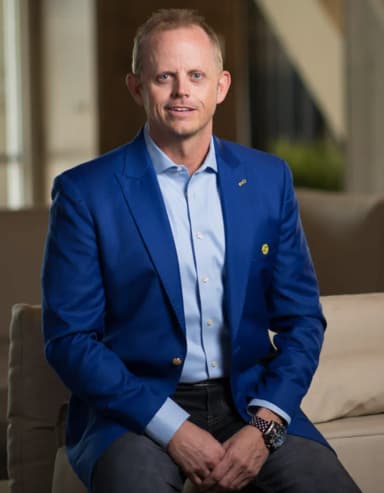
What are you waiting to feel ready for? A business launch. A hire. An investment. A hard conversation you've been rehearsing in your head for months. Most of us tell ourselves the same story: once I feel confident, then I'll move. But that story has the order backwards, and it keeps good people stuck for years. In this Monday mindset episode of The Daily Mastermind, George Wright III makes a simple, uncomfortable case: confidence doesn't come before action — confidence is created by action. If you're waiting to feel ready before you move forward, you may be waiting forever.
Think about the biggest things you've accomplished in your life. Were you completely ready? Did you have all the answers? Almost certainly not. Growth happens when you step into something before you feel fully prepared — that's not a flaw in the process, that *is* the process. And that's where courage enters. Courage isn't the absence of fear; courage is choosing to move forward despite the fear. You don't need to eliminate fear before you act. You need to stop giving fear control over your decisions.
Confidence doesn't come before action. Confidence is created by your action.
The Confidence Trap: When Preparation Becomes Procrastination
One of the easiest traps to fall into is waiting for confidence to show up on its own. You tell yourself you need more information, more preparation, more experience, a better plan. Preparation genuinely matters — but at some point, preparation becomes procrastination disguised as responsibility.
You're not preparing anymore. You're avoiding. And usually the avoidance has a name: fear of making the wrong decision, fear of failing, fear of being judged, fear of looking inexperienced, imposter syndrome, or fear of losing something you already have. So you wait. And waiting creates exactly zero confidence.
The Sequence to Remember
Here's the order George wants you to internalize: courage creates action, action creates experience, experience creates evidence, and evidence creates confidence.
You take the first courageous step. That step gives you experience. That experience gives you evidence that you can handle what's in front of you. Every piece of evidence you stack builds belief in yourself — and that belief is where real confidence lives. You can't think your way into the level of confidence that comes from actually doing the difficult things. Confidence is earned through experience.
When Fear Is a Signal of Growth, Not a Stop Sign
We've been conditioned to believe fear means stop. Sometimes that's true. Often it isn't. Sometimes fear simply means you're stepping into unfamiliar territory. Sometimes it means you're stretching beyond your current identity. Sometimes it means you're risking rejection, or pursuing something that actually matters to you.
If you only do what feels comfortable, you'll keep creating the results you've already created. Growth requires moving beyond what's familiar, which guarantees fear will show up. So learn to ask the diagnostic question: *Is this fear warning me about real danger, or is it simply telling me I'm outside my comfort zone?* Those are two completely different signals, and confusing them costs people years.
Why Every Founder Acts Before They Know
If you're an entrepreneur, business owner, or leader, uncertainty is literally in your job description. You launch before everything is perfect. You hire without knowing exactly how someone will perform. You invest without guaranteed returns. You make decisions without every piece of information. You have difficult conversations without knowing how the other person will respond.
That's not recklessness — that's leadership. Leadership isn't knowing exactly what's going to happen. Leadership is developing enough trust in yourself to know you can adapt and handle whatever comes your way.
Real confidence says, whatever happens I trust myself to handle it.
And here's the counterintuitive part: some of the greatest confidence comes from the things that don't work. Think about your biggest failures. You survived them. You learned from them. You adjusted. You became more resilient and you moved forward. Failure didn't destroy you — it developed you. The highest form of confidence is knowing you don't need everything to go perfectly; you simply need to know how to handle what comes next.
Momentum Beats Certainty Every Single Time
When you're stuck, don't try to figure out the entire roadmap. Identify the next courageous step. Ask yourself: What decision am I avoiding? What conversation do I need to have? What opportunity am I hesitating on? What am I overthinking? Where am I waiting for certainty that's probably never going to come?
Then take that step — not twenty steps, just one. Action creates feedback, feedback lets you adjust, adjusting creates momentum, and momentum creates clarity. Most people believe they need clarity before they move. In reality, clarity often doesn't arrive until after you move.
So the daily question — who do I need to become? — may have a simpler answer than you think. Become the person who acts. Who doesn't need perfect certainty. Who trusts their ability to adapt. Who understands that fear isn't always a stop sign. Who chooses progress over perfection. Courage isn't something you either have or you don't. Courage is something you practice, and every time you practice it, you build confidence.
Action Steps
- Name one thing you've been waiting to feel ready for — one decision, one conversation, one opportunity, one move you know you need to make.
- Ask the diagnostic question: is this fear warning me of real danger, or just telling me I'm outside my comfort zone?
- Audit where preparation has quietly turned into procrastination, and set a decision deadline.
- Take one step — not twenty — then use the feedback to adjust and build momentum.
- Reframe a past failure as evidence: write down what it proved you can survive and figure out.
You don't need confidence to take action. You need courage to take action, and the action builds the confidence. Every courageous move sends yourself a message: I'm capable, I can figure it out, and I can move forward even when I don't have all the answers. It's never too late to start living the life you were meant to live.