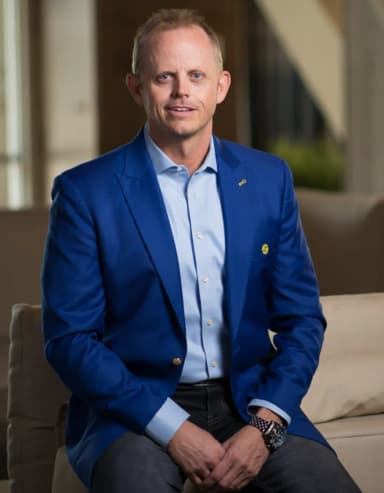
Welcome back to The Daily Mastermind, George Wright III with your daily dose of inspiration, motivation, and education. And today we're going to be talking copy. We're going to be talking business. I'm really excited to introduce you to a guest that I've known for quite some time. He's kind of a legend in the marketplace when it comes to copywriting. His name's Stephen Kimball. It's nice to have you on the podcast. Thanks, George. Great to be here. Appreciate it. Yeah. Listen, it is hard for me to get in your schedule because anybody that lives in Hawaii like you do, it makes it really hard for me to communicate with both because I want to be there, but also because of the time zones. I appreciate you taking some time out. I know you're a busy guy as well. And Stephen, before we get going, I want to give everybody a little bit of a background as to why I'm having you on the podcast and what we're doing and what we want to accomplish here today. And so for those of you listening for the first time, make sure that you hit that subscribe. You don't want to miss any episodes, but this is one you want to take some notes on because, you know, I've known Steven for a long time, 25 years in this industry of direct response copy. I mean, this guy has worked with some of the biggest companies out there. And what he does is he helps businesses improve how they communicate their value so that they can sell more effectively. I mean, he's worked with founders, marketers, companies to sharpen their message, build their landing pages, write their videos, but his focus is helping brands turn words into a measurable business growth tool. And so I wanted to talk just for a minute, Stephen, so they understand your background about where you've worked, what industries, who you've worked with, these kinds of things. Can you give us a little bit of the brushstroke of what you're doing and what you've done in this industry? Yeah, for sure. Yeah. I mean, over the years I've worked with, I don't even know, probably 20, 30, Fortune 500s from Capital One to Walmart to, you know, Omaha Steaks, so many big brands. But I would say the majority of who I've worked with are individuals, offer owners, people who, you know, decided to stake their flag in the ground and sell their old products. And, you know, really good at what they do, really good direct marketing gurus. And they are the ones that usually find me the ones that don't want to do everything by themselves. They They just need someone they can trust, especially when it comes to outsourcing and copywriting. Coming up with a strategy, they're already good at what they do, but they want help to take it to the new level. Yeah, it's so interesting because you've been in the health space, the finance space, business strategies. And I've always looked at you, and this is why I'm bringing this topic up for individuals, is it's not just about writing copy, making sales, doing marketing. The strategy is such a huge role, which is why with our companies that do authority marketing, we feel the first step is strategy. But you like to think of yourself not as a marketing copywriter, but as a marketing partner. Why do you say that? Why do you view yourself as a partner when it comes to marketing? Because I think this is a key principle people lose track of when they're trying to grow their business. Yeah, and I didn't really start out that way. I started out just wanting to be a copywriter. like just really wanting to work with with words and you just think this just happens over time when you've been doing the same thing for 20 25 years you learn every aspect of the marketing process like every everything that can go wrong everything that go right all about the metrics and the analysis and the messaging and the products and the development of the products and everything that goes into getting you know that exchange of money for good you learn about because I've been around and I've done it. I've helped do it. And, you know, after doing that for at least, you know, 10, 15 years, you just become an expert on all things marketing. And so the copywriting is good. It's what I, you know, charge for. It's what I do most for people, but really what I have to offer them when, you know, they've come to realize over the last, especially 10 years is I really have some invaluable years of experience that kind of outshine the copywriting portion of what I do just because I've seen it and been around it for so long. Yeah, that is exactly the way I kind of feel. And I think this is a critical point for people that are trying to grow their business and they're trying to do things. What they realize is that I talk a lot about the fact that sales is a skill, whether you're a salesperson or not, you need in business. And marketing is a skill you need in business. Copy, and you like to say the use of words, and persuasion is the skill. That is what supersedes, you know, when you're like, hey, I need to write a video sales letter. I need to write a website copy. If you, for example, go to AI and you just kind of spit out these topics, without strategy, it is not as effective and or it becomes something that creates a good result, but not the result you're looking for. And so thinking with the end in mind is so important. So I like that. And I like that you're a copywriter. What do you think about some of the things going on right now in the marketplace? because AI has become a tool everyone goes to. They think, I could just do it myself now. They're starting to realize that the search engines are picking up on when you're just using AI, and AI is not as natural as people would like it to be. But what are some of the trends you're seeing in the industry, and what are your thoughts on that before we get into some of the topics of copy? Some interesting things I've heard lately. The other day I saw someone, also a business owner, said something to the effect, If I see one more AI generated ad, I'm going to scream and pull my hair out. I saw someone else say, a colleague of mine said, it's made copywriters really lazy and marketers in general because now you can just go pop in what you want. There's so many aspects to it, so many ways to use it. And I don't even know if we understand what the future of it is. But for me, it's just a tool. But you can't just hand someone a scalpel, tell them to do brain surgery, hand them a hammer. tell them to build out that that actually know what they're doing and so i think what you've got is a lot of mediocre copy out there ai generated because it's being generated and judged by people who don't really know how to judge it and you know authority you know that's a great word because authority is starting to rise to the top of people when it comes to marketing because now everybody's just an anti-generated talking head and people can pick that up oh that's not even real but someone if it was real, all of a sudden it's getting a little more attention and respect. Yeah, it really is one of those things where people don't understand how to use it the best way. But, you know, Tony Robbins talks about the fact that there's an art and a science of everything. And I do believe the science is there are frameworks, you know, attention, interest, details, action, you know, hook story offer, things people are used to hearing. But then there's a art behind it. There's understanding the strategy. There's the, you know, you've talked before about this principle of persuasion. That is not something that is just like cookie cutter. What are your thoughts on this idea of having a fundamental, you know, that in the world of copy, there's this idea or art of persuasion. And how do you see persuasion when it comes to entrepreneurs and building their business Yeah I mean I think it important because especially today we used to live in a world where you know ads came through magazines or billboards or tv commercials but now we live in a world where we are thousands of ads a day it's just constantly being you know being thrown at us hammered with different products and solution for everything and i think it's you know overwhelming the general consumer and so you talk about persuasion like you have to work harder to get a sale these days because you're working through competition which is so fierce where there used to be you know a few brands or key brands or well-known brands now there's so many brands and there's so much you know science it can go behind you know whatever it is everybody can prove their point in a much much more credible way than they used to and you know you persuasion just can't be coercion it has to be you know really understanding the heart and the mind and the emotions of the person you're trying to sell to it's really got to speak to them because yeah competition is just so fierce today yeah what do you and what do you think because a lot of business owners as they go forward i think a lot of the ones that you work with are ones that fall into that category that they want an expert in an area to help them to populate and it extends to so much of their business their landing pages their, you know, direct mail, their emails, their copy, their videos, everything else. But a lot of times entrepreneurs will try to start their business and just throw, you know, random copy out there. What are some of the mistakes that you find a lot of people do? In other words, you're brought in a lot of times to help take a company that might have their website and some of their assets out there, and they're just trying to get more results. What are the mistakes you usually see a lot of business owners making when it comes to this area? I think a big one is just understanding what has to happen. I mean, AI has made it so easy. If you have a product, you can go generate advertising for it. You can make a VSL. You can make a landing page. You can make native ads. You can make everything you want. Again, those people think they're cutting corners, saving time, saving money by just doing it all themselves. They spend a lot of money to get this stuff together, get the developers involved, get the production involved. They throw it out into the world and nobody's buying. And honestly, just really shocked. It wasn't that easy. And they start throwing major money at their ad budgets and find out that still nobody's interested. And that's the biggest issue because they'll come to me eventually when I realize that doing something inherently wrong and they can't figure out what it is. And I usually tell them within a few seconds that they haven't put any thought at all. Or maybe they put some AI-generated research thought into who am I talking to? What do I need to talk about? But not everybody's a marketer. Not everybody thinks like a marketer. Not everybody understands, has taken a deep dive into human nature and buying habits and the things actually get people to do what you want. And so they just throw something together, expected it to work, shocked when it doesn't. And then they usually find me and realize that they need some more help than they thought. Yeah, it does come back to that idea. And we've, look, we've done this with my companies as well. We've thought, oh, we can just replace this process with technology or automation or AI, or we can create these pieces. And what I'm starting to learn more of, and I think a lot of entrepreneurs and business owners are as well, is that technology, AI specifically, as well as, you know, funnels and CRMs and things like this. they're meant to maybe scale your business and they're meant to help increase your leverage. But without that strategic thought process, what is your customer thinking? How are they thinking? And by the way, that changes all the time. You probably notice this too, right? The way people consume content, the way they consume, whether it's reading, listening. I'm curious because you've been dealing with the written word and that's used so long. Do you approach a project differently if someone's doing a video versus written in print versus those kinds of things? Or do those principles still apply the same regardless? Yeah. And the principles to me are timeless. Somebody comes to me with a product, my first thoughts are, what does it do? Who are we selling it to? And what's special about it? And if I can understand those three things, I can usually come up with a pretty good angle to sell it. But a lot of times people, you'd be surprised. They just don't really, they don't really understand. Cause once you understand those three things, you have to take the second deep dive and say, you know, what not having a product is a, how is it affecting their life? And a lot of people just aren't, you know, they're not, if anything, a copywriter makes you a student of human behavior. You know, what makes people tick? How do they really feel? You know, if you're selling some kind of supplement, what does the daily pain look like for those people? You know, what's the pain point, or maybe it's financial, whatever it is. You have to understand, you know, how to talk to them in a way that really touches soul and something that AI just can't do. And even, you know, unseasoned marketers don't understand it. That's why people hire me because even, you know, I've worked for hundreds and hundreds of business owners who, you know, their product, their company is their baby and they understand it from one view, but they come to be for a reason. They want another view. They want someone who's not, who doesn't have that. Yeah. Can see the forest through the trees. Right? Yeah. My job is my job. I tell them this is forget about the copy of the strategy, the medium, whatever my job is to make them money. That's why ultimately they choose me instead of someone else. I, you know, I'm not there to necessarily hold their hand, make them feel good and prove what they're doing. My job is at the end of the day is to make them more money with what they've been, what they put in place. That's interesting. You say it the way you do, because I don't know if you're listening to this podcast, you're probably noticing a couple of things because you like to listen to the meaning behind it. But most businesses, business owners, and I'm in the business of marketing and authority, most businesses and owners, they've got the market down when it comes to what their product is, what they do and how they do it. But many of them, when I ask them, who is their ideal customer? What do they want? What are their pain points? They haven't thought about that because they're so busy selling. This is why the distinction I want to make right now is how to persuade without selling. How do, you know, marketing for me has always been selling without physical presence, without coercion. And so at the end of the day, if you don't even know who your client is, and now sometimes people do, they know who their client is, but they don't understand what they're thinking and feeling and where they're coming from. And when you go to that granular level, that's why I find it interesting. You're always talking about the client's thoughts. Then it's easy to put the copy together. Would you agree? Yeah. I mean, that's why it's, you know, my answer, the ones that are good marketers, but just understand the value of working with someone else instead of working in a vacuum because they do understand their pipe They understand why they put it together why they offer it in the first place but they just don't see it the same. And so we do become good partners. They give and take the bouncing ideas off the understanding of what can we do with research? What can we tell them that we haven't thought of or they haven't heard yet? And my best client partnerships are the ones when working with someone who's as smart as I am, but understands the need for a partner. Yeah, the perspective, right? Because I think that's the way we've been and many companies that I know at the end of the day, if you don't have perspective. So the marketplace has changed a lot. Like people, just the way they consume and what they do, it's reality TV versus polished celebrities. What are some things you've noticed in the marketplace when it comes to people and how they consume and the way they consume, that's affected how you write copy and how you now communicate with people. Yeah. And again, it's kind of pushing things toward the authority where, again, people know they're, people used to understand they're being sold to, sometimes it was actors and the typical commercials, marketing content. But now, for example, if you're selling a product for a child, the authority is bomb. The authority is a doctor. So, you know, that's who they want to listen to. If you want to convince me to buy something from my kid, I need to hear from another parent. I need to hear from a doctor who sees kids. I think that's, you know, what I see is a lot of this, you know, this UGC concept, you know, but not people necessarily being paid. Let's get to the real stuff. Show me a real mom with real kids who has real, you know, issues to solve and problems to work through. And I think that's where we're heading is if, you know, people want to, they want authenticity, they want genuine, they want to hear from their peers, they want to hear from other authorities, because it's the only, it's like the only safe space anymore with AI dominating our lives. Show me somebody real who honestly understands me and I'll listen to them. Yeah, I think that a lot of people right now, for sure, when it comes to search, you know, AEO is becoming bigger than a lot of SEO, even though that schema and that framework and foundation is important. And so having multi-platform we found and having individuals that are more authentic are key. And I think, you know, there's another hidden value of having, you know, some strategic partners when it comes to copy. And that is just confidence. I think a lot of people are not confident out there. And I find a lot of times confidence comes from knowing what you're going to say and how you're going to say it as much as, you know, the message itself. And so how much does that play in for your clients when you are building their confidence by helping them to structure stuff that they know is going to be more effective? Yeah, I see. I mean, we live in a day where anybody can launch a product and you see a lot of people with, you know, passion projects. They've developed a supplement, they've written a book, they've developed some kind of course, got some kind of financial product. They're taking something that was near and dear to them, turned it into something people will buy and then they, you know, run into that wall of who's going to help me with this. And, you know, that's, that's great. I mean, it is awesome to see the people that I've worked with who just didn't come from a marketing background. They do other things. They have other jobs, but they're trying to build businesses. They've done all their research. They've done all their homework. They've done everything they can to put everything in place to get the best chance of success. But the thing they're really missing is, you know, the bus driver, somebody to say, show us where to go, show us where to take this. How do we optimize this funnel? You know, we can kind of see what's going on. We know where the dead spots are. They just need somebody to come in and, you know, fix the problems, plug the holes, redirect them, you know, maximize what they're doing so they're not leaving money on the table. That's the part they just know never taught them. They never learned. They just caught up in their passion and excitement, but didn't think always about the logistics of scaling a brand. It takes more than just passion for what you're selling. And it changes as you scale. This is what most business owners don't realize is they get passionate about a project, they start to go out with it, but the markets change, the message changes, and once you scale, it changes. And I think this is the difference, what I wanted to really highlight with this episode, the difference between a marketing technician, somebody that does social, does copy, does landing pages, and a marketing strategist, because strategy drives those pieces and it certainly can help you leverage at a higher level. But most successful people I know, they don't want to do it themselves anyway. They want to work with experience and strategies and things like that. So I think when people are objectively trying to launch products and create new solutions, starting with strategy is so important. I can't emphasize it enough. And this isn't, I'm not talking about oversimplifying or over-clarifying or over-structuring. And sometimes people think too much about it, which is why it's better to get a third party to come in and kind of give you some direction. But I do think that most people start, they jump in, they pull some stuff on AI and they go off and then they spend a lot of money and then they come back and realize they need to stop a minute and get some strategy. Is that kind of what you found? Yeah. Cause I mean, budgets will just eat you alive. You know, I hear people say we're, we're, you know, we're spending, you know, 30 grand a day to make 35,000 and they're wondering how they're ever going to make money with that. And so they don't always see the problems. You know, it's not a perfect system, you know, no matter where you advertise, it's always got its downfall. So you have to work, you have to figure out how to work within the system to make it work well for you. And people surprised what it will cost to launch a product or just to keep it going, just to keep it out there. And you know, anything they can do, sometimes they don't need to make monumental changes. They just need to make, you know, three small changes will make huge difference in what they're doing. Yeah. That really brings me to kind of that last point I wanted to talk about, but just to kind of put a, put a real sticker on that one we just talked about. I do believe that. So for example, my company does authority and we build authority for companies and they always wonder why I back them up and try to create a nice voice guide. So we know what your message and your market and your avatar and, you know, your tone and all that stuff is because they're out there saying so many things. They think just go on social media and roll and, but it never ties together. You could be everywhere and it doesn't tie together. So strategy is so important, but you said something I really liked. And that is sometimes it's just a little tweak. Sometimes it's a couple of little things and, you know, you've got to be able to identify what that is. And that's obviously the magic that you do with your partners, but what are some of the things that you feel are low hanging fruit that someone that is trying to grow their business ought to take a look at and really take notice of? Sometimes I can tell, you know, someone else, here my landing page I can look at it and I can see that someone has put no thought into a headline There a headline but they just didn put any thought into a job that needs to do You know they just treated it like it doesn matter The headline, people reading, keep going. They don't understand the no, that they won't keep reading it if you didn't really speak to them. I think, you know, for a lot of products, especially, you know, digital marketing these days, their upsell, downsell flow is the key to profitability. And they haven't put anything, any thought into that. sometimes I've seen them like oh we don't have a product to upsell to them and I explain that's often where the profit margin is on something like this sometimes you know creative is too long sometimes it's too short sometimes it just hasn't spoken to the prospect in any meaningful way you know sometimes see stuff that's just clunky and hard to read sometimes I see stuff that's thick dense. Nobody in their right mind is even going to try to read it. I see stuff that, you know, doesn't work well because so much of this is consumed on phones today and they're not thinking about it because they're doing this on a laptop or a desktop now thinking that whoever reads this probably going to see it on the phone and they've never had that discussion with their developer. Is this going to be, you know, smartphone friendly and, you know, just so many different things to look at. I mean, that's just a short checklist. There's probably, you know, four or five other things, just big mistakes people haven't thought of. They haven't taken into consideration that, you know, and these are the things, if you can get them all dialed in, you literally have to dial in, you know, 50 things to make it work really well. Isn't it true though, that it's just little incremental things though, that stack up. Like I remember we were doing back in the day, as you probably remember, we were doing maybe a million pieces of direct mail a week. And we would upset, we would change the metrics a full percent by changing the PS line or changing the type of font on the outside of the envelope. And, you know, people used to joke, they'd be like, Hey, we got your same, you know, invitations. We got your same copy, but there's nuances that you would not be aware of, but they're little ones. And those little ones stack up over time, especially now, like you said, that's just what you say and how you say it, but where are you saying it? You're not going to read a full long letter on your phone. Newsletters have changed, right? Newsletters are still coming back really strong. And you talked about podcasting and content, the captions you use, how you use them, where you use them. All these little things really stack up, don't they? Yeah, for sure. I mean, they really can mean a difference between a profitable offer and something that's just taking up your money, you know, wasting your money. I just encourage clients, no matter whether they're in the process, whether they're new to me or already in the middle of it, to, you know, put something out there that is as good as it can be and establish a baseline. And then, you know, it's okay. We can see where we're at, you know, good or bad, profitable, breaking even. And then we can work from there. Instead of trying to change everything, because people, clients will be like, oh, it didn't work. we need to start over again and i'll be honest with them you don't probably need to start over again you just need to fix the problems and it's better than having to start you know process the time it takes to do that the money it takes to do that establishing a baseline is so important and a lot of times they just haven't even taken the time they're just they are chronically testing and they don't even understand you know the rhyme or reason of what they're testing and sometimes i I just try to encourage them to slow down, take a step back. Let's really look at this and study it. And then make some intentional changes instead of just changing everything. Yeah, that's a great lesson to be learned because I think a lot of entrepreneurs, especially because we're so fast-paced, shiny object, right? If it's not working, we move to the next thing. It's like anything in life. Olympics. Olympic athletes, the difference between a gold and a silver medal is a tenth or a hundredth of a second. And so you're trying all these things and they're not working. So you're trying more things when literally the nuances and the details and the between that this is what the whole topic of this podcast is. Strategy and nuances are an art. And if you look at those, a lot of times you're down the right path. You just need to make a few changes rather than revamp and reorganize what you're doing. I'm sure you've seen that happen a lot with entrepreneurs. True. So true. And yeah, that is the thing people do think, oh, we're e-com digital marketers. We can make changes on the fly. That doesn't mean you always should. You should think about the changes you're going to make, ask yourself why you're going to make them. Sometimes you're changing the price point of your offer can make a change. And like I said, your upsell can make a big difference. You know, there's just so many things to look at. There's so many mistakes to be made. And that's, you know, part of the problem is people jump into an offer of their product and they're not even aware of the pitfalls falling into that are keeping them from success. So a lot to look at. That's why people are finally happy when they find me and say, oh, I think you can help us solve a lot of the problems we're having. Because I've seen them all. I've seen them all many dozens of times. Yeah, it really is. And that's why, look, I've had thousands of clients, hundreds and hundreds of millions of dollars in sales. And one of the main reasons I had you on here, and so if you're listening to this podcast, you know you've probably picked up some ideas on copywriting but I always say this one of the reasons I highlight experts in their field is because it's how they think and you've probably noticed that how you persuade how you use words what you do and why you're thinking it and who your clients are what they're thinking because success leaves clues I mean you've obviously been doing this for a long time and so the clues are in the nuances that is what it's all about and I appreciate you being here with me how is the easiest way for people to get in connection with you. And I can certainly put some links in the show notes as well, but where's the best place for them to find and connect you? You can find me on LinkedIn. Just search my name, Stephen Kimball. It should come up pretty easily. I have a website, skcopywriting.com. Easy to find. Yeah. If you just search Stephen Kimball, DM copywriting, you'll find it. Pretty easy to find. You're pretty much there. Pretty easy. I'm not hiding anywhere. Pretty easy to get ahold. Yeah. Yeah. So if you have the fortunate opportunity to work with him, that would be great. I'm going to put some links in the show notes. And for those of you listening to this episode, listen, I hope you've gotten some value. I want you to share the show, check out what Steven's got going on. And remember, it's never too late to start creating the life you were meant to live. But the key here is to be intentional, to be purposeful, to be strategic. And that's why the Daily Mastermind was started was to help you get that clarity, focus, and discipline to keep you growing and your business growing. And so thanks for spending time with us here today. I look forward to talking with you more tomorrow. Hit us up on the Daily Mastermind and let us know what you're up to so we can celebrate those wins and bring in new topics that you're looking for. So have an amazing day and we'll talk with you soon.