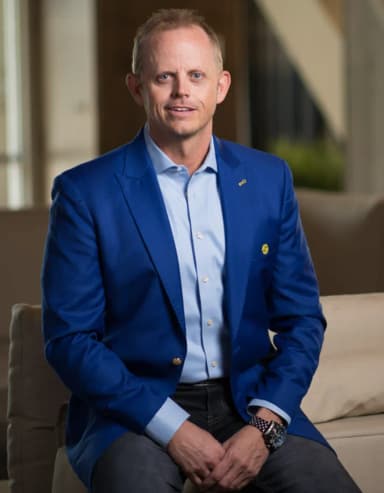
What separates the people who actually achieve their goals from those who fall short year after year? According to George Wright III, host of The Daily Mastermind, the answer is not talent, luck, or the perfect set of circumstances. It is discipline, specifically mental discipline, and it is the single most important skill you can develop to guarantee your success.
George launched this episode at the start of 2023 with one clear message: no matter what resolutions, goals, or aspirations you carry into the new year, none of them will materialize without discipline as the foundation underneath them.
Why Discipline Beats Motivation Every Time
Most people rely on motivation to get them moving. The problem is that motivation is emotional, and emotions are unreliable. There will be days when you do not feel inspired. There will be stretches when progress is slow and the energy you felt in January has faded. Discipline is what carries you through those stretches when motivation goes quiet.
George put it plainly:
All of your goals, all of your aspirations, and the absolute best version of yourself lie just on the other side of discipline.
That is the shift worth internalizing. Your goals do not live on the other side of a lucky break or the right mood. They live on the other side of consistent, practiced, chosen discipline.
George also opened the episode with a quote he attributed to Bob Proctor:
You can't win if you quit.
Simple. Absolute. And it connects directly to discipline, because staying in the game when it gets hard is itself an act of disciplined commitment.
Discipline Is a Skill, Not a Trait
Here is where most people get stuck. They treat discipline as a personality characteristic, something you either were born with or you were not. George challenges that assumption directly: discipline is a skill, and like any skill, it can be learned, practiced, and mastered.
This is genuinely good news. You are not at the mercy of your genetics or your upbringing. You can decide, starting now, to develop discipline the same way you would develop any other capability: through deliberate focus, consistent practice, and the right structures around you.
If discipline does not come naturally yet, that is not a character flaw. It is simply a gap in a skill set, and gaps can be closed. The first step is treating it that way.
How Discipline Builds Mental Strength
One of the clearest benefits George identifies is that discipline builds mental strength over time. When you structure your day, honor your commitments to yourself, and push through resistance, you are not just completing tasks. You are training your mind to handle difficulty.
Many people spend energy wishing their problems would go away, wishing for a different job, a different environment, a different set of challenges. George reframes that instinct entirely: the goal should not be fewer obstacles. The goal should be to become stronger than your obstacles.
Challenges are what force growth. Resistance is what builds capability. When you develop the discipline to face difficulty repeatedly, your mental strength compounds. Over time, you stop dreading problems. You start knowing, with genuine confidence, that you will overcome them, because you have done it before.
Discipline is what George calls a leading indicator of results. You may not be able to track your future success directly, but you can track your discipline today. And that discipline will reliably predict where you end up.
The Connection Between Discipline and Confidence
The third benefit George highlights is often overlooked: discipline is one of the most powerful drivers of self-confidence.
Every time you do what you said you were going to do, even when it was uncomfortable, you deposit something into your internal account of self-trust. Over time those deposits accumulate. Your belief in your own ability grows. The self-sabotage, the imposter syndrome, the low self-esteem that many people wrestle with, these tend to shrink as discipline grows.
Leaders need confidence to take risks, make decisions, and show up fully for the people they serve. Discipline is a direct path to that confidence. It does not require a big win or external validation. It requires only that you keep the promises you make to yourself, one day at a time.
George grounded the whole episode in a principle he calls Prosperity Pillar Number One: I create my life. Your thoughts, your surroundings, your habits, your schedule, the people you choose to spend time with, these are all things you can direct. Discipline is the mechanism that makes that direction intentional rather than accidental.
As Napoleon Hill defined it, a mastermind is:
The coordination of knowledge and effort of two or more people who work towards a definite purpose in the spirit of harmony.
That spirit of purposeful, coordinated effort applies just as much to the way you organize your own mind and daily habits as it does to any group endeavor.
Action Steps
- Add discipline to your list of goals for the year, and treat it as the foundation that makes every other goal reachable.
- Build structures that require discipline until you have internalized it: daily rituals, firm deadlines, progress tracking, and accountability from a coach or mentor.
- Stop trying to eliminate challenges from your life. Instead, invest your energy in becoming stronger than those challenges.
- Track your discipline daily as a leading indicator. Consistent small wins compound into lasting mental strength and confidence.
- When motivation fades, return to the decision you made at the start: resolved, committed, and unwilling to quit.
Discipline is not a gift reserved for a few. It is a skill available to everyone, and it is the one skill that unlocks everything else. It is never too late to start living the life you were meant to live.