The Daily Mastermind
ALL EPISODES
Episode 1185 · Sep 30, 2025

From Operator to Owner: The Mindset Shift That Unlocks 7-Figure Growth

Watch
Listen

George Wright III has built and scaled multiple businesses, and he'll be the first to tell you: the thing that almost stopped him wasn't competition or capital. It was the trap of doing too much himself. In this episode of The Daily Mastermind, George breaks down the single most important shift every entrepreneur must make to move from six figures to seven and beyond.

Why Hustle Alone Will Never Get You There

George describes a version of himself that will sound familiar. Sales, operations, marketing, customer service. Wearing every hat, grinding every day, and still watching meaningful growth stay just out of reach. He eventually hit a wall. The burnout was real, and the harder he pushed, the less return he seemed to get.

The turning point came when he heard something from Tony Robbins that landed differently than he expected:

It's not about your resources. It's about your resourcefulness.

At first, George thought this was about creativity or finding new options. But the deeper meaning revealed itself: resourcefulness is really about leverage. It's about knowing how to use time, people, systems, and tools in ways that multiply your impact rather than keep you trapped inside the machine you built.

The Operator-to-Owner Shift

The core insight of this episode is straightforward, and George frames it clearly: most entrepreneurs are stuck in operator mode. They answer every email, make every decision, run every meeting. In the early days, that makes sense. It's how you learn the ropes, get close to customers, and understand every moving part of your business.

But stay there too long, and it becomes a prison.

An operator's business is fundamentally limited by the operator's own capacity. If you're running everything, then growth will always be capped by your time, your energy, and your decision-making bandwidth. Owners, on the other hand, design systems. They architect the business rather than just running it.

Seven-figure entrepreneurs stop seeing themselves as the worker. They start seeing themselves as the owner, the one responsible, not for doing the work, but for building the machine that does the work.

Ask yourself honestly: are you running your business, or is your business running you?

How to Build Leverage: People, Systems, and Tools

Once you make the operator-to-owner shift, the next step is building leverage across three areas.

People. Most entrepreneurs think delegation means handing off tasks. Seven-figure entrepreneurs delegate outcomes. They hire people not just to complete a checklist, but to own an entire area of the business. George points to Dan Sullivan's book "Who, Not How" as a useful frame for this. When you face a challenge, the default question is usually "how am I going to do this?" The better question is "who can own this?"

Systems. Systems are how you scale consistently, regardless of who is involved. George uses McDonald's as an illustration: a Big Mac tastes the same whether you're in New York or Tokyo because the system is documented and repeatable. Your business needs the same kind of structure. Build your playbooks, document your processes, create SOPs and repeatable workflows. Success should not depend on your memory or your presence.

Tools. AI, automation, and digital platforms can multiply your output for a fraction of what it would cost to hire additional people. If you are not using tools to free up your time, you are leaving growth on the table.

Your Calendar Reflects Your Priorities

George offers a practical filter: your calendar should reflect your value, not your obligations. If what fills your time does not directly grow your brand, build your relationships, or increase revenue, you are misusing your most valuable resource.

He describes a simple exercise. Look at your to-do list or your calendar for the week. Circle every task that directly grows revenue or builds brand equity. Put a star next to everything else. Everything with a star needs to be delegated, systematized, or eliminated. George credits his mentor Robert Stuburg with this idea of pruning at the end of each year: ruthlessly cutting what does not serve the business.

Adopt an Abundant Mindset About Time

Scarcity thinking around time is one of the most expensive habits an entrepreneur can have. "I can't afford to hire help." "It's faster if I do it myself." "I don't have time to train someone." George's response is direct: you cannot afford not to if growth is the goal. Every task you hold onto that is not directly creating revenue or building your brand is costing you growth.

Seven-figure entrepreneurs treat time as their most valuable asset. They protect it and invest it where they will get the highest return.

Invest in Growth as an Accelerator

The final shift George addresses is how successful entrepreneurs see learning, coaching, and hiring. They do not treat these as expenses. They treat them as accelerators.

George has personally invested six figures over the years in masterminds, coaching, and mentoring. Every time, the return has come back tenfold, not just in revenue but in clarity, speed, and access. His reasoning is simple: money is renewable, but time is not. Investing in growth shortens the learning curve and helps you avoid costly mistakes.

If you want to think like a seven-figure entrepreneur, get in rooms with seven-figure entrepreneurs.

Action Steps

  • Make the mental shift from operator to owner. Stop being the bottleneck in your own business.
  • Audit your calendar this week: circle tasks that grow revenue or brand equity, star everything else, then delegate, systematize, or eliminate the starred items.
  • When facing a new challenge, ask "who can own this?" before asking "how do I do this?" (as Dan Sullivan describes in "Who, Not How").
  • Build or improve at least one system this month so a part of your business runs without requiring your direct involvement.
  • Invest in a room, a coach, or a mastermind that exposes you to people operating at the level you want to reach.

The operator-to-owner shift is not a one-time event. It is a practice you return to every time you take on a new opportunity and feel the pull to grind your way through it. George admits he still catches himself falling into that trap. The difference is recognizing it faster and making the shift sooner. You have greatness inside you. It is never too late to start living the life you were meant to live.
READ THE FULL TRANSCRIPT

All right, welcome back to The Daily Mastermind, George Wright III with your daily dose of inspiration, motivation, and education. Today I want to talk to you, I want to dive into the single most important mindset shift that separates scalable, sustainable success from spinning your wheels in frustration. And this is the difference maker between entrepreneurs who plateau and burn out at six figures or those who break through to seven figures and beyond. And here's the thing. This shift has nothing to do with working harder. If anything, it's about learning how to stop grinding so hard in the wrong areas. Because people who scale, those who really build legacies, not just businesses, they aren't just doing more. They're thinking differently. And if you've ever found yourself hustling every day, checking every box, wearing every hat, you know, and still wondering why the growth you dreamed about seems just out of reach, then this is the episode that's going to be for you. And I'll warn you, you know, once you see this shift clearly, you really can't unsee it. It'll change the way you run your business forever. So, you know, multiple times in my career where I've kind of been in this same situation. I had multiple businesses, right? You know, I've had this happen over and over, to be honest with you. I've been wearing every hat, sales, operations, marketing, customer service. I was that guy who believed if I just outworked everyone else, eventually I'd build my empire. And sometimes I feel that way today even. And so it's hard. It's a trap that we all fall into. But you know what? I hit a wall and maybe you're feeling that way. Burnout, plateaus, you know, that frustrating point where the harder I push, the less return I seem to get. And I always ask myself, is this really sustainable? And is it really what success is supposed to feel like? You know, it wasn't until I heard Tony Robbins say something that really hit me right between the eyes. He said, it's not about your resources. It's about your resourcefulness. Maybe you've heard that before. You know, at first I thought he was just talking about being creative, you know, getting, you know, new options I hadn't thought of. But the more I dug into this, the more I realized that resourcefulness is really about leverage. It's about knowing how to use time, people, systems, tools, and ways that multiply your impact instead of leaving you and keeping you trapped inside the machine that you built thinking was going to get you, you know, the lifestyle. That's when the light bulb went on for me. I didn't just need to work smarter. I needed to completely change the role I was playing inside my own business I had to stop being the bottleneck Sometimes I feel like I am the biggest bottleneck You know entrepreneurs are that And that brings us to the topic today The number one mindset shift that every seven business owner or entrepreneur makes It the shift from, listen to me closely, it's the shift from operator to owner. The shift from operator to owner. And here's the thing, when you shift from operator to owner, you know, most entrepreneurs get stuck in operator mode. They're the ones running the show, doing all the work, answering every email, making every decision. And in the beginning, that's fine because your talent is really what helped you get to that point. In fact, it's necessary. You learn the ropes, you get close to your customers, you understand every moving part of your business. But if you stay there too long, it becomes a prison. I'm sure you can relate. An operator's business is limited to the actual operator in your capacity. If you're running everything, then growth will always be capped by your time, your energy, and your decision-making bandwidth. Owners, on the other hand, they design systems. They don't just run the business, they architect the business. And they step back and they say, how can I build this thing so it runs whether I'm in the office or whether I'm on the beach with my family? And, you know, so here's the question you got to ask yourself. Are you running your business or is your business running you? Seven-figure entrepreneurs stop seeing themselves as the worker. They start seeing themselves as the owner, the one responsible, not for doing the work, but for building the machine that does the work. And until you make that shift, you'll always be trading hours for dollars, even if you're the boss. I find myself in that position over and over when I have new opportunities because I try to grind and get them going, but then I don't make the shift and you need to make that shift. Now, here's another point that I want to talk to you about. Let's break it down. Once you make that shift, The next step is understanding leverage. You can't scale alone. I don't care how talented and disciplined you are. They're only 24 hours in a day. Leverage is the only way to break that ceiling. And there's three forms of leverage that I want you to think about today. People, systems, and tools. People, systems, and tools. With people, most entrepreneurs think they need to delegate tasks, things like post this on social media or send this invoice. But seven-figure entrepreneurs delegate outcomes. They hire people not to just do tasks, but to own the entire area of the business they're talking about. They empower them to make decisions, take responsibilities, and grow with the company. Now, that's pretty scary at first. I struggle with that too. Letting go feels risky, but better risk is, you know, it's kind of like the better, the bigger risk in letting go, it going to give you the better upside if that makes sense It going to you know because bigger risk is never letting go of keeping yourself trapped in the weeds Does that make sense Dan Sullivan talks about this. Maybe a better way to articulate it is he wrote a book called Who, Not How. In other words, most of us think of how we're going to do something when the answer is really who, especially if you're trying to scale things. And so people is very important. The next thing is systems. Systems are how you scale consistently. Think of McDonald's. Love it or hate it, they've mastered the systems. A Big Mac tastes the same whether in New York or Tokyo. Why? Because of the system. And your business needs the same kind of structure. Document your processes, build your playbooks, your SOPs, create repeatable workflows. That way success doesn't depend on your memory or presence. It also doesn't depend on people. It depends on the system. Does that make sense? So systems are important. And then tools. Look, we live in a time where AI, automation, and digital platforms can multiply your output for a fraction of the cost of hiring more people. I talk about that with our authority marketing. You could spend one hour a week and be put in front of millions of people. And if you're not using tools to free up your time, you're leaving a ton of growth on the table. So here's the filter I use. Your calendar should reflect your value, not your obligations. If what's on your calendar doesn't match the things that actually grow, brand, or increase revenue, then you're misusing your actual most precious resource, your time. So make sure that you find ways to use tools as well. So people, systems, and tools. Now, the last thing I want to talk to you about is you have to adopt an abundant mindset about time. So let's just take a second and talk about this. most entrepreneurs live in scarcity mode when it comes to their time. They say things like, I can't afford to hire help. I'll do it myself. It's faster. I don't have time to train someone. I can't take time out to teach that person something. But here's the truth. You can't afford not to if you want to grow your business. Every task you hang on to that isn't directly creating revenue or building your brand is costing you growth. Seven-figure entrepreneurs treat their time as their most valuable asset. They protect it, they guard it, they invest it, you know, whenever they, you know, wherever they can get the biggest return. So let me give you a practical exercise. Take a look at your to-do list or your calendar this week, for example. Circle every task that directly grows revenue or ones that, for example, build brand equity or strengthen your relationships. Then put a star next to everything else. All the things with stars, you need to delegate systematize or eliminate One of my mentors Robert Stuburg used to say at the end of the year he would always try to prune He would delegate systematize or eliminate things Just delete them. So when you operate from abundance, you realize that freeing up your time isn't a luxury. It's literally a necessity if you want to scale. And this is why time is something that you've got to grasp. Now, last thing before we go, let's talk about investment. One of the biggest shifts that you'll see in entrepreneurs who hit seven figures is that they stop seeing learning, coaching, hiring as an expense. They see them as accelerators. I'm constantly learning. I've got a mentor and a coach. These individuals that can look at my situation and give me advice from the outside looking in. The main reason is because money is renewable, but time is not. And investing in growth shortens the learning curve. So when you learn and you get outside feedback, it helps you avoid costly mistakes. And I'll give you an example. I spent six figures over years on masterminds, coaching, mentoring, and every single time I've gotten something out of it that's paid back 10 times, not just in revenue, but in clarity, speed, access, whatever it is. And so if you want to think like a seven-figure entrepreneurs, you need to get in rooms with seven-figure entrepreneurs because that's how you're going to get there. You're going to have to surround yourself with that. So that's just a thought I want to kind of throw out there for you. You know, if this episode makes sense to you, if you can relate, do me a favor. You know, so first of all, subscribe to the podcast, but share it with another founder or entrepreneur that you know. You know, don't keep this stuff to yourself. Somebody in your network needs to hear this today, and I would really appreciate it if you'd share the show. And if you're serious about identifying exactly where you're stuck, one of the things that I'd recommend is run over to our website, or I'll put it in the show notes here. Go get your authority score. I created this new authority scorecard in order to help you to figure out where you are in business with your personal branding and authority. It's a pretty powerful tool. You can go to theauthorityscorecard.com. It'll show you exactly where to shift your focus, what you're working, what's working, because authority is really the new currency, and You need to know where you stand in order to take action. So that's my message for today. I hope it's something that has taught you something or maybe inspired you or motivated you to do something different with your time, but make that shift mentally. And I appreciate you being here with me today. You've got so much potential inside you. It doesn't matter if you're killing it right now or if you're feeling stuck. You've got greatness inside of you. It's never too late to start living the life you're meant to live, but you gotta take action. So that's my message for today. Have an amazing day. I will talk with you more tomorrow. Thank you.

The Newsletter

Get the next episode's ideas in your inbox.

Join The Daily Mastermind newsletter — inspiration, motivation, and education to help you create your ultimate destiny.

About the host
George Wright III, host of The Daily Mastermind

George Wright III

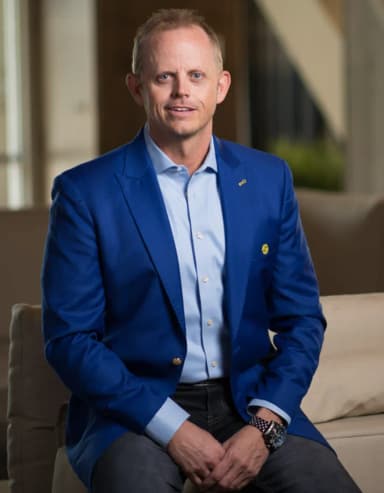
George Wright III is an entrepreneur, investor, and the host of The Daily Mastermind. Over more than two decades he has founded and scaled several multimillion-dollar companies and built a renowned seminar business that put some of the world's biggest names and brands on stage. With 25+ years across marketing, sales, and executive leadership, he's made a career of turning bold ideas into results — and momentum into lasting growth.

Today his mission is singular: empower driven entrepreneurs everywhere to master their mindset, unlock their potential, and live their ultimate destiny. Through The Daily Mastermind, George shares the Prosperity Principles and strategies that help people create massive change — in their business and in their life.

MORE ABOUT GEORGE