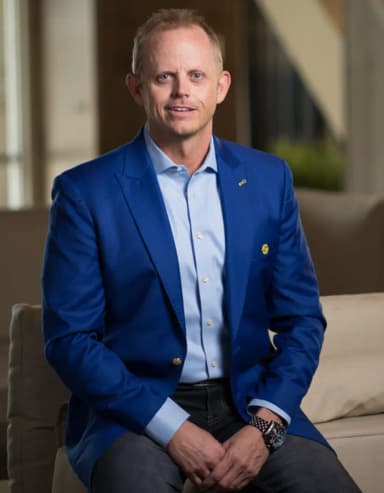
welcome back to the podcast george wright the third and i am excited to have in our studio here today a special guest jeff stock jeff how are you i'm doing great how are you this is good yeah i'm doing great and i'm i'm excited to talk a little bit about money with you about uh about all kinds of things that people can do to grow their wealth so i want to give a little bit of introduction For those of you that are first listening, and before we get started, I want to make sure that you do whatever you can to follow this episode, follow the podcast. We're going to be launching some really great episodes over the coming weeks. And today we're going to talk a little bit about money. And Jeff Stock, who's a 25-year financial strategist, he's the CEO and founder of Stock Alternatives. He's an authority in both tax-optimized wealth building, but also he's going to be launching a podcast. And he's got some amazing topics when it comes to tax, investing, risk management. And so, Jeff, I'm glad you're here, but I would like people to get to know a little bit about where you came from because you had this background in actuary. So talk us a little bit about where you came from, and then we'll start to get into some core strategies. Sounds good. Yeah, I'll tell you a little bit where I came from. So I am an actuary, which is basically for people who don't know, that's like a math nerd at an insurance company or a consulting company. So we're the ones that they say there's like three kinds of actuaries. No, that's the wrong joke. The introverted actuary looks at his shoes and the extroverted actuary looks at the other person's shoes. So making the leap from actuary to running an investment fund, it's been really exciting. And I have a lot of good analytical insights for people and I'm really a good resource for people wanting to understand risk and reward and trying to balance your portfolio with alternative investments to get a higher return and also reduce your risk. Yeah. You know, at the end of the day, there's a lot of people out there that are teaching investing and things like this. But you come from a background that the reason I wanted to bring that up is it's a foundation for helping people to have a little bit of a unique perspective on investing. And so why did you decide to go from being an actuary, a, you know, number cruncher, risk analyzer to actually managing a fund and growing wealth for clients? Great question. So it started off at college. I went to University of Connecticut, and we did this Big East Stock Market Challenge, and I was always interested in finance and investing. And we ended up winning the Big East Stock Market Challenge. We invested in, like, Amazon. It was with fake money. Amazon and a bunch of internet startup companies. Our portfolio went up 73% during, like, the six-month competition. We won a prize for the university, a big check from the sponsor. got to go to the Big East March Madness Tournament in New York City. And it was so much fun. And we went there in a limousine. So then the university was so proud of us that they said, we're going to let you start a student managed fund to manage a portion of the university endowment. So they picked five undergraduates to manage maybe 1% of the endowment. And it was right before the dot-com crash. and we invested it all in internet and really risky, overvalued companies in hindsight. Maybe we had Amazon, but so in the long run, it would have been fine. But we lost over 80% of the value of the student managed fund. And the four other managers that were doing this with me, they all disappeared. And I was left kind of explaining to the donors to UConn, you know, why we did what we did and tried to explain that it was only a small portion of the portfolio and the rest of the portfolio was well diversified. So anyway, the learning from this is that they assigned me to basically come up with a report to make the program better for the next year. So they could do another relaunch next year and have the students do more research and have proper diversification and justify every decision, look at correlations to make sure they're not putting all their eggs in one basket. So it was sort of a failure from a perspective of we lost money for the university. But for me, it was a launch. One, being really interested in what I was doing. But also I learned a lot. I learned I would never put too many eggs in one basket. I definitely would diversify and be really strategic going forward. And then I feel like, yeah, go ahead. I was going to say, I feel like a lot of investors had to take their licks and their wounds, you know, early on. But one of the core things I really liked about when you said that, and we talked a little bit earlier, is that it really sets you up with some knowledge. You really continued on. This is what helps you to build a lot of your credibility, a lot of your contacts connections to be able to grow moving forward. And so right now, one of the things, the reason I bring this up is your background has been kind of technical modeling with real world investing. And you're connected to a lot of elite tax attorneys and top investment networks. And so you've grown now to where you've launched this stock alternatives fund and company. And so what do you think, do you feel like your actuary background, your technical background is what's given you a foundation to separate you from what a lot of other investors and funds are doing? Yeah, absolutely. So the actuarial background, because actuaries, you know, people have seen the show Along Came Polly and the guy that was afraid of risk. So that's not really an actuary, but that's what people have the idea of what an actuary is. and they see an actuary as just being so nerdy that you can trust them. You can trust them with the math. You can trust them with the numbers. If I say, you know, I think that, and we're also tend to be really conservative. So if I say we're going to earn 20 to 25% returns, you can better believe that that's really what I think. I'm not just floating the numbers and, you know, and over-promising. So we always want to promise reasonably expected results and ideally over-deliver. And we do that on the tax side as well. So if someone making more than like in income and paying in taxes I recently found out through some partnerships that they legal We call them loopholes but they not loopholes strategies that can reduce up to 60 or more of those taxes that are being paid And what we do with our fund is we can reinvest them in investments that earn fairly predictable double-digit returns. Yeah, that's amazing. What do you think, because you've now been in this space for quite a while, what do you believe most traditional financial planners and investors are getting wrong, you know, about diversification and long-term wealth building? What is it that you feel most get wrong that you do differently? So I actually had joined, I was a financial advisor briefly before starting my fund, and I joined an RIA, and actually I joined one RIA and I switched and I joined another RIA, And all they would do is they would say, try to beat the stock market with stocks. So they would have different strategies on doing that. If you look back testing, it's very difficult to beat them. Warren Buffett will say, buy the index. And most of the time that actually works. But the people who I worked with, they did beat the market. But sometimes it's unknown whether it's luck versus skill. But what I'm doing differently, and the other side of it is if you wanted less risk, to use bonds if you wanted more risk to use leverage so you borrow money to invest in the stock market or use bonds or annuities in some cases to de-risk what i'm doing instead to get a higher alpha and higher return is using alternative investments and i'd say that the higher quality financial advisors are using to some extent alternative investments so that's things like real estate development that would be things like potentially investments into to trading strategies or oil and gas, fix and flips. So anything that is different than normal large company or even small company or international, right? All that stuff is good for correlation. But the more buckets that you have in different categories that move in different directions, the better. So yeah, and you've said before that higher returns don't always mean higher risk as well, right? That's exactly right. So if you look back at like 2008, right, the financial crisis, stocks, bonds, real estate, international, global, oil, they all went down at the same time. So in order to have a really strong portfolio, and they went down like 50%. And right now with the stock market, we're at like the 98th percentile compared to historical valuation. So it's really looking ripe for a correction, especially with all that's going on with oil prices in Iran right now. What I look for is investments that are going to perform even in a correction. So we have some investments that we work with that they actually do better when the market does poorly. And then other things are more short term in nature. So our fix and flip, even though it is tied to housing, they get in and out in like a couple of months with each property. so they're not really exposed to a housing market correction. I like new construction better than multifamily rentals because the rental yields right now are fairly low and very at risk of a market correction, and they already have corrected in some locations. Not saying to put it all together, but putting money in different buckets really does help. Yeah, and I like how you approach it from all angles, right? Because you talk about investing, but you also talk a lot about risk mitigation and taxes. And so how do you take tax strategies and investment strategies, work these together for clients into single wealth building principles? What's your approach for tax strategies combined with investment strategies? Yeah, so let me tell you a tax story with a real world example. So I came in contact with another actuary and he was making good money, like $300,000 in a year, paying around $100K, we'll say, in taxes. And he didn't know that he could get involved with solar or clean energy, EV chargers, and the government provides a 40% tax rebate on any investment into that. So we have a strategy that's really interesting and exciting that you've used your past three years of taxes as a down payment on the EV charger, using the rebate. And then we have a loan and leaseback arrangement where there's no cash outlay so that you can actually buy an EV charger with no cash in your pocket and you can get 500,000 of depreciation, which is a write-off against your income. Wow. So it's really, really powerful and I'm trying to share it with as many people as possible. And if this is something that people are hearing and they want more information, definitely find me on jeffstocks360.com. Yeah, and what's interesting is that's a great example of how you utilize tax strategies and investing and also limiting risk at the same time. Like it's all three of those things, right? Absolutely. Lower risk. So the easiest way to have less risk with investing is to risk the house money. So if you saved $200,000 in taxes with one of my tax strategies, you could put it into anything and it's going to be less risky because, I mean, we're not going to lose it. But if you did lose it all, it's something you had in the first place. So it's a really easy proposition to say, hey, I'll save you several hundred thousand dollars in taxes, you know, either this year or over time, and then redeploy investments that are going to earn double digit returns and protect you through diversification. Yeah, you have some pretty unique, you know, projects that you're working on and things that you're working with. So I'm curious how your mind works with this too. What is the framework you use when you evaluate opportunities? Like what type of framework do you use? Do you have a mental checklist? Do you have, you know, risk reward? What do you do when you're analyzing opportunities that you're working with on clients So the first thing that I do is my I not looking necessarily like my buy box is not the most safe so you know if you want the most safe you can stick your money in the bank or a treasury and earn 4 But what I looking for is something that is very safe what I consider safe or moderate safety that's going to target an upwards of 20% or more. And the reason why I say that is if you're in, say, five investments and you're targeting 20%, And let's even say that one of them doesn't go well. Over a five-year period, you're still going to get more than 10% as long as four out of five get the 20%. And I could demonstrate the math on that. So if you have a lot of investments that are targeting high returns and most of them go well, you're going to outperform the market. And that's why, you know, if you look at it over time, and I don't necessarily recommend this for everybody, But the highest performing assets over time are a lot of the startups and the very high risk capital because they have the higher expected returns. And if you're in a lot of them, then you're going to get the return and be able to hedge the risk. But that should only be a certain portion of the portfolio. What I tell people is, you know, have some stability that's going to generate income, but also take a few swings at the bat for some home runs. And those home runs will potentially carry your portfolio. Yeah, that's, you know, I really do think it's strategic overall to have, you know, not only take your goals and assessment, but to also allocate it that way. So let me ask you a question, because I've run across a lot of individuals, high income professionals, and they always think a little bit differently. And I had a conversation with you the other day, and so I was going to ask you, how should high income professionals think differently about taxes if they want to accelerate their wealth rather than just preserve it? Because a lot of times they're just trying to preserve their wealth. How should they view taxes overall in their investing strategy to accelerate their wealth? Yeah, so that's a great question, George. So what I would say to that is that if you say you're earning a 10% return, which that used to be my benchmark for what I wanted to get every year. Now I go for something more than that. But say you're paying taxes of 30% on that or even 20% on that. your actual return is eight, right? So you're much better off if you, you know, the important thing is to look at the returns after taxes. Right. So if you don't analyze, I mean, this is the point that I think a lot of, it's like a hole in the boat, right? A lot of individuals do not really emphasize or put value in the tax strategy side. And that's one of the things I really liked about how you kind of incorporate that in addition to risk mitigation into investing. Because if you don't take that into consideration, you're really not truly netting out the type of investment and growth over time that's going to compound, right? Exactly. Yep. And on real estate, for example, there's lots of tax advantages. You can defer your capital gains until you die and take a step-up basis and never pay the taxes on the gains. You can even buy and hold other investments. For certain startups, you have a provision or if you hold it for five years, you don't have to pay taxes when it goes public or when it finally launches. So there's all sorts of different tax strategies that if people don't know about them, they're going to miss out. But really, my focus is on business owners and W-2 wage earners that are making more than $200,000 to use strategies to reduce your taxes by up to 60%. And there's so many strategies out there. Can I give you one story? of yeah i'd love to so i haven't started using this one yet but i i recently found someone that wanted to partner and what he does is they have a charity and if you donated like fifty thousand dollars to that charity that charity is going to come back and give you two hundred and fifty thousand dollars worth of gift cards because you know gift cards not everybody uses them and i guess they have certain gift cards that people use less so the fifty thousand buys you two hundred $250,000 of gift cards. And then these people, they go and say, you can donate that $250,000 of gift cards to another charity. And then you get all of a sudden $250,000 of write-offs instead of the $50,000 that you actually gave. And if you're in the 40% tax bracket, the $250,000 of write-off is closer to $100,000 of benefit, but you only actually donated $50,000. So these are some of the things that rich people are doing that are legal. You have to be very careful and make sure a tax attorney signs off on it. But these are ways that some wealthy people are paying lower in taxes and also contributing to charity. Yeah, it's one thing I've learned over time is the high net worth, the ultra high net worth do have strategies a lot of people just don't know about. But also they view taxes different. They view investing different. They view risk different. And so you have to think differently, but you also have to take advantage of these opportunities and strategies that are out there. And you're in those circles because you have a lot of contacts in your network that are bringing these opportunities and things up. It's interesting to note that you're also going to be starting a podcast, which I think is great as well. And what made you decide to kind of get into the podcast game as well? What was the main driving force for you to do that? Yeah, so the main driving force for me to decide to do a podcast was that I met this wonderful person by the name of George Wright III. And he said that, you know, if you go and do a podcast, you'll get in front of more people and you'll be able to share and spread your message and help people. And that's really what I'm about is helping people. So I want to help people to one, save taxes, but also to to secure their lifetime income through strategies that are going to deliver higher risk adjusted returns and perform better than the stock market with more stability and higher returns. Yeah I love it And it so true because at the end of the day you could be one of you know the best thought leaders the best strategist the best products on the market And if nobody knows you there And yet I also found on the other end that there are a lot of individuals like yourself that are in these inner circles that know the strategies that have the context connections the network that people can access And so they just don have access to these strategies. And so I think it's good that you're doing that. I think it's good that you're putting it out there. And at the end of the day, you know, people are working like crazy to create a life that they want to live. They want to build their wealth. They want to accelerate their lifestyle. And there are ways, like you said, it's interesting your perspective. There are safe, effective, but aggressive ways to be able to grow your wealth. But you have to apply all these pillars, right? You got to apply the tax, the risk, the investing, and also have access to the strategies in the first place, right? Correct. And the one thing that I would add is don't be afraid of what you don't know. I mean, you get a lot of advice that says invest in what you know, and I do agree with that. But on the tax side, if you're just going to a regular CPA and you make good money, they are usually just filling out the blanks and making sure the numbers tick and tie. They're not necessarily proposing to you how you can save a couple hundred thousand dollars through more advanced tax planning. And there are people who specialize in that. And fortunately, I've been introduced and exposed and partnered with a lot of the top tax attorneys in the country. And the one that I work with, they've saved over a billion dollars in taxes for clients and they really are phenomenal. That's awesome. Yeah, it helps to have that expertise and that background as well. Well, this has been really helpful and I think a lot of people are going to get some value out of it. What is the best way, you mentioned it before, but what's the best way for people to connect with you and to, you know, with you and your company and also the stuff that you're doing? Yes. So my website is www.stockalternatives.com or my personal website, jeffstock360.com. You can also find me on LinkedIn by searching Jeff Stock FSA. That's credentials for an actuary, M-A-A. So basically Jeff Stock plus my actuarial credentials and all those work very well. Great. And we'll put all those links in the show notes. So if you're listening to this, you know, I'd really encourage you to, and Jeff, I appreciate you joining me because I think a lot of people put off taking action when it comes to building their wealth, minimizing tax, you know, creating security and financial security for the families and for their businesses. And I think it's one of those things that you have to put a priority in because what you focus on grows. And if you want to grow your wealth and your lifestyle and your investments, you've got to be able to put more time and learn and grow. So it's been helpful to have you on the show. Is there anything else you'd like to add before we take off? Anything else you want to talk to our listeners about? Yeah, I wonder if I could highlight two or three of my favorite investments. Yeah. Really briefly. So one of my favorite investments, and this is a really interesting one, is if you can imagine that an airplane when it's first new is like $30 million. And then after 20 years, that airplane, guess what it goes for? Maybe $3 million. But the parts, if you buy that airplane for $3 million, tear it down parts, they're worth like $10 million. So one of my favorite investments, which I think is pretty protected from the economy or market correction, is they buy airplanes, they tear them down, and they sell the parts. And we can give investors very, very strong returns that are backed by collateral with that investment. Wow. That's pretty interesting. Yeah, that's very interesting. What was the other one you wanted to mention? So the other one, my sister, her house burned down in the Pacific Palisades, California fires, and she built her home and she used a modular company to save on the cost. So they saved about 25% on the cost of building the home through using the modular for 70% of the build. And then they use their general contractors and her elite design work for the remaining. So now I'm partnering with them to build homes in the Pacific Palisades. And they're really strong investments because the land right now is about half of what it used to be before the fires. And we're projecting that the houses will not go for quite the same as they used to be. But even with conservative assumptions on what the houses are going to sell for once they're rebuilt, we project really, really strong double-digit returns. Wow. So it's a combination of opportunity and there again, insights people would not know unless you're connected to the right sources, right? Correct, exactly. And the one other thing I would add is, I forgot to mention. So if someone has, I meet a lot of people that have really large IRA balances. So like a retirement account balance, that's not a Roth. And so a lot of times when they're getting older, they're gonna have to pay distributions and taxes on the distributions. We have a strategy through the EV chargers that can reduce over half of the taxes that are going to be paid on a Roth conversion. So if anybody's worried about the high taxes from taking their distributions, come talk to me and we can help you out with the strategy. I love it. I love it. Yeah, and it's going to be situational based, but I think that's something that a lot of people are going to be looking at, especially the aging generation we have and the type of wealth that they're trying to now access, right? Exactly. Excellent. Well, good. Well, those are great ideas. And Jeff, like I said, I appreciate you being with us here today. If you're listening to the episode, make sure that you check out the show notes. I'm going to put a bunch of links in there so that you can connect. And if you have any questions, hit us up. We want to hear from you. We want to know what you're working on, what you're struggling with, what your biggest challenges are. And share the show. If you share the show, we'll get the message out. We'll be able to share and help more individuals, like Jeff said he wants to do, when it comes to investing taxes and risk management. So thanks again for being with me, Jeff. I look forward to having some further conversations. And if you're listening to this, make sure you tune into the show. We'll talk with you soon. Have a great day.