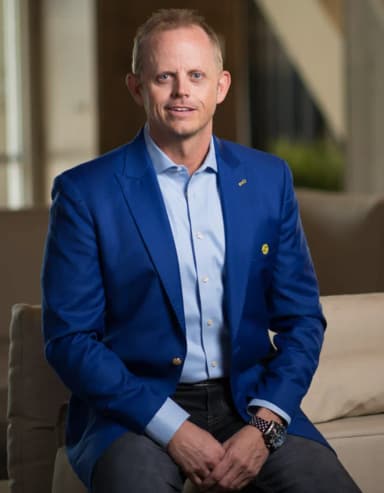
George Wright III opens this Friday edition of The Daily Mastermind with a hard question for every founder: why do so many successful entrepreneurs still feel burned out, restless, and unsatisfied even after hitting their revenue goals and lifestyle dreams? His answer is direct. Achievement is not the same as fulfillment, and without purpose, success starts to feel empty no matter how many milestones you check off.
Why Founders Drift From Freedom to Performance
Most entrepreneurs do not start their journey chasing money. They start chasing freedom, opportunity, and impact. They want to provide for their families, solve real problems, and leave something better than they found it. But somewhere along the way, purpose quietly gets replaced by performance. Revenue becomes the scoreboard, growth becomes the obsession, and comparison becomes the habit. Founders wake up one day having built a successful business but forget why they started it in the first place.
George warns that when success becomes your identity, nothing is ever enough. Every milestone just creates another milestone, and every victory lasts only a few minutes before the next target appears. That cycle is exhausting, and it is not what anyone signs up for when they first dream of building a business.
Your Business Should Serve Your Life, Not Replace It
One of the biggest myths in entrepreneurship is that burnout is simply the price of success. Long hours become a badge of honor. Skipping vacations becomes proof of commitment. But George pushes back on that idea directly.
Was it to create less freedom, less peace, less time with your family? Of course not. Most founders want more control over their lives, more flexibility, opportunity and impact.
Somewhere along the journey, the business quietly becomes the master instead of the servant. The calendar controls your life, the inbox controls your emotions, and the business dictates every decision. George says this is backwards. Working hard still matters, but the goal is to intentionally build systems, develop leaders, and create processes that eventually give you your life back.
How Purpose Builds Resilience Through Setbacks
Every founder hits tough seasons. Clients leave, markets shift, plans fail, and partnerships end. The question is never whether adversity will show up, it is what keeps you moving when it does. If money is your only motivation, those setbacks feel overwhelming because the reward no longer justifies the struggle.
Purpose changes that equation. It reminds you why the work matters and who you are serving. George explains that the most resilient founders are not the smartest ones, they are the ones with the strongest reason to keep going. When your why is bigger than your obstacle, the obstacle loses its power over you. Purpose does not eliminate problems, it gives them context, turning challenges into temporary chapters instead of permanent roadblocks.
Achievement Versus Fulfillment: Know the Difference
George draws a clear line between two ideas entrepreneurs often confuse. Achievement is external. Fulfillment is internal. Achievement comes from accomplishing goals, while fulfillment comes from living aligned with your values. You can accomplish everything you have ever dreamed of and still feel like something is missing.
He references one of his favorite Jim Rohn ideas: success is not something you pursue, it is something you attract by becoming the right person. If building your business costs you your family, health, relationships, faith, peace of mind, or integrity, success eventually starts to feel like failure. Real prosperity is not measured by revenue, it is measured by quality of life, by whether you can actually enjoy what you built and be present with the people you love.
Values as Your Decision Filter
The greatest businesses are reflections of the people who built them. Your values are not words on a conference room wall, they show up in your decisions, your priorities, your leadership, your calendar, and how you treat employees, family, and friends. Every decision either reinforces your values or erodes them.
Founders who create lasting impact use purpose as a filter for every choice. Before saying yes to an opportunity, they ask whether it aligns with their mission, whether the relationship supports their values, and whether the business is actually creating the life they want to build. Drifting away from purpose rarely happens all at once, it happens one small decision at a time, so staying intentional matters.
Action Steps
- Set aside 10 minutes this week to ask why you started building your business in the first place
- Evaluate whether the way you are living today actually reflects what matters most to you
- Project five years forward on your current path and ask if it leads where you truly want to go
- Identify one system, leader, or process you can put in place to free up your time and control
- Use your core values as a filter before saying yes to your next opportunity or decision
Build a Business Worth Having
George closes with a simple challenge: do not sacrifice the life you are trying to create for the sake of the business itself. A business should serve your purpose and your vision for life, not the other way around. Better leaders build better businesses, and better businesses change lives, but only when success is grounded in something deeper than the next milestone. Take the time this week to ask the hard questions, because it is never too late to start living the life you were meant to live.