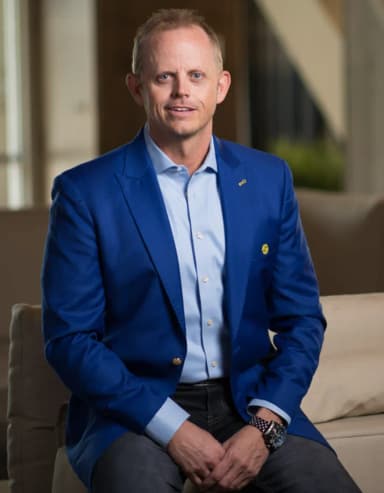
George Wright III opens this episode of The Daily Mastermind with a question that cuts to the heart of modern business: why do some people make a lasting impact on the world while others, with equal talent and resources, struggle to be heard? The answer, he argues, isn't luck or money. It's how they think, act, and communicate.
Drawing on Simon Sinek's influential book and TEDx talk *Start With Why*, George walks you through a powerful framework for operating from purpose rather than product. When you learn to lead with your why, everything changes.
The Golden Circle: What, How, and Why
Sinek's Golden Circle is a simple but transformative model. Picture a bullseye with three rings. The outer ring is the what: what you do, what you sell, what you offer. The middle ring is the how: how your product works, how your service is delivered. The center is the why: the purpose, the belief, the reason you do what you do.
Most businesses communicate from the outside in. They lead with what they sell, explain how it works, and hope you'll buy. But the most innovative, trusted, and influential companies flip that model. They start at the center and work outward.
Success is getting what you want. Happiness is wanting what you get.
George shares this Dale Carnegie quote not as a throwaway opener, but as a compass. True success requires both achievement and alignment. When your business operates from its why, you attract the right people rather than chasing the wrong ones.
How Apple Communicates From the Inside Out
George uses Apple as a prime example. Most computer companies say: "We make great computers. They have beautiful designs. Would you like to buy one?" Apple operates differently. It starts with why: Apple challenges the status quo. It innovates to make your life better. As a result, it builds beautiful, elegant products. And by the way, those products happen to be computers, phones, and MP3 players.
The difference isn't the product. It's the order of communication. When you lead with purpose and belief, people trust you. They align with your values before they ever evaluate your features. Dell makes great computers too, but it lacks that same gravitational pull because it hasn't communicated a compelling why.
Why Dr. Martin Luther King Said "I Have a Dream"
George's second example is equally instructive. Dr. Martin Luther King was not necessarily the most technically gifted orator of his era, but he was one of the most powerful communicators in history. Why? Because he led with his beliefs.
Dr. Martin Luther King, he didn't communicate his plan. He didn't say, I have a plan. He said, I have a dream. I have beliefs.
People didn't follow King because he had a detailed strategy. They followed him because they shared his beliefs. The march wasn't built on a project plan; it was built on alignment with a vision. This is the same principle that drives loyal customers, committed teams, and lasting movements.
The Biology Behind Why People Buy on Emotion
This isn't just philosophy. George points out that Simon Sinek grounds the Golden Circle in neuroscience and biology. The human brain has distinct regions: the neocortex handles rational, logical thinking, while deeper structures handle emotion and decision-making. And here's the key insight: behavior is driven by emotion.
That's why you've said "it just doesn't feel right" about a purchase even when the specs were perfect. You weren't being irrational. You were being human. People buy on emotion and justify with logic. Too many entrepreneurs and salespeople are out there selling the logic, the features, the data, while leaving the emotional core untouched. Leading with your why reaches people where decisions actually happen.
How to Define and Communicate Your Why
George closes with three practical steps you can take immediately. Your why is not money or recognition. Those are results. Your why is the deeper reason behind what you do. Why would your product change someone's life? Why does your company exist beyond revenue? Once you can answer that clearly, you're ready to start communicating from the inside out.
The more you practice leading with your why, the more natural it becomes. And as you refine your message through real conversations and real feedback, your ability to connect, persuade, and inspire will grow.
Action Steps
- Script your what, how, and why. Get detailed and specific. Your why is not money or recognition; those are results. Your why is the deeper purpose behind what you do and why it would change someone's life.
- Practice communicating from your why. Talk to people around you from a place of purpose. Start conversations with belief, not features. This is a skill that sharpens with repetition.
- Refine as you go. The best way to learn is to do. As you communicate from your why, gather feedback, spot what resonates, and sharpen your message continuously.
- Study the model. Check out Simon Sinek's TEDx talk on Starting From Why. It has over 45 million views for a reason.
Success is not to be pursued. It's to be attracted by the person that you become.
The more you align with your why and lead from that place in every conversation, product launch, and business decision, the greater your influence, the greater your impact, and the greater the legacy you will leave. It's never too late to start living the life you were meant to live.