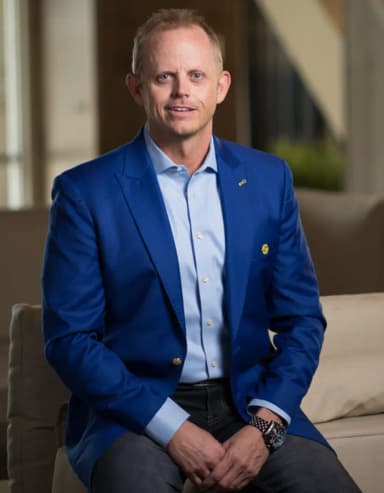
Good morning, good morning, and welcome back to The Daily Mastermind. My name is George Wright III. I am your host, and we are here with a little bit more inspiration, motivation, and education to carry you into the weekend. I want to finish up our series on how to win friends and influence people. I'm super excited about this book. It's one that I pull out from time to time, and if you've listened to some of the other episodes, if not, no big deal. go back and listen to those. But before we get started, I do want to go through the quote of the day in the Daily Mastermind mobile app. The reason I do is I think it's very, very appropriate for our discussion. The quote is actually from Proverbs 23.7. It says, As he thinketh in his heart, so is he. Wow, man, I love this quote because I think at the end of the day, we're trying so hard to influence our environment, to people around us, like the book says influence other people. But what we realize over time is that it comes from within. It's like my favorite quote, success is not to be pursued, it's to be attracted by the person that you become. And that's the thing, that's the overall high-level message that I feel like you should get out of this book. I think that at the end of the day, we hear a title like How to Win Friends and Influence People, and we think all kinds of different things based on our paradigm, based on our filter, based on what we have in life, and what I personally have taken away from this book. And you'll all have different thoughts and ideas and messages based on where you are in life. But what I've found is that this book is really more about you and what you can do and what you can internalize to become the best version of yourself to ultimately influence other people. And that makes me really believe that influence on everything around us in our environment actually comes from within. And the idea that influence can come from within is why when I take that filter and that perspective, I pull this book back out, I learn from a different frame of mind. You know, if you pick this book up and you think to yourself, man, I'm going to be able to sell and persuade and get people to do what I want them to do. Okay, that's fine. But at the end of the day, I think if you really dig deep and you start working on what's going to make you fulfilled, what's going to make you happy, It's going to be growing and learning and becoming the best version of yourself. And in order to do that, you have to change your filter just a bit. So I love this book by Dale Carnegie, How to Win Friends and Influence People, because it's absolutely a timeless classic. You know, there's a reason that it's sold tens of millions of copies over almost a century now. It's something that you can bring back in your life at various points in time. You know, I've had those times in my career where I've been an entrepreneur, where I've been a sales guy, where I've been a CEO, where I've been an owner, where I've been an individual entrepreneur. And every time I have a different filter so these different topics come back and they just make a huge huge impact in your life Whether it how to deal with people whether it how to win people over to your way of thinking whether it being a leader they all very very important things because we go through different seasons in our life. And I think you'd agree, you're probably in a different season in your life. And maybe, maybe that season right now is tough. Maybe it's something that's, it's really difficult for you to navigate. And sometimes it's a catch-22 because one of my best suggestions when you're going through a difficult time, whether it's depression, anxiety, tough circumstances, things like that, I'll always recommend take the focus off you. Because when you can become focused on other people, then you're not caught up so much in your own problems. However, this is one of those situations where I believe you can really work within. And the difficult thing to do when you work within is to have a little structure. Because when you get inside your own head, sometimes you just can't get out and you get caught up in all the thinking and things that your mind has this pattern of going through. Whereas if you can have a little structure and you can say to yourself, these four parts, these four sections of the book that we went through, you can say, I'm going to apply these to myself and I'm going to have some structure. Then when you're internally working on becoming the best version of yourself, you have some structure. You're not going to get sidetracked. You're not going to get distracted. You're not going to be off on these negative or disempowering thoughts that you may have. So that's my suggestion. And that's why if you'll take a different perspective maybe and apply this book a little differently internally, I think you'll still accomplish the external goals you want. You'll still be able to influence and attract success into your life. And you'll be able to get other people to follow you and to be able to work with you in your cause, your mission, and your fulfillment, your purpose in life. So I have three specific thoughts. I just wanted to kind of throw out there for you. These are thoughts that have been hit over and over inside the book, but they're just thoughts that I had notes on, so I thought I'd mention them to you. The first is on criticism. I think it's very difficult with today's day and age where everyone's trying to be in your face, reality TV, dropping the F-bombs, whatever it is, and I'm not judging on anything anybody does because the real point here is you have to be you. You have to be you, whatever is authentic, and stop trying to be everything everybody else. wants you to be. But through that process right now, what's happening is people are getting really good at criticism. People are getting really good at telling people what they think. And I think when you dig deep enough with some of the best leaders out there in the industry, the best thought leaders, guys I listen to like Gary Vee and Ed Milet and Andy Frisella and, you know, Sean Whalen and guys that I listen to that you might take one way or the other and you realize how deep, at a deeper level, what their true intention is. You realize that they're being them, They all have different styles, by the way. They're not all in the same category, but they're being them. So many people are trying to be Ed Milet, be Gary V. Be Sean Whelan. What they not realizing is that you need to learn to be you In this difficult environment we have where people are so you know looking forward to getting recognition and the limelight they try to be critical And criticism doesn't do you any good. What you'll learn through this book is that criticism is not what the goal is. Now, being authentic and being direct and trying to help people by saying things that no one else will tell them, that's different than criticism. Criticism is something that hurts and it causes damage. And so criticism is something that I feel is very important for us to be aware of and it's very important for us to eliminate from our communication and our influence with other people. That's the first thing. The second one is just this overall concept of dealing with people. See, I think that one of the biggest lessons you can learn from this book is how to communicate. Communication, in my personal opinion, is one of the greatest assets and skills you can learn. I don't care if you're in sales, marketing, operations, engineering, massage therapy, whatever it is. Communication is something that you need to learn because communication is your ability to persuade individuals. Your ability to persuade, attract success, and do things in your life will be directly proportionate to your ability to communicate in a positive way. And I'm telling myself this as much as anyone else. It's very difficult nowadays through text messaging or email and things like that to communicate in a positive, uplifting way or in a direct way that doesn't come across wrong. See, the art of communication is going to come from your voice inflection, your rate of speech, your tone, your facial expressions. And we lose a lot of that. Excuse me. And I've been talking way too long on podcasts and phone calls. I'm losing my voice. Communication, there's so many pieces to it outside of the literal words that you say that you got to remember that communication comes with intention. Communication comes with, like I said, rate of speech, voice inflection. I've had multiple telesales floors or sales groups that I've trained over time, and we always have a section on your tone, your rate of speech, your voice inflection, your mannerisms, because you can communicate with your body language and with your tone and flux as much as anything else. So when you learn that communication is such an important skill, you'll learn to also grow through learning these other things, these other techniques. And we can talk about that sometime as well if you'd like on the podcast. And the third topic besides criticism dealing with people is just this overall idea of influence. Because I think sometimes when we don't think closely enough about it, we see influence as our ability to just persuade. And great leaders influence, they don't manage. Great leaders influence, they don't sell. Great leaders influence, they don't manipulate. Because there's a real fine line. I learned in the education space and in sales and marketing that there a real fine line between influence and manipulation And I think rather than talk about the technique and the science of influence I think if you'll just remember that your intention, your intention, your motives, your cause, your purpose, your passion behind what you're trying to influence is the key. See, I know so many leaders out there and so many people that are very successful. I know a lot of them that they influence people, but their intentions are not great. Their intentions are not great because they say things that are not true or they say things that aren't backed up by their own personal experience. They're just saying things they don't understand. And so when you influence people, even if you think it's for a good reason, but you do it in a bad way, that's not influence. That's manipulation. And there are a lot of manipulators out there. And it's difficult, it's very difficult to understand the difference because you see all these people with these high lifestyles and fancy cars or homes. And I'll tell you how you can notice it. It's the people that flaunt that stuff all the time. Look at me, look at me, look at what I do, look what I have, look where I've been. That's not influencing people, that's manipulating people. And I think at the end of the day, if you will learn to influence with a good intention and a good cause and be authentic and not criticize and work with people that way, I think you're going to find massive success comes your way. Massive success comes your way. And when I say success, it could be your definition of success, which doesn't have to be money, right? I just happen to think money is pretty cool. so overall at the end of the day I feel this book is one of the best ones I've read on how to deal with people how to create influence how to become a better leader it's the reason I pull it back out because we all can learn every single day based on the season we are in our life and as you know Carnegie points out in the book we're constantly dealing with people in business and it's a key skill set that you need to develop it's amazing to me why communication influence and people skills is not taught in everyday school but if it was I believe we would all be better equipped to deal with life and deal with people around us and relationships and be able to grow our worth in areas that really, really matter. Nevertheless, I believe that if you'll read and apply the teachings of this book in How to Win Friends and Influence People with Dale Carnegie, you will definitely, definitely create a life of greater happiness, fulfillment, and prosperity. So that's my message for today. I hope you have an amazing weekend. I look forward to getting feedback from you. Share this episode of this podcast if you would. it would mean the world to me. I appreciate your feedback and I've had a lot of emails and things from individuals. So feel free to email me anytime at george at g3worldwide.com george at g3worldwide.com and check out our new dailymastermind.com website. Anyway, I'm here to help. I'm here to support you. I know you can do it. I believe in you. Have an amazing weekend. I'll talk with you soon. Thank you.