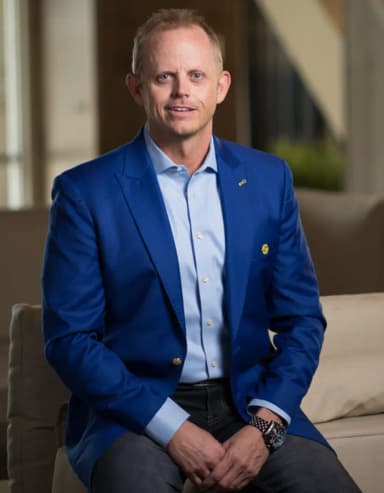
Okay, welcome back to The Daily Mastermind. My name is George Wright III with your daily dose of inspiration, motivation, and education so that you can create your ultimate destiny. We are joined today. Boy, I'll tell you what, you are going to be blown away with what we're going to be offering today. We're joined by a good friend, past colleague, Dr. William Danko. Welcome to the podcast. Thank you, George. It's been a while, right? We've worked together many times over the years and have known each other and reconnected. And I'll tell you what, I'm super glad to have you here because your message, your timing, your latest book couldn't come at a more opportune time. And I appreciate you scheduling me into your fun lifestyle that you have up in the Adirondacks and up in upstate New York. I mean, it's hard to get you tied down, but I'm sure we'll get into some of that today. So thank you so much for being here. Glad to be here. Let me do this for those of our listeners that do not know you, that maybe have heard of your work, have heard of your stuff, or I've talked about you and mentioned you in past podcasts. Let me just do a quick introduction because many of them know you as the co-author of The Millionaire Next Door, New York Times bestseller for over three years. But I'm going to give them a little bit of your background. So, you know, after 31 years on the marketing faculty, nine as the chair, you received the emeritus status in 2007 at the School of Business, State University of New York at Albany. And during your tenure, studied consumer behavior, in particular, the topic of wealth, which is a very high topic for this podcast. But as the author of The Millionaire Next Door, a research-based book about wealth in America, that really, I mean, this thing just crushed it for years and years and years. We actually featured it quite a bit in our events over time. But you've most recently written and co-authored a book called Richer Than a Millionaire, A Pathway to True Prosperity, which we'll talk about today. But I know your academic publications and career have spanned the globe. I mean, Journal of Consumer Research, Journal of Business Research, Journal of Advertising Research, and many, many others. but you've also spoken and presented to crowds, groups, select individuals in the U.S. and all over Australia, Canada, Germany, Poland, Switzerland, Taiwan. So you earned your PhD and that was at Polytech Institute, correct? Right, Rensselaer Polytechnic Institute, yes, RPI for short. Oh, that's awesome. Nobody can say Rensselaer, that's the problem. Nobody can Well, what I do know is you are an expert when it comes to studying human behavior as well as wealth building. And that's the reason I wanted to have you on our podcast. And we had a call. It's funny because we had a call a week or so ago. And both of us looked at each other afterwards and wished we had just pressed record on the mic because that would have made an amazing podcast. So we'll do our best to try to regroup and readdress some of these amazing topics we talked about. I really enjoyed that. So with no further ado, I really appreciate you being here and I hope that we can do what we can to just kind of get some golden nuggets from you. So with that introduction, maybe you could give us just a little bit of your background into not just your career, but what took you into this specific direction of wealth and looking at consumer behavior and individual entrepreneur behavior which kind of led to the first book and then what we'll do is we'll talk a little bit about the millionaire next door and then and then gravitate into the more recent book the one I'd like to discuss which is richer than a millionaire so maybe give us a little bit of your background so people know you more yeah no fair enough that's a good way to start you know goes back to 1973 when I was a mere undergraduate student and one of my professors was Professor Thomas J. Stanley. And it was a good course in consumer behavior. It was like a sociology course. But we developed a relationship. And he encouraged me to continue my studies, which I did. Got my PhD at RPI subsequently. But from 1973 to 1993, I was still in upstate New York. And Tom went down to Georgia to become a professor at Georgia State University. And we kept in touch doing a number of consulting studies and academic studies over the years. It was good. And in 1993, that was a pivotal year, he called me up and said, do you still have the old data sets from you know various financial institutions that we consulted for and I did he says well let's reanalyze the data and create a an over encompassing umbrella survey and and we did so it was a academic study we self-funded all this this is before either of us were rich and famous We were just struggling academically. And I said, holy smoke, you know, I have a young family. He has a young family. But the point is the concept sounded good. And as we were developing the manuscript, the running title was Big Hat, No Cattle. Which is a lot of entrepreneurs nowadays, right? Yeah, well, there's a lot of people who have the illusion of wealth. You know, they have a big car, a nice neighborhood. They have all the trappings, but they're on this economic treadmill. And so with the survey research, we found that there were some what we call industrial strength neighborhoods looking at their zip codes. And there were some people in the trades and farming, you know, plumbing and carpentry and car salesmen and car dealership owners. not what you would call the professions like law or engineering or medicine, the so-called right places to make a living. So we found that there are a number of very well-off people in these lesser neighborhoods, and they had jobs working with their hands for the most part, as opposed to being the so-called elite, college-educated, beautiful people. So that's how it evolved. And then over that 20-year period from 1973 to 1993, we had looked at IRS data, census data, all of our survey research data, personal interviews, and we had something called convergent validity, which means we have these various sources of truth converging to give us the basic premise of what became the millionaire next door, how ordinary people can really achieve a substantial net worth. Okay, so that's how that book evolved. Then, well, and I'm going to kind of point out, it's interesting, because a lot of people just grow up around this idea of I want to be a millionaire. And this is what I want. This is why I want it. And they don't really have any clue. And not only do they not have any clue, but they think they know what a millionaire really is, they think they know what it takes to be there, and a lot of times it's a vision and a dream and a plan that really has no basis behind it. So it's really interesting some of the things in that first book that really pulled that out. Exactly. So, you know, in The Millionaire Next Door, I mean, if you had tried to summarize it, there's a lot of quiet wealth. There's not a lot of flash on these ordinary millionaires. And one thing that we discovered in that survey, but also in subsequent surveys, 80% of the millionaires in our country are first generation wealthy, which means they own their own. And one of the hallmarks of wealth generation is to be an early and consistent saver so you can be an investor. In fact, many are small business owners. You know, when I look at some of the ways that millionaires became that way, they often have multiple streams of income. They may have their day job, which we call the active income, no matter what they're doing. But they also do things like they may own a billboard company for storage units, or they may own parking lots, where they're charging people just to place their car for the day. Yeah. One of the more colorful ones. I interviewed a guy who owns two trailer parks. And I said, well, what's the story there? He says, well, I have this piece of developed land with utilities on it. And the person who's living there owns their own trailer. And so if they don't pay the rent on time, I have a whole new definition of rolling stock. Exactly. Yeah. That's so funny. There are some states, as you point out, I live in New York State, and being in the rental business and housing can be quite burdensome. Oh, yeah. There's a law for everything. I think California is the same way. There's a lot of tenant rights. We don't want to abuse students. Don't get me wrong. But boy, if you could have a parking lot or you can do things that are pretty passive to make money. That's a common characteristic, right? I mean, like of these of these millionaires, there's everyday people just like us, but they had a side hustle. They had a side thing. They had, you know, something else going on. And I also want to make sure I mention what you, I don't want to pass up what you said a minute ago, that they're early savers or that they treat things a certain way. Because one thing we talk a lot about on our podcast is how you do anything is how you do everything. You can't be someone that's going to manage money if you mismanage money along the way. These are principles and characteristics and traits that you have to adopt early on. And that was a common characteristic of people that were truly not millionaires, but net worth millionaires that were worth some money, correct? No, this is true. They're good stewards of their resources. That's for sure. In fact, there's this concept called self-imposed economic scarcity. And this became clear in The Millionaire Next Door. Let's say you're making $100,000 a year, but you spend $100,000 a year. just on an economic treadmill, right? You're never going to get ahead. But what if you get between your ears the notion of, I am going to systematically save and invest 20% of whatever I make and live on 80% of whatever I make. So if you could, right now in America, the typical household to saving about 8% of their discretionary income. And that's not necessarily long-term saving. That could be part of their emergency fund or something they're going to spend quickly on tuition or some other. It can go really fast. Yeah, really fast. It sure can. Yeah. But if you can have the attitude of saying, I'm going to take 20% and have a long-term investment portfolio, and I prefer low load mutual funds. I don't give investment advice, but I do need the fewer expenses you have, the better off you are. Yeah, but you know what's interesting? You say that and that's an amazing point because I love the term self-imposed economic scarcity, meaning stop spending everything you make and not only because from a standpoint of if you were to save more, you can invest more and eventually solve the problem of having more than you're currently getting. But, you know, a lot of thought leaders today say that same thing a little bit differently where they say, listen, everyone complains they can't get that side business, that side, you know, mobile home park or real estate or, you know, billboards or whatever going. But, you know, if you just spent a little less money, you could fund your side business. So whether it's an active income, a passive income or investments, I think that strategy by itself is huge. I think that is, that's a huge strategy people need to learn. And it's hard because nowadays people feel like they need to put on the show of being a millionaire to ever attract what they need in their life. But that is not what time has proven to create millionaires. That's right. And this is why in our survey research, you know, the typical millionaire, or when you become really economically self-sufficient, you're in your 50s. That's why, because you have to learn that lesson over time? I mean, well, learn that lesson, but it's a steady-as-you-go approach. Here's the problem. There are people in their 50s are saying, well, gee, in 10 years or 20 years, I want to retire. Maybe I should start saving. Well, we have to get this notion of compounding interest working in our favor, right? And the earlier you start, the more compounding you have. So it's interesting because you used to, you've spoken for me many, many times on stages at our asset protection events and we talk about things that the high net worth, no, but the average person could implement. Like you know reduction in your taxes is about as quick and safe and effective way to have extra money to invest with as anything else But people don spend time on that either So clearly the knowledge and the learning needs to increase and it needs to increase as young an age as possible. So I love the concept. And, you know, there's a reason that Millionaire Next Door was a New York Times bestseller for years and years and years is because of that. Is there anything else? And I know that you took some updates to that bridging into the next topic, but let's go whichever direction you want to go with that because I know you had a transition. Yeah, maybe one or two additional points here. Also, millionaires tend to avoid excessive debt. Now, there are some that are very highly leveraged, that's for sure. However, there's the admonition in the book of Proverbs from the Bible, chapter 22, verse 7. the borrower is a slave to the lender when you are in debt you are a slave so when you have a house with a mortgage that again you're you're you have that beautiful neighborhood in the beautiful car and and you have a wall-to-wall mortgage and you have car payments that are excessive yeah um you're a slave you can't quit working well it doesn't that's literally the definition of stress and anxiety and all those things, right? You think you're getting all these things to feel better, but you're a slave to them. You're a slave to money. Money's not working for you. Yeah. And, you know, when I reflect on, you know, my academic thinking about this, you know, in sociology, when we talk about social class, and I'm not so sure that's a relevant construct anymore, but social class has a couple of elements, including, you know, what neighborhood do you live in and how do you make a living? So if you're a physician living in a very nice neighborhood, well, you have a higher social status. But if you're a plumber living in a blue-collar neighborhood but have a lot of money and you may have a very nice net worth, you have a lower social status. And for some reason, we got into our heads in our American society that it's better to be an upper class person. Well, the millionaire next door kind of dismisses that idea saying, wait a minute, who am I trying to impress? I'd rather have satisfaction that I can say I could quit my job if I wanted to, if I wanted to, but I can do things on my own terms. And that's the real advantage of being a millionaire and being economically self-sufficient that I now have the ability to act in a way that few people can stop me from doing. Okay. I love that concept, by the way, you said stop impressing other people. I think that that's huge because the irony of that is if let's say you take two individuals that make the same amount of money, let's say they make six figures and one of them lives in a blue collar neighborhood or one of them lives in a high-end neighborhood, the guy making $100,000 that's living at the top of his social circle and probably has a lot less stress than the guy that's living at the bottom end of his social circle with the exact same amount of money. Yeah, exactly. And, you know, before we leave the topic of the millionaire next door, there's one chapter in particular about economic outpatient care, EOC, and what it means to support an adult child. and you could have children 30, 40, 50 years of age still on the dole and they depend on their parents' largesse. Now, I've had the opportunity to speak at some high net worth conferences that were lunches that had the parents and the children attend the same lunch because they wanted to hear about that EOC chapter. the parents loved it and the children well they were less enthused about getting the message about being this is basically kids codependent on their parents still right yeah that's right that's right so what's a nugget from that what did you what what would you say to the audience of this podcast about that because that's it that's a that's a thing right now obviously yeah it's it really comes down to tough love doesn't it you know you're not doing the kid any favor by making them economically dependent in fact look I have three kids and five grandkids I know you have a number of children yourself and as a parent and grandparent I always think about well what do I want for my children I don't want them to be screw-ups I don't want them to go to jail I don't want them to be on drugs and I want them to be economically self-sufficient where I am not going to be subsidizing their lifestyle. Now, look, to be fair, you know, I made sure my kids got out of undergraduate school debt-free, you know, and now they're launched. Two of them have PhDs courtesy of the companies they work for. Yeah, right. And all three are gainfully employed in the professions. None of them are marketers. My wife's an occupational therapist. none of them are in medicine um one's a mathematician and two are engineers and i love it they're they're economically self-sufficient and they they got the message and i and i think probably one of the things that they got them you know when my kids were young and all they do is see me study and we didn't have a lot of money they grew up without money so they never needed money yeah and you know it was really good well you know it's interesting because well go finish go ahead and finish your thought okay yeah yeah warren buffett you know had a good point about this about you know what was the sense of having money if you can't you know spend it on the kids he says well give your children enough so that they can do anything but not so much they can do nothing yeah so not so much that they will do nothing right yeah exactly you know you know you hear about the trust fund babies and you know oh man they don't have to do anything because they're special right well yeah but the thing is it's crazy about today's entrepreneurs and and i think it can work both ways both with parents supporting their kids but also with kids that are going is one of the biggest principles we talk about on the daily mastermind is i create my life and so if you're a kid living at home or you're you're you're dependent too much on someone else anyone else especially parents you know you're not creating your own economy you're not creating your own destiny, you're codependent. And so it's not of benefit regardless. And so instilling those things from a parental point of view and then claiming that ability and proactive responsibility to create your life for the kids are both very, very sound principles. So I think that's really, really a good thing. And I'll have to go back and check out that as well because that EOC, I think applies to both the parents and the kids and it does create anxiety and depression and things because when you're not in control of your life you're going to be stressed out and when you are feeling like you're supporting others and they're not taking the ball you're going to be stressed as well so that's a that's a tough thing for both sides and the problem is it all starts out innocently enough you know you don't want to see junior sleeper you know so you're subsidizing and more and more and more. Sometimes you just got to rip the band-aid off because you're right. It starts out simple enough, but it never ends up simple enough when you get to that point where it's like, all right, what do we do now? Yeah. Okay. Let's talk. Yeah, let's kind of go to the next kind of phase of your life and through the books and the second book because I know you've had some personal story that's kind of gravitated and led you to writing your second bestseller there, Richer Than a Millionaire. So let's talk about that for a minute. That's right. You know, 2015 was a pivotal year in so many ways. One, Tom Stanley died in a car crash. And two, my quadriplegic brother that my wife and I were keeping out of a nursing home for 20 years died that same year. And it was only two years later after that that his cat died, and then you're really free. Well, and you took care of, you mentioned this a second ago, but you took care of your brother. I mean, this is no small commitment. Yeah, and I do it again in a heartbeat. beat. Now in 1996 or 1995 my mother who was the caregiver to my brother had a stroke and she couldn't take care of him anymore. So fortunately I you know had a career as a university professor then the royalty started coming in. I was able to buy my brother a house, keep him out of a nursing home and my wife and I, you know, well, we were the primary caregivers for 20 years. And every Friday, Saturday and Sunday, because it's so hard to get a weekend aid and I had to cut the grass sometime. So I would be the personal aid on Fridays as well as Saturdays and Sundays and get to talk to a guy who couldn't even scratch his nose. Okay. I mean, he was a quadriplegic paralyzed from the neck down. Wow. And, and, uh, you know, he manifested MS at the age of 23, right out of getting out of college. And then by the time he was 68, well, like three years after that, he was in a wheelchair. And by the time he was 68, when he died, he was a total quadriplegic and I had to feed him, bathe him, dress him. Anyway, I would do it again in a heartbeat no question but boy it gives you a perspective about life that I think few people have I mean everybody thinks everything is you know you know roses out there and gee all I have to do is you know do my thing well when you start doing something for somebody else and having that greater purpose it really is the basis of what the richer than a millionaire came to be so I still had a social life and I would confer with one of my colleagues in upstate New York Richard Van Ness and as we were driving we would chat about what kind of legacy do we want to leave our children and grandchildren. And we started taking notes and really became the backbone for richer than a millionaire, you know, because he had, you know, everybody has tragedies in their life. And he had some as well. And he coped. And I coped. And on top of that, between us, we had over 50 years of teaching experience at the college level. And we said, you know, we've got to start teaching our students this stuff and we have to, you know, start teaching our own children and grandchildren. So it's interesting to say that because, you know, it's also currently in our economy and in our marketplace, this whole concept of fulfillment and happiness and things which we'll get into has become so much more. But here you are, you mentioned to me before, I think you guys had studied over 15,000 students and now your filter is starting to change, his filter is starting to change and you're realizing what other people are searching for is that there is more than just money and you are also trying to figure out how you're going to leave a legacy. But these are all topics that I think people are really searching for answers for right now. So I think that that's amazing that you happen to be in a position where you had literally studied and worked with individuals, thousands and thousands of students and things like that, where you could affect them, but also you could really get a sense of what people thought, how their mind was going and stuff, correct? Exactly right. And, you know, and of course, at a school of business and teaching, you know, students, it's about, okay, this is what you got to do to get a job. These, this is the attitude you have. This is how you acquire money. You know, I taught marketing and marketing research. And when I think about this, holy smoke, this is what we do to extract money from people in exchange for something else. Yeah, it is funny. It is funny to note, I'll bring up, you know, you weren't just a professor, you're a professor in business and marketing and wealth. So it's interesting. That's right. So, you know, so we started talking about a classic essay from 1758 by Benjamin Franklin he wrote it under the pseudonym Richard Saunders as in poor Richard's almanac and it's called the way to wealth and I encourage your listeners to Google the way to wealth it's a 3,500 word essay some of the English is a little stilted but when you look at the the lessons I mean basically Ben Franklin says that 90% of the reason that you don't have money is because of you. Wow. He says 10% of government and taxes and, you know, the friction in society, it's about motivation. And I really believe that. In fact, there was a book that came out in the year 2000 called Radical Innovation by the Harvard Press And if I could just share something with your listeners about this The question was well where do blockbusters come from You know, the next new thing, the next thing that's going to make a lot of people rich. And what the authors found in this radical innovation book was that they were hoping to find it was group think, where you had an organization that was working on a common problem. if I could just read a quote here, I happen to have it on my desk. Yeah, for sure. However, we found just the opposite. Radical innovation was primarily driven by individual initiative. We were surprised by the lack of corporate attention. What this means is, you know, there's somebody who is going to be the spark that's going to create an industry. I mean, look at Elon Musk. I mean, he has some quirky habits, but boy, what a genius he is. Yeah, there's a million of those examples, right? I mean, you're talking, you know, Mark Zuckerberg. There's just a ton of them because it's an individual that's part of it, right? Yeah, Bezos. Yeah, yeah, Bezos, yeah. That's a great point, and it's so funny because those are principles that are time-proven, right? What the mind of man can conceive and believe it can achieve, and it doesn't say what, you know, everybody gets together and figures out could be the next big thing. you know so that's a really really good point that book is radical innovation you said yeah it came on in 2000 Harvard Press Richard Liefer is the lead author there's several authors on it but Liefer is the first author okay so obviously so obviously individuals can make a huge effect they can create their own economy they they need to do things that are principles that are taught in the Millionaire Next Door, but as you get into Richer Than a Millionaire, what's the real key point that these books are going to bring us to? Now, in Franklin's Way to Wealth, he makes it clear that being industrious and frugal and prudent, these are all good things. And he says, as he continues his thought, but all of it is blasted without a blessing from heaven, and therefore ask that blessing humbly and be not uncharitable to those in need. Okay, so he's bringing the charity dimension here and doing things for the good of others. He says, now, industry prudent and being frugal are all good things, and the millionaire next door makes that clear. But what we wanted to test in the new book, Enricher Than a Millionaire, is does it matter if you're charitable well again franklin from 1758 said it was important but guess who else said it was important how about the god but how about the gospel of matthew and christianity matthew 25 that which you've done to the least of these you've done on to me what about in judaism in chapter 58 when it talks about giving your coat to those who have no coat do not turn your back on the hungry. And even in Islam, one of the five pillars of Islam is almsgiving, being charitable. And so we have established religion saying being charitable is important. We have Ben Franklin from 1758 says, don't forget to be charitable, because he's talking about the way to wealth, and that's where we're coming in, true prosperity. And so we did the survey research where we looked specifically at the issue. Of course, we measured things like household net worth. We also measured charitable activity in terms of how much do you donate? How many hours do you give on a volunteer basis? Do you practice the golden rule of doing unto others as you would have them do unto you. And then we also have another construct from the psychology literature called subjective well-being, SWB, created by Professor Ed Diener and his colleagues in the psychology literature. And he created a valid and reliable scale where we could measure, well, how happy are you? How well adjusted are you? And so using his scale, which fortunately is in the public domain, so we can use it freely. But I happen to know because people ask, well, it's on page 94 of Richer Than a Millionaire. You know, you can actually score yourself. But the way it works is this. If you score low on the scale, you're basically considered, well, less well adjusted or unhappy. and if you score high on the scale, which, well, fortunately I do actually, you're considered to be pretty well adjusted. And so here's the basic premise. You know, money is good, but money and happiness is better. That's a really good point because how many people do we know that have that same issue? And if you're only chasing the wealth without the happiness, a lot of times you end up getting, you just get that without the happiness, right? So, yeah, exactly. In fact, what we demonstrate through our survey research, put a little benchmark here. In the United States right now, $50,000 is the median net worth. No, excuse me. $100,000 is the 50th percentile, the median percentile for net worth in America. So half have less than $100,000. In fact, that less than $100,000 includes negative net worth. And half have over $100,000. And so when we were doing the survey, we looked at only those with more than $100,000 net worth. And we find there's a group between $100,000 and a million, which we call the up-and-comers, or the ones that are probably going to make it if they just practice some of these principles of woman creation. And then we had others above the million dollar threshold and it was about $3 million, was $3.2 million in net worth for those with more than a million dollar. So you're studying two groups, you're taking the half above 100,000 and they're kind of split into two groups, people that have a net worth of $100,000 to a million and a group of people that have a million or more are the two groups, right? Exactly. Right. And then we look at, okay, how happy are you? And so we have of those up-and-comers between $100,000 and $1 million, we find that 73% would consider themselves pretty happy, pretty well-adjusted. conversely 27 percent are unhappy and you can say well all right i can see that they might have expenses and 100 000 is good but it's not great but relatively speaking you're about in the top half of all households so you are better off than you think and uh and in the millionaire group we find that 88% are pretty well adjusted and 12% of discontent. And so now this gives us, because we have mutually exclusive groups, the opportunity to contrast and compare the characteristics of the happy versus the unhappy. And of course, this is outlined in the book. And so here we have correlates. I wish we could talk about causality, but, you know, If we had a sponsor who could fund a longitudinal study for 20 years with multiples of millions of dollars, we could do this. Right, right, right. So we basically have to settle for what are the top reasons that these people are unhappy or happy, right? So we'll start with that, because if we could prevent it by cause, that'd be great. But at least if we can figure out what'll change it, right? Yes, it'll give us, I mean, you know, a lot of medical studies are done this way, you know, with survey research. They said, well, we don't have causality here, but there's an association and it warrants further study. And I agree. But when you look at the preponderance of evidence and what I'm going to say next, you know, the golden rule of doing unto others as you would have them do unto you, practicing that and being happy are positively correlated with each other. Got it. Giving money to charity, the more you give, the happier you are. The more hours you spend volunteering, the more you volunteer and integrate yourself into some organization, the happier you are. One of the things that I also looked at in this survey is do you belong to an organized religion? now the gallup organization at the time when the survey was done said that 85 percent of all adults in america claimed to have a formal religion and this particular research it was about 90 percent so it's not so different from uh the population as a whole got it and some well if you belong to a religion, then you got it made, right? Well, what we find is 90% of the dissatisfied belong to a religion, and 90% of the satisfied belong to a religion. When we ask further questions, okay, even if you belong to a religion or not, the question, are you at peace with your soul? And this really gets to the nub, doesn't it? Because you know, when you have that uneasy feeling right that you're not at peace you don't know where you're going you're in debt you know you know just have a lot of anxiety in fact we ask are you anxious about the future what we find is those who are at peace tend to be satisfied those who are not anxious tend to be satisfied and the overarching overarching question, is God central to your life? Yes or no? And those who say yes tend to be in the satisfied group. I got to tell you something. Yeah, it is. And I want to kind of highlight some of that really quick because from my perspective, you said some amazing things I want to make note of. And that is that all the stuff leading up to this book that you read, whether it's from, you know, Benjamin Franklin or some of the research and things you did is that it started to correlate towards, you know, charity, giving, you know, service. And this is a lot, this is a difficult concept for people because law of attraction and knowing that you give to give, you don't give to get, you give to give, and it will come back, you know, 10 times is something you've heard since you were a child, but it's correlating to more happiness and more wealth and all the above. But you're saying that when you looked at the people that were under a million in net worth and over a million in net worth, there was a strong correlation that 90% of them had an organized type religion, but it didn't necessarily dictate whether they were happy or unhappy. But when you started to add these things, I made a note here that you were less anxious about the future, that you had, you know, God as a presence in your life and that you had you were at peace with your soul. These are things that I think happened through the Give Charity service and stuff. And so I really love that. And it's not it's not something that's completely mutually exclusive from business, but it's an avenue that most people don't look at. they just hear make more money, make more money. Because when you said those stats, I said to myself, well, you're actually telling me 73% are happy in the under million, but 88% are over the million. The first thing I thought was, well, obviously making more money was a correlate, right? And maybe it's not that it's not, but the point is the happiness piece, why not have both, right exactly right you see um man i think this goes back even to the 1958 essay by earl nightingale called the strangest secret i love that you know yeah yes yeah yeah one of the metaphors he uses is the man says to the wood burning stove give me heat then i will give you wood right well what he's really saying is you must be a giver before you can get and so in business from the Earl Nightingale lesson I he was a religious man but his metaphor of you got to give before you get you know and it's the right thing to do I well I got to tell you I'm gonna stop you there because I just barely caught that because I've always taken that analogy as you got to be willing to to do the work to get the reward you've got to put the fuel in to get the heat but you just said something I think makes a huge amount of sense and that is it's the simple act of you got to give it to get it and and you know and that's huge I love that and you're right I think that goes back to pretty much as a man thinketh the golden secret I mean strangest secret I mean pretty much everything I've read now it takes on sort of a both meaning right you got to put in the work, you got to have a path, you got to have a plan to get the reward. But it's the act of giving that you also have to have the faith will get you what you're looking for, right? Yeah it really having a purpose greater than yourself saying look I got to do the work I got to give give the wood I gotta put the effort in but you know it also touches upon war itself now why am I bringing up war you know I read a speech by General Douglas Douglas MacArthur from 1935 when he was addressing his World War One veterans at reunion and they talked about the concept of what's in your heart and how can we avoid war in the future and this is a concept that's not fully explored in the current book but it's it's something that it's going to be in a new version of what richer than a billionaire it's a concept called metanoia metanoia M-E-T-A-N-O-I-A metanoia is a sincere transformation of the heart and when General MacArthur was introducing his soldiers he says you know human conflict is not going to be eradicated through institutions and the government and politicians you know importantly he said and it gets back to that the individual concept it could only be reformed through the individual human being it has to come from within it's you have to internalize that it is good to practice the golden rule it is good to be a giver it is good to be engaged in a society and having a more important role than just you and your own money and your own house and your own car. It's really, what is the greater good? And that's really the key lesson here in Richer Than a Millionaire. You know what's funny? And I got to ask you this question because I think from from a lot of people right now because they're just getting pounded with social media and messaging that you know have a side hustle grind get you know get the success get the success you can do anything make it happen and I think some people from that perspective might be hearing okay I hear what you're saying what you're saying is I may get to that point and and lack the happiness and so I should also be searching for things that are important but I think what I'm getting out of this is number one, yes, think about the end game. Think about wanting happiness and fulfillment because you truly can have both. But I'm also getting that the irony is that giving and charity and service and having that other piece actually will bring you more success and it will bring you more results in the process. That's the part I think people don't sometimes get is that it's not just an end game correlate. It's actually a path to the game sometimes, don't you think? That's right. And it's something that's internalized at a young age and becomes part of who you are. And you're just a, well, a better citizen, aren't you? You know, too many times we get isolated with our electronic toys and we don't know our next or neighbor and you know church attendance is down social groups like kiwanis is is on the is on the way out as well you know there's just a lot of uh alienation people have they're not connected they're just not connected anymore like they can't be they're not they're not connected and and that is uh a real issue i mean we can't solve all society's problems but I think if we had a more connected world would be all better off well it's also probably why so many people are focused on the logical tactical strategic ways to be successful because there's less of that human interaction right so the human interaction is a big piece of it but one common theme I'm finding when I talk to individuals and entrepreneurs or even thought leaders like yourself is that more and more people realize and they understand that it's not the destination it's the journey right and those types of things and so what what what I think your message really rings true to on is why not enjoy the destiny or the journey why not enjoy and you will from a pure happiness level you will enjoy the journey more if things that you're working on and have included in your daily rituals or your practicality is is things that correlate to happiness like giving and service and and you know charity work and things like that that actually helps you to enjoy the the journey while also contributing to your success so it's a great message I really love that do you have any practical like strategic things that from your your correlation to studying people that were happy that specifically that they did along the way or that they instilled in their lives to to really bring you know when you talk about giving and charity and service anything in particular you can suggest well well one thing and especially yeah what I address young students you know just a mere a little bit above 20 years of age we all want to get a new car and I said well look let's talk about the time value of money and ask yourself you know you need a $90,000 car or how about a $30,000 well depreciated car you know it still can be a luxury car yeah but well depreciated let somebody give you the gift of early depreciation and so the extra sixty thousand dollars in a very practical sense can be used for other purposes like long-term investments and you know it all comes down to you know so it's a very practical sense of frugality I don't think should ever go out of style it's you know if you could save that 20% you know that economic Like self-composed economic scarcity, if you can buy good used automobiles and be a long-term investor with multiple streams of income. But there's also on a personal side, when we talk about being a good steward of resources, yeah, you want to have insurance policies and you want to have your corporate and maybe limited liability companies for legal protections. But what about your personal relationships? Yeah. You know, in personal habits, you know, one of the things that is so costly, there's a local attorney with a commercial that says marriage is grand, divorce is 20 grand. You know, it could be a lot more expensive than that. But other than the financial impact, the emotional impact can be substantial. In fact, the Center for Disease Control did a study, and they looked at death certificates of those who died after the age of 50, and they looked at their marital status at the time of death. And they found that those who were married at the time of death lived the longest, and those who were divorced live the least long and those who were never married live somewhere in between those two groups. So when you look at the opportunity for compounding of your money, just by having a relationship that's long-term and stable is certainly going to encourage you. Well, I think you make a great point about connection, though, too. I mean, you know, most of us are so heavily, you know, involved with creating content online or doing things online, it takes you the opposite direction of the connection. So bringing that connection piece back into your, your goals and your routines and your vision of where you want your life to be, you're saying has an impact not only on you, your happiness level, but on your economics as well. So. Yeah, absolutely. And with all those good habits, you know, you know, I would encourage everyone to continue being charitable and never forget to be charitable because there's always going to be others that you meet who are going to be a lot worse off than you that's for sure well i'll tell you go ahead oh with all this said i want to go back to um benjamin franklin's 1758 essay on the way to wealth one of the concluding paragraphs is after all this good advice is given that we just talked about this during this past period he concludes by saying the people heard the advice agreed with it and then practiced the contrary that isn't that the truth that that is it's actually the truth with almost every piece of wisdom that's out there today people they don't they don't see it and not get it they see it and they agree with it and they get it but they don't do it yeah because they say change is hard change is hard, I get it. But if you're really serious about being richer than a millionaire, you gotta start internalizing this stuff. Oh man, that's an amazing way to end this podcast. And yeah, I wish we weren't out of time because this is such a great topic. I want to just kind of come back and circle back to the very first thing that you kind of said. And you talked about it kind of changed your filter, one of the first things before of the book. And so I want to end on this thought. You know, I think we talk a lot about creating the vision of what you want your life to be like. Not what do you want to do? How much money do you want to have? What do you want your life to be like? I think your life, if you want it, and you really think about the true path to prosperity, it's going to involve happiness. It's going to involve fulfillment. And it's going to involve the economy of success and money and things like that. But when you get really clear, and I tell the people on this podcast quite a bit, when you get super, super clear as to what you want in your life that will create the filter that you go on so instead of being on this path of needing money and then some event happens in your life that changes your filter so now you're starting to think about this what we're trying to do is get you to think about the fact that if you want a life of true prosperity where you have happiness fulfillment and economic success you will create a filter that you will use for everything you do. Are you going to spend more money on that car or not? Probably not if you want these things. Are you going to involve charity, service, you know, connection with human beings to have that quality of life? You probably will. So when you have that filter up front when you're working on your path to success, it helps you make the decisions instead of just wandering through life making decisions one way or the other. So that's, that, I'll tell you, that is a great topic in, especially since we talked so much about marketing, economics, strategy, social media, and even personal development and mindset. That's a topic that I'm super, super glad we had the opportunity to talk to you about today. And I'd like to, as we do follow-ups, have you on even more. So let's end with this. Dr. Danko, where can we have people find you online? Where can we send them for them to get more information other than obviously Amazon? Pick up the book, Richer Than a Millionaire. you won't be disappointed. It's an amazing read. Where else can they find you and where's the best place for them to get some more information? Yeah. So, yeah, so certainly Amazon, other bookstores have it too, but look, it's, it's, it's a lot easier to go to Amazon. I'm not trying to make it hard for independent bookstores, but the reality is there's a lot of competition out there and Amazon has it period. Okay. You can also go to richer than a millionaire.com. Um, Rich Van Ness and I created that website and it has a collection of various, uh, essays we have, uh, written over the years and various interviews, um, that we've engaged in. Yeah, I love that site, by the way. I will be a big proponent of that because I went through it. It had some really good stuff. You've got, you know, podcast articles, news, resources. There's some good things there. And by the way, we are planning, for those of you listening, we are planning on getting many, many, many copies of Dr. Denko's book for our wealth summits that some of you are invited to. It's kind of an exclusive event around the country. So richerthanamillionaire.com, obviously Amazon for the book. Anything else that you would want them to maybe go to to connect with you? Yeah. I can give you my email address. or is that going to be dangerous? Well, I'll put some context in the notes, but I think that's a great place to start. If they pick up the book, they go to Richer Than a Millionaire, that's a great way. We're going to help you to connect with both Dr. Denko as well as, you know, his co-author and some of the things that he has going if you have an interest in kind of doing some more and connecting with him. So once again, thank you so much for your time. I know it's hard to get you because you have some great priorities in your life and it doesn't always involve speaking for me anymore or are those kind of things. So thank you, thank you, thank you so much. I appreciate that. This is fabulous, George. I appreciate you're making this time available for me, really. I thank you. You're welcome. And I really wish the best for all of your listeners. Just as, you know, when I was in the classroom on a regular basis with thousands of students, I always wished the best for them as well. I really do. I want to see everyone succeed. And again, as we say, you can hear the message and then practice the contrary, but please internalize it. Yeah. Don't practice the contrary. We'll end with the same thing that I generally will say, which is you absolutely have the ability and the greatness and the talent inside of you. And it is never too late to start living the life you were meant to live. And that includes putting these practical principles inside your life. So have an amazing day everyone and we will talk with you soon.