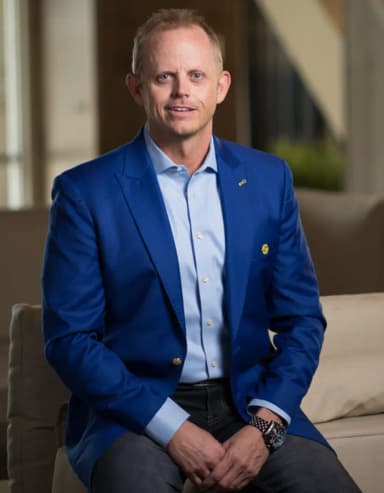
Welcome back to the daily mastermind George Wright III with your daily dose of inspiration, motivation, and education. And we're going to talk a little bit about money today. So we are excited to have a special guest on the podcast. His name is Jay Connor. Jay, how are you? George, I am fantastic. And let me tell you, I'm so excited to be here. I'll tell you why, because we're going to be talking about private money and private money. I'm so excited about it because it's had more of an impact on my real estate investing business than any other strategy that I have employed ever since 2003. I know. I love this because I have so many, you know, we have a lot of seat bills, owners, entrepreneurs as part of our listening audience, and they're so busy building their business and growing, but they don't spend enough time on their investing and strategies. And so just for people that don't know you, I mean, look, you are really the private money authority and you've raised tons of money. You do hundreds of deals, you know, but at the end of the day, folks, I want you to realize Jay's a national speaker, real estate coach. He's the author of where to get the money now. And we're going to be talking everything really around that, but also kind of getting to know him and what he's got going on. Cause I was pretty impressed, which is why we've got this going. So, Jay, why don't you do us a favor, just real quick, for those that people don't know you, just give us kind of your background. Give us a little bit of the journey that took you into this space, and then we can dig into the weeds a little bit. Sure. Thank you, George. Well, my wife, Carol Joy, and I, we live here in eastern North Carolina, a really, really small town, Moorhead City, Atlantic Beach. My total population target market to where I buy my single-family houses is only 40,000 people. Now, we're so blessed. Over the past 12 months, our average profit per deal is $86,000. I don't share that to brag. I share that to make a point. I'd much rather be a big fish in a small pond than, you know, competing with all those other real estate investors. Well, here's what happened, George. So from 2003 until January of 2009, all I needed to do to get funding for my real estate deals is go to the local bank or the local mortgage company, get on my hands and knees and say, please find my deal. And the banker would make me raise up my skirt to look at all my personal assets and for my credit score and appraisals. And I had to abide by their rules, right? So all that worked out okay. The first six years from 2003 to January, 2009, and then George, everything changed in January, 2009. I was sitting right here at this desk. I called up Steve, my banker. Steve had funded a ton of deals in those six years for me. And I told him about these two deals I had under contract that represented over $100,000 in profit. And I learned like that over the phone, George, that the bank had closed my line of credit. And I said, Steve, what in the world are you telling me you've closed my line of credit? He said, Jay, don't you know there's a global financial crisis going on right now? I said, no, but you just gave me a financial crisis. I don't have a way to fund these two deals. He said, sorry, we're not loaning money out. Well, I hung up the phone. I sat right here at my desk. George, I want to share with you and your audience a very powerful question that I asked myself right after that conversation, learning I'd been cut off from the bank. And you know, the power in asking the right questions. This question that I asked myself changed the total trajectory of my company and mine and Carol Joy's life, to tell you the truth. And this question will help fix any problem anybody's got going on. And by the way, these people running around saying, oh, every problem is an opportunity. I want to throw up. I didn't have an opportunity. I had a problem. Let's face the facts now. Did that problem become an opportunity? Yes. Here's the question I asked myself. I said, Jay, who do you know that can help fix your problem of losing all your funding for your real estate deals? I immediately, when I asked myself that question, I immediately thought of Jeff Blankenship, dear friend that lived in Greensboro, North Carolina. at the time. He was investing in single family houses. I called up Jeff and I told him what had just happened with me getting cut off from the bank. And Jeff said, well, Jay, welcome to the club. I said, what club is that? He said, the club of losing your line of credit. My bank cut me off last week. I said, well, Jeff, how are you going to fund your real estate deals? He said, well, yeah, have you ever heard of private money? I said, no. He said, have you ever heard of self-directed IRAs and how people can use their retirement funds and loan us money for our deals. And we pay them interest. It's either tax-free or tax-free. I said, Jeff, I don't have a clue what in the world you're talking about. What is private money? He said, well, I really don't know. But there's this gentleman down in Jacksonville, Florida by the name of Ron LeGrand, and he can teach us how to get private money. I said, well, what is it? He said, I don't know. But Ron LeGrand says we can get a lot of it really, really fast. So that's why I went to my very first real estate investing conference in February of 2009. I learned what private money was. And you know what, George, I came back home. I put the right mindset on. People ask me all the time, how do you get started in real estate? I said, you got to own the real estate between your ears. So I put my mindset on if I was not going to ask anybody for money, I wasn't going to chase, I wasn't going to beg, I wasn't going to sell. I wasn't going to persuade. What was I going to do? I put my opportunity together. And then you know what I did? I put on my teacher hat. I put on my teacher hat. My teacher hat says private money teacher. And I went about teaching initially people in my own network what private money is, what self-directed IRAs are. and less than 90 days, I was able to raise a little over $2 million in new funding that I didn't have. And you know what's interesting, George? I got 47 private lenders today that are funding our real estate deals. And you know what? Not one of them people ever heard of private money, private lending. They never heard of how they could use retirement funds to invest and be a passive real estate investor by being a private lender. And so what's the secret to all this? And look, my business tripled in 2009 for having all this funding available. The secret to all this is never having to ask for money. What do I do? I share with people, individual people, ordinary people like you and me, what private money is, how they can earn high-rich returns safely and securely. And here's a big part of the magic. Here's a writer-downer. Desperation has a smell to it. The worst time to be raising private money is when you get it. For sure. for a deal. So I teach the opportunity. They tell me how much money they got to work with. If they want to use retirement funds, I introduce them to my self-directed IRA company representative. They tell me how much they got to work with And then here the sauce I call them up when I got a deal to fund never asking for money I call them up with what I call the good news phone call And it in that phone call that they learn about a deal to where they can invest their money And you know what? If time permits on your show, we may not have time, but if time permits, I will share with you and your audience the exact script that I say to my private lender when I have a deal for them to fund without asking for money. And I get my deals funded 100% of the time. Yes, I love so many things about what you just said. The first is that most investors, most individuals are relying on everything outside their world, right? Their banker, their lender, whatever it is. And they don't really have a lot of control of their own economy. And it's probably because they don't know. They don't know any better. So what you did out of a problem is you turned that into a new course of action, which has really changed the trajectory of whatever you're doing. And what you did is you created certainty in a very uncertain market that I've also found over time carries through all types of markets and cycles, right? Because you've now been through, you've done this multiple market cycles, and yet you have some stability because you've taken control of what you're doing and how you're doing it. I also like your perspective. I tell our audience all the time, you know, success leaves clues. The way you look at things determines your success. It's not just about having the right contact, the right connection, the right deal. And the way you approach helping and not asking for money, but actually giving the opportunity, as well as not needing to go out and find these lenders. So for individuals that don't know this market and what works and how it works, I'd love for you to share us just a few more ideas, because I think people are thinking things like, well, how would I find lenders? Like, where would I do this? What would be the best way? And so I think it would be appropriate for us to kind of go down the rabbit hole just a bit and just kind of talk a little bit about what the strategy entails and maybe some nuggets of wisdom you can share along those lines. Absolutely. Well, one of the most valuable things that I can share about this world, this world of private money and not asking for money, is again an example of how I'm serving people, how you will serve people when you start raising capital this way. I think a good place to start or go next is, for example, that script that I just mentioned. So, George, let's do just a little bit of role play here. You'll get your words exactly right. All you got to do is shake your head and you got it down. Let's do it. Yeah, I love it. Let's do a little hypothetical assuming here. Okay. Now, let's first assume, for those of you that are listening to this show, let's assume that George and I have been friends for some time. And let's let's say let's assume we go to church together. Right. And we see each other every week. And so we've already got the likability, the trust factors in place, have a relationship there. A second thing, let's assume is let's assume I have shared this opportunity of becoming a private lender with George. I've shared with him what the interest rate is that I pay, which, by the way, I've been paying 8% no points ever since February 2009. Same thing through all these markets. So, George, let's assume, likes the interest rate. He likes the length of the note. He knows I'm not going to borrow more than 75% of the after-repaired value. I didn't say 75% of purchase price. Yep. 75% of after that. George knows I'm going to bring home a big check every time I purchase a property. Who wants to get paid to buy a property? So let's assume George loves the program. And let's also assume that George had $150,000. I'm using small numbers to make a point. Let's say George had $150,000 in a 401k with a previous employer, and it was in the stock market. And let's say he doesn't like the volatility of how that works. And George is going to want just a reliable straight return. He's happy with 8% because he knows he can only get a half a percent in a same amount, maybe 3% in a CD. And finally, let's assume that I have introduced George to the self-directed IRA company that I recommend. And George has moved that $150,000 over to the self-directed IRA company at my recommendation. And now George is sitting at home waiting for me to give him a phone call and put his money to work. So a couple of weeks goes by. I call up George. Here's the exact script. It's exactly what I would say to George in this scenario. George answers the phone. We have a little chit chat. And then here is the good news phone call script. George, I've got great news for you. I can now put your money to work. I've got a house under contract in Newport with an after-repaired value of $200,000. Now, the funding required for this deal is $150,000, which matches up to what you have available. Closing is going to be next Friday, so you'll need to have your funds wired from your retirement account to my real estate attorney's trust account by next Thursday, I'm going to have my real estate attorney email you the wiring instructions. That's the end of the conversation. The most stupid thing I could have done is ask George, do you want to fund the deal? Right. Or George wants to fund the deal. And here are three big reasons why George is dying to fund my deal. Well, and I just got a comment, Jim, you laid it up. Like you literally laid it out. Like there's nothing to really reject to. So go ahead and finish your thought. But it's like, what is there to even say other than, okay, when and where? Exactly. Well, here's the three big reasons George wants to fund this deal. Number one, he trusted me to move his money over to the self-directed IRA company, right? He wouldn't have done that unless he liked the program. He trusted my advice. So he moved his money over. The second reason George is ecstatic to fund my deal is because George knows I'm not going to bring a deal for him to fund unless it matches the criteria of the program that I already taught him. Did you hear the numbers? I told him it had an after repair value of $200,000, and I told him the funding requires $150,000. There's the 75% of the after repair value. And the third reason George is dying to fund my deal is because he's not making any money until he puts that money to work. So I am ethically obligated to put George's money to work for him. Right. No, I love that. And, you know, the obvious question here that comes up, and I'm sure you get this a lot, because I think most people could be listening to this, Jay, and saying, man, that just sounds like a no-brainer. So where's the heavy lift? Well obviously you know you got to find your money lending partners and you got to learn about private money So you know give me just a couple of thoughts there because I think what a lot of people don understand and listen for those of you listening our goal here is not to give you the full education on private money I think that something we'll give you some links in the show notes and some ways you can do that with the book. But, but one of the questions that comes up is if there's a lot of people that don't understand the world, where do you find these people? And I think that the logical answer is like everybody out there with a retirement plan so that it doesn't get in anything. I would love to have opportunities to do this, but where do you find most of your private money lenders? There's three categories of where you find private lenders, and here's the three categories or places. The first category is what I call your own warm market, your own connections, people that's in your cell phone, people you go to church with, people you play golf with. who do you see on a regular basis every week or every month? Who are you talking to? So your own connections, right? Even your social media. So that's number one. Your second category is what I call your expanded warm market. Now, what do I mean by that? If you're wanting to scale your business, if you're like ordinary people, you're going to run out of your own connections sooner or later, depending on how much private money that you want to raise. So I teach real estate investors how to grow your network and blow up your network like overnight. I'll give you one great nugget right now. I've gotten millions of dollars from being active in our local BNI, which stands for Business Networking International. Right. I love BNI. And you know what? I volunteered to be the education coordinator. So I got the spotlight for five minutes every week in that hour where everybody else only got 30 seconds, right? B&I, Ivan Meisner founded that organization. It's fantastic. I've raised millions of dollars just from here in our little old local Moorhead City, North Carolina with 20 B&I members. The third category is what I call existing private lenders. Well, where do you find existing private lenders? These are individuals, ordinary people, just like you and me. And by the way, when I'm talking private money, I'm not talking hard money. I'm not talking any kind of brokerages or any kind of institutions. I'm talking about doing business with individuals, just like you and me, with no middle person or broker involved. So existing private lenders, where do you find these people? Well, if you're like me and you start out, don't do it the way I started out. I hired my real estate attorney to look for public records in our county of deeds of trust, of individuals' names. Well, that's slow going right there. I actually, a couple of years after I started that, I started my software, which is called the Private Lender Data Feed. We update that for my community members every month. There are over 12,000 private lender loans closed in the nation every month. We get all their contact information. But if you're not a member of my community, where can you go to find existing private lenders? Well, let me give you a free resource. You can never beat free if it's good quality. And so self-directed IRA companies. I mentioned that a few minutes ago. Well, a self-directed IRA company is also called a third-party custodian. It's approved by the IRS, and it allows people that have current retirement funds to move their funds over to the self-directed IRA company with no tax effect, no penalty whatsoever. And then they can truly self-direct and invest those funds. Well, one way that they can invest those funds is to be a private lender and be totally passive. So, did you know that over 70% of account holders in self-directed IRA companies want to be a private lender? Sure, they do. They don't want to go negotiate deals and find deals and oversee deals. They just want to be totally passive, invest their money as a private lender in real estate with real estate investors and operators, and just sit back and watch their account grow. Well, guess what? These self-directed IRA companies have networking events, some of them monthly and virtual, and you don't have to be an account owner to attend. Love it. Self-directed IRA networking events. There's private lenders walking around all over the place. But don't be mistaken. I'm not putting, you're not putting your teacher hat on at those networking events. Not at those, right. Yeah. You're not offering your opportunity of 8% no points. you're not having a negotiation conversation with people that already know this game. And unfortunately, a lot of them are spoiled, wanting 12% and more. I'm not doing business with them people. I'd much rather raise my own capital through my connections, through networking, through growing my network and offering this opportunity because they love it. They never heard of it, and it puts you in control to where you are your own underwriter of your deals. You set the interest rate. You set the terms. You set the frequency of payments. You set the maximum loan to after-repaired value. It puts you in control. Hey, there's no applications. You are already approved. Right. No credit score. There's no limit to the number of private lenders or private money you can have. You're not regulated by the SEC when you're doing single family houses because we're not borrowing unsecured debt. It's all asset-backed debt collateralizing those promissory notes with the real estate. So I got 20 reasons I love private money. No, and those are great places to go to. So let me ask you this because we're getting kind of to the end of our time. One of the things that I was thinking when I first contacted you is, what made you decide you wanted to pivot a bit into writing a book and teaching and training and coaching? Because obviously that's a whole lift in and of itself. You've got a very successful real estate and private money lending business. What made you decide to write the book, where to get the money now, and start building a community, talking and teaching and educating people? What was your motivation behind that? That's a great question. Well, I remember back in January of 2011, after I started raising private money two years previously, my business, my investing business was relatively on automatic. I got a great team in place. I've had the same acquisition as talking to sellers for 20 years. Her name is Kim. I got the same general contractor. I got the same project manager for 15 years. And I was totally bored, George. And I called up my friend and mentor, Ron Legrand, and I called up Ron and I said, Ron, what is next? I'm bored. I said my company running netting over seven figures a year in our small market And I bored to tears I said all I doing is making offers and making sure the marketing machine is turned on He said well Jay what are you really good at? I said, well, I'm pretty good at raising a lot of money pretty quickly. He said, well, you just need to teach other real estate investors how to raise private money the way you do. So Ron Legrand actually launched my coaching and education business. He scared me to death. That phone call was in January of 2011. I had my first live event in Atlanta, Georgia in 60 days later in March. And in January, I had nothing written. And so I had to prepare for that live event and I created my first home study course. And then I actually did not actually write my book, Where to Get the Money Now, subtitled how and where to get money for your real estate deals without relying on hard money lenders or institutional loans. I didn't write this book until very, very recently. And I discovered, George, I just have a passion. I absolutely love coaching, teaching, educating other real estate investors and giving back what I have learned and still do in the real world. And there's no way to describe how it makes me feel. I'm thinking about Eric and Erica Carmadel who live in Poplarville, Mississippi. Yeah. Their nearest BNI is an hour away. And, um, but I think about them. They started working with me and I started coaching them. And within seven months, Eric had retired quote unquote, the railroad. He was not even 40 years old. And I watched their lives transform totally to where now Eric, she's homeschooling. homeschooling. I think about Crystal Baker. When we started working together, she was an occupational therapist making multiple six figures a year, but she was totally miserable working 80 hours a week. We started working together and I showed her the way I do real estate investing and private money. In less than a year, she quit that multiple six-figure income, went full-time real estate investing and now she homeschooled and those stories just are so meaningful to me to where I'm able to give back. Yeah, it's, it's, uh, it's something I found with a lot of individuals is that at the end of the day, you know, you, you can, you can make money, you can business, you can invest, but when you can actually give back and you can really see that transfer to other individuals, there's a, there's a huge sense of accomplishment with that, which is why I think, you continue to do it. It's why I've got the Daily Mastermind. I don't sell any products on the Mastermind, but I love doing it just to help and kind of help drive people. And one of the reasons I tell our audience, look, if you're looking to get into anything, especially private money, why take that trip and go the long way? Why not expedite your journey by working with individuals that have been there, done that, save you the time, energy, and money in learning the lessons yourself. So that is really, really a key point. Let's, let's do this. I think, um, for those individuals that have, this has kind of piqued their interest. It's got them really starting to think, Hey, I want to, I got to spend some more time building my wealth. I'm trying to create a life that is going to get me out of the office and get me off, uh, you know, just doing things myself. What's the best way for them to connect with you? What's the best way for us to give them to connect as we kind of wrap up here? What, what do you recommend? Yeah, the best way to connect with EJ Conner, by the way, I'm an ER, not an OR, is let me give you my book. And the book, as I said, is where to get the money. Now, this is not an ebook. This is an actual book. The postal service is still in business. I'll autograph it. I'll three-day express it to you. You can pick up the book at www.jconner.com forward slash book. Again, that's jconner.com forward slash book, and I'll rush it right out to you. In fact, I'm going to include two tickets valued at $3,000 to my private money conference, and you can learn all about how that event is about as well. Yeah. And just to clarify for everybody listening to the show, he'll actually give you that book for free. You just cover the shipping and it's covered. So if you're interested in getting involved with that, you know, and look, if you just want to even connect and follow Jay's journey, see what he's got going on, I'll put links to his social media in there as well. and um you know i guess the thing i would say for those of you that are kind of thinking because one of the reasons i do episodes on investing and money is you know if you're if you're trying to create the life that you want to live you know your best life first of all i i know and i always tell our audience it's never too late to start creating the life that you were meant to live the one you you want to live and but you've got to take action you've really got to move forward you've got to do things and that involves your mind body money business and your lifestyle so you know this is why we have the topic here. And Jay, before we take off, is there any last, you know, maybe piece of advice, or maybe it's something that people are wondering if, you know, the, you know, the logical thing people say, like, what's the timing of the market and is a good time or a bad time and politics and things. Any last, you know, piece of advice you would give somebody just, you know, from your knowledge bank. Don't make the mistake I made that cost me hundreds of thousands of dollars. The first six years that I was in this business as a real estate investor, I was out here on my own on an Island. And it was during those six years that I made all kinds of very, very expensive mistakes. What's my advice? Find somebody you like and you trust to work with, get a mentor to work with you, particularly if you're new at capital raising or you're new at real estate investing, don't go on this journey by yourself. I love that. That's great advice. And that's one of the things, kind of a staple of our podcast here is, you know, after working with 30, you know, over 30 years, um, you know, hundreds of thought experts, celebrities, you know, um, you know, really successful people. That's one thing I've learned is why, why try to do it on your own and why not benefit from the decades of experience that people already have to expedite your journey. It's never been easier to actually expedite your path because of the knowledge and the stuff that's out there right now. So Jay, I certainly appreciate you being here with us, man. I know your time's hard. It's been like lining up the planets to try to get the two of us on a call. So it's been really good. I appreciate you being here for us. George, thank you so much for having me come along. God bless you. Yeah. Well, listen, guys, if you're listening to this for the first time, make sure you hit that subscribe button so you're not missing the episodes. But do me a favor and remind yourself of a couple things. Number one, it's never too late to start creating the life you're meant to live. And number two, if you got some value from the show, go share the episode. If you share it, it'll mean the world to me. I think it'll make the difference for other people as well and look forward to talking with you tomorrow. Have a great day. you