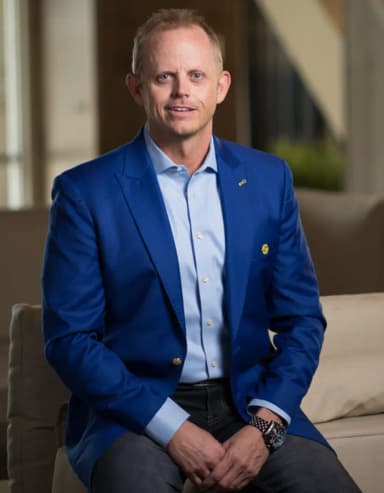
Welcome back to The Daily Mastermind, George Wright III with your daily dose of inspiration, motivation, and education. I'm joined today by an amazing leadership host, Topic CEO. I'm going to give him an introduction in a minute here, but Dr. Eric Hallsapple, how are you doing today? I'm doing great, George. Thanks for having me on. Oh man, it's a pleasure. We have some very similar backgrounds. I'm super excited. So listen, guys, buckle up. I want to give you a quick little background. We've got here a very diverse guest, one that I really feel will bring some value to you today. He's a PhD in economics. He's a real estate background and CEO in real estate and development for over 40 years. But he's also rounded it off, I feel, with this idea that he's practiced yoga and meditation for over 30 years. He's had the Entrepreneur of the Year Award a couple of times, but he's the author of the book, Profit with Presence and the founder of the Living in the Gap. We're going to talk a little bit more about this Living in the Gap, but his company on teaching CEOs and professionals different ways to operate on mindfulness and still grow. So with that introduction, I would love it if you'd give us just a little bit of your background and this bridge that came from entrepreneurship or business into mindfulness. Give us a little bit of the backstory. I'd be happy to. I was raised in rural Maine and I went to the University of Maine and then out to Colorado State University, got an MBA. Came out, always worked, but got my first job in real estate after that MBA. And I was immediately successful in real estate. I was within a couple of years a general manager and then president shortly thereafter of a North American division of an Australian company. and started in Denver and then got moved to Los Angeles and traveled. Denver, Princeton, New Jersey ran offices, Western Canada reported to the UK and Australia. I had all the outward signs of success. I had the six-figure salary, the Mercedes, the apartment. I had all those things, but I was not happy. I was overweight. I was single. and I got to my 30th birthday, I remember. And a little bit after that, I got a transfer from them into Boston to help with a company there. And I just, I couldn't tie, I couldn't get my top button done on my shirt for my tie, my belt, my top button, my pants, but I wasn't giving in. I finally got an apartment there on a scale. I remember getting on that thing and going, God, you better make some changes or you're not going to be around very long. I had one of those aha moments. So I did make some changes. I left that job. I lost a bunch of weight. I started running again, and I found yoga. It was my first entry into mindfulness. When I was an athlete, always growing up, I hadn't done anything in four or five years. I finally got back into sports. And my older brother, by the way, I applied for a PhD program in economics. I said, I'm going to find more purpose in my life. I'm good at business. This is good, but I'm just not, it's not doing it. And I also met my wife. and my older brother at the time was estranged from the family. He was a poet. My dad was a football coach. And for 10 years or so, he didn't come around the family very much. They were like oil and water. Then I watched my older brother take up meditation and come back to the family. And then he got closer to my dad. My dad didn't change. He was in his seventies and he opened up, my dad opened up and I was like, I got my family back. And he said, Hey, you want to try it? I said, sure, I'll try it. So I tried meditation and I had immediate results with it. Just had less stress, more focus. I'd improved my relationships and improved my sports and improved my just was happier. But for a lot of years, I didn't come out. I just was a closet meditator. I just did it on my own. I did a little yoga routine and meditation. And for 10, 12, 15 years, I just did on my own. And then gradually I got through my PhD program and got back into developing with my own company, with teaching on the side and raising a young family and those kinds of things. And then generally one at a time, people that I worked with were coming up to me and going, what are you doing? I have this problem. What do you do? What do you know? And they noticed some changes in me and I'd become someone that was easier to talk to than I had been historically. Cause I run 150 miles an hour. I'm a hard charging guy. And anyway, we started a seed group at our company where we'd just read a book and talk about centering. We didn't get weird on meditation too much. We'd talk about centering and read a book and do things. And before I knew it, the room was full. Management committee got together and changed the vision statement to mindfully creating community. And everybody just started getting involved in nonprofits and giving back and doing a little putting their families first and changing things. And it just made a huge difference, It's the same difference I noticed in my life. I saw others do. And then later I launched a living in the gap nonprofit where we train others to do that. And it's not what I've really found. I love capitalism, but I've really found what's for capitalism to work. People have to give back when they can. Yeah, I totally agree with that. It's funny. I feel like our stories have been very similar and I'm learning more and more than when I interact with people, they have the similar stories as well of chasing success, getting that success realizing it not the end all be all it not making you happy I got a question for you Please And it one that maybe you have an answer to maybe you have multiple answers to But you mentioned an aha moment Do you think there was several years, a period of time? What do you think it was that caused this need or shift? Was it an aha moment or was it that, because I find this similar path of people, when they accomplished the success they had been chasing and they get all those, like you said, outward appearances or things that people deem as successful, once they get them and they realize it's not fulfilling, is that what sort of creates this need for more? Or is it an aha moment of, I'm overweight, I had a situation happen? What do you think it is? Because I had a similar type of experience. I think it was both for me. But I think generally, I call it in my book, a cultural lie. We've been raised to believe that if we do all the right things, really study hard, get into the right schools, get the degree, get the right job, meet the ideal spouse, get married, have the family, have the two houses, the cars and get these ideal vacations that someday we get to be happy. And what I found for myself and many other successful people that I've been friends with over the years is we just keep changing the goalposts. We just keep saying, oh, it's not this house, it's that house. It's the second car or I want to travel. So I fly. I would like to fly first and then I fly first. No, I'd like to fly private. And then it's, no, I'd like to take a trip to the moon. It's just, we keep changing the goalposts and it's that hot dog out on the string, happiness. Harvard's done a lot of work on this and they found it's like, I can't ever pronounce this guy's Copernicus. Always said it's the sun revolving around the earth. It's no, the earth revolves around the sun. Success revolves around happiness. Happy people are more successful. We all know people that are monetarily successful and not happy. And we also know people that have very little and are happy. Yeah. And, but I think you can have it all. I think you can have those material things, but you have to get that happiness doesn't come from them. Happiness doesn't come from just that pot of gold. You got to have the happiness to enjoy the pot of gold. Yeah. I'm a big, I'm a big advocate of the fact that you can't just achieve happiness. You got to be happily achieving. And I think that's this whole shift to mindfulness, which is now taking the success you have and bridged it into a mission, a purpose, a thing you're doing with the book, with your company, with living in the gap. Help me understand how you tie for people, because sometimes people are not aware of the mindfulness need until it's past the point of, boy, they wish they had. How do you bring mindfulness into leadership, into business? How does mindfulness pertain to business and how do you try to tie the two together for people? Efficiency and focus. First of all, on a personal level, it's stress reduction. It makes you more grateful, makes you happier and whatnot. But to make the business case for it, you have to make the case that it also improves business. And in my case, it has. I'm sure there's instances where people say, I don't want to do this anymore. But most people feel like, oh, someday when I get to be successful, I'll go out and start being mindful. My belief is that if I'm focused in a meeting, it means my phone and my app's not open. I'm actually talking to the person when I'm at the meeting. And I find I'm more focused. I have more time to do that. And we train people to say, hey, okay, when you're at work, focus on that. And then can you leave that, shut the laptop, shut your phone down when you go home and focus on your family? Because that's why we're working. That's why we work so hard. It's those relationships, those personal relationships is where happiness comes from. That's been documented. Can we turn that off? And I just find if I can focus, I can move the world in a few hours a day. If I can, if I'm distracted and divided and all these things and I can't, then I can spend 12 hours a day and get very little done. Just feel like I'm pulled here and there. Yeah. There's so many options for our attention. We have to decide we're going to reclaim our attention to focus on what we choose. I totally agree. I totally agree. And I agree with you in this concept you talked about with the cultural lie. And I think one of the things that I bump up against with entrepreneurs, CEOs, business owners all the time is this belief they have that the hustle is what has gotten me to where I am. So as soon as you have to shift to mindfulness or maybe you view this as taking your foot off the gas, and yet you're making these comments about focus and efficiency and being more mindful gives you, gets you more done, maybe more time. How do you explain that to people? Because they, I know a lot of them feel like, man, that's going to take my edge. It's going to take my edge and my grind and hustle overall. For most producers, you can't stop producing if you want to. People are afraid they'll stop. They'll lose that edge. There was a guy named George Mumford, or there still is a guy named George Mumford. He worked with Phil Jackson in the Bulls days and with the Lakers. And he was coaching Kobe Bryant. And he said, I tell you what, Kobe, go out there tonight and try not to score. Just go out there and try not to score in the basketball game. And Kobe lit it up with 60 points. By passing more and looking more and not trying to be the thing, he's just found the opportunities and put it in the bucket. It's just for real producers, it's an instinct. It's in your DNA. It's not something you're going to stop. but what the purpose of it if you don enjoy it and if you not making the difference that you can make what not profit is not a purpose It the result of a purpose life that is meeting a need that other people have and whatnot and profit results from it. But the profit itself is not a purpose. So it's essential. I'm a capitalist. I love capitalism. It's essential that we make a profit, but it's the result of something. It's not the end all and be all. I love what you said. I want to make a note of this and really point out to our listeners, the idea that if you've been working most of your life, developing habits for production, and you're a producer and you're a performer, whatever it is, you've more than likely developed those habits. So you don't necessarily need to continue to focus on that. In other words, you can take that like natural ability. Now that you've developed those, those habits of success and now focus on something with more purpose and presence. Trust yourself. Yeah, trust yourself. Yeah, I love that. Trust yourself. You'll keep producing. And if I had to make the choice to produce a little less and to be happy and more satisfied and have better relationships, I'd choose that. But in my experience, you're getting more done with less time and you're making a bigger difference. I love it. I love it. So talk to me a little bit about the book. And I love the title, Profit with Presence and these ideas, the 12 pillars of leadership. I don't know if that's something that you maybe want to take a minute and kind of walk us through some of those. So I think that's a great topic to hit. Well, so the idea is I've been in the mindfulness community for a while. And I find not all, but a lot of the mindfulness community think money's dirty. It's like taint you. And then on the business community, mindfulness is woo. And I just said I've been able to bridge that gap to find no mindfulness is focused on one side. And we live in a capitalist society. What's the idea of saying you live in a capitalist society, but the whole basis of society makes you dirty? I buck that. I say, no, you have to be able to make a living. We're householders. We're not renunciants that go live on a hill in India. I run a business. I have a family. I'm a householder. I have responsibilities. So it's okay for me to make money, but what do I do with it? I make my own life better. I make the life of my family better and the community better. So it's profit with presence. How can I, that I can do both? the 12 pillars of mindful leadership the first three pillars are what i'd call the foundational pillars which are be present and practice mindfulness everything you do of consequence whether it's athletics or it's music or business takes practice and so does mindfulness so come up with some practices that that allow you to do that and be more present in your life pillar two is identify your purpose in life which isn't isn't profit it's what is it one One of the purposes, an inner purpose is to be awake, to be present, to know that we're in a body and we're in life. And here we are. It's a blessing over a period of time. And here we are. And then the third pillar is create clarity, vision, intention, commitment, and habits. And that's a mouthful. But clarity, mindfulness, and purpose bring you clarity. They found, and the studies are in the book, that visioning can be just as effective as actually doing something. Tension is usually powerful. And commitment and habits are, if we come up with commitments and our habits are different than that, it's very hard to live up to those commitments. So we have to align our commitments and habits. We have to, over time, like you mentioned, commitments of working or habits of working and those kinds of things. Sure. There's some habits we may need to get rid of to pick up good habits that align with our commitments. And particularly when they're countercultural. Most of the mindfulness is still countercultural, but I want it so that my commitments when I take that vacation or I get sick or whatever, and I get off my habits a little bit, my commitment gets me back on the horse. When my habits on those days when I just don't have it or whatnot, my habits, we're 95% habitual creatures. We just do the next thing. I want my habits to lock into what my vision is and what my goals are so that even when I'm not thinking about it, I'm working on who I want to be. We are our habits in the end where our habits make up who we are. Absolutely. And the other pillars are more or less different mindset things of gratitude, service, things like that, that are very helpful to guide you along the way. But the first three pillars are the foundation. Yeah. I love the foundational aspect because I think a lot of times people, especially as they get older in their life or they're established in their career, they feel like they have heard that before, they've seen it before, they've set up foundational things. But a lot of times, like you said, they don't line up. They don't, some of the things in that until you become aware and conscious of where your habits, where your commitments are, what you're doing and work through that process, you sometimes don't see the disconnect. You definitely don't find the areas that are keeping you from your greatness overall. So let me ask you a question. Where do you professionals, Let's say you're a CEO, a business owner, you're limited on time. Where do you usually recommend someone starts with mindfulness? Is it a practice? Is it a course? Where do you usually want someone to start so that they can get their teeth into mindfulness on a day-to-day? The one thing is that it takes less to get started than most people think. It's consistency more than their length of time. It can you do like with meditation if it that I say start with a couple of minutes two minutes of meditation for a bit until that a habit and build up because the mind is so busy when we start that it can be counterproductive to jump in and say I going to do 20 minutes a half hour whatever of this And also it ends up saying whatever is going to keep them consistent, just start. Yeah. And I would say the lowest hanging fruit is gratitude. If you want to start with just one thing, but just the impact is immediate. The science is irrefutable on both, but gratitude is a really great way to get started. and having the intention, just having a real intention and commitment to say, hey, I'm going to be more mindful and get. One of the things when you get started too is you just take a mindful walk, 10 minutes at lunch, leave your phone. We take a mindful walk and we got our phone jabbing. That's not going to work. We can be unplugged for 10 minutes or half an hour or whatever it is and take a little walk. We're so divorced from nature anymore, most of us. So if you can get out of nature, we just take a little walk around the office building too, look up at the trees and take a minute. so do it start with little doses of things be as consistent as you can maybe pick up a little book on it whatever just get started with it and be as consistent as you can to get started and as what happens is over time is number one you start becoming more efficient that you can do more you you want to do more yeah you you if you don't think so track your time for two weeks and just look on there one and all the bits of time where do you waste time yeah the holes of social media or wherever, or Netflix, or just look at the different times that we waste your day. Could we pick up 10 or 15 minutes to work on some practices? Yes. You made a really good point. And that is that most of these topics that we talk about are topics, but they are practices, even gratitude. Gratitude is a practice of- I do it every morning. Of identifying gratitude moments and things like this. So I really like that. One of my last questions I had for you is this name and your company living in the gap. I don't want to make any assumptions here. I'm assuming that it's partly this between profit and presence, but help me understand the name living in the gap and what it means to you. There's a lot of gaps, but the primary one is creating a little space between thought and who you really are, a little space in between thoughts. There's a gap there. And I've just found that peace and joy and happiness live in those gaps. Stress and anxiety live in what we think about things. we think of it's not what happens to us which we have little most chances most times we have very little control over it's how we react to them how we're being it's a then and then we start noticing it's what we're thinking about something and those thoughts we have some 60 000 thoughts a day that most of them are repetitive and you know not that helpful but just start noticing that's not really this is who i choose to be i'm making a choice of who to be and then noticing those gaps most of us have something, a hobby, a painting or skiing or fly fishing or something where we have, we create those gaps and we're just present. It's finding those times. And really what we try to do is say, can I have those at work? Can I have those times when I'm in the zone at work? Yeah. Yeah. I also think, and this is a really big point. It's funny because I just was thinking about this the other day is what's your intention with the gaps? See, I think most people, their intention is to fill the gaps. If there's gaps, they fill them. You may as well, if you're not doing something? I do. I do. I do. Scroll through your emails, scroll through TV, scroll through Netflix. But if your intention is to create more gaps, that's where the fulfillment and happiness comes. So that's a good question for audiences. What's your intention with the gaps? Is it to create more gaps or is it to fill in the gaps? I would argue that your peace and fulfillment and happiness would come from creating more gaps. This is awesome. This has been a great discussion. And I'll tell you, I think we might even want to fulfill a little bit more depth of this with our academy members, but at the end of the day, where's the best place for people to connect with you to learn more about what you do and get a little bit more information on mindfulness and leadership? Yeah, and check out our website, livinginthegap.org. There's free resources on there, places how to get started with mindfulness. Any programs that we're running are in there. And the other would be our programs are outlined in the book, Profit with Presence. We take you through a process there of awakening and how to be more purposeful. I love it. how to do it at work, not just at home. But it's a thing you can actually, we spend a lot more time at work than we do anywhere else. Most of us professionals. We do, we do. And it would be better to create a little bit more of a bridge for us as well. Listen, everybody, I'm going to put the, in our show notes, so just go there as well. I'll put a link to the site and the book. Definitely go grab a copy of the book. I highly recommend this topic in general. If you're a high performer, CEO, business owner, investor, whatever it is, find those opportunities to create more gaps. It'll create more, ironically, it'll create more fulfillment, but it will also help you to focus, gain clarity and get more productivity. I definitely believe that it's never too late to start practicing mindfulness. And I think it'll go a long way for you. So once again, appreciate you so much for being with us on the podcast. If there's anything that we can do for you, make sure you let us know, but thanks again. I really appreciate you being here, man. This has been a great discussion. Thanks for having me. All right, everybody, listen, share the show, hit me up on the Daily Mastermind on Instagram, Facebook. Let me know what you think of this. Let me know what we can do to bring some more mindfulness into your profession, your life, your business, your relationships, and I look forward to talking with you more. Once again, this is George Wright III, and this has been the Daily Mastermind.