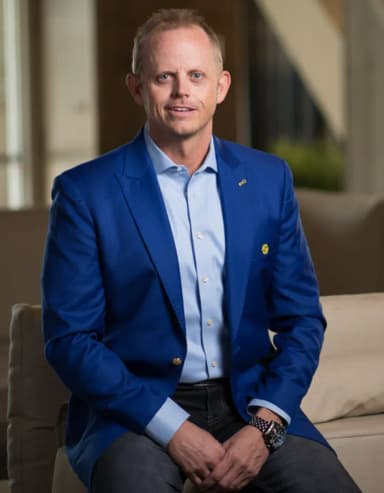
Welcome back to The Daily Mastermind, George Wright III with your daily dose of inspiration, motivation, and education. And I got a treat for you today. We're really excited about the guest that we have, Mike Bennett, who's joining us on the podcast. How are you doing, Mike? I'm doing really well and happy to be here. Yeah, this is really good. I know we've been talking a bunch over the last little while, and I know you're heading on a trip out to Japan, but before we get really going, I want to kind of do a quick introduction. So for those of you that are joining us, first of all, if you haven't, make sure you like and subscribe to the podcast. You don't want to miss any of these amazing interviews that we're doing, especially as we're launching the Authority Formula podcast with our JV with Valiant CEO Magazine, who Mike will also be a featured guest with. But let me give you his his background real quick. So Mike Bennett, besides being a speaker, consultant, dentist, expert, and specialist in the area we're going to talk about with sleep dentistry, you know, he's a DDS, PhD, board-certified dentist and educator, and he's passionate about more than just teeth. It's, you know, helping people to breathe, sleep, heal through their airway-focused care. And with a PhD in healthcare profession education, he really empowers dentists both dentists and clients, and the general public to understand the critical link between oral health and whole body wellness, which is really kind of unique. I really like that extra full body because everybody knows what the podcast here, I'm, you know, mind, body, money, business, and lifestyle. But you have a mission to transform the lives of both dentists and individuals. Is that right? Oh, that's so true. Yes, I do. I do. Well, I want you to do me a favor and just kind of give everyone that's listening your backstory. Help us understand because, you know, being a dentist is one thing, but moving into sleep dentistry and it's kind of been a journey for you. So give us a little bit of your background and what bridged you over into this whole specialty. Okay. Yeah, that's a great question. I pondered a lot about that. And I think it has a lot to do with my early days as a teenage 19-year-old in New Zealand for a couple of years. I served on a church service mission. And while I was there, I just noticed a lot of people had oral issues. We speak to thousands of people over that period of time. And I don't know, my eye was drawn a little bit to the mouth. Before that experience, I had shadowed a dentist and kind of got my feet wet a little bit. I should say my hands wet. Your hands wet. Not really. Dental humor. You know, it's better when you're under the influence of nitrous. Hey, we should be doing this podcast with a little N.O. That's a good idea. Okay, next time. So next time. But anyway, I came away from that experience feeling like I could improve the health of the world, at least in my little locality, by helping people with their oral health. So I came back and I really got into doing the dental track and so jumped right into that. But along the way, I had these feelings of, I just want the whole body. I want to understand the whole body. I want to understand how it heals itself. And I was really torn between dental school and medical school. And even all the way through dental school to my third year, I wasn't completely sold on being a dentist. And it was finally one day in my junior year, and I had two kids. And I thought, I just need to graduate. I need to be a dentist and support my family. But my heart was still, can I go to medical school and do all those things? Uh, long story short, um, I went into dentistry, didn't realize what I didn't know and found out that as dentists, we are the experts in the oral area, the oral cavity, the mouth, and the mouth happens to be positioned right under the brain, under the nasal structures and the throat airway structures. And anything I do in the mouth can influence the way a person breathes. And what's more important to the human body than air, than oxygen, right? You only live three minutes without it, or you get brain damage and you keep living. It's not a good thing. And, and so I realized, wow, if I could somehow enhance the function of the human upper airway, then the body itself could be its own physician. It could work on itself. It could repair itself, heal itself. because while we sleep, our bodies are healing. At least they should be there. And the body is amazingly resilient. If we get poor sleep, we can do that year after year, decade after decade, and still somehow manage and not have a lot of chronic problems. But the reality is it does catch up to us eventually, poor sleep. And so I was excited to realize that at some point. One of the things that jumped out at me early on also was when I would do dental work in a person's mouth and they would come back five or six years later and say, my crown's broken. That crown you put in, it's broken now. How'd that happen? Did you not do a good enough job or was your lab not good enough? And of course, the questions I was having was those exactly. And I realized, well, wait a minute, if I'm doing a good job, which I felt like I did, and my labs were just top notch as well, what's going on in the body to create forces to break a really hard substance like zirconium or porcelain. Yeah. And it turns out that if a person doesn't breathe, they tend to exert heavy forces, they measured them up to 300 or so pounds per square inch in the mouth. So it's like a human man, my size I'm doing, wow. Standing on a one inch section of your mouth and expecting that crown to not break. So wait, so, so not only, first of all, by the way, I had never thought about the idea that dental was more than just, I got to get my teeth maintained. Right. So I think that's a huge, huge, huge point. And I know that you had a dental practice for a long period of time, but it sounds like this is kind of one of those pivot points. Like a lot of people have where they realize there's actually more going on. So I also didn't realize that that affected your dental as well. So you were seeing people having issues coming back. And is that kind of when things kind of transitioned or you had help us understand kind of what, because I know that You had a practice, went into a specialty and kind of came back. Is this what shifted you into the area of sleep dentistry? It is. It is. Over those first 12 years of practice, I noticed that all of these oral signs like worn down teeth, broken teeth, lots of gum recession, lots of periodontal disease, bone loss, and a number of things, sensitive teeth to hot, cold sweets, all of those things. teeth in general, just breaking down was linked to chronic poor sleep. And the literature bore out that, that message over and over again. And I thought, well, wait a minute, if I just treat symptoms my whole career, what tooth at a time, how am I going to really help these people heal permanently and, and avoid these problems of the future? So add that led from one thing to another, traveling the country and outside the country, looking for experts who knew what they're talking about. And we met some wonderful people over the years and came back and decided it's really hard to implement sleep treatment, screening, management. I didn't really have a mentor to help me do. I had some mentors, but I found that it was mostly on my shoulders. It was tough on the staff. So I thought I better specialize. So after 12 years, I specialized 10 years, this is the 22nd year of my practice, just doing full-time sleep disorders, chronic pain, headaches, jaw disorders, popping, clicking, and TMJ-type things, and having an airway focus through all of that. So that's kind of how it morphed. Wow. So that's interesting because, and I want to point this out, and it was in a featured article you did in Valiant CEO Magazine that you kind of made this comment about dentistry isn't just about teeth, it's about total health, which I think is something everyone listening needs to realize that sometimes the problems you have are the results of things they not the cause of things And so it about more than just teeth when it comes to health but also this specific area of sleep. And I want to point out, just because I always like to do this when we have our listeners listening, I know we're going to have both professionals and patients or families listening that there's a principle here I really think you did well, which is, you know, you were very successful in your practice. you really didn't need to go out and learn more and seek out more information and get more, you know, specialty stuff, but you did. And I think that's kind of what separates you from, you know, a lot of just dentists. It's like, you can have accountants and dentists, but they just do their job or they, they go above and beyond. So you zeroed down into this from seeing it all happening, but you were kind of an early pioneer of this whole area. So was it, Was it weird for you to be like, this is not a thing yet? The fact that sleep dentistry and that type of thing, because you were very early on in this whole field, correct? Well, I was early on, but it had actually been around for a number of years. In the 60s, they were talking about it. It just didn't reach real mainstream until I felt like the 90s. I graduated in 99. And so early 2000, it really started to come into something the dentists were interested in. But it's been especially the last 10 years where this wave of interest has developed. So when, but early on, as you were learning, you were kind of seeking out information and stuff. Was it difficult for you to have conversations with your patients or dentists? And because if you had said that to me, I'd be like, huh? Like, okay. What, I mean, was that, was that, was it difficult to have conversations about stuff that you knew was definitely going to make a difference for people and their health and things? Well, you just pointed out one of my weaknesses right there. What's that? Well, that is when I learn something and I'm excited about it and I just feel like I want to share it with the world. Not everybody's ready to listen, nor they're interested in that. Just fix my teeth. Yeah, just you're a dentist. Just worry about my teeth and my gums. And that's all I want out of you. And that's totally fine. And, but there are times when I'll come back from a seminar or I've been reading a book and I'm excited about telling somebody, Hey, the signs that I'm seeing in your mouth, those are risk factors for a sleep, a possible sleep disorder. Are you interested in, in being further screened about that and seeing if there's a problem? There's, there's a significant stigma about sleep apnea out there that only fat people have it. And that is just not the case. That is a myth. 100%. Uh, and so sometimes when I bring it up, it's like, I just called him a name or something. Yeah. And, and there's been a fence. They take it personal. Yeah. Yeah. I was like, I want, look at me. I'm not heavy and I don't have sleep apnea. I sleep great, but your teeth are all worn down and you have gum disease and you have cavities of cream every time you come in and you're flossing and brushing, but they still come. And, and so there there's definitely pushback from all stakeholders out there. parents or patients and parents of patients and then the team and even other dentists where it's just you stay in your lane don't look outside of it and there is some pressure but i've just seen too many examples of successes where when people can you give us some like give us a couple examples because i know you have some really good and they're you know whether it's patients dentists or whether it's examples of health conditions give us some ideas of what you're talking about. Yeah. So, you know, the children especially are poignant, but they're adults as well. But one, one of the children that I've worked with is a nine-year-old boy out of state. He'd actually fly into Utah to have work done with his mom. And he bed wet every night. He was being bullied at school. He smelled like urine all the time and he couldn't stop. He's nine for heaven's sakes. He's nine years old. He's still bed wet. He was recluse, didn't want to get out, hang out with friends, socialize. He just didn't have a lot of energy. His mom had heard about what I was doing to grow the mouth. So there's more room for the tongue and the airway in children. And so she sought me out. We worked on him. We put him in a device. And over the first 30 days of helping him breathe through his nose, open up his airway, he stopped bedwetting. and really is it it's all because of his airway yeah it's more yes it is that um it's the compensations the body goes through when the airways pinched or compromised so for example if you hold your breath your heart's going to start pounding blood pressure goes up your brain says hey get rid of some of this pressure so it tells your kidneys get rid of some of that And if you're a child in bed, you're going to pee out a lot of that pressure. I mean, so it's, it's crazy that she even noticed that, but I think, like you said, as more and more education and online availability for information, people are starting to realize, like what I mentioned earlier is that the results are not, the causes are not what you think they are. You're just focused on the results, right? Yep, absolutely. And you don't realize that when your body's put in a state of fight or flight escape, you know, panic that it's going to reallocate energy to different parts. It wants you to, to survive your night of sleep if you're not breathing well. And so it will do things like empty your bladder. It will do things like take energy away from your gut. So you're not digesting your food. So you have more gas and bloating and constipation and diarrhea issues like that. And, and you have more issues in your mouth because your mouth is dry for mouth breathing because you You have gum disease and cavities occurring because bacteria sticks to dry surfaces and infects and causes problems. Well, I guess just like health problems and everything else, most people are just treating the symptoms, not the actual problem. So, yeah, and did you have some other examples? I know that you had some adult examples as well, too. And I think like I would have never guessed with a child that was so significant. but look at also the end result of how that probably completely changed his life right oh yeah oh it did it did i called his mother a few months after he finished his treatment which took about 15 months and she said it's just amazing what my boy is doing he's out hanging out with his friends at the mall he's only he's only on one medication where he is on three medications two for asthma one for allergies and now he just has an as-needed bronchodilator and he's he's just a new person. He's a student leader now in his school. And it's just, his mom is so excited that her boy is really making a splash in life. That's like the boy she always knew was there, but he just, he could not sleep because he couldn't breathe and was having a lot of issues. Well, and I want, we're going to, in a minute, I want you to dig into some of the things of what you do and what the treatments are. But before we do that, yeah, go ahead and any other examples that you have? Yeah. So a couple of, a woman from Arizona came up and she told me that she had been fired from two jobs because of her chronic migraines and just low energy. She'd wake up in the morning and just like, I can't go to work. So she'd call in and say, I'm sick again. So they worked with her, she said for a long time, but eventually said, we, we've got to have somebody we can count on. And so she heard that I was doing migraine treatments and jaw treatments, came to Utah and we helped her. Turns out that she had an undiagnosed sleep apnea condition. And we, we made a plan to establish good breathing for her so her sleep could improve and balanced and did some things to help her jaw and her facial muscles. So long story story with her is that we reduced her migraines to a level where it was just once in a blue moon, like once in every few months she had, it didn't go away completely because she had some other issues with posture and things and and it's usually a team effort I work with other folks but like other other uh doctors yeah other yeah other doctors chiropractors physical therapists your nose and throat doctors allergy specialists sleep physicians and the list goes on GI doctors actually it's interesting the almost the full gamut of medical specialties there is some link because if your sleep's poor It will affect- It just ripples through. Yeah. Through the whole body, entirely. Wow. Well as entrepreneurs business owners a lot of people that listen to this professionals listen to this I mean they dealing with I mean first of all migraines that something that pretty common right now but chronic stress um overload and you don realize the ripple effect it has coming down. What are some, I'm curious, what are some common symptoms of things you mentioned a couple, but that people would look for that maybe they weren't know, like you said, undiagnosed, um you know sleep apnea and things like this what are symptoms people look for uh other than you know maybe teeth related but like what would they look for that would cause you to feel like there are sleep issues oh there's so many things other than the mouth signs like worn teeth and gum recession and all of that bags under the eyes by the way i just i'm going to highlight that i want to put yeah receding gums yeah bad tea like those are definitely symptoms and signs of sleep problems Yeah. And the tongue is a window to your airway. If you, if you stick out your tongue in the mirror and you see imprints of your teeth along the side of it, that means your tongue does not have enough room. And so where does it go when your teeth are closed? It goes right back to your airplane. Yeah. So, oh, so blocking your airway. Yeah, I got it. So your tongue, your tongue is a big muscle that can flop right back into your airway. And the signs on the tongue are the imprints of the teeth along the side. And then there's sometimes a big fissure right down the middle of it because the tongue has to fold over on itself to fit in the mouth. So, so there's that there's also, if a person has daytime sleepiness, you know, if they don't ever dream at night, if they wake up unrefreshed, you know, if they drag themselves out of bed after eight hours of sleep, an average adult should get seven to eight hours. And the younger you get, the more hours you should sleep. Infants are 18 hours every day. And so we have to look at some of those. I feel like it's the opposite sometimes the older I get, the more I need to sleep, but I get what you're saying. Yeah. Yeah. Yeah. And it varies obviously, but there's other things, a medical history that has things like reflux disease, heartburn, hypertension, history of cancers and Alzheimer's in the family. Those are all things. Snoring is a big one where if you're snoring, you're breathing, but if you're loud snoring, it's, it's a challenged breathing and that's correlated in the research to sleep apnea as a risk factor. So, wow. Now I know, I know you mentioned before that you actually had some, uh, challenges that made you think, and I don't know if that was after you had started learning these things or if it was what caused you to learn these things, but I, what happened with you personally? Well, it did cause me to look inside myself and go, wait a minute, all those years I was so tired studying and I felt like I could remember things better. I did fine in school, but I always felt like I could do better than this. And I didn't realize at the time that I had sleep apnea. I'm sure I did. And I wasn't diagnosed until I was in my forties after doing a course where they did some sleep testing and sure enough, it showed out. So could you comment on that? Because I think you're right. Even myself, I feel like it's, When you say that, I think, oh, you got to go get a machine. You can't breathe. You maybe stop. So what is sleep apnea and what is it exactly that people would be identifying? Yeah. Well, George, it's basically anywhere from the tip of your nose down to your vocal cords is about a 10-inch section. And that can be pinched at any point along the way. And if it's pinched while you're sleeping for more than 10 seconds, then, and if your oxygen drops 3% each of those times, that's considered one sleep apnea event. If you get five of those an hour, that's considered sleep apnea and you're diagnosed with it. So what you can do- So it's not an all or nothing chronic or nothing. It's an actual condition that could be why it's undiagnosed, right? Because if you just, you're tired. And so these symptoms you're talking about, they're caused by that. exactly and and you don't know um what normal is you're just living in your own body and you're going like used to it this is me this is my normal but is my normal really normal and often it isn't until you realize wait a minute other people don't have energy problems they don't have to drink lots of energy drinks i never got into energy drinks but i would take naps all through my 30s and 40s feeling like I just don't have the energy. And so there's just lots of things like that, that weigh in. You finally realize, wait a minute. Okay. I need to check myself. And it turns out that as I've looked back on my life as a child, I had teeth pulled because my mouth was so crowded. Oh, interesting. Or braces. And that was the traditional way to treat crowding of teeth. You remove more teeth. Yeah. Well, as it turns out, it, it didn't really fix the problem. The teeth straightened up, but I still have crowded teeth even now. And I've gone through lots of remodeling, expansion, orthodontic work to reestablish my airway. But the genetic code for the human being codes for 32 teeth in the mouth. And if you don't have 32 teeth, your jaws are already genetically underdeveloped. I mean, I've had my wisdom teeth out plus additional ones. Have you had yours out? uh no no actually uh the funny funny story oh my god my dentist says i have like an extra tooth or or two like little baby tooth back there but you know it's it's interesting you say this whole thing because i think myself as an entrepreneur a lot of other business owners right now the idea is we're all hustling we're all working hard we're trying to build something for the future for our family so it's almost like we should expect to be tired it's there's a little bit of a whether it's a badge of honor or whether it's uh you know don't you know it's part of the deal and and what you're seeing and all these things you're talking about it's making me think like man how much more productive would someone be if they were more optimized the whole idea of health overall optimized yeah yeah 100 100 because the sleep time is designed to get you ready for another 16 hours so you can go and slay the dragon as an entrepreneur and you're doing it on four cylinders in your eight cylinder car, six or eight. Right. So I love that. That's a great analogy. Yeah. Well, it's, it's, it's crazy for that to be the case. And I, and I'm sure, and one of the things I'm going to make sure I do with this, uh, episode is we, we put some links to some areas, because I think what people were trying to do is create awareness. So people understand potential symptoms and you've kind of commented on some of the, uh, you know, diagnosis and stuff like this, but let's talk for a minute about what type of treatments there are, because obviously you know people think oh sleep apnea or uh oral surgery or whatever like what are there some you know general type things what are what are sort of like the home remedy treatments as well as like the types of things you would typically have people do as they're having airway problems yeah you bet so so the earliest uh condition that we treat often is snoring where wife it's usually the wife coming in saying, Hey, will you fix this guy? My husband, I cannot sleep in the same bed. Uh, and, uh, and then what we do is we do a regimen of moisturizing the nose. There's some products out there that called the, uh, the mute, uh, the mute turbines that go inserted into the nostrils. There's some magnetic nasal strips that go onto the nostrils and that opens up those valves. Opens it up. Yeah. So like athletes often wear those breathe right strips. And they've, uh, they've been shown that if you open up your valves, you're actually perform better as an athlete. So you can start with that. You can start with some clear nasal spray, spray into the nose to moisturize and clean the nose. We don't talk about nasal hygiene or nose hygiene. We talk about mouth hygiene, feet hygiene, hand hygiene, but we should clean our noses often. And that's one way to open up breathing. There's some things once you get into the more professional side of it. If you have apnea, you can have a mouth device that helps to hold your tongue and jaw forward gently to open up your airway. And if you use that in combination with some exercises to tone the muscle of your tongue, then your tongue will more often stay put. And if you've got your nasal supports and your tongue out of your airway, then oftentimes that's enough to get you breathe it really easily. Well it interesting you say these things because I think a lot of people think of it as like a regimen and it should be but treating symptoms that it like I can suffer through it But what they stop and they don't think about is how significant it can change the results in your life. When you have more energy, you sleep better. It's a major multiplier effect, which is why I think even sleep in general has become a more common topic. um so it's one of the reasons why i really wanted to have you on because i think those are really really important things so anyway keep going on other things that they can do as rituals or treatments yeah no and can i comment on that that if you it's like stephen covey talks about sharpening the saw if you get your sleep right you become your best self and you accomplish your mission whatever that is in life yeah reminds me a lady who just had the migraines so bad that she wanted to serve a service experience with her husband couldn't we got her breathing she was able to go to germany and do her thing and it was awesome to see that but but when you have a breathing disorder often as far as treatment you're put on cpap that's the most common traditional thing but it's a mask that's on a very sensitive part of your body that's strapped to your head which is also sensitive and it's very difficult for a lot of people to wear a lot of people drop off after a year. It's as high as 70% people drop off and only use it four hours or less after one year, according to Medicare. Wow. And even oral appliances aren't perfect either. It's about 30% drop off rate for those after a year. And so if you focus, if you work with a doctor like myself who can analyze the whole airway and deploy their team of specialist to get every point of that airway open, either through non-surgical or surgical means, then oftentimes you don't have to have CPAP and even oral device. Interesting guy came in just the other day and said, I just fitted him with an oral device and lasered his palate. He's breathing better. And he said, I've dropped 15 pounds just in the last three weeks. Wow. Yeah. Those are the kind of things that make, uh, make it all worth it. Right. Oh yeah. And it's just his body metabolism is starting to work. He's finally breathing and he's not doing anything different. He just dropped 15 pounds. Well, I love the idea because you, you, some, I think a lot of times people think, well, I'm tired. I just need more sleep. They're not really treating the problem. They're just actually, they think they are because they're trying to rest more, do more, create less stress, but they're actually not fixing the, the, the real problem. I'm curious if you feel like Um, because I think you do things that are a lot different than clearly than average dentist, but where is sort of the tech going? Do you feel like besides the awareness that's happening, is there a lot more development happening in, you know, I don't know, tools and, and, you know, techniques and, and, you know, whatever it is, you know, that you can use to treat this as the technology making it easier and better to do. Yeah, technology is improving. This is a great time to be a patient and a dentist treating airway because, for example, if you came in, George, and you were diagnosed with apnea, I would say, okay, do you want to be on CPAP? You'd probably say yes or no. If you said no, let's do it. And I'd say, let's do an oral device. You'd be waiting probably four weeks to get that. And in the meantime, what do you do? You're not breathing well. You're not sleeping well. And so now we're beta testing technology where a dentist can print using 3D technology in the office. So the same day, you can pick up your device and go home and use it that night with your nasal sports, your nose hygiene and everything. And you're feeling like this is the first time I'm breathing. And fully customized, I'm sure because with all the tech now. Yeah. Yeah. So that's coming out. That's down the road. We're already doing crowns the same day in office. Now we're starting to do sleep apnea and snoring devices in office. So I'm curious because not only has this been something you've been passionate about and you've realized that it's about more than teeth, which is actually the name of newsletter that you have with tens of thousands of dental professionals, but you're asked to speak and consult. And so generally, are you out speaking to groups of dentists? Are you doing education? Are you pushing cutting edge tech? What are generally, what are the requests coming to you for this knowledge about sleep dentistry? Yeah, mostly it's my colleagues right now. They're interested in implementing in their practices, how to screen, manage, collaborate with patients that have sleep apnea. And so they're asking me to come. And the more recent thing, I'm going out to Asia, to Taiwan and Japan to share with those docs, orthodontists and dentists and industry leaders out there. And we're doing that for a week and a half or so. But I'd love to speak with anybody. I do have information for parents where we've put it into layman's language, like this is what you need to know and what you look for and where you can go to get help with that. I love that because really this mission you have of overall health, starting with the mouth and the airway and sleep, I think is really important, not just to educate dentists, because I think that dentists will impact it as much, but also families and quality of life. And so what's the best way for individuals to connect with you? What are some ways, whether they're a dentist or they're a family, what's one of the best ways for them to connect with you? I think over the internet, I do have a presence on their website, LinkedIn. Yeah, and I can actually, what I'll do is in our show notes, I'll put links to that as well as your newsletter. I think you got an amazing newsletter. It's generally targeted for professionals, correct? It is, but it's all healthcare providers, but the lay public too. We try to create it to a three to five minute. Here's what you need to know. And it's in language that appeals, I think, to both parties. Yeah. And simple to simple to understand. There's a great bite sized nuggets in there as well. I've seen that. So, yeah, well, excellent. Well, let me ask you one last thing before we take off, because I know we're short on time, but is there any recommendations or ideas or, you know, suggestion strategies you would give? let's say the average person, not necessarily a professional, that they can do or they should do in order to impact their overall health, dental, or anything you feel is really important to kind of mention before we take off? Great question. I think number one would be be your own advocate. Be in charge of your health. Take ownership of it. If you don't, who will? And realize that the human body is its own physician. It can heal itself if you have a good night's sleep and good rest. So make sure that you talk with your healthcare provider about that and make sure you feel good about what you receive. And if you don't feel good about it, keep digging until you feel things that resonate well, because that inner voice will tell you the direction you should go. And so go for it. Have the courage to ask the right questions because the knowledge is out there. We just have to read it. We just have to go after it and ask the questions. Yeah. And I think that's brilliant advice because I do think people need to empower themselves. I mean, on this podcast, I always talk about, you know, it's never too late to live the life and create the life that you were meant to live, but you have to take, you know, responsibility for doing it. And it's never been easier to get informed, to take action. And it's actually, from what you're saying, even, you know, simpler and easier to get treatment. And so I think that's great. So, well, thank you for joining us. And listen, for those of you listening, I'm going to put in the show notes, I'll put links actually to his newsletter as well as his website and his social media handles. So hit him up, make sure that you share this show. I think this is a message that resonates not just with overall creating the best life that you're meant to live, but also health and mindset and impacts in so many ways. So if you're listening to this, make sure you share the show. And once again, thanks for joining us here on The Daily Mastermind. We'll talk with you again tomorrow. w