READ THE FULL TRANSCRIPT
All right, guys, uh, I've got a great episode for you today. Let's just go ahead and hit this topic because you know this is gonna apply to most of you. In fact, uh, some of you may be laughing because it's probably more for me than anyone else. We're gonna be talking about emotional control today. So before you roll your eyes, before you, uh, you, you think about it or overthink about it too much, here's the bottom line. You know, um, your life is not determined by what happens to you. It's determined by how you respond to what happened to you. So think about that for a minute. Um, every day these circumstances are happening outside your control and, you know, people are disappointing, new plans change, businesses fail, family situations are stressful, but those things happen to everybody. What separates really successful people from those who constantly struggle is not the absence of problems, it's their ability to maintain control over themselves and their emotions. [00:01:00] And a lot of people spend their lives, you know, trying to control circumstances when, um, you know, the successful people just learn how to control themselves and their emotions. Emotional control is not, um, you know, suppressing your emotions, and it doesn't mean pretending everything is okay when it isn't. It doesn't mean, you know, being cold or detached or non-emotional. In fact, emotional control begins with acknowledging that you do have emotions. Uh, the goal isn't to eliminate the emotions. The goal is to prevent emotions from controlling your decisions, and that's, that's the most important distinction because, uh, emotions do serve a purpose. Fear is gonna alert you from danger, and frustration's gonna give you some signals things aren't right. And, uh, you know, when you're disappointed, it's gonna reveal maybe even what you're really attached to. Anxiety, emotions, you know, all those things provide you necessary information as a leader. But too many people allow all the temporary emotions... Look, I, I get caught up in it. I'm sure everyone listening to this [00:02:00] podcast does But a lot of people quit when they get frustrated, and to avoid disappointment, they're afraid, uh, you know, they're, they're not gonna be able to handle it. And so emotions is something that really is something you have to get under control. So we're gonna talk about it today. And, um, I wanna just... If-- for those of you first listening to the podcast, I hope you'll follow the podcast. Um, my name is George Wright III, I'm your host, and my job here is to help you create that clarity, focus, and discipline so that you can take your life, your business, and your lifestyle to the next level. And so we're gonna hit these topics. On Mondays, I hit topics that are, you know, designed to be a foundation for you in your life. And, you know, we talk about these things, and they're things that I'm talking about for myself as much as you, but I think by having this daily mastermind, it's something that I believe I hope, I believe will help you. And so I hope it does. You know, emotional control really does matter. And so let's talk about why emotional control is an essential skill. Because every mer- you know, every, [00:03:00] you know, like, major area of your life is gonna require some degree of emotional discipline. And in business, you're gonna get setbacks and rejection and uncertainty and pressure. You know, clients are gonna leave you, and employees are gonna make mistakes, and, you know, revenue's gonna go up and down. You're gonna lose clients. You're gonna, you're gonna gain big deals. Your emotions are gonna go like a rollercoaster. And if you allow your emotions to dictate your actions during each of those moments, that's, that's gonna make you make bad decisions and, and say and do things that you're gonna regret. And the same is true in relationships, right? A re- every relationship experiences all this conflict and misunderstanding and frustration and bad communication, and emotional reactions damage relationships. So if your personal development journey is gonna include anything around mastery, it's gonna have to include emotional control because, you know, when you're dealing with emotions, you're gonna experience doubt and fear and impatience. You're gonna experience [00:04:00] moments where your results don't match your efforts. And so without emotional control, it's easy to abandon your goals and, and get caught up in it. That's why emotional discipline is such a competitive advantage, because everyone can stay positive when things are going well. Um, you know, and anyone can remain calm when life is easy, but the real test of character is how you respond when circumstances become difficult. You know, over the years, I went from being a very reactive, very, um, you know, individual that's caught up in emotions to one that at least steps back, is more aware, and tries to make changes because leaders aren't defined by how they perform under ideal circumstances. They, they're defined by how they perform under pressure. And one of my favorite concepts comes from that idea that, uh, s- you know, Dr. Stephen Covey talks about with stimulus and response. There's this space, this space that lies in your power between stimulus and response Think about that. Something happens, someone sends [00:05:00] you an email, for example, and a client complains, or a deal falls apart, or a family member said something upsetting you. In that instant, you have a choice. Now, most people react, and high performers respond. That, that's the difference. Reaction is an automatic thing, and response is intentional. Reaction is emotional, response is thoughtful. Um, you know, you don't wanna be impulsive. What you wanna do is you wanna align with your values and eliminate, you know, it, it... Let me, let me rephrase 'cause it-- the goal is not to eliminate the emotion. The goal is to create enough space between the emotion and your action that you choose your response because the space is where your emotional mastery begins It's where you really gain control and develop your skills. So how do you develop emotional control? Um, how do we work on this? Let me give you some practical strategies and some ideas and things that I've thought of. The first is awareness. You can't manage what you don't [00:06:00] recognize. If you are constantly flying off the handle and you don't recognize that you're responding and reacting, you're gonna be in trouble. Most people move through their day completely unaware of what they're feeling. They just know they're stressed or they're irritated, they're overwhelmed. But the first step is just identifying the emotions you're dealing with. Ask yourself, "Why am I feeling like this? Why am I... You know, what happened? What's triggering this response that I'm getting?" And when you become aware, and it's that step back that you take with your emotions, you create separation between you and the emotion. That's the key, that space. You begin to realize that you are not your emotions. You're the one experiencing the emotions. That's the distinction that gives you your power, and that's why awareness is so important. Now, the second thing you've gotta do is you have to pause before acting. Now, that sounds simple, but, um, it, it can really change your life because when emotions are elevated, judgment is often impaired. And, and one rule I try to [00:07:00] follow is never make a permanent decision from temporary emotions. Um, I adopted a philosophy a long time ago: Stop. Don't ever send an angry email, right? Don't make that emotional phone call. Don't quit the project. Now, we... Look, we all have our moments, but if you can learn to pause and take a breath and give yourself time, the ability to pause is often the difference between wisdom and regret, right? Um, that, that awareness is important, but the pause is where you find your power. And the, the, the next thing you n- you have to do, though, is you have to challenge that story that you're telling yourself because here's what most people don't realize. Events aren't creating the suffering. It's the meaning you're assigning to the events creating the suffering, and this goes for emotions as well because two people can experience the exact same circumstance, right, and respond totally differently. Why? Because they're telling themselves this story. When something negative happens, y- they're telling themselves that [00:08:00] there's meaning behind it. And so you have to ask yourself, "Is this story actually true?" number one, and, "Am I making any assumptions? Could there be another explanation out there? Could there be an opportunity that's hidden in this challenge?" And, you know, often the emotion itself isn't coming from the event. It's, it's the emotions you're having are coming from how you're interpreting the event. And when you change your interpretation, which you can control, you change the emotional experience. And so being aware, pausing the space, and then trying to redefine that story is, is, is a powerful way to get control of your emotions. But, but finally You know, you have to return to your values because emotions always will fluctuate. They're always up and down, but values are what give you stability. So when you're feeling frustrated, angry, anxious, or discouraged, you know, you just gotta ask yourself a simple question: Who do I wanna be in this moment, right? So maybe you're dealing with this stuff, [00:09:00] but-- And you-- And, and, and I don't want you to ask yourself how do you, you know, h-h-how do you feel? Um, w- you know, not, not what do I wanna say or w- how do I react? It's, it's who do I wanna be right now? Does the best version of me want to react? Do I wanna be patient? Do I wanna be disciplined? Do I wanna be courageous? Do I wanna be a leader? When you anchor your actions in your values of what you're trying to accomplish instead of the emotion itself, you start operating from your highest self, and that, that, my friends, is where the real growth occurs. So here's what I've come to believe. Freedom is not the absence of negative emotions, and your goal should not be to get rid of emotions. Freedom is the ability to choose your response despite the emotions that you feel. And you can feel fear and still act, and you can feel doubt and still move forward. You can feel frustration and still lead. You, you could even feel anxiety and still execute. But that is emotional strength and [00:10:00] emotional a- maturity, and that's what separates, honestly, high achievers from everyone else. So as I, as I kinda wrap up this thought, and I hope this is something that's making you think, I want you to play-- basically pay close attention to your emotional triggers. Every time you feel frustrated, angry, anxious, discouraged, overwhelmed, stop and ask yourself these questions. You know, what am I feeling? What is that story I'm telling myself? And how would my best self respond? 'Cause I can tell you, like I've had times that without being aware of it, I've reacted to something and I, I just, I knew it was the situation at hand, and when I stepped back, I realized there was something else in me. Maybe it was an insecurity, maybe it was some other thing that happened during the day, but it was feeding the story of why I was reacting in the moment. And so when you can become aware and, and pause and just recraft that story, you know, over time, that's gonna change the directory, uh, the trajectory of your [00:11:00] life. Because, you know, the strongest people are not those who never experience the difficult emotions. In fact, it's the opposite. The strongest people are the ones who actually have those negative experiences and refuse to let them control them. Because, you know, s- success is built on emotional mastery, and that's the power of emotional control, and that's the power of leading your life and leading yourself first, and that's what creates your best life. It's gonna actually give you experiences that you'll just never forget. So I hope what you'll do this week is you'll, you'll work hard on controlling your emotion-- not controlling your emotions, but being aware of your emotions. And I hope this is a topic that'll bring you some value. I really do. Um, I believe in you. Um, you know, you're not doing it on your own. That's why I called and trademarked the Daily Mastermind, right? We're masterminding together. So I hope this is something that brings you value, and I hope you'll do me a favor and hit me up on, um, any of our social pages, or you can email me. I [00:12:00] always put it in the show notes, but at george@g3worldwide.com. I mean, that's my email address. I'm the only one who gets it, george@g3worldwide.com. Tell me what you're working on. Tell me what you're struggling with. Tell me what you wanna hear about, what you're winning at. Um, I'd love to know. And, um, and share this show. If this is something that got you thinking, inspired, motivated, or even educated you on some things, share the show. And, um, and I'll look forward to talking with you more tomorrow. I'm gonna hit you up with some business this week. I'm gonna get you some connections on authority. But also, um, we're really digging deep in AI automation, and I've got some good ideas for you. So I'll share those with you later this week. I hope you have an amazing day. Once again, George Wright III. I look forward to talking with you soon
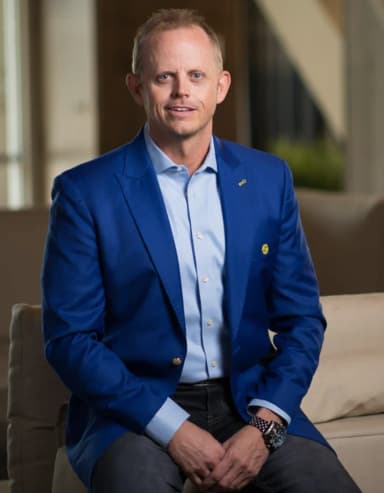
George Wright III
George Wright III is an entrepreneur, investor, and the host of The Daily Mastermind. Over more than two decades he has founded and scaled several multimillion-dollar companies and built a renowned seminar business that put some of the world's biggest names and brands on stage. With 25+ years across marketing, sales, and executive leadership, he's made a career of turning bold ideas into results — and momentum into lasting growth.
Today his mission is singular: empower driven entrepreneurs everywhere to master their mindset, unlock their potential, and live their ultimate destiny. Through The Daily Mastermind, George shares the Prosperity Principles and strategies that help people create massive change — in their business and in their life.
MORE ABOUT GEORGE→