
The Daily Mastermind
ALL EPISODES
Episode 1094 · Mar 6, 2025

Managing Your Thoughts: How to Take Control of Your Mind

Listen

George Wright III opens this solo episode of The Daily Mastermind with a topic he calls essential for our current moment: managing your thoughts. Drawing on key principles from Mary J. Lore's book "Managing Thought: Think Differently, Think Powerfully, Achieve New Levels of Success," George delivers a focused breakdown of how your thought patterns shape your life, and what you can do right now to take the wheel.

The core idea is deceptively simple, yet profoundly powerful: your mind is a tool. The question is whether you are using it, or whether it is using you.

You Are Not Your Mind

One of the most important distinctions George returns to repeatedly is this:

The first and most important powerful thought is that you are not your mind.

Many people move through life on autopilot, letting their thoughts run unchecked. When you don't actively manage your thoughts, those thoughts manage you. They shape your perceptions, drive your reactions, and quietly write the story of your life without your conscious input.

Separating your identity from your mental activity is the first step toward genuine mental freedom. You are the observer of your thoughts, not the sum of them.

Why Present-Moment Awareness Is the Foundation

George outlines three foundational ideas from Mary J. Lore's work. The first is that now is the only reality that exists. You can only take action in the present moment, which makes presence the starting point for any meaningful change.

The second principle draws on Buddha: everything we are arises from our thoughts, and with our thoughts, we create the world around us. This isn't abstract philosophy; it's a practical framework. What you think about consistently, you become. What you dwell on, you amplify.

The third principle is being on purpose: aligning your thoughts with your actual goals. That requires three sequential skills: self-awareness (recognizing what you're thinking), self-mastery (gaining control over those thoughts), and intentional alignment (pointing your thoughts toward your vision).

How Your Thoughts Create Your Results

George revisits his belief cycle framework to show exactly how thoughts produce outcomes. Your thoughts shape your beliefs, your beliefs drive your behaviors and actions, and those actions generate your results, which in turn reinforce your beliefs. Change the thought, and you begin to change the entire cycle.

This is why Eckhart Tolle's observation lands so hard:

Thinking has become a disease. It's not so much that you use your mind wrong, you usually don't use it at all. It uses you.

If you are not proactively directing your mind, something else is. Your environment, your habits, your unexamined fears all fill the vacuum. Being reactive is not neutral; it is surrendering authorship of your life.

The Role of Inspiration and Positive Emotions

George makes a point that often gets overlooked in conversations about mindset: inspiration matters. When you feel genuinely happy, grateful, and aligned with your purpose, your mind becomes far more manageable. Positive emotional states are not a reward for good thinking; they are fuel for it.

George suggests that stating "I am successful" instead of "I want to be successful" reflects and reinforces a different internal posture. Acting as if you are already where you want to be helps align your thoughts with the emotional frequency of that future.

Pruning Your Mental Tree

Mary J. Lore's metaphor that George finds most useful is managing your thoughts like pruning a tree. As George puts it:

You got to start with the vision of what you want. Know what you want in your life and what you want to create. And then remove the thoughts, experiences, and distractions that do not serve you. And then every day, just nurture positive thoughts and habits.

Start with the vision of what the tree should look like. Remove the dead and unhealthy branches (the thoughts that don't serve you). Then consistently feed and water the growth you want to see. T. Harv Eker's principle applies directly here: roots create the fruits. Your internal world shapes your external results.

How to Gain Practical Control Over Your Thoughts

Michael Singer's guidance, as George references it, points toward a concrete first step: pause and observe. When you step back and look at your thoughts rather than living inside them, you shift from reactive thinking to proactive problem solving. This activates the prefrontal cortex, the brain's executive center, and opens space for solutions rather than overwhelm.

Your brain processes between 60,000 and 100,000 thoughts per day. That volume makes focus difficult without intentional intervention. Rather than being swept along by the current, you can practice deliberately slowing the noise.

Action Steps

  • Practice noticing your thoughts this week. When a thought arises, pause and acknowledge it as a thought, separate from who you are.
  • Identify your three-part process: self-awareness (what am I thinking?), self-mastery (can I redirect it?), and purposeful alignment (does this thought serve my goals?).
  • Use the pruning metaphor. Write down the vision you want for your life, identify recurring thought patterns that undermine it, and commit to replacing them with intentional, goal-aligned thoughts.
  • Add a daily mindfulness practice. Even five minutes of meditation or quiet reflection can reduce the mental noise that keeps you reactive.
  • Treat strong emotions as information, not identity. When a negative feeling hits, ask what it is telling you about where you are out of alignment, and use it as a signal to course-correct.

Managing your thoughts is not a luxury or an advanced personal development skill. It is the foundation of everything else you want to build. You are not your thoughts, and you are not your emotions; you are the person who can choose to direct them. It's never too late to start living the life you were meant to live.
READ THE FULL TRANSCRIPT

All right, welcome back to The Daily Mastermind, George Wright III with your daily dose of inspiration, motivation, and education. And today we're talking about managing your thoughts. I'm going to give you kind of a fresh perspective with some information I've kind of covered before, but it's things that I believe we really need right now. You know, sometimes I do these episodes for myself as much as everybody else, and it's one of the reasons I started the Daily Mastermind. I wanted to be able to provide daily rituals of inspiration and motivation. So I hope that's what it's bringing for you. And if you haven't already, and this is your first time listening, I'm really trying to just become a great source of information for you. And most of the thoughts that I get are from mentors and leaders and thought leaders that I've acquired over the last 25 to 30 years of being behind the brands of some billion-dollar brands out there. And I feel like the nuggets of wisdom and things that I've learned, I want to be able to share. And that's why I'm here for you today. And one of the things that continually comes up with clients, with individuals, whether it's family, friends, relationships, clients, it's this idea of managing your thoughts. And I'm going to take a little bit of a deep dive into it today, because in the world that we live in today, we really find ourselves spending a lot of time inside our own heads with limited interaction or more online interaction, it's more important than ever that we have to be intentional with how we manage our mind and our thoughts because our mind is just a tool. And a book that I've mentioned before I really love is this book that I think can transform your life. It's written by Mary Lohr called Managing Thought. And the subtitle alone really says it all. The subtitle is Think Differently, Think Powerfully, achieve new levels of success. And this book has some real fundamental principles I want to kind of bring into your mind today. I mean, it covers a lot of things like, for example, rethinking your path to success, refocusing your goals and priorities, reframing your negative thoughts, and becoming more creative and energetic, and restoring your sense of purpose, and reclaiming your peace of mind. That's a big one, right? These are all powerful shifts that can help you take control of your thoughts. And so let me kind of just dig into some high-level notes that I've taken and ones that I believe have made a change and a difference for people that have applied them. And the first and most important powerful thought is that you are not your mind. Let me just remind you again, one of the most key concepts that you can get, I've talked about on the Daily Mastermind is that you are not your mind This was probably one of the most listened episodes I ever did because so many people are stuck in their own thoughts and their own head We often go through life sort of on autopilot not managing or at least actively managing our thoughts and just letting our thoughts and our mind run the show. But the truth is, when we're not in control of our thoughts, they actually control us. And so managing your thoughts isn't just about personal development and having better thoughts. It's about living a life on purpose, and we all deserve that life. So there are three real big takeaways I'll kind of start with that I got from this book, but I think will really help you. And there may be reminders for you, but at the end of the day, we need these reminders. Number one, now is the only reality that exists. You've got to remind yourself that to influence your life, you have to be present. You can only take action right now in the present moment. And that is a big guiding principle for your thoughts. Second, we are what we think. We are what we think about. Buddha's words remind us that everything we are arises from our thoughts. With our thoughts, we create the world around us. And so you've got to be present, but you've got to realize that you are a result of the thoughts you're thinking. So you have to have three key principles when you're managing your thought. The first is self-awareness. You've got to recognize what your thoughts are. Sometimes we're just out there just moving along, but you've got to recognize what your thoughts are. Second, you've got to have self-mastery. You've got to be able to gain control over these thoughts. And then third, you've got to be on purpose, aligning your thoughts with what your goals are. So recognize your thoughts, gain control over them, and align them with what your purpose is. And just remember that, you know, this is a reminder that I give often, is that your thoughts will shape your reality based on this belief cycle that I always talk about. And the idea is that your thoughts are driving your behaviors which create your beliefs and your results, right? Your thoughts and your beliefs drive your behaviors and actions, which ultimately create your results and then reinforce your beliefs. So it all starts with thoughts. When we shift our beliefs and our thoughts, we change our outcomes and we can craft what we truly believe inside our philosophy. But the power of inspiration is something that I really think you've got to bring into your life more. We achieve more results and take more control over our thoughts when we're inspired. You know, when you have experiences like happiness and gratitude and you align with your vision and your purpose when we align our thoughts with positive emotions inspirational emotions you going to make a difference in how you think And so here a real question for you Are you driving your thoughts or are your thoughts driving you Are you being proactive about what you're thinking about or are you just reacting to everything about you? You know, Eckhart Tolle said, thinking has become a disease. It's not so much that you use your mind wrong, you usually don't use it at all. It uses you. Think about that for a minute. Even if you are not proactively using your mind, it is using you. So I've got to ask you, are you using your mind as the tool, the amazing tool that it would be, or is it just using you? Because it's like anything else in life. If you're not being proactive, then you are definitely being effective. it's not just about being into personal development. It's about creating and shaping a life. And if you're not proactive, your life is being shaped by someone else and something else in your outside environment. So the power and the key is awareness. If you want to be able to master your thoughts, you've got to become aware of them. You've got to be knowing what you're thinking about. Take a step back, like Michael Singer says. When we pause and observe our thoughts, we shift from reactive thinking to proactive problem solving. This activates kind of from your prefrontal cortex, the CEO center of your brain. It allows you to find solutions rather than being overwhelmed. So sometimes it's that simple step of recognizing that you're having all these thoughts and stepping back and actually looking at what your thoughts are rather than the situation. So there's a couple of steps that you can use to really gain control of this. You got to start by practicing noticing your thoughts. That's why meditation and mindfulness are so good. When you start thinking, I wonder why I'm thinking that. I wonder why I'm thinking that. Notice what you're thinking and then calm your mind in order to become more productive. Remember, our brains process 60 to 100,000 thoughts a day. Making it, it's so difficult to focus under that kind of stress and those many thoughts. So take breaks. Go for a walk. Practice meditation. Reset your mind. Just find ways to slow down the number of thoughts and you will massively increase your productivity. And remember, you are not your feelings. A lot of times the thoughts we have are emotions. Emotions are just triggers and indicators of something when we are not aligned with what we really truly have as our best selves. So use those as an indicator, a red flag, not a roadblock. Emotions shouldn't be a roadblock for you. They should just be a red flag that help you to recognize you not aligned with where you need to be And really push yourself to align with positive emotions You know when you say you know I am successful versus I want to be successful right You know when you act as if I think things come your way a little bit more and you feel more aligned. So we really need to do an effort in managing our thoughts. But one of the things that Mary Lohr mentioned in this book that I really like is the idea of managing your thoughts like you're pruning a tree. You start with, Remember, you got to start with the vision of what you want. Know what you want in your life and what you want to create. And then remove the thoughts, experiences, and distractions that do not serve you. And then every day, just nurture positive thoughts and habits. So you have to start with what you want this tree to look like, and then you've got to prune the bad branches off, and then you've got to start to just grow and nurture the tree. You know, T.R. Veccher always talks about the roots, create the fruits. Your internal world shapes your external results. So you've got to intentionally cultivate the thoughts, build the thoughts, grow the thoughts that you want to have if you want to lead to success. So I really encourage you to put more time and energy and effort and focus towards your thoughts. Practice this week noticing your thoughts. And when you have negative thoughts and things arise, remind yourself that's a thought. That's something happening from your mind. You are not your thoughts. You are those emotions. And the minute you step back and become objective, it's one strategy I've found that pulls you out of emotions is when you can become analytical of what that emotion and thought is that you're having. It really gives you a little bit more objectivity. Whereas when you're deep in the emotions, it's hard to react. It's hard to problem solve. So that's my thought for today. I hope you're having an amazing week. I hope that there's some thoughts that we've had this week that have helped you, but I would love to hear from you, I'd love for you to hit me up at the Daily Mastermind on Facebook, Instagram. Go to the show notes. I always include my email address in the show notes so you can hit me up. Let me know what you're working on. We have a new website we've launched at dailymastermind.com. We've got multiple podcasts and multiple magazines that are coming out. By the way, if you're interested in getting interviewed or featured in one of our authority magazines, we've got 100,000 readers online in just one of the magazines. And we've got some ways to help you build credibility and authority and things. I've got free interviews on the site if you want to go check that out. I want to do anything I can to bring you resources and ideas that will help you. So that's my message for today. Please share the show. Spread the message. Help us to build the mastermind. And I look forward to talking with you more tomorrow. Once again, this has been the Daily Mastermind. Have a good one.

The Newsletter

Get the next episode's ideas in your inbox.

Join The Daily Mastermind newsletter — inspiration, motivation, and education to help you create your ultimate destiny.

About the host
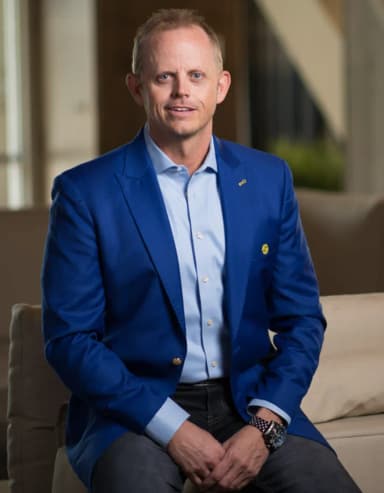
George Wright III, host of The Daily Mastermind

George Wright III

George Wright III is an entrepreneur, investor, and the host of The Daily Mastermind. Over more than two decades he has founded and scaled several multimillion-dollar companies and built a renowned seminar business that put some of the world's biggest names and brands on stage. With 25+ years across marketing, sales, and executive leadership, he's made a career of turning bold ideas into results — and momentum into lasting growth.

Today his mission is singular: empower driven entrepreneurs everywhere to master their mindset, unlock their potential, and live their ultimate destiny. Through The Daily Mastermind, George shares the Prosperity Principles and strategies that help people create massive change — in their business and in their life.

MORE ABOUT GEORGE