The Daily Mastermind
ALL EPISODES
Episode 906 · Jan 15, 2024

Taking Personal Responsibility to Control Your Life

Listen

In this episode of The Daily Mastermind, host George Wright III delivers a powerful solo message built around the second of his 12 Prosperity Pillars: "I take personal responsibility." If you have ever felt stuck on the treadmill of life, overwhelmed by uncertainty, or worn down by circumstances that seem beyond your control, this conversation is for you. George makes the case that responsibility is not a burden but one of the most liberating decisions you will ever make.

The episode opens with a quote from Michael John Bobak that sets the tone for everything that follows:

All progress takes place outside your comfort zone.

That single idea anchors the entire discussion. Growth does not happen inside familiar territory, and neither does real, lasting change.

Why Taking Personal Responsibility Changes Everything

George identifies four concrete reasons to embrace responsibility. First, it is proactive: you stop waiting for conditions to improve and start building the life you want. Second, it is empowering: when you focus on the things within your control, you gain a sense of agency that no outside circumstance can take away. Third, it creates certainty in an uncertain world, because you shift your attention toward what you can influence and stop wasting energy on what you cannot. Fourth, it cultivates positivity and abundance, because a growth-focused mindset naturally attracts better outcomes over time.

These are not abstract ideals. They are practical shifts in how you approach every day.

What Personal Responsibility Is Not

Before diving into the how, George addresses two common misconceptions.

First, personal responsibility is different from creating your life. The first Prosperity Pillar is about designing the story of your life. This one is about how you handle what shows up along the way. Think of it as your operating framework for dealing with challenges rather than a blueprint for building dreams. Both matter, and they work together.

Second, and perhaps more importantly, responsibility is not control. Many people hear "take responsibility" and immediately try to assert control over every person and outcome around them. George is direct on this point: control is not the goal. Results are the goal. You can take bold action and still leave space for things to unfold. You can be responsible without trying to manage and manipulate every variable in your life.

Understanding the Blame Economy

George names something most people sense but rarely say out loud: we live in a blame economy. Culture constantly tells you that your circumstances are someone else's fault, whether that is politics, your upbringing, your environment, or the people around you. And while some of that may feel true, the habit of pointing fingers keeps you stuck.

Here is why the habit forms in the first place: it is natural to want to protect yourself from pain and negative emotions. Over time, blaming others becomes a defense mechanism. The problem is that protecting your ego is not the same as protecting your well-being. When you separate the two, you free yourself to get actual results instead of just managing feelings.

How to Begin Taking Responsibility

George offers a practical set of starting points, none of which require a complete personality overhaul.

Focus on what you control. Your mind, your body, your habits, your relationships, your business decisions: these are all areas where consistent action produces results. Go to the gym. Eat well. Make the call. Do the work.

Focus on solutions, not problems. An abundance mindset generates positive emotions and opens up creative thinking. When you orient your attention toward what is possible, more possibilities appear.

Make solid commitments to your decisions. How you do anything is how you do everything. A person who takes responsibility follows through, even when it is inconvenient.

Change your perception of good and bad results. George references Wayne Dyer's insight here:

When you step back and look at the tapestry of your life, many of the situations that at the time might have seemed bad really might have ended up being for your betterment.

The setback that cost you a job may have been the thing that pushed you toward a better opportunity. Responsibility includes trusting that not every hard moment is a catastrophe.

Managing Expectations and Communicating Clearly

Two often-overlooked aspects of personal responsibility are managing your expectations of others and improving how you communicate.

When you impose your expectations on other people, you are attempting to control them, which is the opposite of taking responsibility for yourself. Let go of what you think others should do and focus on what you can do. You will experience far less frustration and far more fulfillment.

Clear, honest communication is a natural extension of this. Taking responsibility means showing up accountably in your conversations. You do not need to be harsh with yourself about imperfect communication; just keep getting better. The goal is for the people in your life to understand what you are working toward and why.

Eliminate Blame and Give Yourself Credit

The final and most decisive step is eliminating blame entirely. As long as you see yourself as a victim of your circumstances, you will stay where you are. The moment you take ownership, everything becomes movable.

George closes with an insight from Ed Mylett that speaks directly to people who are hard on themselves for not yet being where they want to be:

We don't give enough credit to ourselves for our intentions.

Your commitment to becoming more responsible, more intentional, and more empowered is itself a form of growth. You do not have to wait until you have it all figured out to deserve credit for the direction you are heading.

Action Steps

  • Identify one area of your life where you have been blaming others or outside circumstances, and write down one concrete action you can take this week to change it.
  • Each morning, list three things within your control that you will act on that day.
  • Practice managing your expectations by releasing one judgment or demand you have been placing on someone else.
  • When something goes wrong, ask "what can I learn from this?" before asking "whose fault is this?"
  • Give yourself credit for your intentions. Acknowledge that deciding to grow is already a form of progress.

Responsibility is not about perfection. It is about direction. George Wright III puts it plainly: it is never too late to start living the life you were meant to live, and taking personal responsibility is the key that opens that door.
READ THE FULL TRANSCRIPT

All right, welcome back to The Daily Mastermind, George Wright III, with your daily dose of inspiration, motivation, and education. I'm your host, and I'm glad you're here with me today. You know, the goal of The Daily Mastermind is to help you to truly unleash your potential, and we do that through that daily mindset. And so I want to get you started with the quote of the day. The quote of the day is from Michael John Bobak, and the quote is, all progress takes place outside your comfort zone. And I'm sure you've probably heard that quote before, but it's something for you to really consider and ponder this week because it's one thing to know that we need to be outside our comfort zone. It's another thing to recognize and appreciate the fact that your progress is going to come there. Your results are going to come there. The things you're trying to create in your life are going to come outside your comfort zone. So let me ask you a couple of questions here. do you sometimes feel like you're on a treadmill of life without any way of getting off? You're just going through the motions. Or maybe you feel like you have no control over your circumstances and the things that are happening to you in your life, the life that you've now created. Or maybe you feel like, do you ever feel like situations keep coming up despite how hard you're working and your best efforts? You're giving it everything you've got, but things just continue to pop up on you and take you by surprise. Well, maybe you just wish you could catch a break. Maybe you feel like the people or partners around you continue to take advantage of you. Or do you feel like there's a high degree of uncertainty in your life or your career, your business? A lot of people feel like there's just so much uncertainty right now in their life. Or maybe you feel like, do you wish you could just take more control over the direction and results you're getting, just find a way to take more proactive control. Well, what if I told you that it's actually easier than you thought to change your circumstances? What if you could just make some simple decisions and have things start to go your way? What if you could eliminate the ups and downs, sort of those waves of the day-to-day life and start to live more empowered and a more successful life despite your circumstances that are completely out of your control. Well, look, today I want to really talk about this because it's not only possible, but it's actually simpler than you think to make this happen. And this really leads me to the second prosperity pillar in the 12 prosperity pillars. And if you haven't already heard me talk about those and you're new to the podcast, these 12 pillars are things that are designed that I found and I've accumulated from mentors and thought leaders over the last 25 years. The first prosperity pillar was I create my life. But today I want to talk to you about the second one. And it's I take personal responsibility. I take personal responsibility. And this is responsibility for your life, your business, your relationships, everything else. You take personal responsibility. And this is one of the most empowering principles that we can really talk about on The Daily Mastermind It really is You have to you know you got to eliminate your perception of specifically what you think it takes to create responsibility And I want you today just to kind of open up your mind a little bit and really think deep about this because it all about you. It's all about what you can do in your life. Be open and be objective to the possibilities of growth, not just being aware of responsibility, but growing into that state. So let's talk about this. Why take responsibility? Well, proactively, I know you want to create your life. I know you want to start to begin to create the life that you are meant to live. And by taking responsibility, it's very empowering. You gain a sense of empowerment when you start to act on things within your control and stop letting things outside of your control affect your life. And also So taking responsibility, believe it or not, gives you a way to really create certainty in an uncertain world because you begin to focus on things that you can have influence on and stop putting energy into things that you can't. But also taking responsibility helps you to gain a much greater amount of positivity and abundance in your life. You're starting to focus on growth. You're starting to focus on things that you can be proactive and positive about and that sense of positivity and empowerment is really going to affect your life long run. So these are reasons that you want to take responsibility. But I want to remind you that this isn't just my opinion. You know, these principles have been proven time and time again over the years by many of the biggest thought leaders out there. Some of the biggest leaders you find or the biggest successes you find are people that have really taken responsibility for their life and moved outside that victim mentality and began to do things that they know would take them closer to their goals. So let's talk for a minute before we get into this about what this prosperity pillar is not. This prosperity pillar, the idea of taking personal responsibility is different than creating your life. See, we're talking about a framework for dealing with life rather than creating life. When you decide to create your life, you become proactive. You become empowered in the sense that you're creating the landscape of your life, the story of your life. But when you take responsibility, you're talking a little bit more, in my opinion, of dealing with and a framework for helping you to handle the life that you're creating. So it's very empowering to be able to create your life, but it's also very empowering to be able to learn how to deal with things that come your way. And, you know, responsibility for your life versus creating means a strategy for handling those challenges that you have. So we're not so much talking about creating your life as much as we are just setting a framework for how you're going to handle your life. And the other thing I wanted to mention to you is that, in my opinion, responsibility for your life is not control. This is where a lot of people really go wrong. They say, well, I'm going to be the one. I'm going to take responsibility. But then they start to assert control over everything and everyone around them. And control is not the goal. Remember, it's not about creating control. And later we talk about the fact that it not necessarily even about creating certainty It about getting results That all it about And it not about controlling the outcome It's about creating the outcome. And you can do this through responsibility. You can learn to take action, but allow the space for attraction because you're not trying to manipulate and control the situation. So remember, responsibility for your life is not control of your life. Now, the key to really understanding responsibility is you've got to understand where you're at, where you've come to, where you're at in your life. Because we really do live in a blame economy. We really live in an economy where people are pointing fingers and they're trying to assert that your life is a result of everything and everyone around you, whether it's politics or your environment or whatever it is. But you have to learn that you can't change the things around you. So the less you learn to point the finger, the more you're going to become responsible and you're going to start to create the changes. You've got to recognize that you may have developed this habit over time. You know, look, it's natural for you to want to protect yourself from negative emotions. You want to protect yourself from people and circumstances and things out there. So you've over time learned to be able to create a habit of pointing the finger to other people in your life rather than yourself. Because it's important that we do protect ourselves. But it's not okay just to protect your ego. And that's the problem most people have. You've got to learn to separate the ego from your emotions and your well-being in order to get results. So you've got to really understand where you are, where you've come from, why you do the things you do, if you really truly want to make a difference. So let's talk for a minute then about how you begin to take responsibility. We don't have a whole lot of time, but I just want to share some random ideas with you. First and foremost, you've got to focus on what you do control with your mind, your body, your spirit, your money, your business, your relationships. What do you control? You can go to the gym. You can eat healthy. You can do things that create activities that will create results. Focus on what you can control and you're taking responsibility. Another thing is you've got to focus on solutions. abundance and focusing on abundance will bring you positive emotions and bring you more solutions. When you focus on solutions, which is another pillar, by the way, you're going to be in more of a state of responsibility. Another suggestion I have for you is make solid commitments to your decisions because how you do anything is how you do everything. If you decide you want to do things, a responsible person, someone who's taken responsibility for their life, they're going to commit to the decisions they make. That's being responsible. Also, you want to change your perception of good and bad results. Think about that for a minute. Someone who's responsible and taking responsibility for their life, things don't have to be bad in your life because they could ultimately be for your benefit. Wayne Dyer talks about the fact that when you step back and look at the tapestry of your life, many of the situations that at the time might have seemed bad really might have ended up being for your betterment. They helped you grow. They helped you move forward. They helped you leave one job you thought was bad because it ended and find new opportunities But change your perception of good and bad and start to learn And when you take responsibility everything is for your benefit Another suggestion that helps you to learn to take responsibility is learn to manage your expectations. Look, responsibility means not imposing your expectations or judgments on other people. When you do, you're trying to control the situation. Learn to manage your expectations and learn that it's about you doing what you can control, not putting expectations on other people. And so when you manage your expectations, you're more fulfilled. You're less caught in those negative emotions. And also learn to communicate real clearly. If you're trying to take responsibility for your life, don't try to impair your judgment or impair your communication by trying to assert yourself. Responsibility just means don't judge your communication. Become better and better and better over time at the way you communicate. Don't judge yourself harshly, but learn to communicate clearly. Because if you're taking responsibility for your life, you want others to just be clearly aware of what you're trying to do. And the other thing is, this is a big one. Eliminate blame. You're no longer a victim. Take responsibility for the results, the circumstances, the emotions, and the feelings that you have, instead of, you know, being a victim, be proactive in changing the circumstances and solutions. Instead of being a victim of your circumstances and solutions, be proactive in changing them. And you can only do this by eliminating blame for where you are in your life and taking responsibility for what you've created in your life. The best that can happen is you can move on. The worst that can happen by not taking responsibility is you're going to continue to stay in that rut. Now, a couple of things to consider as I let you go, because I know we're kind of out of time here. Stay true to your values and direction and vision. You have value. Don't let others, just because you can't control them, don't let others change or deteriorate the value that you have. And remember, responsibility is not a burden. Taking responsibility is not a burden. It's a skill. It's a gift. It's a decision you make to empower yourself. So don't look at taking responsibility as some difficult thing. And remember, and I like what Ed Milet says, he says, we don't give enough credit to ourselves for our intentions. Remember that your intentions of becoming responsible for your life is a very empowering thing. Give yourself credit for that. I know you have greatness inside you. You can grow. You can unleash the best version of yourself on a day-to-day basis. And one of the ways to do this is to start to become responsible for your life. So that's my message for today. I hope you have an amazing day. Do me a favor. In fact, why don't you head over to jointheevolution.com. Jointheevolution.com. You can check out all the options we have to be able to help you on your day-to-day, find ways you can connect with our community, and do me a favor and just share this show. If you'll share the show, share the message, you'll learn, others will be empowered, and we can make a big difference in this world. That's my message for today. Once again, this has been The Daily Mastermind. I'm your host, George Wright III. Have an amazing day. Transcription by CastingWords

About the host
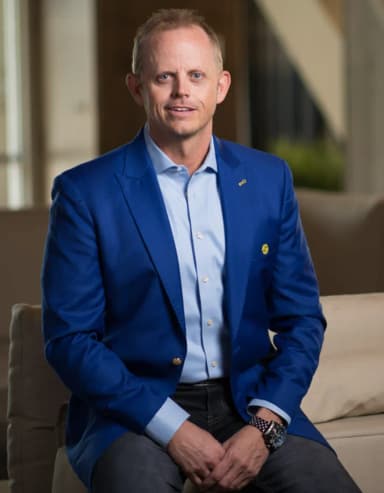
George Wright III, host of The Daily Mastermind

George Wright III

George Wright III is an entrepreneur, investor, and the host of The Daily Mastermind. Over more than two decades he has founded and scaled several multimillion-dollar companies and built a renowned seminar business that put some of the world's biggest names and brands on stage. With 25+ years across marketing, sales, and executive leadership, he's made a career of turning bold ideas into results — and momentum into lasting growth.

Today his mission is singular: empower driven entrepreneurs everywhere to master their mindset, unlock their potential, and live their ultimate destiny. Through The Daily Mastermind, George shares the Prosperity Principles and strategies that help people create massive change — in their business and in their life.

MORE ABOUT GEORGE