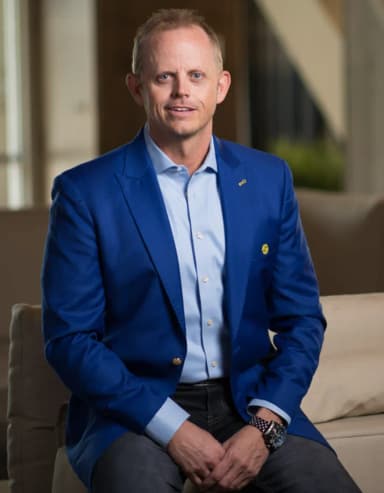
George Wright III opens this episode of The Daily Mastermind with a quote he keeps returning to: "I am the master of my fate. I am the captain of my soul," from poet William Ernest Henley. From there, he dives into a book that has shaped his own outlook on obstacles, setbacks, and the strange clarity that only hindsight can provide. That book is "I Can See Clearly Now" by Dr. Wayne Dyer.
Wayne Dyer was a bestselling author and speaker who wrote more than 40 books, 21 of which became bestsellers. His first book, "Your Erroneous Zones," has sold an estimated 35 million copies. Though Dyer passed away in 2015, his ideas continue to reshape how people think about perspective, purpose, and personal growth. George's episode this week draws from Dyer's reflective memoir-style work to deliver one of his most powerful concepts: detach from the outcome.
What "I Can See Clearly Now" Is Really About
Dyer's book reads as a personal autobiography, walking through moments in his life that felt like crushing setbacks, only to reveal, from the vantage point of years later, that each obstacle was actually shaping something larger. The overarching idea Dyer captures is this:
As I look back at the entire tapestry of my life, I can see from the perspective of the present moment that every aspect of my life was necessary and perfect. Each step eventually led to a higher place, even though these steps often felt like obstacles or painful experiences.
George highlights that the key phrase here is "from the perspective of the present moment." Looking back changes everything. What feels unbearable in the moment often looks, with distance, like exactly what needed to happen.
Why Perspective Is the Filter for Everything
George draws a direct line between perspective and thought. He argues that your thoughts don't exist in a vacuum. The filter you use, the lens through which you interpret events, shapes the quality and direction of your thinking. Dyer put it simply:
If you change the way you look at things, the things you look at change.
That quote might sound familiar because George returns to it often. It's one of his favorites. The reason it lands is that it asks you to do something active: shift the filter. You're not waiting for circumstances to improve. You're choosing a perspective that opens up possibility instead of closing it down.
How Detaching from Outcomes Sets You Free
The central practice George takes from this episode is one Dyer models throughout the book: detach from outcomes. That means releasing your grip on how you need things to turn out, whether in business, relationships, health, or life goals.
This doesn't mean becoming passive or indifferent. It means choosing to anchor yourself in purpose and heart rather than in a fixed result. When you're attached to a specific outcome, every obstacle feels like a personal failure. When you're attached to purpose instead, obstacles become information. They redirect you. They sharpen you.
George shares from his own experience. He describes building thriving businesses with strong income and recognition, only to have key partners undermine or destroy what he had built. He had to start over more than once. At the time, those experiences were devastating. Looking back, he says he truly believes those situations defined him, made him better at handling stress, and sharpened his ability to keep priorities straight when things get hard.
The Story of Dyer, the Marathon, and What Mockery Made Possible
Dyer illustrates this principle through a personal story in the book. At one point in his career, students mocked him for gaining weight, mimicking him during lectures. He laughed it off in the moment, but admits it genuinely hurt. Instead of letting it spiral into shame, that discomfort became fuel. He began working out. He could barely walk a mile or jog a block when he started. Over time, driven by how those students made him feel, he ran a full marathon.
Looking back, Dyer felt gratitude toward those students. Without their mockery, he might never have found the drive. The obstacle that felt humiliating became the catalyst for a physical transformation.
That is the pattern George is pointing to throughout this episode. It's not about pretending hard things aren't hard. It's about recognizing, in retrospect and eventually in real time, that difficulty has a function.
How to Apply This to Your Own Life
George asks you to think honestly about the hardest moments you've faced. The situations where you questioned why it was happening, where it felt unfair or overwhelming. You survived them. You're still here. But have you actually gone back to examine what those situations gave you? How they shaped the person you became?
When your thoughts are laced with intent and purpose, George argues, you almost certainly guarantee a better outcome in future situations. Not because you control everything that happens, but because your response to what happens becomes more grounded, more resilient, and more capable of finding solutions. A filter clouded by anxiety over outcomes makes it nearly impossible to see clearly.
Action Steps
- Identify one past obstacle that still feels unresolved or painful and write down three specific ways it may have shaped your strengths, values, or direction.
- Practice detaching from a current goal by reframing your focus from the desired outcome to the purpose driving you.
- When you catch yourself spiraling about a result you can't control, ask: "What would I do next if the outcome didn't matter and only the purpose did?"
- Revisit Dr. Wayne Dyer's "I Can See Clearly Now" in audiobook or print for a full, story-driven exploration of this perspective shift.
- Share one insight from this episode with someone in your life. Teaching what you learn helps you internalize it more deeply.
Every obstacle, every painful chapter in your story has been shaping you. You may not be able to see it clearly in the moment. But as Dyer's own life demonstrates, and as George reflects from his own career, the tapestry looks entirely different from a distance. It's never too late to start living the life you were meant to live.