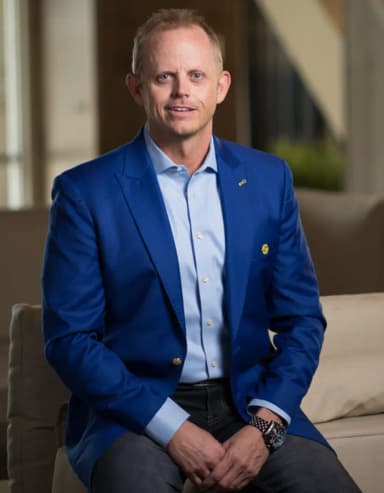
George Wright III opens this episode of The Daily Mastermind with Prosperity Pillar #9: "I am committed to lifelong learning." But George is not talking about simply reading more books or listening to more podcasts. He is talking about a complete learning process, one that transforms information into experience and experience into belief.
This distinction matters. Most people assume they are already committed to learning because they consume content. George challenges that assumption and explains what true lifelong learning actually looks like in practice.
Learning vs. Merely Reading
There is a difference between going through the motions of learning and actually internalizing new knowledge. George makes this clear from the start: the activity of reading or listening is not the same as learning. What separates the two is application.
The application of knowledge is as important as actually learning something.
When you read a book or listen to an episode without intending to apply what you discover, you are collecting information, not building capability. Real learning requires you to take what you encounter and test it in your actual life.
The Belief Cycle Equation
George introduces a core equation that explains how lifelong learning produces lasting results: learning plus application of knowledge equals new experiences, and new experiences build belief. This belief cycle is what ultimately drives your success.
Belief is one of the biggest obstacles people face on the way to achieving what they want. The way you dissolve that obstacle is by creating new experiences that challenge your current assumptions. You do that by learning something, applying it, and seeing what happens. Each cycle expands your belief a little further.
Napoleon Hill stated it directly: "What the mind of man can conceive and believe, it can achieve." The belief cycle equation is how you build the raw material that makes that principle work.
How to Learn with Intention and Effectiveness
George's most pointed message in this episode is about being intentional with your learning rather than treating it as background noise. Many people listen to audiobooks while driving, scroll through educational content, or attend seminars without ever pausing to ask: how do I actually learn best, and am I doing that?
Different people internalize knowledge differently. Some need to read. Some need to hear it. Some need to experience it in a live setting. The question is not which method is most popular. The question is which method helps you absorb and apply the material. Be specific with your intent. Don't just do things to do them.
When you bring focused attention to your learning, you get a return on the time you invest. When you go through the motions, you get very little.
Be Open and Teachable
One of the most common ways people close themselves off from growth is by deciding they already know something. George calls this out directly. When you say "I've heard this before," you are choosing to stop learning. Your past experience with an idea does not mean you have extracted everything from it.
Your beliefs and your context change over time. A book you read five years ago will land differently today. A strategy that failed in a previous business environment might succeed in today's marketplace. Stay open. Stay teachable. Approach familiar material as if it might still have something new to give you.
Learning from Both Successes and Failures
George pushes back against the common view that failure is the only real teacher. Both successes and failures are learning experiences, and you need both. Understanding why something worked is just as valuable as understanding why something did not.
Strip the judgment from outcomes. Successes and failures are not good or bad. They are situations. Your perspective and the filters you apply will determine how much you learn from each one.
The Power of Mentorship and Consistent Daily Rituals
Two of George's most practical recommendations are getting a mentor and building daily rituals around your learning. A mentor gives you direct access to someone who has already developed the beliefs and experiences you are working toward. That belief transference accelerates your growth in a way that solo study rarely can.
Daily rituals, whether that is reading, working out, meditating, or listening to a podcast like this one, keep you in a state of consistent learning. The power is not in finding the next new thing. It is in repetition. Books like Think and Grow Rich have endured for decades because people return to them at different stages of life and find new meaning each time.
It's true what they say when they say, if you're not growing, you're dying.
Physical, mental, spiritual, and emotional growth all depend on continuous learning. The rituals you build now are the infrastructure for the person you are becoming.
Action Steps
- Pull out a book you have already read, go to the first chapter, and study it with full attention rather than reading for new ideas. George recommends Think and Grow Rich.
- Identify the learning method that works best for you (reading, audio, live events) and be intentional about using it rather than defaulting to passive consumption.
- Apply one specific piece of knowledge you already have this week. Track what happens and notice how the experience shifts your beliefs.
- Find or reconnect with a mentor who has already developed the mindset and skills you are working toward.
- Build at least one daily ritual that keeps you in a consistent learning state, something you return to every day without fail.
Growth is not accidental. It is the result of showing up with intention, applying what you learn, and staying open to what comes next. As George Wright III reminds us, it is never too late to start living the life you were meant to live.