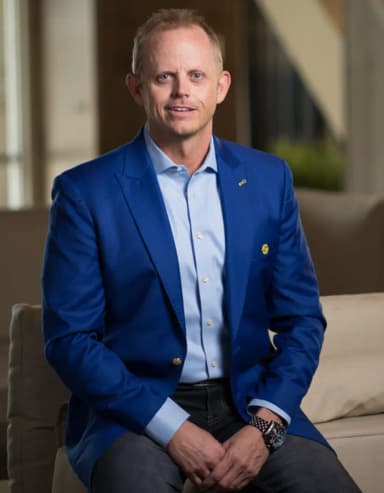
Welcome back to The Daily Mastermind, George Wright III with your daily dose of inspiration, motivation, and education. And we're joined in studio today by Joseph Kancilla. How are you doing, Joseph? I'm doing good. Thanks for having me. Yeah, this is good. I know we had a chance to talk before and we're both down in the same area, which is kind of cool. I grew up in Scottsdale and you're in so many different markets now. I want to talk, so if you're first time listening, we're going to share some ideas today on scaling your business mindset, but I want to give you a bit of an introduction on Joseph because he's got a pretty diverse background. He's just really the go-to in his space. So Joseph is the founder of HANA Events and Experiences. It's a full service event design company with production, high impact for corporate luxury events and everything from entertainment, production, logistics, everything you can imagine. But he brings like 28 years of live performance experience from 12 years old to, you know, scaling companies and experiences for companies. And he's got over a decade scaling from like small to large productions. But he also is a former marketing agency owner. He's got a lot of marketing savvy, which is one of the reasons I wanted to bring him on the show. And we're going to talk a little bit about creating the ultimate experiences in your life and your business and everything else. So Joseph, I'm really glad to have you here, but I would love it if you could just give everybody a little bit of your background as to what got you into this. Because you were performing, doing fire performances at like 12 years old, right? Yeah, I mean, I started Polynesian dancing when I was three years old, not that I really knew what I was doing on stage at that time. So it's been part of my life for my entire life. And it was about 12 years old when I started training to spin fire. so now 28 years later of fire in my life it's it's my my second love wow I mean what a great what a great analogy as well too but but like at some point you went from being a performer to realizing that you could scale a business so what took you from being a performer to actually starting your own business because a lot of people that you know have these things are passionate about sometimes maybe they don't even realize how it could become a business how did you pivot into creating your own business in the beginning? Well, it took me quite a few years, but I realized that I can only do so much and I can only provide so much wow factor on my own. And then I started to pair up with others doing different kinds of things and seeing what it's like when we put it all together. And then I was in a situation designing fire shows for a retreat. And it was sometimes 18 to 20 performers in a two hour long show and it was really powerful to be able to watch all that come together and to be able to be the one to get everybody organized because I experienced that same show without me kind of taking the lead before and there was a very big difference when everybody was able to get organized and were able to take the audience on a really emotional journey using music and using movement to be able to do that so the minute I stopped looking at myself as a performer and looking at us collectively as performers we were able to offer something that was much bigger it went from being like I don't know 450 bucks for me to go spin fire for 20-30 minutes if that to 60 to 90 minute shows with 18 to 20 performers and a huge price range that we can accommodate like most budgets depending on what people want but it's yeah it's really come a long way since I started to really lift other people up I've always been big on training other people and developing like human talent. Yeah. But when I started to, even on my social media, when I stopped saying, look at me, look at me. And I said, hey, look at this guy. Hey, look at her. Hey, these guys are amazing and really becoming like their backbone and lifting them up. Like that's crazy because that's like leadership 101, right? I mean, you go from being a performer, superstar, some people in their business, a lot of entrepreneurs and business owners listening to the show to an event architect, like a leader, someone that now you had to shift your mindset into kind of building more of an event overall. And to do that, you had to bring people along for the ride, but also kind of develop because, you know, especially in an event, a lot of things can go a lot of different directions, right? So the event itself is a logistical coordination, but you've also been able to deliver this at a high scale and start to scale your business. So we talked before about the fact that you had to not only change the way you look at things with how you orchestrate the events, but your mindset had to shift into kind of CEO mode as well, right? Yeah, I really did. I had to learn to get out of the daily grind, and it's a really bad habit of mine. I've had that bad habit for many years of like, hey, I'm faster, I'm better, the quality, I'm just going to do it. But that's a really bad trap for me. But then when I realized I can put other people in there, and even if they can get it done like 85, 90% of what I would do it at, that's, it's good. Well, scalability happens more when that's the case, right? Because obviously you're one person, a lot of business owners, a lot of people, even individuals, let's say running or wanting to create an event for their company, it takes a huge coordinated effort to put on an immersive experience, right? Something like what you guys do now. Yeah, and I think I pull a lot from my military background because I was, back in the day when I was in the Marine Corps, I was running all the logistics for food, for sustenance, for whether we were out in the field or in a cafeteria, Like we were feeding 1,000, 1,200 Marines every day. And there was a lot of moving pieces. And now I still have a lot of moving pieces. It just looks like lead parts and sparkles and lighting and lasers. You know, what's interesting though about what you said, and I think it's pretty clear, and that's why I wanted to have you on the show, that you've got this mindset for success. You've grown like a lot of business owners and entrepreneurs do from being the superstar to coordinating a team to building a business and scaling it. And what you're doing now is you're creating these high impact immersive events. And it's not just an event though for you, it seems to be an experience that you're trying to create. So how do you define, let's talk a little bit about your business. How do you define a high impact immersive event like what you put on right now? I think for me, that would be two words, emotional resonance. And for me, every boring event that you go to, every event that you're dragging your feet through and you can't wait to leave it's lacking emotional resonance because like you can't relate it's not hitting on a deeper level than just oh that looks cool or okay that speaker gave some really good education like how are we getting them involved if we can hit them with all five of their senses and sometimes i even say a sixth sense of human connection or energetic connection if you get them on that level that's forcing them to be fully present and it forcing like this emotional like response to whatever it is that we doing I love that you say that because a lot of people think of events look it just like in life you know events can happen in your life Some you remember some you don But when you connect with an event, you create a memory and you, you, like you said, you've engaged in it. It just, you know, it lasts a lifetime. And I think most companies are not just, at least for your target audience, are not just trying to put an event on. They really do want to create impact with the people that they're bringing to it. They want to create an experience. And so I love that you say that. But the other reason I bring it up is I caught early on from you that when you do events, your goal is not the event. You can execute that logistically perfectly. Your goal is the result of the event. So what are you hoping your attendees get an experience in the end? Well, I think that depends a lot on what's the client's goal. If it's a corporate event, Like, I want to know what that CEO's vision is or who is responsible for this event. What's the purpose? What's the why of the event? And why are we going to breathe this into existence? Like, so they're going to have whatever desired impact they want. And for me, I usually will take whatever their vision is and 10 exit and just go as hard as we can at it. And so for my, for me, like my intention, my impact that I want to create is fulfilling whatever that vision is because it's not really always about me sometimes i'm not designing things that like really resonate at the core of who i am although i infuse a lot of myself into everything that we do but i could use that jewish event as an example i was telling you about that offline but this is one of the biggest events we've done actually it is the biggest event that we've done in my entire career and we're it's we're managing an entire week-long event programmings from 8 30 a.m. to 1130 at night. We're bringing in LED drone shows and animal experiences and wellness zones and roaming talent and entertainment. We're putting contortionists inside of a clear ball in the water for the women's pool. But the big centerpiece of the entire week is our giant fire circus show. And one of the coolest things that I heard on the phone with the client a couple days ago it was coming from a little bit of anxiety and hesitation because they had no idea we were going to be going this all out for their show they're like i thought we were just going to get something that looked really cool but like you're trying to get on our level like you're learning hebrew you're learning what these songs mean you're designing the show with an emotional pull there's it's going to be an emotional roller coaster telling the story of passover because this is a week-long Jewish Passover celebration. So it starts off in darkness and then they escape from Egypt. It's the big exodus. And then the freedom, the triumph, the happy, the joyful, like it's giving me the chills even describing this to you right now. Well, and you explained that you went deep in this, like you didn't, this isn't like they asked you to do this. You took what they gave you, you expanded it. It's not just entertainment, right? It's entertainment, it's engagement and and its impact you're trying to create. So give me just a flavor. Like this is the kind of stuff that you do. What did you have to do to prepare for this event outside all the logistical moving parts? You know, you're talking about speaking Hebrew. You're talking about creating and writing a show. Give me a flavor of what you had to do just for this one. Yeah. We even wrote custom music because I couldn't find any one song. Like every Jewish song that I found was either kind of of sad and dark and touching to that darkness or it was happy go lucky up bmik i want one song that has both so we wrote the lyrics we were even able to infuse the company name like the client's name into the song and pesach which is passover in hebrew and lots of things we were able to like really customize this music and the back line of the music like writing it in a way that it can be the climax of the show because it's at the end so and i can't have any female voices because of how orthodox this jewish organization is no female voices no female performers we have a couple female musicians but they're not singing or dancing they'll be sitting and playing an instrument and so i figured out all the guardrails that's usually the first thing that i have to do is figure out what are my guardrails and then I'm gonna I'm gonna be that bowling ball yeah with the bumpers like going down and then asking questions along the way I think the first two weeks was more of like gathering information I was diving into AI I was diving into questions with the client double checking my AI because there it was feeding me all this information I'm like nah I want I want to hear it from them and so i got really clear about what the story of passover is and what's the symbolism and why why do they eat unleavened bread why what is this um seder um seder is their meal and like the entire experience like coming from somebody that doesn't know anything about it yeah that was step one is seek first to understand not to just bulldoze through this thing and create something and make a fool of myself even um i don't think i have it up here um i ordered one of those little circle hats it's called a kippah and for them the symbolism is like there's nothing there is no one above us but god yeah and even though i don't share these values and i am not Jewish. Like I can, I asked them if it would be okay, or if it would be disrespectful for me to put one of those on my head at the beginning of the show. And for me, like I'm trying to pull it relatability and I'm going to be the one on the microphone and seeing this entire thing. And what's funny, you mentioned my background in marketing. Like back then I was a storyteller and now I'm an entertainer. I'm still a storyteller. It's just a different medium. Yeah, but you make a lot of really amazing points that is the purpose of this podcast, right? Like people need to realize that, you know, you just don't have some cool ideas. Like there's a key to success and your success, and that is you go above and beyond. You immerse yourself in the experience. You want to create impact and results far exceeding what the normal event and experience space does. but you also you apply principles that are not just going to give value, but are going to give long-term benefit for your company as well as the people that are there. I'm curious, do most businesses that do events, because you've been around this space a long time now, do they just do them for the entertainment value or deep down, do you feel like they're, they go into it knowing they have a result they're trying to create, or is it more like a reward for, you know, employees and corporate events and things like this. What on average, like what is the real purpose behind events a lot of times that you find with your clients? You asked me two questions. The first one you asked about other entertainment companies, are they doing the same thing? And then the second one was the result for the corporate clients. Yeah. Do they go into it? Do companies go into it looking for a result? Are they really looking, in other words, this bar that you keep raising, I mean, it just completely exceeds expectations. Do most companies come into events like you do and they're just trying to execute some entertainment or do they generally have an objective they're trying to accomplish as well I think most are just trying to like give them something cool to look at just to like make the event a little bit better than everyone just standing around drinking and listening to music yeah but i think that a principle the reason i wanted to bring that out is that i think that's a principle in business like anything else it's taking taking what you do to the next level separates you from the competition it's one of the reasons why i'm so big on authority is how do you separate yourself from the competition it's not the client leading you It's you deciding I can do better. You mentioned before we started our interview that a lot of clients just don't understand that you can handle more than they could even give you because they don't think about that. Because most people in the space just execute the basic results, right? So we've talked a lot about what separates you in the marketplace, but what else do you think makes you guys different? I think one of our biggest things that people look at us for, at least on the entertainment side, is our custom shows. Like that Jewish one, that is a very custom show. I don't think, I think I can confidently say there isn't another entertainment company in Arizona that could nail it as well as we're about to with these guys. The event's not even here yet. It's in about a week. And I'm sitting back kicking my feet up on the table now that I put in all that work. and I know it's done, but like most of the other- Well, you're holding it at a really amazing, amazing place and everything from, you know, we haven't talked a lot about it on here, but you are a detailed logistics guy. Like you have had to create and you manage the logistics literally for events from the detail all the way to the experience, all the way to the imagination, right? To get a result. Yeah, and for me, like being as organized as I possibly can be is one of the most important things that we can do because it lends to the experience. I don't want performers dealing with this unorganized mess because it's not as enjoyable. I don't want the clients dealing with this unorganized mess because it's not as enjoyable. And if we can be organized, but still be flexible because things could change mid event and you kind of have to be ready for anything. Yeah. How do you measure the success of an event? Like, how do you know if you did a good job other than everybody's like, ah, this was amazing. What do you use? You have some metrics and things as well, right? Yeah, I was telling you about that before. We have been playing around with this ENPS score. And most companies, if they have like a trade show or something that is like client facing, they will rate it with an ENPS score. And that's the net promoter score. but for me i've been wanting to morph it into an event net promoter score that we can survey like their workforce before we ever do an event for them like hey how did the event go last year that we didn't do i probably wouldn't ask it like that but yeah no it's true though right and i think it's like anything else most people are not as confident as you guys so they you know they don't necessarily want to measure it but most successful scalable entrepreneurs and businesses want to measure their performance so they can do better so they can show value and things like this so just the idea that you want to score the events is uh is a mindset that is held by you know high achievers yeah and that kind of came back from my marketing days because everybody wanted to see the analytics and they wanted to try to make sense of the analytics and we show it to them but when it's events and it's like hands-on and we're running around a venue like how do we show metrics of that so i know like my internal things and my like pet peeves at an event that i'm always looking for like downtime like any dead air like i i do not want dead air because it's awkward and if you give all the guests an awkward experience it's a little hard to recover from that and it's very quick to lose their attention and to bring it back is it's really difficult sometimes. Yeah, well, and it's hard to manage. Well, this is I guess this is life 101, right? If you really want to create an epic life, just like you would an event, you want emotionally driven, purpose based experiences, but you have all the day to day logistics of managing your life for your event. So you have to juggle, you know, logistics versus experiences and emotions. How do you how do you balance those things while managing people? It's hard. I really focus a lot on like my own balance and being able to take the breaks when I need to, because I used to burn the candle on both ends. And I don't recommend that to anybody, no matter how bad you think it's necessary to never sleep and always work. Like that's not the answer, but really like, oh, go ahead. Yeah. I was just to say, but you, you, with your events, you manage individuals that have to create, they have to logistically execute their job, but you're trying to get them to also love what they do and love the experience. And so you have to manage that internally as well as for the event attendees as well, right? Yeah. Cause if we're all having a good time, the ones that are performing, the ones that are entertaining, the ones that are managing the event, if we're having a good time, everybody else is having a good time. If I'm on the mic in front of a thousand people and I'm having a good time oh everybody else is going to be having a good time maybe there'll be a couple of negative nancies but yeah in general we'll have like the attention of the entire audience and you can feel it like when you're on stage in front of people you can feel where they're at you can feel the energy drop and you can do a lot of things to pick that back up and sometimes i've changed out entire numbers in the middle of a show or i've changed an entire station that was supposed to be interactive in this way, but no, we're going to do it like this. And because I got a read on the people that were there when we started the thing. That's, that, that's, that takes a skill because to call audibles like that, especially when it's like, I've done events most of my life and it's, the last thing you want to do is change logistics in the middle, but you have to be really good if you're going to, right? If you're, if, if you're going to, you better get it doing it. That's true. um i want to ask you a quick and and uh it was my sister that was performing with us and i heard something from an audience member and they had just lost somebody at that school and instead of giving them this show that was like happy for nothing right because everybody was so sad and and they were feeling this loss i completely turned on a dime we were only 25 minutes into the 45 60 minute show and i said hey do you still remember this one and i have the music can you and it was a number that we used to honor loved ones that have passed away and oh the entire crowd was in tears like and it changed the entire tone of the rest of the show and then we were able to wrap up at the end and show our respects and say a few things and even get some of the audience members to share a few things about this person they all loved. And it was exactly what everybody in that room needed. I love that you said that because I think at the end of the day, you know, some people are just so caught up in their job and their business and their experience that they forget the real reason behind they're doing it. Like we all want things, we all want success, but we're doing it for the emotions that'll bring us. And I wanted to ask you, because you mentioned this before, and you have this marketing experience, entertainment experience, everything, but you mentioned storytelling. What, in your opinion, what is, what makes a good story and why is that so important both in business and events What makes a good story is when you get to be part of it So for me and I really sucked as storytelling until I had kids. And then my kids kept asking me for stories and I'm sitting there just like racking my brain. Like how many times am I gonna talk about unicorns and castles and mermaids in a different way? Right. But then I started to like use my kids' names and put them into the stories. And they would just sit on the edge of their seat and they'd be so glued to what this experience was. And it was giving them a feeling of what these characters would be feeling inside of the story. And then it evolved from there. With marketing, we tell the client story. We tell the story of whoever that client is, their purpose, their why, who they are at their core. and let that ripple out into what they do and how they show up for their customers. And it's always better. Like if you've ever received these spammy emails that everybody hates, like they're just trying to force feed you something you don't want. But if you were to tell a story in a six-part email campaign and you leave them with this cliffhanger at the end, they're going to want to open that next email. And so it's the same thing. It took me a while. Like I was never a public speaker. I was at my biggest fear was speaking in front of people. And I had to force myself to do it because the partner I started my business with 11 years ago ended up going his own way. And everybody on the team was like, Joseph, we need you to jump on the mic. I was like, no. Most of the best things are ones we're forced into, right? Yep. And there is an art and a science to storytelling, right? You got to, there's an art and a science. But at the end of the day, I love what you said. the best storytelling are the ones that you're in and that also creates the biggest impact too right yep that's how you get somebody feeling all of those senses if you can put something in their hands like we try to make our fire shows immersive by giving them real fire to hold with their hand little fire bubbles and we light it and it lasts for like four or five seconds they take pictures with it like they get to be part of it or we did a fundraiser for a little boy that had brain cancer He was 10 years old and his mom and dad had no idea I was going to bring him up on stage with me, surrounded by hundreds of people for this fundraiser. And I put this shiny curved sword in his hand. And on the end of the sword, there was a fireball and he became the little cancer warrior. And he was the story. Everybody was there for him. So he was able to step into it and be the champion and the hero of his own story. It was it was amazing moment. Wow. Yeah. Well, the moments that people will carry the rest of their lives. And that's why, you know, if you're listening to this, for example, and you're thinking about life in general, your business, or you have a business and you're thinking about events, you know, creating experiences is why you're here, why you're in business, why you're trying to create impact. And so I love that. And I love how you think because you are an entrepreneur at heart. You do have a lot of success. You're scaling businesses. You've got the logistics and KPIs, but you are really trying to create impact. so let me ask you just before we take off i wish we had a little bit more time but it's it's what are some misunderstandings people have about events or things that maybe they didn't think were possible because you have this like anything's possible kind of mindset what are some things that maybe you want to kind of mention that people didn't think was possible or that might be concerned about even with events yeah well i know that we have a huge reputation for fire and that's something that i've been trying to course correct that we're not just fire performers and entertainers but that's a big one. A lot of people don't think we can have fire shows indoors and that it's dangerous because we're inside of a building. But really, that's the first place I would rather be doing a fire show because there's no wind. It's a controlled environment. We can really understand our surroundings enough that it keeps everybody a lot safer. And we've even done it with the fire marshal's stamp of approval with the fire permit. sometimes they'll be on site with us watching the entire time keeping all of us safe and making sure that we're good and also doing what we said we were going to do so I love that you said that though because even though you might because I know you do a lot more than fire shows but what's interesting is if you want to capture people's attention that is a huge way to do it and yet your real objective your real value to the marketplace is that you do create experiences results, engagement, and things like that. So that is, we do a lot of things to get attention as well in the marketplace. But at the end of the day, are you creating impact? Which is huge. Well, I love that. I love how you think. I love how you do events. I mean, we're gonna have to do some additional things and maybe have you back with our mastermind. But I'm curious if there's anything else that you feel like you'd like to share. You have the mindset of a CEO, you're scaling businesses, your entertainment, storytelling, marketing. what else would you share that you think is applicable or anything else you'd like to to give our listeners i think really just focusing on that end user experience if you want to take away anything from this call like we're throwing events for the guests the event is not for the person throwing it when i'm designing something it's not for me i have to get myself and my ego out of the way every single time so that i can get on their level and design it in a way that's going to be the most enjoyable for them. And every audience is different. So the more that we can understand about them and get inside their head and get inside their heart, that's when we're going to be able to really create something to Lance. I love it. And sometimes I ask an open ended question at the end of our podcast, because I like to see where someone's mind goes. But I, you could have gone a lot of different ways. But for you to say, create experiences, that just, I think sums up what's important in life and business, you know, mind, body, money, business, all these things. It's lifestyle. It's an epic experience. So I appreciate you sharing that with it. What's the best way for people to connect with you, find out more about your company and, and get connected? Probably our website. It's www.hana.events. HANA is H-A-N-A. I'm really active on Instagram. I try to be active on LinkedIn. in. Yeah. Well, I'll have to, the cool thing is you share, you got a lot of experiences and cool, epic stuff. So I'll put the links to everything you mentioned in the show notes and, um, and, and you're doing events all over now. So obviously this is something where people, you've got a network of performers, you know, all across the Midwest for the most part, right? Yeah. I'm the East coast pretty much nationwide right now. And I just realized we have a ton of traffic coming to our website from Japan. So that's next on my horizon. Well, listen, if you're looking for events, ideas, you even want to just connect with somebody that's in that space, that's a marketer, a storyteller, I encourage you to check out what Joseph's got going on. But for those of you that maybe have gotten some value here, you've got some ideas, I want to hear from you. So hit me up on the Daily Mastermind on Instagram, Facebook. You can message us, check the show notes out so that you can connect with Joseph and myself. and I just want to appreciate you for being here, being part of our mastermind. And remember, I always say this, it's never too late to start living the life you were meant to live, but it's going to be experiences that are going to help you to do that. So thanks for joining us. Once again, my name is George Wright III with Joseph Kinsella. Have an amazing day.