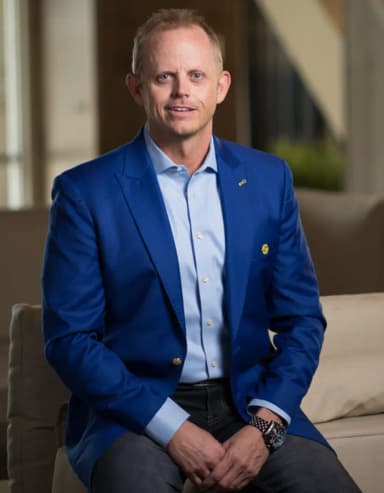
George Wright III opens this episode of The Daily Mastermind with a Colin Powell quote that sets the tone perfectly: there are no secrets to success, only preparation, hard work, and learning from failure. But Wright goes further than motivational fundamentals. Drawing on ideas from Dr. Benjamin Hardy and Dan Sullivan, he lays out a practical mental framework for rewriting how you think about where you have been, where you are, and where you are going.
If you have ever felt trapped by your own history, or limited by what you think is currently possible, this framework is worth sitting with.
Why Your Past Is Not Fixed
Most people let their past define who they are in the present. You carry the weight of old failures, difficult relationships, and missed opportunities, and you use all of that as evidence for why your present self looks the way it does.
Wright flips this around. Conscious creators, the people experiencing rapid transformation, do not let the past define the present. They use the present moment to reframe the past.
"As you get further in life, you'll look back on the tapestry of your life, and you'll realize that events in your life take on a different meaning."
That perspective, borrowed from Dr. Wayne Dyer, is a powerful reminder that the meaning you assign to past events is not permanent. The divorce, the failed business, the fractured partnership: in the middle of those experiences they feel overwhelming. Looking back from a stronger, wiser vantage point, you often find they were the very things that pushed you forward. Your past is a draft, not a verdict.
How Your Future Self Should Shape the Present
Here is the second shift Wright introduces, and it is equally important. Most people use their present circumstances to project a version of the future. They assess their current skills, resources, and opportunities, then aim for something modestly bigger.
Truly transformative people reverse that sequence. They build a vivid, compelling vision of their best future self and let that vision govern what they do today.
"It's not about the number of years you have left in your life. It's about the amount of life that you live in your years."
This is not wishful thinking. It is a strategic move. When you anchor your daily choices to a 10x version of yourself rather than a 2x improvement on today, you naturally stop spending time on activities that will never get you there.
The 10x Framework: Why Bigger Goals Require Fewer Distractions
Wright leans on a concept from the Hardy-Sullivan book "10x Is Easier Than 2x": going 10x does not mean doing ten times more work. It means identifying the small number of actions that actually produce transformative results and cutting everything else.
When you set a truly large goal, 80 percent of what you are currently doing will not get you there. That clarity is the gift of thinking big. It forces you to identify the 20 percent that genuinely moves the needle and to find new pathways, new collaborators, and new skills that your current situation cannot yet show you.
Why the Mind That Got You Here Cannot Get You Further
One of Wright's most direct challenges is this: you cannot think your way out of your present moment using yesterday's logic. The mindset, habits, and strategies that brought you to where you are today are not sufficient to take you to the next level.
This is not criticism. It is a call to expand. It requires a leap of faith, a willingness to believe in a version of yourself that does not yet fully exist in the evidence of your daily life.
"You're not your past self."
Physically, mentally, emotionally, and spiritually, you are not who you were five years ago. The question is whether you are willing to stop thinking like that person.
Choosing What to Emphasize
Because the past and future are both drafts, constantly being rewritten by new perspectives and expanding knowledge, the present moment is where you hold the pen. You get to decide which experiences from your past you carry forward and which ones you let recede. You get to decide whether your future vision is modest or genuinely transformational.
This is not about pretending difficult things did not happen. It is about choosing emphasis. Are you going to build your identity around the hardest moments, or around what you learned from them? Are you going to build your future around what seems safe, or around what you are genuinely capable of?
Action Steps
- Write a vivid description of your 10x future self: who you are, what you have built, and how you spend your time. Make it as concrete as possible.
- Review your current weekly priorities and ask honestly which ones connect to that 10x vision. Eliminate or delegate the ones that do not.
- Reframe one difficult past experience: write down what it actually taught you and how it contributed to who you are becoming.
- Identify one new path, skill, or person (a "who" not a "how") that your 10x future requires and that you are not currently pursuing.
- Ask yourself daily: am I acting from my future self today, or am I acting from the version of me that existed last year?
Commit to Your Future Self
The framework Wright describes is simple but demanding. It asks you to release the grip your past has on your identity, stop building futures that are just slight upgrades on the present, and step into a larger vision with enough conviction to let it shape your actions today.
It is never too late to start living the life you were meant to live. The only question is whether you are committed to your future self, or still operating from who you used to be.