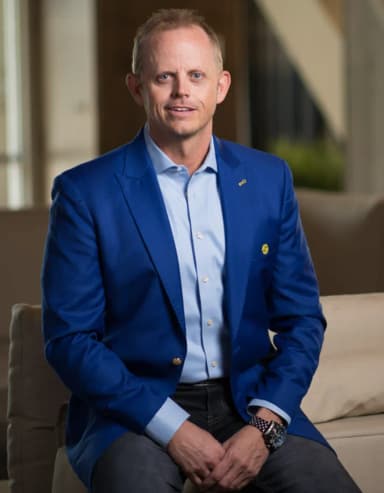
Resilience is more than the ability to survive hard times. On this solo episode of The Daily Mastermind, George Wright III breaks down what it actually means to be resilient and, more importantly, how you can build that capacity in your own life. The goal is not simply to recover from adversity. It is to use it as a launching pad, to bounce forward rather than just bounce back.
George draws on a set of 14 scientifically identified markers of resilient people to give you a concrete framework for understanding where you are strong and where you have room to grow.
Why Resilience Matters More Than Ever
In the current economic climate, the pressure people face is real and constant. Change comes fast, stress accumulates, and the temptation is to measure resilience only by how well you endure punishment. But George challenges that framing. True resilience is not about absorbing blow after blow indefinitely. It is about recovering quickly, adapting intelligently, and coming back stronger and more capable than before.
Resilience applies across every dimension of life: emotional, physical, spiritual, mental, and financial. When you build it as a complete practice, it shapes not just how you handle crises but how you perform every single day.
The 14 Markers of Resilient People
Researchers have identified 14 characteristics shared by highly resilient individuals. As you read through them, honestly assess which ones are already strong for you and which ones you want to develop.
1. Attention to health and good cardiovascular fitness. Physical energy is the foundation. Motion creates emotion, and emotion creates energy. 2. Capacity to rapidly recover from stress. Stress is unavoidable; what matters is how quickly you come back from it. 3. A history of mastering challenges. Every obstacle you have overcome is evidence for your ability to handle the next one. 4. High coping self-efficacy. This is your belief in your own ability to succeed and take care of things. 5. Disciplined focus on skill development. The more you master your skills, the more resources you have when difficulty hits. 6. Cognitive flexibility. The ability to reframe adversity in a positive light, to change the way you look at a situation. 7. Positive emotion and optimism. Whether natural or trained, optimism is a muscle you can develop. 8. Loving caretakers and sturdy role models. Having people in your life who model strength matters. 9. The ability to regulate emotions. Emotional mastery is one of the most important and most difficult skills in both life and business. 10. Strong social support and service. Getting outside yourself and contributing to others builds resilience from the inside out. 11. Altruism. A spirit of service keeps you from getting consumed by your own problems. 12. Commitment to a valued cause or purpose. Clarity about why you do what you do keeps you anchored when things get hard. 13. Capacity to extract meaning from adverse situations. Finding the benefit in difficulty is a skill you can practice. 14. Support from religion or spirituality. A connection to something larger than yourself provides grounding and perspective.
How Reflecting on Past Challenges Builds Your Belief
One of the most actionable insights George offers is about the power of reflection. When you regularly look back at the challenges you have already overcome, you reinforce the evidence that you can handle what comes next.
The more that you reflect on how you've been able to overcome challenges, the more you'll increase your belief in being able to.
This is not passive positivity. It is a deliberate practice of building the mental case for your own capability.
Three Habits That Strengthen Your Resilience Muscle
Beyond the 14 markers, George highlights three concrete practices that resilient people consistently apply.
Recharge and recover regularly. You cannot absorb sustained stress indefinitely without recovery time. Resilient people build recharging into their routine, not as a reward but as a requirement. George pushes back on the idea that toughness means taking punishment without rest. Eventually, without recovery, even the most resilient person will struggle to get back up.
Learn from feedback and invite it in. Resilient people are not defensive about their blind spots. They actively seek feedback because they know that learning what they cannot see is how they grow. If you are closed to input, you are cutting off one of your most important sources of improvement.
Stay flexible and agile. George mentions a friend named Kurt who teaches improv comedy principles to business professionals. The lesson is that resilience requires the ability to move with changing circumstances, to pivot when the situation demands it rather than rigidly clinging to a single plan. Like an improv performer responding to the audience in real time, resilient people know when to change direction.
What It Means to Bounce Forward
The phrase George returns to at the end of the episode captures the whole idea:
Resilient people are the ones who don't just bounce back, they bounce forward.
Bouncing back means returning to where you were. Bouncing forward means coming out of adversity further ahead, smarter, more capable, and more grounded than before. That is the real goal. Not survival, but transformation through challenge.
Action Steps
- Review the 14 markers of resilient people and identify your top two or three areas for growth. Choose one to work on this week.
- Build a recovery ritual into your schedule: time each day or week where you genuinely recharge, whether through exercise, rest, prayer, or time in nature.
- Practice cognitive reframing: when something goes wrong, ask yourself what benefit or lesson the situation might contain.
- Actively seek feedback from someone you trust. Ask a direct question about a blind spot you suspect you have.
- Reflect weekly on challenges you have already overcome to reinforce your belief in your own resilience.
Resilience is not a fixed trait you either have or do not have. It is a set of skills and habits you build over time, one challenge and one recovery at a time. As George Wright III puts it, it is never too late to start living the life you were meant to live.