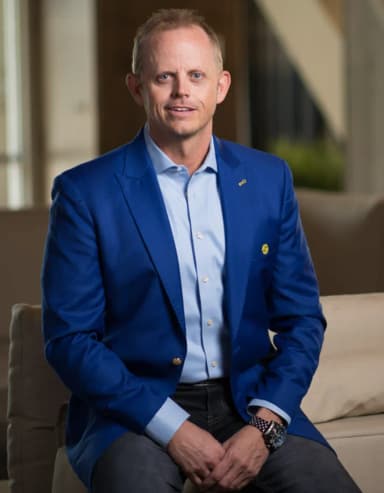
All right, welcome back to The Daily Mastermind. George Wright III here with your daily dose of inspiration, motivation, and education. And I'm really excited because I was able to track down the one and only infamous Greg Herline. I'm super excited to have you here, Greg. Welcome to the podcast. Thanks. I'm glad to be here. It's great to see you and hear from you again. It's been a little while. I know, I know. Everybody's kind of like a bit locked up, but thanks to the power of social media and technology, we are doing an interview. And today I want to share with you guys, there's some really, really good content and information that I think we're going to be able to give you with regards to business and success and investing in general. So let me, for those of you that don't know who Greg is, Greg Herlean, I'm going to give you a quick intro. Greg has, and I've worked with him in the past. I've had multiple business dealings and things with him. And so I can attest to this guy is literally the epitome of entrepreneurship. He's got a great extensive background in a lot of areas like real estate and investing, but he's personally managed over a billion dollars in real estate transactions. He's flipped over 450 homes, 2000 apartment units, also purchased and sold 12 hotels. He's the founder of Horizon Trust, which is a New Mexico based custodial company, which we'll get into here. But, you know, he's got this mission of educating Americans through the power of self-directed IRAs. And other than being a speaker, mentor, author, wrote a book, investor, and business tightening, I'm telling you, I don't use that term lightly. He's a family man. He's got a lot of things going on. So, Greg, I just, I'm really glad that you're here today. We're going to ask you a ton of great questions and it's stuff that you are just an expert at. So thank you, man. I appreciate you. Well, thanks for having me. When you read all those things, it makes it sound like I'm super old, but I feel super young still. I feel like I can beat my kids in almost everything. So thanks for the intro. No, I think that's the point is you have accomplished a lot, right? You've accomplished a lot in a short period of time. So you're still a young guy. I, on the other hand, am getting up there in age. Stop. Stop. So you know what I'd love to do real quick is I would love to back up a little bit real quick and just kind of talk about your early days. And, you know, we don't have to get into, you know, the shenanigans when you were younger. I just mean like early entrepreneurial days because, you know, a lot of people ask, especially when they see someone with your pedigree, you know, how did they get into entrepreneurship? What brought them into business? I mean, I don't know, were you always just kind of a business-minded guy? Did you start with a career and then bridge into this? Like, give us a little bit of the backstory of where you came from and what brought you into the business world for the most part, like your entrepreneurial start? Okay. Well, look, I'll start by just saying I definitely didn't have a business background. In fact, I dropped out of college because it just wasn't for me. I couldn't get enough grades to get into the field that I thought I wanted to be in. And so I think it was more of seeing people, friends of parents or my, my, the, the friends of the parents of my friends, how they lived and what they had, you know, I always found myself going to their house, you know, on their boat, on their vacation. And so for me, that's kind of where it started in high school, seeing that and not, you know, you know, my dad worked hard, you know, and, and, and, and, and took care of the bills, but it didn't have that lifestyle isn't home. And so for me, it really is like, Hey, I want to create a lifestyle where I can be home with my kids. I can make, you know, all the tournaments and games. And, you know, I didn't really know what I was going to do. I just knew that that was my why. Everyone talks about their why. Mine was I wanted to build a family and wanted to be home with my kids at the important activities. So, so that my entrepreneurship was really watching from afar, seeing these, these families. And I was like, man, I want people to come to my boat. You know, I want them to come to my house. I want to live on the beach. And so that's, so, you know, it might sound silly and simple, but that's really where it began. I didn't come for money, didn't have any money, wasn't really around it too much, but I got to see it and touch it a little bit. So that's kind of where it began. I was in my young 20s. And then when look, when you get married at 22, 23, it's like, and you have a kid that, you know, I didn't, you know, you said, don't mention the shenanigans. I didn't have time for shenanigans. I dropped out of college, started a family. I think I'm getting more shenanigans now than I did, you know, 20 years ago. So, so, you know, it's funny you say that though, Greg, because I, you're, you're making a comment that I think a lot of entrepreneurs skip over, but I know a lot of people wonder, and that is, you didn't know what you wanted to do or what you were going to do, but you just knew what you wanted. So what, I mean, like what kind of activities did you do to get going down the path? Were you just, you know, trying to be active, taking action on different things? Like what, what did you do to kind of get you moving to where you were able to have some things happen? Because if you knew what you wanted, but you didn't know what you were going to do, how did that translate? Well, look, I dropped out of college because I was introduced to an individual who was 25 years older than me. And he was that guy that had the boat and the house and all those things. And I literally said, whatever he's doing, I'm going to do it. Now, thankfully, it wasn't like he was a drug dealer or anything. He was a family man. But I asked him, I said, hey, look, I don't know exactly what you're doing, but if you don't mind, I would love to work for you. And so the advice I give to anyone that's wanting to jump in to be an entrepreneur and live their goals and their why, it's if you think you want to live a certain lifestyle or be in a certain field, jump into it with somebody who's already doing it. And work for free. Be an intern. Give as much as you can to that individual because you're going to find out within literally months if you even want to be in that field, if you like it. And it is worth five years of education those three months to just be around someone who you think you want to be like. That's what I did. I literally dropped everything, and I was like – I mean I was picking up his dry cleaning. I was doing all the things that he didn't want to do, but I was listening to him. I was in all his meetings. And so that's where it kind of began for me. How does it so the million dollar question I have, because I love the principle of finding somebody not necessarily always doing what you want to do. But but that's that's a really important principle. But living the life you want to live. The million dollar question I have for you is, is this a guy that was doing what you do now? Or was it just a successful person that you started working with? And so you started moving and getting those, you know, those principles in place. Jeff Lerner, Ph.D.: Very good question. It started with just a guy that was living the life that I wanted to live. So that's where it began. Jeff Lerner, Ph.D.: And who knows? You might have actually liked doing what he's doing, but you wouldn't know until you do it, right? Jeff Lerner, Ph.D.: That's right. I just liked his personality and I liked his lifestyle. That's where it began for, look, that only lasted like 10 minutes, right? And so then you go and find out what he does and it's like, oh, okay. He sells life insurance and And he's a sales guy. Like, okay, I mean, sounds good. So, you know, that's where it began. But what I learned is he did so much more than life insurance. And so I learned that he was, you know, doing financial planning and he not only did life insurance, but he also sold real estate. And that's actually where I was in those rooms. And the more I sat and listened to him talk to clients and I heard what people were interested in, people didn't want to talk about life insurance. Even though that's what his main focus was, they want to talk about real estate. and so did I. The more I heard about real estate, I was like, that's what I want to be doing. And so I learned within six months, like clients want to hear about real estate. They're already investing in real estate. He already dabbled in real estate. So that's where I grew this kind of passion and education for I've got to start doing real estate because I enjoyed it, but it's also what clients wanted to be doing with their money. And I felt like being around money was going to help me create my own money. And so that's where, again, I was literally 22 to 23. I mean, that's where I started. That's so huge because I think people, I just want to draw the attention to that. You know, most people start with, what do you want to do? What do you want job? Do you want what career? Whereas I talk a lot about what do you want your life to be like, right? And that's exactly what you just said, which I love. You were like, look, here's somebody that's living kind of the lifestyle I want. Maybe I want to do what he's doing. Maybe I don't. But that put you both working with somebody successful, but also going down a path that the path itself led you to real estate, which obviously led you even further into more of a niche. But I love that you said that because you would have never been able to do it if you hadn't gone there. And if you had looked for just some career, like you're in college, right? You might've been down another path as well. So that's, that's huge, man. I think that's, that's great. So what you, you were, were you just aware of it with digging into real estate or what was it about real estate? Was it something that you felt kind of passionate about? Was it just where the money was like you were saying, or what is it that made you really drive into that arena of real estate? Cause you've obviously got a great background in real estate and done a lot, had a lot of success in it. Yeah, look, I think it was something that I could understand. Look, I'm not the smartest guy, you know, even today, especially. I feel like I'm really good at a couple subjects in real estate, in particular, raising money for real estate transactions. Look, I learned about real estate and the returns that real estate can create in my first year of being in business. And so when he would talk about insurance and annuities, I didn't get very excited about it. And I also learned what kind of rate of returns people get in annuities. It's anywhere from 2% to maybe 6 or 7. Well, in real estate, they're making 6% to maybe 10 or 12 or 15. And so, a young guy, I was like, oh, well, of course, when I mean real estate, it's double the returns. Yes, there's a little bit more, there's more risk involved for sure and more work involved. But that's kind of, for me, was I saw the way he spoke to people about how to invest and what basic principles there were when investing and trying to make money and preparing for retirement I heard that conversation over and over every day And so again I was just trying to find my niche Okay so how can I learn from these examples and create a business from it And so I learned quickly about real estate because typically people need money for real estate. And so I decided to go down a route of how do I connect people that are looking for deals with people that have money because both need to happen and you're usually not good at both. You can be, but I learned quick that I didn't like to find the deals. I also didn't like to like, I mean, George, this will be no surprise to you, but I don't like to get too dirty. And so, but I don't mind walking through a project and be like, okay, I can see that you need $100,000 to rehab this deal. Let me see if I can find you the money or a partner to help do that deal. And so that's how I got into real estate is I would slowly would learn what people are looking for on the investment side and couple them with actual people that were finding the deals. And that's how I got, you know, in the beginning into real estate. I love that because I think you also make a couple of really, really good points for people. And that is it's not always the, it's not always the specific topic as much as the transactions. And you saw the value of the money flow and it And it wasn't so much about the product. But I think you've got, and it's probably because you started early on with what lifestyle do you want to have or what do you want to do with your life rather than what job do you want to have. You were just, the way you were thinking and the way I found a lot of seven, eight, nine figure guys think is they always look for kind of the way people talk, the way, what the real meaning and system behind what they're doing. It's not just about most people are in this mentality of a job and a product and they don't see the forest through the trees. And you were able to be in that arena for insurance, but see the opportunity with real estate, be in the real estate, but see the opportunity with the money. And so I think it just shows that really successful people think just a little differently. They don't they don't just take things for face value. They're always looking for ways. And I've definitely noticed that about you as well. So the money- Okay. Can I interrupt you real quick? Sorry, George. One thing I thought you were going to mention earlier and you brought up a different really valid point was in today's world, as far as entrepreneurship, I want to just say this real quick is I talked to so many young people now who like, yeah, I want to do what you do. I want to have what you have. Right? I mean, they look at you, George, like, okay, well, they missed like, so what I did from 22 to like 32 for my first 10 years is all the things they don't want to talk about. They're like, oh, yeah, yeah, work hard. Yeah, oh, yeah. Now it's like, well, hey, I want a job where I can, like, work out in the morning and then I can go to work at 10. You know, I can be home by 4. It's like I just want to focus. When I said I wanted, you know, I was building this business, you know, I lost, you know, I didn't sleep. And I was constantly thinking, creating, and failing. And in today's world, it's interesting. It's like these, a lot of young people, I'm going to pick on young and old, but mostly young. You know, I'm going to just buy, you know, Bitcoin now. It's so low, right? So I'm going to buy it and that, you know, I'm going to buy a car with it. Okay, cool. That might work like for one car, but then what are you going to do like two, three years from now? And so I don't want to, I didn't want to leave that subject. No, that's huge. In fact, I think the distinction is a lot of people look for the lifestyle and then they chase the lifestyle. What you did is you found the lifestyle you want and then you went to work. That's right. You know, whether it's a mentor or a path or a product or whatever, you went to work doing it. Because I'll tell you this, I've been around the insurance business and that is no freaking easy job. Like that's like we're talking cold calls and we're talking leads and we're talking sales and closing. Like that is not easy. minutes across town, 45 minutes across town to get a signature, to get like a $80 commission. I mean, and then I waited 30 days to get that commission. I mean, those were the days. I mean, I learned about that. Well, the problem is nowadays, people can get online and they hear the great stories, but you know, it's not sexy to talk about the hard work, right? It's not sexy to talk about, okay, the only reason you were in a room to see real estate transactions is because you were working your ass off with this guy. But the distinction that's key is you did identify a person or a life or a job or a career that you wanted it to end up like. And then you went to work and it was the path where you found it. But the path is hard work. And you and I know, look, we've been traveling all around the world. And even when you're successful, I mean, let's not discount the fact that getting there is a hard road. Staying there and keeping it going is also a freaking really hard road. It's sometimes you're right. People look at your lifestyle and you know, the, you know, the travel and the lifestyle and things like this. And they think, oh man, I just want that. But fast forward a while, it took a long time to get there. Right. That's right. That's right. Sorry. I just wanted to make that. That's a great point. That's a really good point. Cause you just make it look so easy, man. That's why I'm interviewing you. Cause you just make it look easy. So yeah, definitely not. It's good. So, okay, so let's talk about real estate, money, and it led you into this whole field of self-directed IRA, which, believe me, still blows my mind that some people don't understand. And I don't know if you want to start with the book or your bridge into the self-directed IRA or where, but lead us now into this topic in this arena that you're really focused on, which is really driving your mission to help people and things around the world. Look, just like I got into, I went from, I moved from insurance to real estate really quick. But I will tell you, moving from real estate to where I am now in the self-directed space, probably was a 10-year process. All through my 20s, I really focused on raising money for real estate. And I would use, what I learned is that basically there's over 80 million Americans that have IRAs, which is over $4 trillion in assets out there. And so for me, that was my market. I was like, okay, every time I find a real estate deal or a commercial or a hotel or apartment complex, and I needed to raise money for it, I would find individuals, one, two, three, four, five, 10 individuals that had IRAs, they'd be my partner and we'd do a deal together. And so what would happen is that the investor would come to me and say, I want to do a deal with you and let's partner. And they move $100,000 from their IRA. Let's say it's called Charles Schwab or Fidelity, wherever, from there to a trust company. And when the money arrived to the trust company, then that money would go to Tidal or the LLC for us to do a deal. Well, that simple process I just explained was a difficult process with trust companies. I just felt like they were lumpy. The process wasn't smooth. And so, I decided 10 years into my business that I was going to create a trust company to smooth out the process. So when someone wanted to invest in one of my deals, we had a trust company. I wasn't trying to make money on the trust company. It was like, let's just smooth out the process. People think my real estate deals. Yeah. They thought my deals weren't great because they had to go through this process because they thought that company was mine and it was not. So I decided I'd start a trust company. Little did I know that I was going to basically change my path and my focus in my career to the trust company self-directed space. And so I'll say that as far as what that means real quick, a self-directed IRA was something that was approved and created in the 70s. I can say I was born in the 70s, which is weird. So it was something that was created in the 70s and it was something that the IRS approved. So this is not something new, believe it or not. Most Americans don't even know about it. But it is something that is an IRS approved vehicle, which allows an individual person that has an IRA or retirement account to invest their retirement funds in something that's more alternative, meaning into real estate, gold, businesses, Bitcoin, mortgages. I mean, the list goes on and on. There's a few exceptions that you can't get into using your IRA but almost anything's fair game. And so when I learned about how it works and the power behind a self-directed IRA and how one can use it, I became passionate about it. And so in fact today, I still am more passionate about it probably even than real estate because I feel like it's something I'm sharing that's new to almost every person I talk to. If you and I were to just talk about real estate and this was a real estate podcast, you've probably had very successful real estate guys on here. And everyone, frankly, if you go talk to your neighbor right now, they all think they're real estate experts because they've all bought and sold a home. So it's not as easy for me to get someone excited about real estate, but talking about self-directed, well, one, it would either put you asleep immediately because all of a sudden it's retirement and it's maybe IRS related. So I lose those people right away. But everyone who actually can stick with me for like five or 10 minutes to actually understand what a self-trickered IRA is and what it can actually do, that became my market. And so my whole goal with our company at Horizon Trust Company is we've created a boutique firm to walk people through the process, to make it simple, to give them a good service and just to do what we say we're going to do. Because most companies, believe it or not in my industry, just don't even do the bare minimum. And they're like, hey, you want to open up account? Cool. Here's the application. And you get like a 20-page application. Like, well, I don't even know how to answer all these questions. So, we literally walk them through that. Yeah. So, pause that thought for a second because I want to make a transition here because I think a point that goes, that might have gone by really quickly but needs to be just kind of pointed out is, you know, this idea that you were in the real estate arena and bridged into SDIRAs or IRAs, it just proves that there's a lot of times there's a huge amount of opportunities in the process of what you're doing. And like you said, you did it out of necessity, but then you identified the opportunity. And so many people are so focused on the end goal or so focused on what they're doing, they miss all the opportunities in the process. So I want to point that out. But then I want to now shift because I know you're passionate about real estate and everything else, but you own this custodial trust company. And so what, just to back up for people, like you said, I think a lot of people don understand both the power of the tool of having a self IRA and also what they can do and how they can do it Or they have one and they don even know they can do stuff with it. Why is a self-directed IRA just at a real surface level, why is it such a powerful tool for people to grow wealth? And then maybe this relates a little bit to your book and why you wrote this whole concept of bank on this, like be the bank. Why is it such a powerful tool just at high level? Well, it's so powerful because you're able to amass serious money slash wealth in a non-taxable environment. So let's say you're working on whatever that job is and you're making enough money to pay your bills but you're doing these other investments like investing in real estate or notes or Bitcoin like I've talked about, which is the big buzz. Well, you can do all of those things that interest you inside of a self-directed IRA, which means every time you make money, if you do it inside a Roth, self-directed IRA, you're not only earning tax-free, it's coming out tax-free. It's a game changer when you go to retire. And so there's, I mean, go on so many different paths here with the question. But one thing that I think is powerful and important is so many individuals, I know that the stats are just, they're crazy, start saving money in their 40s or 50s or even late 50s for retirement. The numbers are staggering. The average 40-year-old has like a $48,000 IRA. Well, that's scary. And so the message I try to share and why I think it's become kind of something so important to me is everyone needs to start a Roth IRA immediately. My son's got a Roth IRA. He started at 18 years old. And so everyone needs to start it and most people don't until it's too late. And that doesn't say too late, but it could be so much bigger. And so what does that mean? Why is that so important? Well, that real estate deal or Bitcoin deal or gold deal or business that you're going to fund, rather than funding that next business that you're doing, because a lot of these entrepreneurs, I think a lot of people are listening to you, George, already have a business, right? They're already doing well. And now they're like, okay, I want to start a new business or I want to do a real estate deal. Well, instead of doing it in the name of their LLC, which I get this tax advantage of that, do it in the name of their IRA. And so now all those gains are deferred, depending upon what kind of asset they get into and we can talk them through that. So that's what's exciting. I think that's the distinction. I think that what people don't get, and this goes back to your comment about working hard or working easy or wanting a quick way, is people don't understand that true wealth, you have to understand how money works. And when you do, when you have any concept of how money works, you realize that it's not the sexy, easy, fun things that make all the money as much as pre-tax, tax-free, tax-deferred, or compound interest. It's like why people realize, hey, I'm going to go try everything I can to earn $10,000, where saving $10,000 on your taxes could be easier for you, but it just doesn't sound sexy. And so understanding how money works, and I feel like what I've learned from you is, especially with an IRA, and for those of you who don't know, an SDI or a self-directed IRA just means you're using an IRA, but you're directing it, which we'll talk about. If you're not doing that, then you're not capitalizing on these powerful tools of like compounding and pre-tax and tax-free or tax-deferred, whatever the structure is. And if you're not using those principles, it's much harder to amass serious wealth. And you just have to go out and grind, right? So those things make it way better, right? Yeah. And essentially, you and I, an example I give is you and I, George, can invest in the same things. And I essentially can do 30%, excuse me, less than you and have the same amount of money in my account. So I could either work 30% less than you or my returns can be, I could take less risk than you and get the exact same returns because I'm saving that much money on not paying taxes. And that's what the self-trickering IRA does. Yeah. It's a big, that's a great perspective because I thought of it as you're going to gain a lot more, but it's also a great like sort of like handicap or sort of an extra that you're going to have when things aren't going well to maintain and determine you're still going to create massive wealth. So that's huge. This is the power in the tool itself I really wanted to emphasize to everybody. And then doing that, taking advantage of compound interest, taking advantage of tax-free earnings, tax-deferred tax, whatever, pre-tax, that's huge. But the real power, I think, comes in what you've been able to do rather than just be this custodial company where your education has taken people as to the power of self-directing that because if they're not investing it, the bank is and they're the ones making all the money, right? So why, and obviously having a real estate background, you already came from that investor arena. You did this because you felt it was necessary, but what do you think or what would you recommend with individuals that have an IRA or that want to start an IRA as to the power and reason why they should be self-directing? Because most people are going to look at that and go, oh man, like I have no energy to have to manage my investments. I don't know if I can handle that. What do you say to people like that? Self-directing my retirement. That's hard to, you know, that seems overwhelming. Well, look, first I'll say maybe what, you know, I'm not sure if this is where you want me to go, but I'll be honest. It's not for everybody. For those that are like, oh my gosh, this is extra work and I need to do extra research and spend a little more time, the answer is yeah, you're going to have to spend a little bit. I mean, I don't think that's your audience. And it was, they're more outgoing entrepreneurs anyway. So for the person or people that are actually willing to spend literally, like my opinion, I always tell people 30 minutes a month, and that's it, which is about 10 times more than anybody else's. When I say anybody, majority of America. So for those that are willing to take a little bit of action and and research and educate themselves, they should, you know, where to begin really depends on how much effort they want to put in there. Like a lot of people are listening to this, like, look, I don't want to use my IRA to go find a deal, fix the deal, flip the deal and not pay taxes. And that's okay. There's just so many other people that are actually doing that. I mean, think about, you know, a lot of you that are listening are already entrepreneurs, right? And already because you're already a little bit or a lot successful, what happens as you have success? How many times do you get hit up about a new deal or a new opportunity and they want you to invest your money in it? The next time that deal or opportunity comes up, what I would say is have your IRA own that ownership. Have your IRA invest in it and then it doesn't have to pay taxes on the gains. And so there's a new rule that came out in registration last year and in September, I got got approved. It was a hot topic. I don't know if you heard about it. It's the Peter Thiel Roth IRA. I don't know if you know who he was, but there is. But he was a founder of PayPal. And he invested his Roth self-directed IRA for $2,000 into PayPal. That's how he owned his ownership. And he owned, I don't know what the percentage was, but it was substantial. I don't know, 25, 50% of PayPal. today, his Roth IRA is worth $5 billion. And so the government found out about that and there is a new law, they call it the Peter Thiel Law. You can Google it. It's pretty funny that no longer can you, you can now not make more than $10 million per year in your Roth IRA. So for those of you that want to do this method, the cap is 10 million and they also put a cap of after $2 million dollars per year, if you make more than two million per year, it's an automatic audit from the IRS on that account. Again, I think these are good problems. I think if we have to max that at nine million, whatever, I mean, that's a good problem. But I do think it's interesting. I share that with you because it's on one end of the spectrum. Like Mitt Romney, they talked about that when he was running his IRA, how amassed to be so big. He's investing in his own businesses. And so you can't do that when you invest right now in your Merrill Lynch account. You give them in allocation. You say, I want to be conservative or risky or whatever the case is. It goes in all these mutual funds. You have no say. They take out the fees. They get paid regardless if the account goes up or down. I mean, literally this month, we saw it from here to there. I mean, in the last two weeks, it's been like that. So, that's what I love about self-directing. Well, no. I also think people need to realize that, yeah, it takes a little bit extra work, but two things. Number one, if you like money, then you need to put the work in. Like, I mean, at the end of the day, if you want to create wealth, you will do it. But you're not even saying it takes a lot of work. So get over that. But the second thing is, it's different when you think of it as a whole other thing. The way you think about it, and you're different than a lot of guys that I've met in this field. That's why I think it makes it unique with what you're doing with Horizon is when you think differently, you think about how you can transact your business and your investments and things with an IRA. It's not something different. It's not like you're compartmentalizing all these things. It's a strategy and tool you use in everything you do. And that makes it pretty exciting because I don't think people even think about investing in a business or investing in opportunities like that. And so I do think it's sort of like one of those discussions with money that it just goes along with if you want to create wealth. Like you got to have that discussion. And if you're not, if you're listening to this podcast and you don't have an IRA or you haven't even spent any time learning about it, then you clearly aren't looking to grow your wealth. Like that's just the facts. And I think it's a strategy, right? A tool. So let me ask you this. I want to just kind of take a second and ask you more specifically about crypto blockchain assets, whether it's NFTs, things like this. And it's probably so unregulated and maybe there's not a whole lot of ruling and case law on this and stuff. But I think a lot of people, ironically, Greg, people's first investments they're even making, some of these young kids are things like that. They're not real estate or stock. So is that a thing? I mean, And is that what do you recommend What the direction there Well hey I can recommend anything in particular I can even recommend real estate even though that my thing But no, it's okay. It's a fair question. I get asked it all the time. First, I will tell you, NFTs are not allowed in a retirement account. They're considered a collectible. So NFTs have been a hot topic and hot subject. And I got to be honest. I don't know enough about NFTs to, you know, to talk about it too much. I think partly because I know it's a collectible or deemed a collectible. I haven't. Well, and just to clarify, really, I think a better way to say it, because I was trying to figure out how to say it is what is allowed and what isn't with all these new things. And so it's good that you say it's not allowed. You're not I'm not necessarily looking for you to weigh in, although that would be cool, too, on what you think will work and stuff. But but I get it. That's not allowed. NFTs, non-fungible tokens are not allowed. Yeah. So it's easier to say what's not allowed because almost everything is allowed. You know, so a collectible is not allowed. Antiques are not allowed. Buying your own property that you live in or a vacation home that you visit are not allowed. That's almost all that's not allowed. I mean, there's other, there's a few other exclusions, but in general, that's those. And so, but you know, I would tell you that the most common things people invest in with us using a self-trick diary are definitely real estate. And when I say real estate, it's got like six buckets of real estate, lending, different funds, PPMs, investment properties that they rent out, commercial projects. I mean, the list goes on and on. And real estate is, I would say, probably 60 to 70% of our investors. Then you've got the crypto world. And then you have, you know, there's a little bit of gold, but a lot of businesses, a lot of people are funding either their own business. If you're starting a new business from scratch, there's actually some rules. And again, I won't go deep into those that you can actually use your funds to fund your own business or fund someone else's business. So I would say that's the majority of it. When it comes crypto we have a platform that we have our clients use they don't have to use it um they can also open up an account with us um and fund their llc and the llc can have an account with coinbase and then they can do it do it you know and not just coinbase but wherever else llc's are approved so but if not if someone just wants to open up an account and and and buy and sell without opening up an llc we have a platform for that that's very slick it's very clean um yes i have bought some uh yes i have made money on some and i have lost money on some overall i'm up um but i think you know that just depends on uh the time right um but i i mostly bought it because my at the time 17 year old son was like you gotta do it and i was like i don't know and so you're a great example though that i always like to tell people and that is invest in things you know invest in things you know and if you don't if you want to then you better learn or don't just invest unless you learn and go deep. So I think the real message I really wanted to make sure everybody could get in this episode is that there are some success principles and ways of thinking that you have done really well with. We've kind of covered those. And if you want to grow wealth, because this podcast is about money and business and investing and mindset, is you've got to understand the tools and you've got to understand the tools that make your job a lot easier and more compounding and productive. And that's why I really love the power of that. So even though I know we're short on time, but I really wanted to ask you one or two other quick questions. And that was just given the state of the marketplace right now, because you're kind of a guy, as you know, I go to when it comes to success strategies, principles, and things. Outside of IRA and outside of that, just in business in general, is there any particular skill sets or strategies or principles that you feel would be really helpful for people to keep in mind or that you utilize right now? And the reason I bring this up is I'm a big proponent of daily rituals, whether it's meditation, inspiration, working out. And I push those really heavily, even when it comes to business, because your mind, body, and your routine and discipline are so important. What would you leave our listeners with completely outside the IRA arena, as far as principles for success that you think have served you well or that you feel like right now in the marketplace are critical for people to kind of keep at the top of their list? Look, principles for success, in my opinion, are, you know, you never get away from hard work. This is not lucky. What I do or anyone that's been successful, it's not luck. It's hard work. and sometimes when I say hard, it just can be different. So I also mentioned hard work is like 30 minutes a month focusing on your retirement plan. I mean, I don't know how hard that sounds to you. Believe it or not, that's hard for most of America, 30 minutes. So, you know, the feedback I give you is, you know, definitely work at it, educate yourself a little bit every single month and then take the action to do it. And again, these are the most simplest things that I can tell you, because look, I can tell you, having a plan is critical. I mean, for me, I have a schedule and that works for me. And so I have a schedule and I have a routine and it works really well. And I put what's important in my life first and I plan around that. I mean, I plan everything. I mean, my calendar is full, my time for either reading, sorry, this is your life. I got the job. It's all good. It's all good. So I'm going to hold one second and make sure. So as far as planning my schedule, yeah. I mean, I'm like probably most people that are finding success between my own personal time and in education. But I would say it's not that hard either. Like I'm still, I wouldn't say super educated by any means. but if you work at it and you plan, you plan better than you probably are right now. And all you have to do, and my advice on this is just do something a little bit better right now. When I talk about self-directing, if you could just make an extra two or 3% in your investments, that's it. And that would be in a difference of having hundreds of thousands of dollars, if not millions in your account by making two to 3% more or doing it in a tax protected way, even better. So, So I would say make small changes. And then the last thing I'll say is stay focused. The biggest problem that I had, especially myself, but I see when I go out there is people get so excited about so many opportunities. They can do this. They can be in Bitcoin. They can do real estate. They can do life. They can do all these things. Stay laser focused. If you have an amazing team and I can actually run two businesses, good for you. it's not very realistic to run more, especially unless you've got a very well-versed team. So, my biggest advice is stay focused. No plan B. I mean, my fiance, she taught me that. It's like, if you're already thinking about your plan B, your plan A is not going to work. So, focus on your plan A and make it work. There is no option B. And if there is no option B, A is going to work. And so, that's my advice for you. I love that. I love that. You said a couple things I'll just kind of point out. and that is hard work doesn't always mean time it might just be different and i do think that people get caught up in adding new things when different is not a bad thing successful entrepreneurs they see different as opportunity they see hard work as opportunity and if you view it as hard work or whatever that's why 90 of the people don't do it so different that's a really big one and i love that you you know these common success leaves clues right schedule discipline and then focus uh absolutely 100 i do like when you say prioritize and then schedule around it that's i think a big one um i didn't do that a lot of my career it was always like schedule the you know do the things and then schedule important things around it i i'm not that way anymore um but i think that that's a big one and then focus um that is definitely something that people young and old have trouble with now is focus because i think there's a difference between diversifying your knowledge and driving that deep and then just being a shiny object person. So I love that. So Greg, how can people get in touch with you, follow you, give us what the best source is for them to go to? Yeah, I would say, look, I mean, any friends of yours are friends of mine. So like you can get, you can obviously find me at horizontrust.com. My website, gregherlene.com. My email is greg at horizon trust. Really simple, just shoot me an email. I've got a book. I'll send it to you. So if you listen to this and just send me a message saying, Hey, I was on George podcast here and I'd love to get your book. I'll send it to you for free. For me, it's about getting a message out. I want people to take action, make those small changes. I hear now I've been talking about it for so long. It's the most rewarding thing that happens for me is I'll go somewhere and I'll say, I heard you three or four years ago and I've been doing it. Like last month, I was talking to this young couple. I had no idea and they started doing two to three wholesale deals in their self-directed IRA, their IRA went from $5,000 to $85,000 in one year. I had no idea who they were. So for me, I just love hearing those stories. So for me, if I can give you as much education and help on what your options are and then you take action, that's what it is. So again, Greg at Horizontrust.com. I'd love to hear. That's great. And what I'll do is I'll put that in the show notes. Guys, if you're listening to this later on, And I'll put his contact in the show notes and his email as well so that you can reach out to him if you'd like to get a copy of his book. Great information. I've got one, I think, back. I don't know if you can see it, but it's definitely on my shelf. So I appreciate it, Greg. I appreciate you. Listen, guys, share this episode. Share this episode. Tag the Daily Mastermind in your stories. And let's get the message out. Let's see what we can do. And the biggest suggestion I can have is just make a little change like Greg suggested. to try to find a way to educate yourself and apply this in your life. And that's our message for today. So I hope you got value. Share the episode and we will talk to you guys again tomorrow. This is George Wright III. This has been The Daily Mastermind. Have a great day.