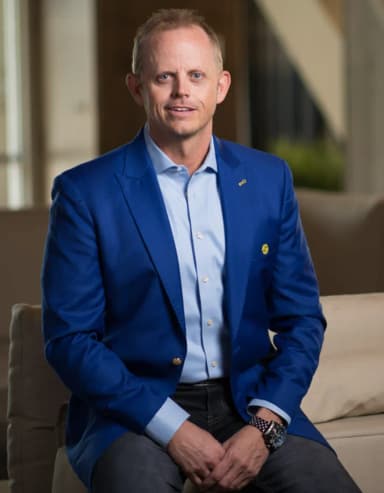
On The Daily Mastermind, George Wright III delivers a focused message on one of his core prosperity pillars: taking personal responsibility. This is not just a success principle, he explains, but one of the most empowering commitments you can make for yourself.
If you have ever felt that life is simply happening to you rather than being shaped by your choices, this episode offers a direct challenge to that mindset and a practical path forward.
Why Responsibility Is Different from Just Being Proactive
George opens by drawing a sharp distinction between two of his prosperity pillars. Pillar One is creating your life, being intentional about what you want. Pillar Two, the focus here, is taking personal responsibility for where you are right now, acknowledging that your current circumstances reflect your past thoughts and actions.
These two ideas work together, but they are not the same thing. You can be a proactive person and still sidestep ownership of your results. True empowerment comes from holding both at once.
It's in your moments of decision that you shape your destiny.
George opens with that quote from Tony Robbins to anchor the core idea: your life is the product of your decisions, and your next decision can begin to change its direction.
How Responsibility Shifts Your Perception
One of the most compelling points George makes is that taking responsibility literally changes how you see the world. When you accept that you are responsible for your circumstances, you stop viewing situations as things that happened to you and start looking for lessons and solutions instead.
George draws on Stephen Covey's principle that the split second between a stimulus and your response is where your character is formed. Taking that pause, choosing a response rather than reacting, is the habit that separates average outcomes from exceptional ones.
Wayne Dyer makes a similar case: when you step back and look at the full tapestry of your life with a broader perspective, the difficult moments often turn out to have been growth opportunities. The challenges you faced made you more disciplined and strong, even when they did not feel that way at the time. Objectivity is not passive. It is a practice that opens up better outcomes.
George puts it plainly: stop focusing on problems and start focusing on solutions. The point of taking responsibility is not to beat yourself up for where you have ended up. It is to recognize that you have the power to change where you are going.
The Power of Stating Your Intention Out Loud
George offers a deceptively simple technique: when a difficult situation arises, say out loud, "I take responsibility. I am the one responsible for this." Your intentions are more powerful than you think, and stating them aloud makes them real.
This connects to a point from Ed Mylett, whom George credits as a mentor:
You need to give yourself more credit for your intentions, not just your actions or your results in your life.
Many people judge themselves only by outcomes. But the commitment to take responsibility, even before results appear, is itself a meaningful act. It shifts your internal orientation and sets the conditions for better decisions going forward.
Why Commitment Outlasts the Initial Decision
George is clear that making the decision to take responsibility is only the first step. The real test is staying committed over time. Most people make good decisions in a moment of inspiration and then drift back to old patterns when life gets hard.
Great leaders, he notes, do not blame others or adopt a victim mentality. They take responsibility not just for their actions but for the overall direction of their lives. That consistency, sustained over months and years, is what actually produces change. Making the decision today is only as good as your long-term commitment to living it.
How to Begin Being More Responsible Right Now
George breaks the practice down into habits you can start immediately:
- Be objective. When a difficult situation arises, resist the first instinct to catastrophize. Ask whether there is an outcome you have not yet considered, one that might actually benefit you.
- State your intention. Say out loud, "I take responsibility for this." The act of saying it reinforces the commitment and shifts your internal state.
- Pause before reacting. Take a breath between stimulus and response. That brief pause is where proactive, responsible thinking lives.
- Look for the lesson. Situations that feel like setbacks often carry the tools you need to grow stronger and more capable.
- Give yourself credit for the intention, not just the result.
Action Steps
- Identify one situation in your life right now that you have been treating as something that has "happened to you," at work, at home, or in a relationship.
- Deliberately decide to take responsibility for that situation. Say it out loud, clearly and without qualification.
- Shift your focus from the problem to one concrete solution you can begin working on this week.
- Practice the pause: before you react to the next difficult moment, take a breath and choose your response intentionally.
- Revisit this commitment daily for the next week and notice how your perception of your circumstances begins to change.
Taking responsibility is not about blame or self-punishment. It is about reclaiming your power to shape what comes next. When you own your circumstances, you gain the leverage to change them. It is never too late to start living the life you were meant to live.